


Know the Notation but Can’t Picture Molecules in 3D? Turn Stereochemistry Into Active Recall
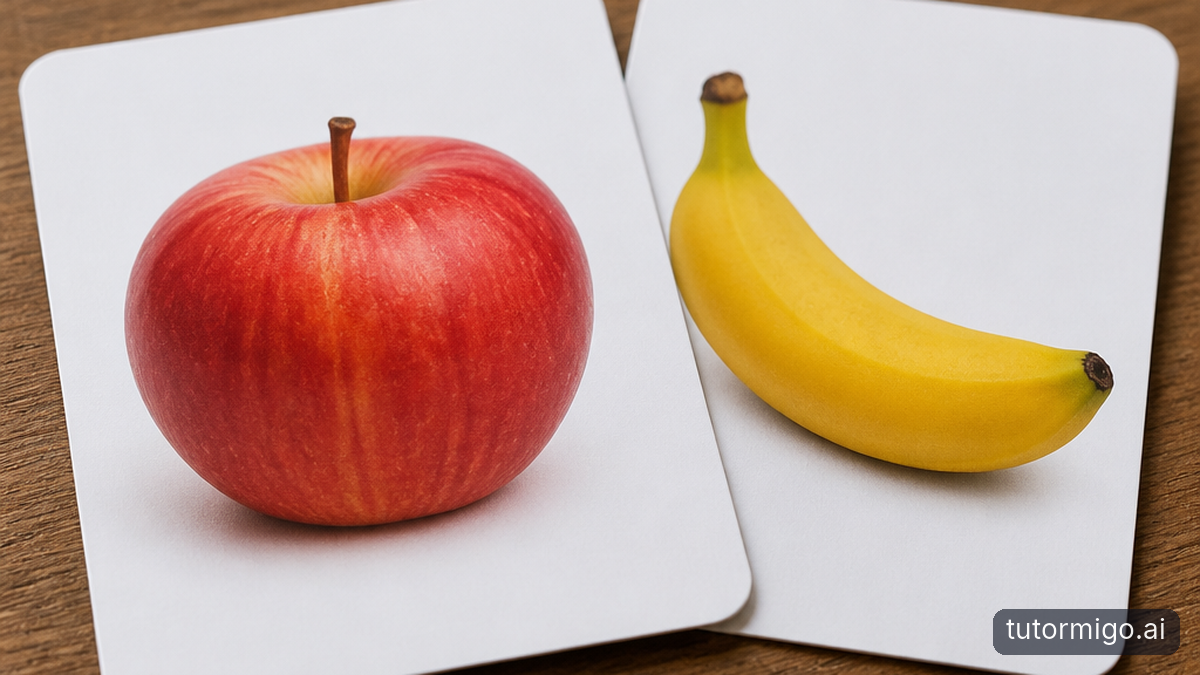
You recognize wedges and dashed bonds, yet a rotated molecule still looks like a different compound. That gap makes stereochemistry frustrating: knowing the notation is not the same as picturing the structure. A repeatable routine combining tutoring, an external molecular viewer, whiteboard recall, and spaced repetition can help bridge it.
Start with one narrow question: are these two structures the same molecule viewed differently, or different stereoisomers? Use a mirror-image pair of lactic acid molecules, each with one stereocenter. Before checking anything, describe which groups point toward you, which point away, and what you expect rotation to change.
Your first answer is useful even when it is wrong. Perhaps you treat every change in drawing orientation as a change in configuration. Perhaps you can identify the groups but lose track of the one pointing away. Name that specific difficulty instead of recording only “stereochemistry is hard.”
Make the study cycle predict, inspect, explain, and retrieve. Predict before manipulating a model; inspect to check; explain the discrepancy; then answer again without help. This turns a visually impressive demonstration into a retention exercise you can repeat with new structures over time.
Use TutorMigo’s Personalized Tutoring and Session History to Build on Each Practice Session

Open TutorMigo.ai with a precise request: “I understand wedge-and-dash notation, but I confuse rotation with a change in configuration. Ask me one question at a time about a molecule with one stereocenter.” The AI Tutor can personalize the conversation around your explanation rather than starting with a broad chapter summary.
Give your reasoning before asking for a verdict. For example: “I think these are identical because I can rotate one drawing.” Ask which part of that claim you need to test. A useful tutoring exchange makes you account for all four groups, not just the two easiest to follow.
Use session history as a practice record. At your next visit, revisit the earlier exchange and identify the point where your reasoning broke down. Tell the AI Tutor what you previously missed and request a fresh example targeting that same distinction. History supports continuity; it does not replace another retrieval attempt.
End each session with a brief explanation in your own words and one unresolved question. Those two notes become tomorrow’s starting prompt and the basis for a small, focused flashcard deck rather than an expanding collection of copied explanations.
Pair an External 3D Molecular Viewer With Whiteboard Practice to Test Your Spatial Understanding
Choose an external molecular viewer that lets you rotate structures and inspect a stereoisomer pair. This is a separate resource, not a built-in TutorMigo molecular viewer. Keep its job narrow: it helps you check a spatial prediction, while tutoring helps you explain what that check means.
For the lactic acid pair, identify the central carbon and its four attached groups. Predict whether rotating one model will make every group align with the other. Then rotate it. Mirror-image enantiomers cannot be superimposed through rotation alone; changing the viewing angle does not change their configuration.
Next, hide the viewer and use the whiteboard in TutorMigo’s Study Tools Hub to redraw one structure with wedges and dashed bonds. Explain which bonds point toward and away from you. Reopen the viewer only after committing to an answer, then compare your drawing with the model’s orientation.
Repeat from a different viewpoint to avoid memorizing one familiar drawing. If your redraw fails, describe the mismatch in tutoring chat instead of assuming the whiteboard automatically interprets chemical structures. The productive moment is explaining why you misplaced a group, then trying again without the model.
Build Stereochemistry Flashcard Decks and Use Spaced Repetition to Retain What You Learn
Build a small deck around the mistakes your practice exposes. TutorMigo’s Flashcards supports AI-assisted card creation and spaced-repetition review scheduling. Use that assistance to draft focused prompts, then check each answer against your course materials or a trusted chemistry reference before relying on it.
One card might ask, “Does rotating an entire molecule change its configuration? Explain.” Another could ask, “What evidence distinguishes identical structures from non-superimposable mirror images?” A third can instruct you to sketch a tetrahedral center from memory and explain every bond direction. Keep each card focused on one decision.
Include explanation cards alongside definition cards. Recognizing the word “enantiomer” is easier than explaining why two structures qualify. For a practical flashcards study routine, answer aloud or on the whiteboard before revealing the answer. If your explanation depends on guessing, treat that concept as unfinished rather than familiar.
Return for scheduled reviews instead of repeatedly rereading the deck in one sitting. A ten-minute spaced-repetition routine can keep practice manageable. When a card stays difficult, simplify its question or return to the external model, then test recall again without that support before moving to another example.
What Parents and Teachers Can Monitor: Explanations, Review Habits, and Recurring Mistakes
Parents and teachers can support this routine by looking at the learner’s reasoning, not just whether an answer matches a key. During an agreed check-in, ask them to explain why rotation preserves configuration or why a particular pair cannot be superimposed. A short explanation reveals more than a confident “I understand.”
Review relevant session history together, with the learner’s participation. Look for recurring statements such as “the wedge moved, so the molecule changed.” Then compare that explanation with a later attempt. Improvement means the learner can correct the misconception independently, including when the drawing looks unfamiliar.
Check review habits through the learner’s flashcard practice: are they returning for scheduled reviews, attempting answers before checking, and revisiting difficult concepts? These are practical things to discuss together, not a claim that TutorMigo provides a dedicated monitoring dashboard or automatic misconception report.
Keep support specific and low-pressure. Ask for one explanation, one redraw, and one next step rather than supervising every card. Teachers can use the same check-in to decide whether another spatial example is needed. Parents can protect a short review window without needing to teach the chemistry themselves.
TutorMigo vs. General-Purpose Chatbots: A Comparison Table of Tutoring, Study Tools, and Scheduled Review
A general-purpose chatbot can be useful for asking what an enantiomer is, requesting practice questions, or checking an explanation. Some also offer conversation history and additional tools. The fair comparison is not whether one category can explain chemistry; it is how much of your repeatable study routine each particular tool supports.
TutorMigo brings personalized tutoring chat, session history, an interactive whiteboard, and spaced-repetition flashcard decks into a study-focused platform. That combination supports moving from a mistaken explanation to a targeted practice question and then to scheduled retrieval. You still need to choose useful prompts and evaluate the answers.
With a general-purpose chatbot, you may need to maintain a separate deck and review schedule, depending on its features. That can work well if you already have a reliable system. Check the actual product rather than assuming every chatbot has the same memory, drawing tools, or scheduling capabilities.
The comparison below separates tutoring from spatial inspection. An external molecular viewer complements either workflow; neither conversational fluency nor an attractive model proves your answer is correct. Prefer the setup that gets you to predict, explain, and retrieve consistently, with the fewest practical obstacles.
| Study task | TutorMigo workflow | General-purpose chatbot workflow |
|---|---|---|
| Personalized practice | Personalized tutoring chat and session history. | Conversational practice; personalization and history vary. |
| Redraw from memory | Use the interactive whiteboard. | Drawing tools vary; a separate whiteboard may be needed. |
| Deck building and review | AI-assisted flashcard creation and spaced-repetition scheduling. | May draft questions; deck management and scheduling vary. |
| Inspect molecular geometry | Pair tutoring with an external molecular viewer. | Use an external viewer unless the specific tool supports inspection. |
Start Your Next Session: Examine a Stereoisomer Pair, Test Your Recall, and Schedule Review
Start your next tutoring session with a single goal: distinguish a changed viewpoint from a changed configuration. State what you already know and where you hesitate. Ask for one question at a time, and commit to your explanation before requesting feedback. Keep the first session focused on one stereocenter.
Next, examine your lactic acid stereoisomer pair in the external viewer. Predict whether rotation alone can superimpose the structures, then test that prediction. Close the viewer and reconstruct one orientation on the whiteboard. Explain what stayed the same as you rotated it and where your mental picture initially failed.
Turn that failure into a few checked flashcards: one conceptual distinction, one explanation prompt, and one redraw task. Use AI-assisted creation as a starting point, not as a substitute for verifying the chemistry. Save a short summary in your tutoring conversation so you can revisit the reasoning next time.
Finally, use flashcard review scheduling and choose a realistic window to return. At the next review, attempt each answer before checking it. If the same error returns, revisit that exact spatial step. Your goal is reliable recall across unfamiliar orientations, not a larger deck.
Frequently asked questions
No built-in molecular viewer is described here. Use an external viewer alongside TutorMigo’s tutoring and whiteboard.
A focused question that requires a prediction, explanation, or redraw before you check the answer.
Revisit the spatial step with a model, explain the mistake, and simplify the card before reviewing again.
Related reading
Enjoyed this read?
Like, share, or comment below.

Comments
0Sign in required · respectful discussion · replies supported
Loading comments…