


Use the Final Five Minutes of Tutoring to Plan Your Next Step
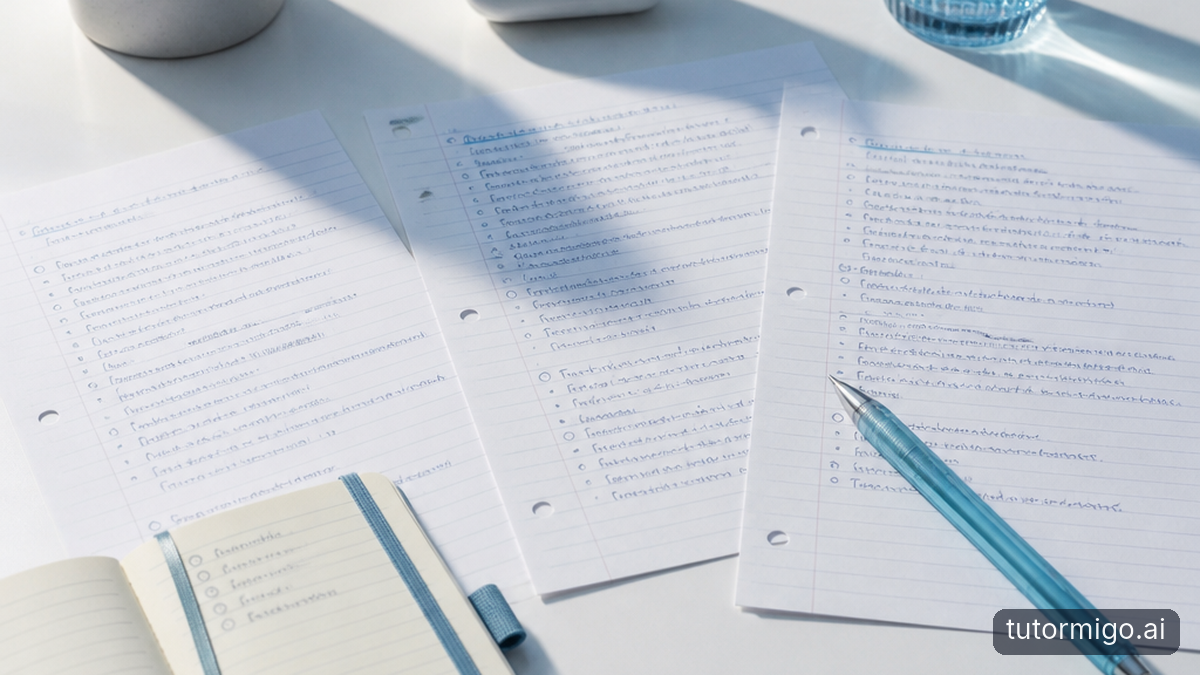
You leave tutoring with three pages of notes, but when you sit down alone, you still don’t know where to start. Use the final five minutes to test one skill without help, name one unresolved difficulty, and choose a small practice task. You need evidence of understanding, not another page to reread.
During a session, your tutor supplies more support than you might notice. They choose the example, ask a useful question, or point toward the line where something went wrong. That help makes learning possible, but following it successfully doesn’t tell you exactly what you can do independently.
Instead of squeezing in one more explanation, agree to focus on the final five as a handover. You take more control while your tutor watches what happens. The aim isn’t to prove that you’ve mastered everything. It’s to find a sensible starting point for studying alone.
You can suggest this before the session begins: “Could we save five minutes for me to try something without hints and decide what to practise?” That makes the ending part of the session rather than a rushed extra. Divide the time loosely: two minutes to try, one to identify the difficulty, and two to agree on your next action.
Check What You Can Do Without Your Tutor’s Hints

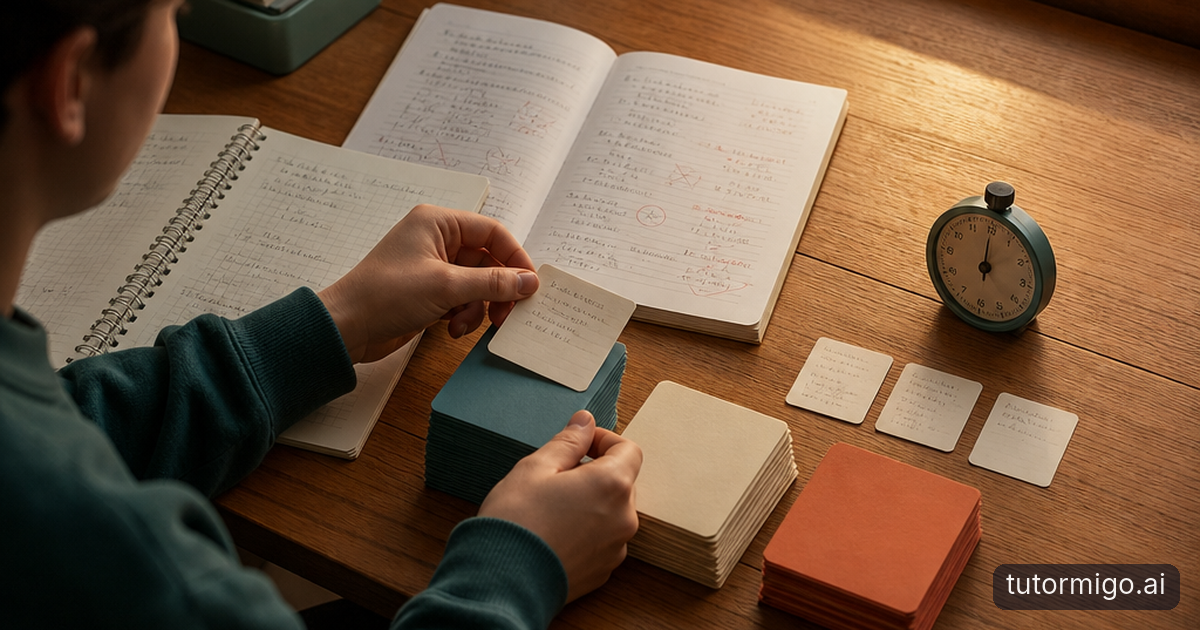
Choose a short task that uses the skill you just studied, but isn’t an exact copy of the example in your notes. Close the worked solution and ask your tutor to hold back prompts until you finish or deliberately ask for help. Keep the task narrow enough to reveal something within a couple of minutes.
If you’ve been solving equations, try one with different numbers but the same structure. If time is too short for a complete solution, write the first two steps and explain why each is allowed. “I’d start by doing something to both sides” is less informative than naming the operation and carrying it out.
Notice what actually happens. Can you choose a starting step? Can you continue without checking your tutor’s expression? Can you explain a decision rather than repeat a rule? Getting the answer right matters, but your route there tells you which parts are dependable and which still require support.
If you get stuck, mark the exact line before accepting a hint. Then distinguish the independent attempt from the assisted finish in your recap. “Solved after a reminder to distribute” is useful evidence, not a failure. It tells you what your next practice needs to test instead of letting a successful finish hide the help you needed.
Pinpoint the One Sticking Point You Still Need to Resolve
“I don’t understand equations” is too broad to guide your next study session. Look at the independent attempt and name the smallest meaningful obstacle. Perhaps you knew to remove the brackets but multiplied only the first term. Perhaps you handled the algebra correctly but couldn’t tell whether your answer was reasonable.
Ask yourself: “What was the first decision I couldn’t make or explain?” This keeps you from listing every later mistake as a separate weakness. One early misunderstanding can produce several incorrect lines. Fixing that first decision may remove much of the confusion that follows.
Turn the obstacle into a question your tutor can address directly: “Why does the number outside the brackets multiply both terms?” is more useful than “Can you explain it again?” After the explanation, try one fresh step yourself. If you still need prompting, record that honestly rather than marking the issue resolved because the explanation sounded clear.
You may notice several gaps. Choose the one that blocks the next task, and park the others in a short note. Prioritizing doesn’t mean those questions don’t matter. It means you leave with a workable order instead of treating every uncertainty as equally urgent tonight.
Choose Your Next Practice Task and Set a Realistic Stopping Point
Your next action should be specific enough that you won’t need to make another study plan before starting. Replace “review algebra” with “after dinner tomorrow, solve three equations with brackets, keeping the worked example covered.” Identify the actual questions before you leave, whether they come from your existing worksheet or examples your tutor selects.
Match the task to the sticking point. If distributing is uncertain, a few carefully chosen equations are more useful than a long mixed worksheet that introduces several other difficulties. Include an opportunity to explain the troublesome step, not just produce an answer. You want to know whether the reasoning holds up independently.
Set both a workload and a time boundary: three questions or ten minutes, whichever comes first. That limit is a practical starting point, not a guarantee of mastery. If all three are correct and you can explain the key step, stop and save a fresh question for another day.
Also decide what happens if you get stuck. Try the step, mark the blockage, then consult one relevant example and retry with the notes closed. If the same issue remains, bring that attempt to your next session. On a difficult day, a five-minute version of your study task can preserve the priority without expanding the workload.
An Equation-Solving Recap: Understood, Needs Work, Next Action
Suppose you and your tutor have practised equations with brackets. During your independent check, you attempt . You write , then pause. Your tutor reminds you that the outside factor applies to both terms. You correct the line to and finish with .
Understood: “Once the brackets are expanded correctly, I can subtract the same amount from both sides and then divide to isolate the unknown.” This claim matches the part you completed independently. It doesn’t turn one prompted solution into a claim that you can solve every equation with brackets.
Needs work: “I don’t yet distribute reliably without a reminder. I need to explain why both terms inside the brackets are multiplied.” That identifies the gap more precisely than “careless mistake,” which describes the outcome without giving you anything concrete to practice.
Next action: “Tomorrow after dinner, I’ll attempt , , and , with my notes covered. I’ll explain each expansion and check my answers by substitution. I’ll stop after three questions or ten minutes and save any blocked attempt.”
The recap separates demonstrated understanding from supported performance. It also gives tomorrow’s practice a purpose: finding out whether the reminder is still necessary.
Your End-of-Session Checklist: Clear Priorities and a Manageable Study Plan
Before you pack up, read your recap back to your tutor. This is your chance to catch a mismatch between what you think you should practise and what the session actually revealed. If your plan says “mixed revision” but your independent attempt exposed one specific difficulty, narrow the task before leaving.
Keep the recap somewhere you’ll see it when you study, rather than burying it halfway through your notes. A short note at the top of the worksheet is enough. You should be able to open your materials, find the first question, and begin without reconstructing the whole tutoring conversation.
Use this checklist to confirm that the plan is ready to follow. Each item should point to something concrete, not simply a feeling that the session went well.
I tried a short task without hints.
I recorded what I could do independently.
I named one unresolved sticking point.
I chose the exact questions to attempt next.
I set a start time and stopping point.
I know what to save if I get stuck.
If an item is missing, ask for it directly: “Which three questions should I try?” or “What should I do if that step still doesn’t make sense?” You don’t need certainty about everything. You need one clear priority and a manageable way to test it.
If you want somewhere to continue the conversation between sessions, TutorMigo.ai offers a personal tutor workspace with chat and session history.
Frequently asked questions
Make choosing the first step your independent check. Cover the example, name the operation you would use, and explain why. If you need a prompt, record that starting decision as your sticking point.
Write down the remaining questions, but prioritise the one blocking your next practice task. Trying to resolve everything can leave you without time to check understanding or agree on a realistic plan.
Stop at the agreed boundary and save your attempt. Note where you stopped, what you tried, and whether you used help. That gives your next session a useful starting point without turning a short task into an open-ended struggle.
Enjoyed this read?
Like, share, or comment below.


Comments
0Sign in required · respectful discussion · replies supported
Loading comments…