


Brief check-ins help working parents give tutoring a clear purpose
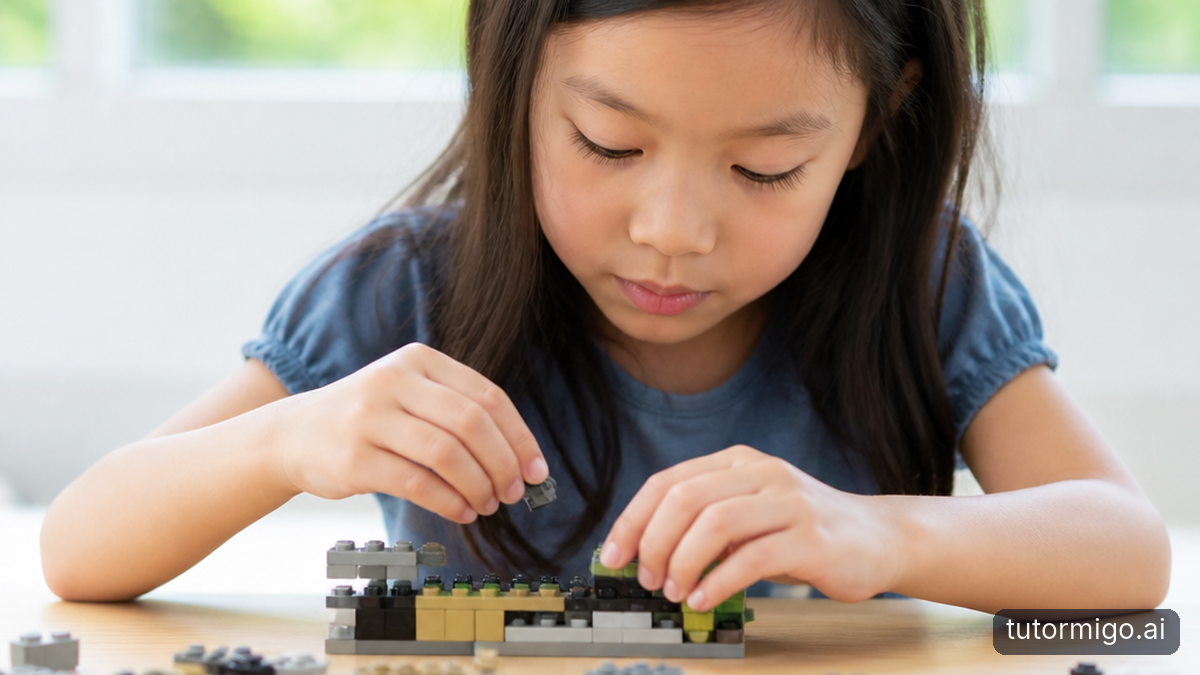
A useful check-in can take three minutes. Ask what your child needs to finish, what they already understand, and where they feel stuck. Keep the goal specific: “Explain how to find equivalent fractions” is more useful than “Get better at math.” A small target makes it easier to choose the right help and recognize whether that help worked.
In the TutorMigo.ai AI Tutor Workspace, your child can use personalized tutoring chat to work on that target. For example, they could ask for a hint about comparing fractions, explain their current thinking, and request a simpler explanation of the confusing step. Encourage them to attempt the problem before asking for a complete solution. Our guide to getting unstuck with hints rather than answers offers a useful starting point for that habit.
Session history gives you and your child something concrete to revisit together. Before the next study period, look back at the earlier explanation and identify the unfinished question rather than reconstructing the whole evening from memory. Ask your child to explain one idea in their own words afterward. Among the practical TutorMigo benefits is this combination of personalized help and a record you can return to. Your role remains important: you help set the purpose and check whether the explanation actually made sense.
Match flashcards and interactive tools to the homework
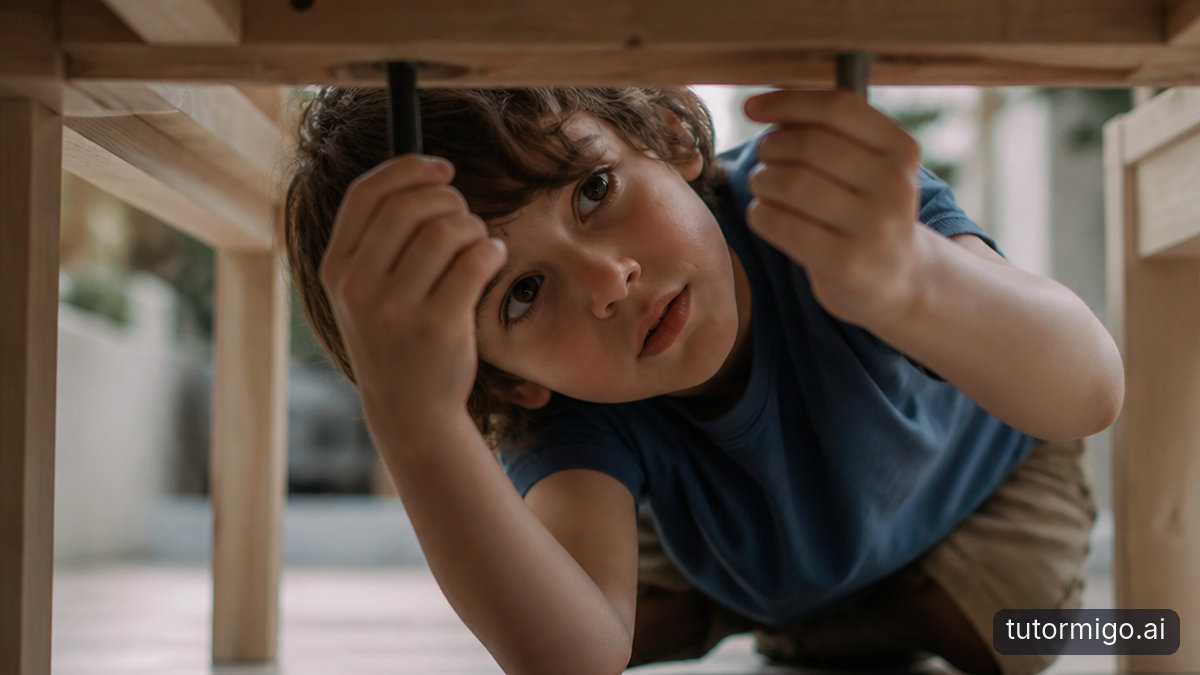
Different homework problems need different kinds of practice. If your child understands a science concept but keeps forgetting the vocabulary, spaced-repetition flashcards are a sensible fit. TutorMigo.ai offers flashcard decks with AI-assisted card creation and review scheduling. You can help your child check that a card matches their class material, then leave the scheduled reviews to guide short practice sessions rather than planning a new quiz yourself every evening.
Keep cards focused. For a lesson about plants, one card might ask what roots do, while another asks how leaves help a plant. Have your child answer before revealing the response, then explain an example aloud. A correct guess is less useful than a confident explanation. This introduction to active recall when studying does not seem to stick explains why retrieving an answer matters more than repeatedly reading it.
When the difficulty is understanding a process, choose an interactive tool instead. Your child could use the whiteboard to sketch equal parts of a rectangle or the math step editor to lay out a calculation. For coding homework, the code sandbox provides a place to work with code. You do not need to master every tool. Ask, “Can you show me what changed?” A visible attempt gives you a better conversation starter than a finished answer alone.
Use progress visibility to start better conversations
You cannot watch every study session, and you should not have to. The TutorMigo.ai Parent Dashboard provides visibility into your child’s progress, alongside learning controls and co-learning features. Use that visibility as a starting point for questions, not as a verdict on effort or ability. A progress view can help you decide where to look more closely; it cannot tell you everything about a tiring school day.
Suppose your child says homework is going well, but a shared review leaves you wondering whether a topic is secure. Open the relevant work together and ask them to explain one example without following the earlier response. If they can describe the reasoning but stumble on a definition, brief flashcard practice may help. If they cannot explain the first step, return to tutoring for a clearer explanation instead of assigning more of the same work.
Look for patterns across your conversations and the progress information available to you. Does the same difficulty keep returning? Is your child avoiding a particular task? Choose one response together: a shorter practice session, a different representation, or a question for their teacher. Avoid turning every review into an interrogation. “What support would make this easier?” keeps the focus on learning and makes it safer for your child to admit when something has not clicked.
Understand the practical difference from a general chatbot
A general-purpose chatbot can explain a concept, suggest practice questions, or help a child think through a problem. Some also provide conversation history and other learning-friendly tools. The useful comparison is not whether only one product can tutor. It is how much setup and coordination you need to create a manageable study routine, and whether the available tools fit your child’s actual homework.
With TutorMigo.ai, personalized tutoring and session history sit alongside dedicated spaced-repetition flashcards, interactive study tools, and parent progress visibility. Think about a science assignment: your child might discuss a confusing explanation in tutoring, practice key terms with flashcards, and show you their understanding during a shared review. With a general-purpose chatbot, you may need to arrange parts of that routine separately, depending on the tool and its features.
An AI Tutor should still be treated as a source of learning support, not an unquestionable authority. Check important explanations against class materials, especially when the wording or method differs from the teacher’s instructions. Ask your child to show their reasoning rather than accept polished output as proof of understanding. Whatever tool you choose, your involvement supplies something essential: knowledge of your child’s confidence, circumstances, and readiness to keep going.
Start a manageable routine, then review it together
Start with a routine small enough to survive a busy weekday. Choose a dependable cue, such as finishing an afternoon snack, rather than an ambitious schedule that collapses when work runs late. Agree on a brief opening check-in, a focused period of independent study, and a quick closing conversation. If you are unavailable at the start, your child can note their goal and the question they want to discuss later.
During the opening check-in, choose one priority and the support it needs. That might mean personalized tutoring for an unfamiliar method, a whiteboard sketch for a confusing idea, or scheduled flashcard review for material already learned. At the end, ask your child to teach you one thing and name one question that remains. You are checking for understanding, not demanding a perfect performance after a long day.
Set aside a short weekly review to look at progress together and revisit useful session history. Celebrate something specific, such as asking for a hint before giving up. Then change just one part of the routine if needed. Perhaps the study period needs to start earlier, or the next tutoring session needs a narrower goal. Start tonight with one question: “What would help you get going?” A manageable routine grows from that conversation, not from finding extra hours you do not have.
Frequently asked questions
Start with a few minutes before and after study time. Focus on the goal, one explanation, and any remaining confusion rather than checking every answer.
No. It can support explanations and practice, while you provide encouragement, context, and help deciding when a difficulty needs attention from the teacher.
Ask your child to explain what they tried and where they became stuck. Help them frame a tutoring question, then check the explanation against class materials together.
Review one concrete example together. Identify whether the problem is remembering information, understanding a method, or getting started, then choose one small adjustment.
Related reading
Enjoyed this read?
Like, share, or comment below.



Comments
0Sign in required · respectful discussion · replies supported
Loading comments…