


Make screen time engaging—not endless

Games often make the next action obvious. Your child knows the goal, gets feedback quickly, and can try again after a mistake. Progress is visible, and the challenge may feel achievable even when it takes several attempts. Compare that with “Go and study science,” which offers neither a clear starting point nor a clear finish.
Traditional study can also become passive. Rereading a page feels familiar, but familiarity is not the same as being able to explain it later. A child may spend twenty minutes looking at notes without discovering what they can retrieve from memory. That makes studying feel both dull and strangely unrewarding.
Educational games and simple gamified activities can encourage participation by supplying a small goal and immediate feedback. For example, ask your child to explain five vocabulary words before turning over the answers, then revisit the tricky ones. A cooperative challenge—“Let’s find which two need another practice”—keeps mistakes useful rather than embarrassing.
Choose activities where success depends on the knowledge you want remembered. If your child can win by tapping quickly or guessing repeatedly, the activity may offer little retrieval practice. Keep scores optional, avoid punishing wrong answers, and stop at the agreed endpoint. Borrow the clear goals and helpful feedback, not the pressure to keep playing indefinitely.
Build a small deck that makes your child think
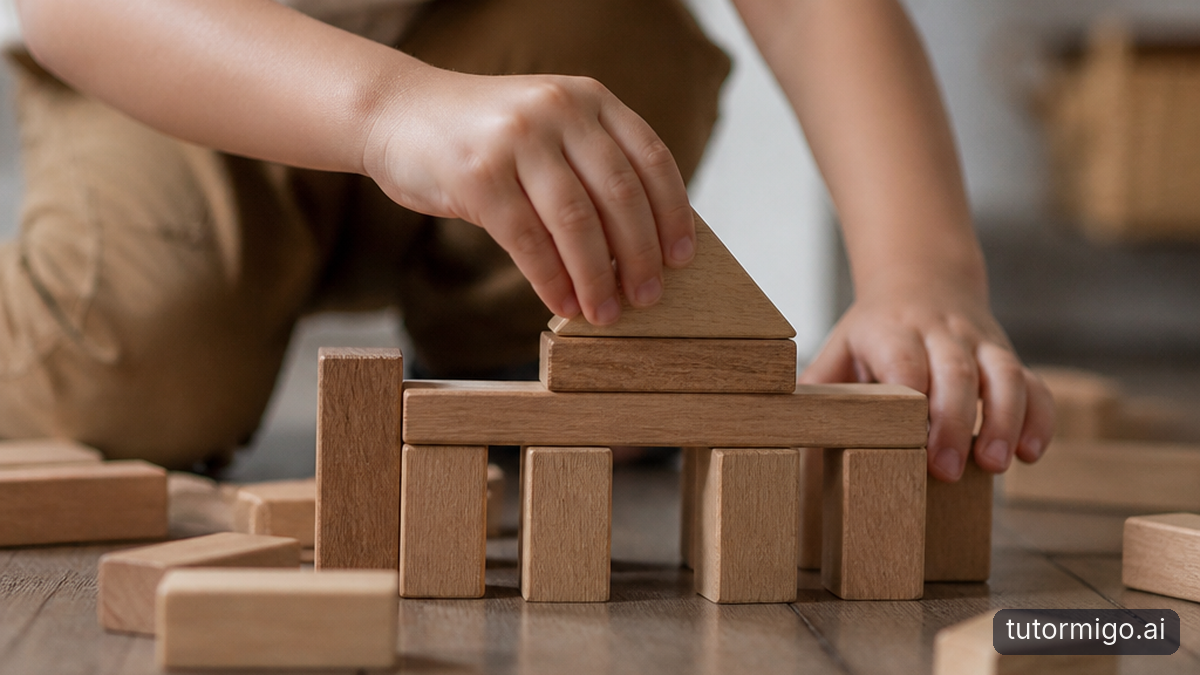
Start with one topic from current schoolwork, not an enormous deck covering everything your child has ever learned. Eight to twelve focused cards might cover the vocabulary from a recent reading assignment or the key ideas in a science lesson. Let your child choose the topic that would make tomorrow’s work feel easier.
Each card should ask for one manageable response. “Explain everything about plants” is too broad. “What is the main job of a plant’s roots?” gives your child a specific retrieval task. Keep the answer short enough to check accurately, then ask for an explanation aloud when deeper understanding matters.
TutorMigo.ai’s flashcards support spaced-repetition decks, AI-assisted card creation, and review scheduling. You and your child can use assisted creation as a starting point, then check every card against class materials. Remove duplicates, correct unclear wording, and split cards that demand several unrelated facts.
A useful flashcards study habit is to answer before revealing the back, even when the answer feels just out of reach. After checking, your child should be honest about whether they remembered it independently. If they only recognized the answer once it appeared, it still needs practice. For broader context, see why effort does not always translate into remembered learning.
Space reviews instead of stretching screen sessions
One successful review does not mean a fact will stay available indefinitely. Spaced repetition brings material back across separate sessions, giving your child more chances to retrieve it after a delay. The aim is stronger recall over time, not an impressive streak or a longer session.
For example, your child could begin with a brief review after their afternoon snack, answer the cards due, and stop when the agreed window ends. On another day, they return to the scheduled review rather than rebuilding the whole deck or rereading everything. TutorMigo.ai’s review scheduling can support this routine without making you responsible for remembering every card’s next appearance.
Keep the workload manageable. If reviews regularly run beyond the planned time, reduce new cards before adding more. A growing backlog can turn a helpful habit into another source of conflict. Your child should have enough attention left to think about answers, not rush through them to reach the game afterward.
Check retention away from the cards occasionally. Over breakfast, ask your child to explain one idea from yesterday in their own words. A correct answer with a useful example tells you more than the number of cards opened. For more on the approach, explore smarter flashcard review and adaptive learning.
Use tutoring to repair gaps, then return to recall
A missed card sometimes signals more than forgetting: your child may never have understood the idea. Repeating the same answer will not necessarily fix that. If they keep confusing evaporation and condensation, pause the deck and work through an everyday example, such as a puddle drying or droplets forming on a cold glass.
In TutorMigo.ai’s personalized tutoring workspace, your child can ask an AI Tutor to explain the distinction, offer another example, or question them about their reasoning. Give the conversation a focused purpose: “Help me understand this, then ask me to explain it without looking.” Check important explanations against the materials their teacher provided.
Interactive tools can make that explanation more active. Your child might use the whiteboard to sketch the two processes and talk through what changes. The point is not to add another screen activity; it is to make their thinking visible before returning to a short recall question. TutorMigo.ai supports learning activities like these, but it is not a gaming platform.
Session history also gives you a practical way to review learning together. Ask your child to show you one question they worked through and explain what changed. An AI Tutor conversation becomes more useful when your child can carry the understanding into a new example, rather than simply show you a polished answer.
Choose one activity and agree on a realistic boundary
Build the schedule with your child, including the parts that matter to them. If they play with friends at a predictable time, account for that rather than starting revision just as the group gathers. An example evening might include a snack, necessary homework, ten minutes of flashcard review, an agreed gaming window, and an offline wind-down. Adjust it to your household rather than treating those timings as a universal rule.
Agree on the stopping point before play begins. When possible, choose a point that respects how the game works, such as finishing the current match within the agreed window. Keep devices away from the bedtime routine if they are disrupting sleep. Learning on a screen still counts as screen use; it does not replace movement, conversation, or rest.
For your next step, choose just one educational activity together: a small recall-based game, a focused flashcard deck, or a short tutoring conversation followed by independent explanation. Name the learning goal and decide when you will stop. Avoid introducing all three at once.
After a week, review a few cards and, if used, a tutoring session together. Ask: Can your child explain more without prompts? Is starting easier? Is recreation still enjoyable, with offline time protected? Keep what helps and simplify what causes friction. The goal is a sustainable balance—not proving that every minute of gaming is harmful.
Frequently asked questions
No. Keep room for recreation while addressing specific problems such as delayed homework or lost sleep. Educational activities work best as focused learning sessions, not as a replacement for every enjoyable game.
Try eight to twelve focused cards on one current topic. Add more only when the review routine feels manageable, and prioritize clear questions over deck size.
TutorMigo.ai provides personalized AI tutoring, session history, spaced-repetition flashcards, and interactive study tools. These support active learning; they should not be described as games.
Review a few cards and relevant tutoring history together. Ask your child to explain an idea without looking, then try a new example. Look for independent recall rather than screen time alone.
Related reading
Enjoyed this read?
Like, share, or comment below.



Comments
0Sign in required · respectful discussion · replies supported
Loading comments…