


1. Set a homework help routine and 2. Break tasks into chunks

You sit down to help, explain the instructions twice, and somehow homework still ends in tears. You do not need better answers to hand over. You need a calmer process: a predictable routine, smaller tasks, timely breaks, guiding questions, useful hints, spaced flashcard reviews, and a way to notice progress together.
Start with a routine your child can recognize. Choose a workable time, gather the materials, and agree on the first task before opening every book. Some children need food and movement after school; others prefer to begin while the lesson is fresh. Aim for consistency, not a timetable that creates another argument.
Give retrieval a small, predictable place in that routine. Before starting the assignment, ask your child to explain one idea from the previous lesson without looking. If they cannot remember, briefly revisit it together. Treat that forgotten detail as useful information, not evidence that yesterday's effort was wasted.
Next, shrink the assignment into visible pieces. “Finish your science homework” can feel endless. “Read this paragraph, explain the main idea, then answer the first question” gives your child a clear starting point. Cover the rest of the page if seeing everything at once makes it harder to begin.
Let your child choose between two sensible starting tasks. After each chunk, check what helped: reading aloud, drawing a quick sketch, or recalling an example. Keep a scrap of paper for concepts worth reviewing later. That turns homework into a source for a small, useful flashcard deck rather than a race to fill every blank.
3. Pause before frustration takes over
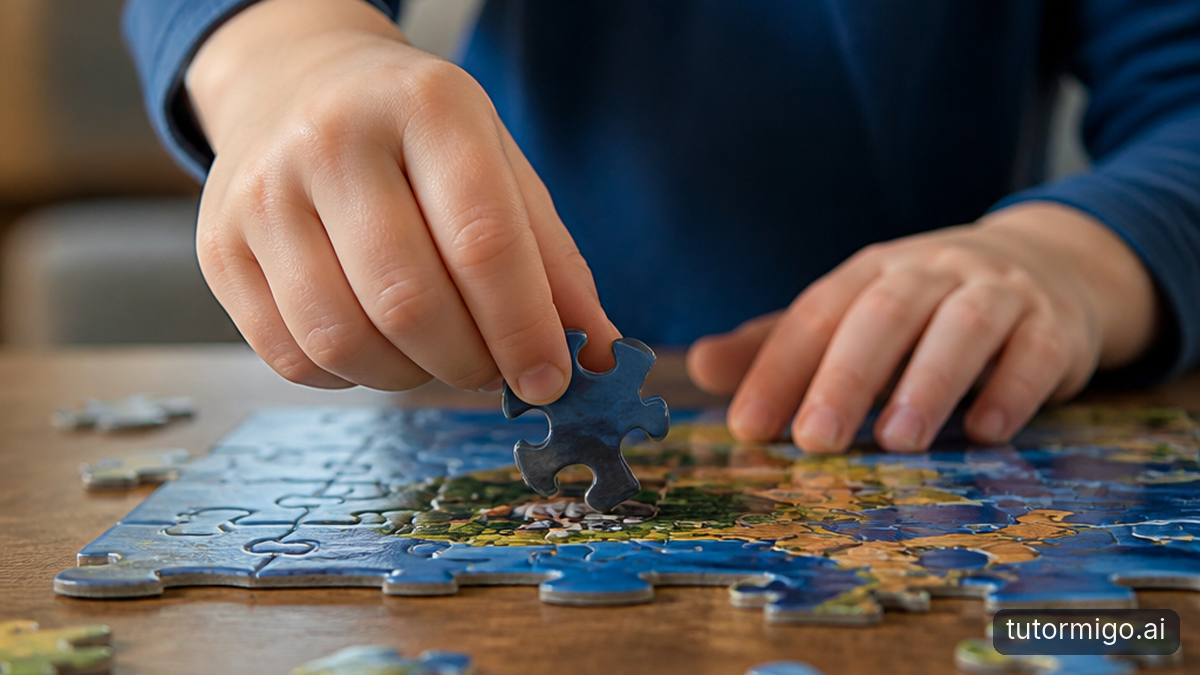
Intervene when your child stops making meaningful attempts, repeatedly misreads a familiar instruction, or becomes too upset to explain what feels difficult. One wrong answer is not a reason to step in. A child testing an approach, noticing a mistake, and trying again may still be learning productively.
Try a neutral observation: “You have read that sentence a few times. Is the instruction unclear, or is the idea hard to remember?” The answer helps you distinguish a confusing task from a missing concept. If your child cannot talk about either without escalating, pause the work before offering another explanation.
Agree on what the pause means. For example, take a short water-and-movement break, with a clear return time. Avoid turning it into a reward that feels impossible to leave. Before standing up, mark the stopping point and write a restart note: “Next: explain why the plant needs sunlight.” A specific cue makes returning easier.
When you resume, begin with a small success rather than the entire unfinished page. Ask your child to recall one thing they already understand, then tackle the marked step together. If exhaustion or distress continues, note what was attempted and what remains unclear, and contact the teacher about unfinished work. Protecting the possibility of learning tomorrow matters more than forcing empty completion tonight.
4. Ask guiding questions and 5. Offer one hint at a time
Helping without taking over means leaving the thinking with your child. Start with questions that reveal their understanding: “What is this asking you to find?” “What do you already know?” “Which example from class looks similar?” Ask one question, then wait. Filling every silence can accidentally teach your child to wait for your answer.
Suppose your child cannot explain evaporation. Instead of supplying a polished definition, ask what happened to a puddle after a sunny afternoon. Invite them to connect that observation to the lesson. If they remember only part of it, acknowledge that part and ask what still needs explaining. This is active recall: bringing an idea to mind before checking a source.
When questions are not enough, offer a hint that moves the work forward by one step. Point to a relevant diagram, identify the first decision, or work through a different example. Then return the original task to your child. A useful check is whether they can explain why the next step makes sense, rather than merely copy it.
In TutorMigo.ai, personalized tutoring chat can support this approach. Ask the AI Tutor to give one hint at a time, wait for an attempt, and ask your child to explain their reasoning. Keep the request focused on understanding rather than a finished response. If the explanation does not match the class method, compare it with the teacher's example. Afterward, have your child close the chat and explain the idea independently; that shows what is ready to practise and what still needs support.
6. Build a small deck and space out review
Homework shows you what to put on flashcards, but not every homework question belongs in a deck. Choose a few ideas your child needs to remember: a science process, a vocabulary meaning, or the reason a particular method works. A short flashcards study routine is more manageable when each card tests one clear idea.
Build cards together using your child's own words. Instead of putting a whole paragraph on the front, ask, “What happens during evaporation?” Keep the answer brief enough to check, while including the essential meaning. If your child gives an incomplete answer, identify the missing piece rather than demanding an exact match to the wording.
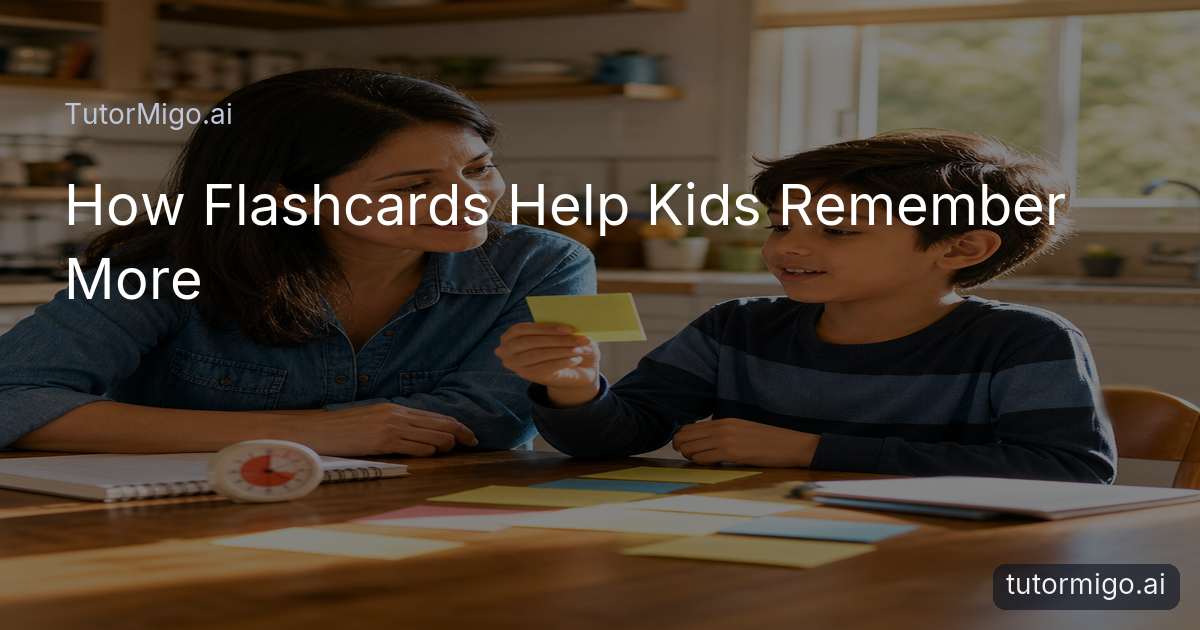
During review, show the prompt and wait for an answer before revealing the back. Reading both sides immediately feels familiar, but it skips the retrieval practice. Let your child say the answer aloud, sketch it, or explain it with an example. Then check and correct it. If a card is consistently confusing, rewrite it; a vague prompt is not a fair memory test.
Space reviews across different days instead of repeating every card until it feels effortless tonight. Revisit uncertain ideas sooner and leave more time between successful recalls. TutorMigo.ai's flashcards support spaced-repetition decks, AI-assisted card creation, and review scheduling. Check any assisted cards against the lesson before studying them. For a sustainable routine, these flashcard habits that help kids study independently offer a useful next step. Keep adding selectively so the deck remains a helpful review tool, not another overwhelming assignment.
7. Track progress together, then plan the next session
Track what your child can explain, not just how many answers are finished. At the end of homework, ask for one idea they understand better and one they want to revisit. A simple note might read: “Explained evaporation without help; still mixing up the next stage.” That gives tomorrow's review a clear purpose.
Compare today's recall with an earlier attempt. Did your child need fewer hints? Could they explain the idea after closing their notes? Could they use it in a different example? These are more useful signs of progress than a single smooth evening. Expect some forgetting between reviews; the important question is whether your child can retrieve and rebuild the knowledge with practice.
If your child uses the AI Tutor, review the session history together to revisit explanations and identify recurring sticking points. This gives you visibility into the tutoring conversation without making you the person who supplies every answer. Ask your child to choose one useful explanation and turn its central idea into a flashcard. Session history is a record to discuss, not proof that every concept has been mastered.
At the next homework session, keep the plan simple: start at your agreed time, review a few relevant cards, and choose one small task. Use a question before a hint, pause if frustration blocks thinking, and leave a restart note for unfinished work. Finish by naming one genuine improvement together. Your goal is not a perfect page or effortless recall; it is a child who increasingly knows how to get started, ask for help, and remember what they learn.
Frequently asked questions
Step in when your child cannot make a meaningful attempt, cannot understand the instructions, or becomes too upset to think. Start by asking what feels difficult rather than correcting the answer immediately.
Ask your child to explain the task and what they already know. Offer one question or hint, then let them attempt the next step. Check understanding with an explanation in their own words.
Mark the stopping point and leave a specific next-step note. After a break, recall one familiar idea before returning to that step. If distress continues, communicate what remains unfinished to the teacher.
No. Space reviews across days, revisiting uncertain material sooner and remembered material less frequently. Keep the deck focused on useful concepts, and attempt each answer before checking the back.
Enjoyed this read?
Like, share, or comment below.


Comments
0Sign in required · respectful discussion · replies supported
Loading comments…