


How can children work through a difficult concept?
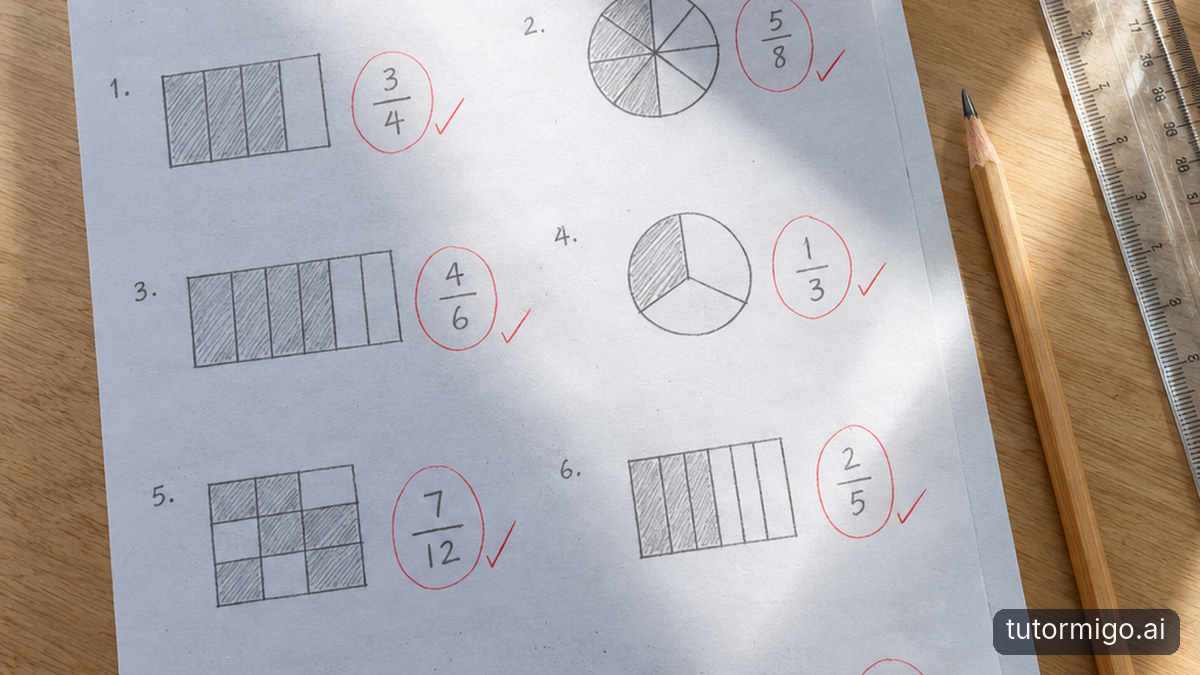
Start with the point of confusion, not the whole assignment. A child who says “I don’t understand fractions” might actually be unsure why equivalent fractions describe the same amount. In the AI Tutor Workspace, they can ask for an explanation focused on that question, then request a smaller step or another example. Personalised tutoring becomes more useful when your child describes what they understand and where the explanation stops making sense.
For example, encourage them to ask: “I can follow this worked example, but I don’t understand why the denominator changes. Explain that part, then let me try.” Stay nearby for the first attempt. If the response is confusing, help your child ask a clearer question rather than accepting the explanation just because it sounds confident. Check it against the method used in class.
The Study Tools Hub adds places to work actively, including a whiteboard and math step editor. Your child might sketch equal parts or work through a calculation instead of only reading a response. Use a tool when it helps reveal their thinking, not simply because it is available.
Session history also offers a reference point for later practice. You can reopen an earlier conversation, find the sticking point and ask your child to explain it again. An AI Tutor can support that process, but the useful check is whether your child can attempt a similar task independently. Our guide to AI tutoring and the role of human tutors explores where adult judgement still matters.
How can flashcards make review more useful?
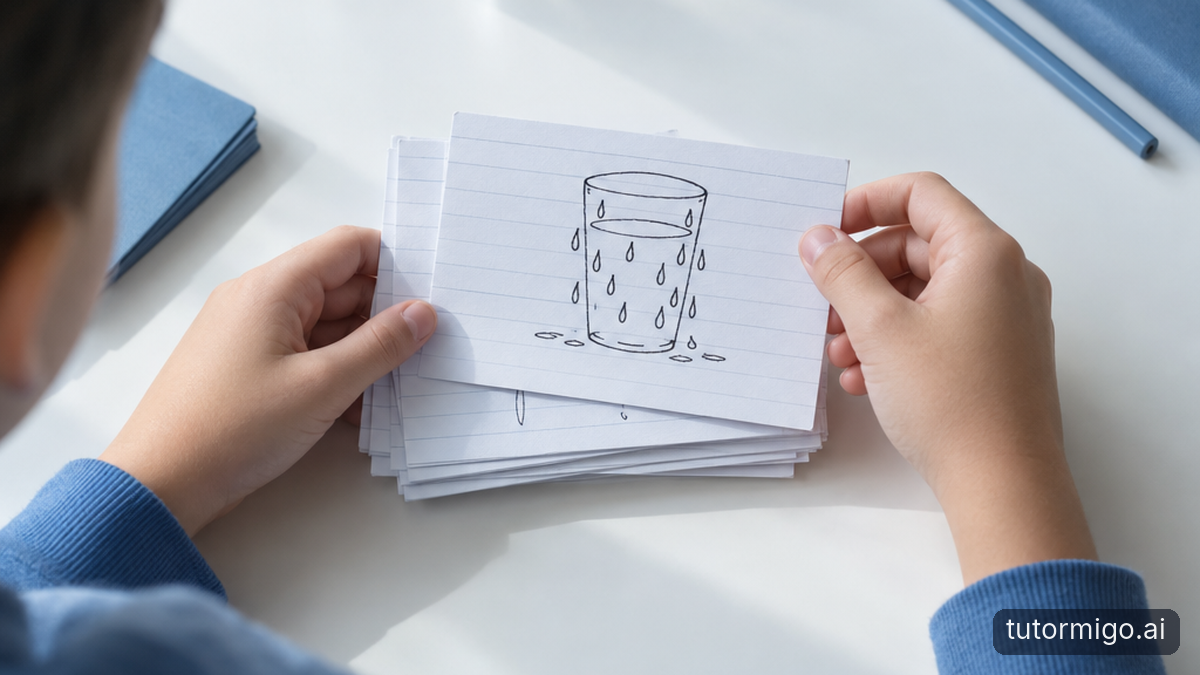
Understanding an explanation today does not guarantee remembering it later. TutorMigo.ai’s flashcards provide spaced-repetition decks, AI-assisted card creation and review scheduling. These features can help turn a homework discovery into something your child revisits, rather than leaving it buried in a conversation. Keep the first deck small and tied to what they are currently learning.
Suppose your child has mixed up evaporation and condensation during science homework. Make separate cards asking what each process means, then add a familiar situation: “Why do droplets appear on the outside of a cold glass?” That final question checks whether they can apply the distinction. Review AI-assisted cards together for accuracy, clear wording and agreement with the classroom material before relying on them.
Ask your child to answer before revealing the other side. If they recognise the answer only after seeing it, invite them to explain it aloud and return to the underlying concept. A card should prompt remembering or reasoning, not become a sentence they can repeat without understanding. For a longer explanation, return to tutoring or a worked example rather than squeezing everything onto one card.
Let review scheduling support a manageable routine instead of building an enormous deck in one evening. After a short review, ask which answer needed the most thought. That gives you a useful starting point for the next conversation. Flashcards complement practice; they do not replace solving problems, writing explanations or applying an idea in a new situation.
How can parents use progress visibility to help?
The Parent Dashboard provides visibility into your child’s progress, alongside learning controls and co-learning features. Treat that visibility as a starting point for conversation, not a verdict on effort or ability. The practical question is not simply “Did you study?” but “What can you now do, and where would another kind of support help?”
Imagine your child has been returning to the same maths topic. Look at the available progress information together, then ask them to show one example that now feels manageable and one that still feels uncertain. You might discover that they understand the method but struggle with the wording of questions. That calls for different practice from repeating the calculation again.
Agree on a small response to what you notice. Your child could ask for a simpler explanation, revisit a flashcard deck or bring a specific question to the teacher. Avoid promising that any single indicator proves mastery. A short, independent attempt and your child’s explanation add context that progress information alone cannot provide.
Among the most useful TutorMigo benefits is the chance to make support more focused: less guessing about what happened during homework, and more discussion about the next useful task. Keep that discussion calm and predictable. You could review learning together after a few sessions rather than interrupting every attempt. If homework takes a long time without clearer understanding, this guide to studying hard without seeing results offers further questions to explore with your child.
How might teachers shape follow-up practice?
As a teacher, you can help families use tutoring more purposefully by defining a narrow learning goal. Instead of suggesting “more practice with fractions,” identify the misunderstanding: explaining why two fractions are equivalent, for example. A parent can then help the child take that question into tutoring without having to recreate your whole lesson at home.
Give the child a simple prompt to use: “Explain this idea using the method we used in class. Ask me to explain my reasoning before showing another example.” The AI Tutor can become part of follow-up practice, while your classroom expectations remain the reference point. Children should check unfamiliar terminology or a different method with you rather than assume it must replace what they have learned.
Ask for evidence the child can bring back themselves. That might be a fresh worked problem, a short explanation written without assistance or a note naming the step they still cannot explain. This approach does not depend on a teacher dashboard or automatic access to tutoring activity. You are reviewing the child’s understanding, not treating a polished AI response as their own work.
A general-purpose chatbot may also explain concepts or suggest practice. The practical distinction here is the combination of a dedicated tutoring workspace with session history, scheduled flashcard review, interactive study tools and parent visibility. Those features can support a routine, but they do not remove the need for a clear task. Keep the follow-up brief enough that you can use what the child brings back to guide your next teaching decision.
What should you try together next?
Choose one real learning task for your first session, not a broad goal such as “get better at science.” Pick something your child already knows is difficult: explaining condensation, understanding equivalent fractions or recalling a few subject terms. Agree that the aim is to leave with one clearer idea, not to finish as much homework as possible.
First, hear your child’s starting explanation. Ask what they think the answer is and where they become unsure. Write down the question in their own words. Then use the tutoring workspace to explore that specific gap. Encourage your child to request a hint or another explanation before asking for a complete solution, and keep their class materials nearby for checking.
Next, let them try without the explanation visible. Choose a similar question or ask them to explain the idea aloud. If remembering a fact is the main difficulty, create a small flashcard deck and check the cards together. If the difficulty is reasoning, spend the remaining time on another example rather than adding more cards.
Finally, review the experience together. Ask what helped, what felt confusing and what they could now attempt alone. Parents can use the available progress visibility as part of that discussion; teachers can review the independent work the child shares. Decide on just one next action: revisit the idea, complete a scheduled review or ask the teacher a precise question. Start with that small cycle and judge the experience by clearer understanding, not simply by a completed page.
Frequently asked questions
No. Start with one familiar homework question, stay involved and ask your child to explain what they learned. Check uncertain explanations against class materials or with the teacher.
The Parent Dashboard provides visibility into child progress, learning controls and co-learning features. Combine that information with a conversation and an independent attempt at the task.
Set a specific learning goal and ask the child to bring back an independent example or explanation. This approach does not require access to the child’s tutoring sessions.
No. Flashcards suit focused recall and short application questions. Longer reasoning tasks still need worked practice, explanations and opportunities to apply the idea independently.
Explore TutorMigo
Enjoyed this read?
Like, share, or comment below.



Comments
0Sign in required · respectful discussion · replies supported
Loading comments…