


Build a continuous study plan with ai tutoring

Studying independently can feel harder than the lesson itself. You may understand one example, forget what confused you yesterday, and spend the next session deciding where to begin. TutorMigo helps make that process more continuous. Instead of starting from scratch each time, you can return to your tutor workspace, review the conversation history, and continue working from the point where you stopped.
That continuity matters when a topic takes several attempts. For example, if you are learning quadratic equations, you might first ask for a worked example, then return later to solve a similar problem yourself. The AI Tutor can respond to the question in front of you while the session history gives you a useful record of earlier explanations. You can notice whether the same mistake keeps appearing and ask for a simpler explanation, another example, or a practice question.
The benefit is not having an answer instantly. It is having a dependable place to think through the answer. You remain responsible for trying, checking, and explaining your reasoning, while personalized support helps you keep moving when a textbook paragraph or brief search result is not enough. That balance can make independent study feel structured rather than isolated.
Use interactive tools to learn by doing
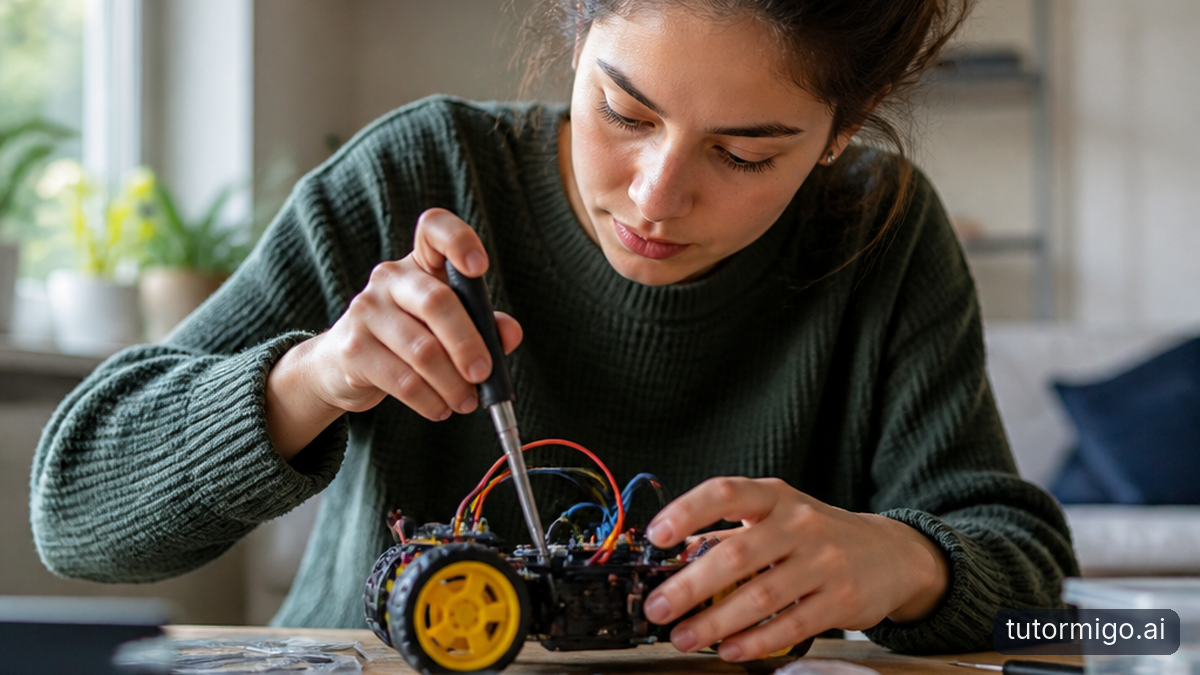
Reading an explanation is useful, but many students understand a concept more clearly when they can work with it. TutorMigo brings several interactive study tools into the learning process, including a whiteboard, a code sandbox, and a math step editor. Each tool supports a different kind of thinking, so you can choose the format that matches the problem instead of forcing every subject into a chat exchange.
Suppose you are debugging a short program. Writing and testing the code in a sandbox can help you see exactly where the result changes. If you are solving an algebra problem, a math step editor gives you a place to work through each stage and inspect the reasoning. On a whiteboard, you can sketch a diagram, organize a process, or map the connections between ideas. Those actions make your thinking visible to you, which is especially helpful when you are studying without someone sitting beside you.
A practical habit is to attempt the task first, then use the tool to check one step at a time. Ask the AI Tutor to explain a specific error or compare two approaches rather than requesting a finished solution immediately. This keeps the tool in a coaching role and helps you build the confidence to handle a similar problem on your own.
Remember more with scheduled flashcard review
Independent learning is not only about understanding something once. You also need a sensible way to return to it before it fades. TutorMigo flashcards use spaced-repetition review scheduling, so your study time can focus on recalling information at useful intervals rather than rereading the same notes every day.
Imagine preparing for a biology unit. After studying cell structures, you could create cards for key terms, functions, and comparisons. You might answer a card about mitochondria today, see it again later, and spend more time on the cards that remain difficult. AI-assisted card creation can help you turn a set of notes into a starting deck, but you should still edit cards that are too vague. A strong card asks one clear question and expects a specific answer.
Flashcards work best when they test memory, not recognition. Instead of writing “What are cell parts?” use a focused prompt such as “What is the main function of the cell membrane?” You can also add an example or a common mistake to make the review more useful. This approach gives you a repeatable routine: learn the idea, test yourself, examine errors, and return to the difficult material. Over time, that routine reduces the need to wait for a teacher, parent, or last-minute study session to remind you what to review.
Prepare for exams with visible progress
Exam preparation becomes less overwhelming when you can separate a large goal into smaller practice decisions. TutorMigo’s structured exam preparation supports SAT, ACT, AP, and IELTS study with practice sets and progress tracking. Rather than judging your readiness by how long you sat at a desk, you can pay attention to the kinds of questions you are practicing and the areas that need another pass.
For example, an ACT student might complete a practice set, notice that time pressure affects reading questions, and plan a shorter review focused on pacing. An IELTS learner might use practice results to identify whether writing structure or listening comprehension deserves more attention. Progress tracking gives you a way to compare your current work with your earlier attempts and choose the next task with more intention.
A useful weekly routine is to set one target for practice, one target for review, and one target for reflection. After a set, write down which question types caused trouble and why. Then use the tutor workspace or a relevant study tool to work through that specific weakness. This is a practical difference between collecting random explanations and following a preparation path. You still need consistent effort, but the record of your work makes that effort easier to direct and adjust.
Keep families and teachers informed without taking over
Independent learning does not mean learning without support. Students often do better when parents and teachers can see enough of the process to offer useful encouragement, while the student still owns the daily work. TutorMigo includes visibility tools for both situations. The parent dashboard can show child progress, learning controls, and co-learning options. The teacher dashboard supports class management, student monitoring, knowledge base assignment, and reporting.
That visibility can lead to better conversations. Instead of asking a student only whether homework is finished, a parent might notice that review is happening regularly but one topic remains difficult. They can suggest a short co-learning session or ask what kind of explanation would help. A teacher can use monitoring and reports to spot a shared gap, assign relevant knowledge resources, and follow up with students who need more guidance.
The goal is not to watch every answer or replace the learner’s judgment. It is to make support more specific. A student can explain, “I keep missing this type of question,” rather than simply saying, “I do not understand.” Parents and teachers gain a clearer starting point, and students get help that connects to actual study behavior. That combination encourages accountability without turning every learning session into supervision.
Build a simple workflow you can repeat
The biggest TutorMigo benefits appear when you use the tools as a connected routine rather than opening a different feature for every new problem. Start with a clear question or goal in the tutor workspace. Work through the idea using the whiteboard, math step editor, or code sandbox when a hands-on format will help. Then turn the key facts or mistakes into flashcards for later review. If an exam is your goal, use practice sets and progress tracking to decide what deserves attention next.
A student preparing for an AP subject might spend twenty minutes clarifying one concept, ten minutes solving related questions, and five minutes creating review cards from the errors. At the end of the week, the student can look at progress and choose whether to repeat the topic or move forward. This is more useful than trying to study everything equally.
Keep the routine small enough to repeat on busy days. One focused question, a few deliberate practice items, and a short review can be more sustainable than an ambitious plan that disappears after two sessions. If you are comparing TutorMigo with a general-purpose generative chatbot, look at the workflow around the answers: session continuity, scheduled recall, interactive practice, structured preparation, and appropriate visibility for supporters. Those details can make independent learning easier to manage. Choose one subject, start one session, and let your next review be guided by what you actually found difficult.
Frequently asked questions
TutorMigo combines personalized tutoring and session history with spaced-repetition flashcards, interactive study tools, structured exam preparation, and progress tracking. Together, these features help you decide what to study, practice actively, and return to material at useful intervals.
A general-purpose chatbot may be useful for individual questions, but TutorMigo connects tutoring with session continuity, scheduled flashcard review, interactive tools, exam practice, and progress tracking. The practical difference is the repeatable learning workflow around each answer.
Yes. The parent dashboard provides visibility into child progress, learning controls, and co-learning features. The teacher dashboard supports class management, student monitoring, knowledge base assignment, and reporting.
Choose one subject and begin with a specific question or study goal. Work through it in the tutor workspace, use an interactive tool when helpful, create flashcards from important points or mistakes, and review your progress before choosing the next task.
Enjoyed this read?
Like, share, or comment below.


Comments
0Sign in required · respectful discussion · replies supported
Loading comments…