


AI Privacy: Personalize Learning, Not Your Identity
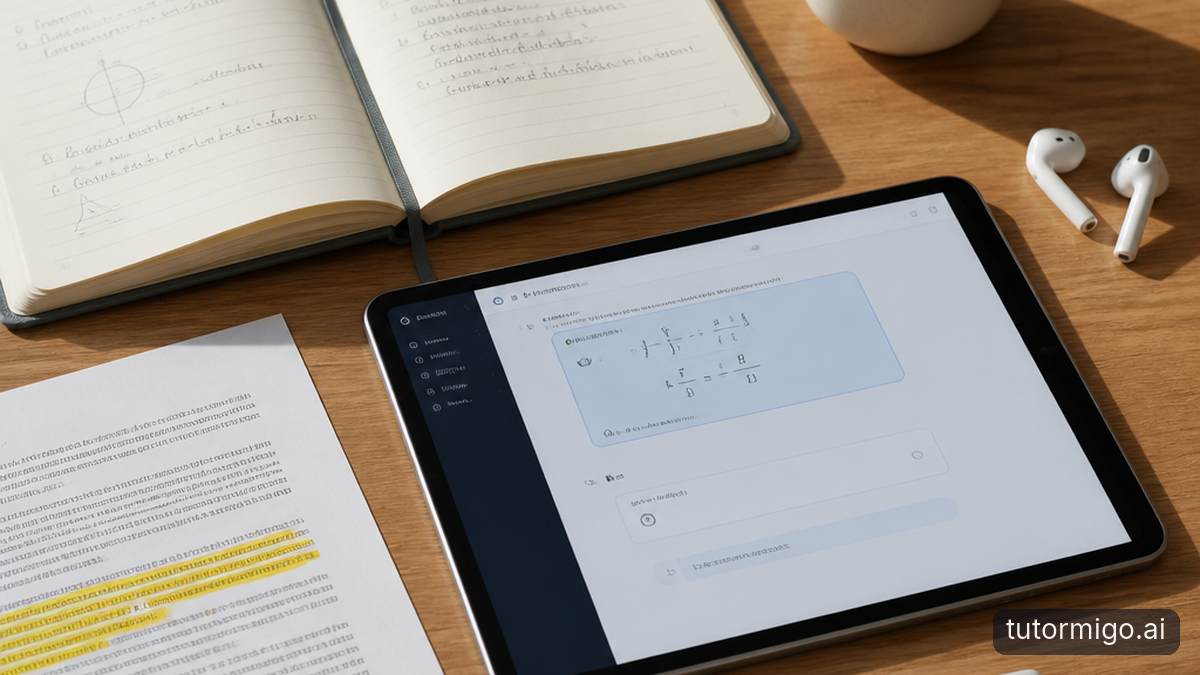
Useful personalization usually starts with learning information: what you understand, where you got stuck, and which explanation helped. An AI Tutor can respond to “I understand the example but cannot explain the next step” without knowing your full name, school, or family circumstances. Before adding background, ask whether it would change the explanation. If not, leave it out. You can request shorter sentences, a worked example, or a slower walkthrough without explaining private reasons for those preferences.
For example, replace “I’m Jordan Lee at Northside School, and my teacher says I’m behind everyone else” with “I’m struggling to identify the main argument in this passage. Please explain it, then ask me a practice question.” The revised prompt identifies the learning problem and the support you want. It also avoids attaching a person, institution, and sensitive judgment to the request.
Apply the same approach when comparing tools. Ask what information each feature actually needs to support learning. A general-purpose chatbot and a dedicated tutoring workspace may offer different study workflows, but neither needs your home address to explain an assignment. Relevant learning context is useful; unnecessary identifying context is not.
Keep these details out of study prompts

Never paste passwords, login codes, recovery codes, or account-security answers into a tutoring conversation. A tool does not need your school login to explain an assignment. Keep home addresses, personal phone numbers, precise location details, and private contact information out, too. Replace “Use my address to help me write directions” with a fictional starting point. If you accidentally expose a password, change it through the account’s official settings rather than simply deleting the message.
Financial information includes payment-card numbers, bank details, tax identifiers, and documents containing account information. For a budgeting exercise, make up realistic figures instead of uploading a family statement. Private health details also deserve a firm boundary: do not share medical records, diagnoses, treatment notes, or another person’s health story to explain a study preference. “Please break this into smaller chunks” usually gives enough direction.
Identifiable school records include named report cards, student identification numbers, disciplinary notes, attendance records, and support plans. A teacher should not paste a named learner’s record to request practice ideas. Instead, describe the learning need without identifiers: “Suggest practice for a learner who confuses evidence with opinion.” Protect classmates’ and family members’ details as carefully as your own.
Anonymize homework without losing the question
Start by separating the academic task from its packaging. A worksheet may include a name box, school logo, teacher email, class code, or link to a private course space. Copying only the question into a new prompt is often simpler than sharing the whole page. Preserve the instructions, relevant passage, and your attempt. Remove details that identify who received the assignment or where they study.
Here is a before-and-after example. Before: “I’m Maya Patel in Ms. Chen’s class at Westbrook. Here is our class discussion, including everyone’s names. Can you improve my response?” After: “The discussion question asks whether the narrator is reliable. My draft is below. Help me strengthen my reasoning without rewriting it for me.” Include only the passage and draft you are permitted to share, not classmates’ contributions.
For a personal essay, swap real people and locations for neutral labels such as “a relative” and “a community event.” For a word problem, replace an actual customer or employer with a fictional one while preserving the relationships needed to solve it. Review the result: does it still contain everything needed to answer the question? If so, the identifying details probably were not necessary.
Check histories and study materials, not just prompts
A clean prompt is only part of the picture. Screenshots, documents, copied code, and study notes can carry information you did not intend to include. Check page headers, comments, filenames, signatures, browser tabs, and document properties where available. A screenshot of one homework question may also show an account name or private message. Cropping can remove surrounding material; when redacting a file, confirm that hidden text cannot simply be selected or recovered.
Session continuity deserves the same attention. An AI Tutor with session history can support an ongoing study conversation, but that convenience is a reason to keep each contribution focused—not to add a biography. When you weigh TutorMigo benefits such as personalized tutoring and session history, distinguish learning context from personal identifiers. This is a sharing habit, not a claim about how TutorMigo.ai stores or uses information.
Carry that habit into spaced-repetition flashcards, interactive whiteboards, code practice, and math work. Use fictional examples rather than real client records, private access keys, or named student results. For exam practice and progress discussions, describe the skill you want to improve instead of attaching an identifiable score report. Reusable study material should contain reusable learning content, not someone’s private record.
Read privacy information alongside school rules
Before a family adopts a service, read its privacy information together. Look for what it collects from prompts, session histories, files, and account activity; why it collects that information; and whether content may be used to improve models. Check whether that use is optional, which service providers receive information, and what the policy says about retention and deletion. Do not assume that removing a conversation from view necessarily removes every retained copy.
Also check age requirements, parental permission, account settings, and who can see learning activity. Parent or teacher visibility can be useful, but you should establish what is visible, to whom, and under what conditions. A parent-dashboard privacy checklist can help organize those questions. If a policy is unclear, ask the provider before sharing sensitive material; an unanswered question is a good reason to use a stripped-down example instead.
School permission is a separate check. Confirm which tools are approved, whether assignments allow AI assistance, and whether school-provided materials or student work may be shared externally. Teachers should follow their institution’s process before using identifiable learner information. An available feature, a paid account, or a helpful answer does not establish permission to upload a record.
Before you share, take one final look
Make the final check a small routine rather than a major project. Read your prompt as though it were separated from the rest of the conversation. Can someone understand the learning question without knowing who you are? Look for details added out of habit: a full signature, a school name, or an explanation of a family situation. Replace them with a learning goal and the smallest useful example.
For families, agree on a simple boundary before study begins: when a task seems to require a personal document, pause and review it together. Teachers can model the same habit with anonymized examples. Lifelong learners can substitute fictional workplace details for real business information. These routines preserve the substance of a question while reducing unnecessary disclosure. They also make it easier to ask for help without repeatedly deciding which personal details belong in the conversation.
If you notice an accidental disclosure, stop adding information and check the service’s deletion and support options. For exposed account credentials, secure the affected account promptly. You do not need to panic, but you should respond to the kind of information shared rather than assuming that deleting a message resolves everything.
- Keep the question, relevant context, and your attempt.
- Remove names, contact details, credentials, and private records.
- Inspect attachments and screenshots for hidden or surrounding information.
- Replace real people and organizations with neutral examples.
- Check privacy information, visibility settings, and school permission.
- When unsure, ask a smaller, anonymized question first.
Frequently asked questions
A study question usually does not. Share your current understanding, goal, and preferred explanation style. Account-registration requirements are separate from what belongs in a tutoring prompt.
Removing the name may not be enough. School details, identifiers, comments, or file information can still identify someone. Describe the learning need instead, and check school rules.
Use fictional details that preserve the academic task. If the original information is essential, ask your teacher or the relevant institution for an approved way to proceed.
Explore TutorMigo
Enjoyed this read?
Like, share, or comment below.



Comments
0Sign in required · respectful discussion · replies supported
Loading comments…