


Different-looking math homework is not necessarily wrong
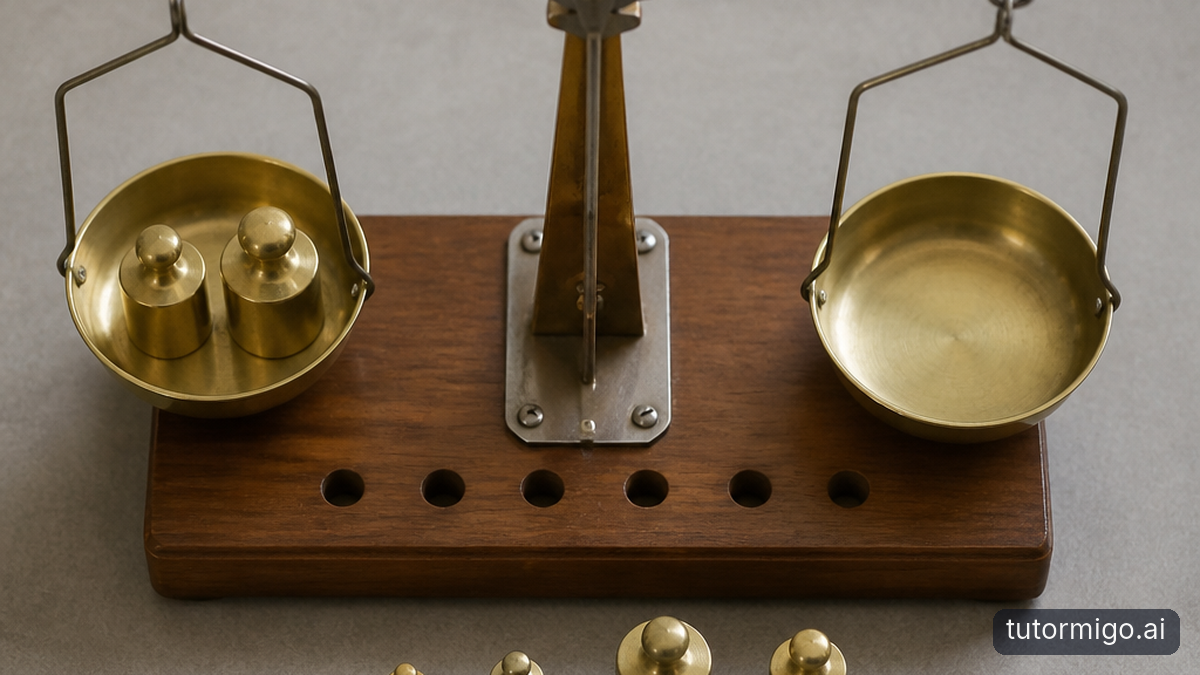
A correct mathematical idea can appear as a drawing, a spoken explanation, or a familiar sequence of algebraic steps. Schools’ approaches vary, and teachers may use different representations at different points in a lesson. A balance drawing might make an operation visible before students write it more compactly. The extra marks can be doing useful work, even when you no longer need them yourself.
That does not mean every unfamiliar method is correct. The question is whether each step follows from the previous one and keeps the relationship true. A neat answer is not enough, and neither is a confident explanation. Ask what changed, why that change is allowed, and how your child could check the result. Those questions work across methods without requiring you to know the teacher’s exact wording.
Listening first also separates understanding from imitation. Your child might explain a diagram clearly but struggle to record it in symbols. Or they might copy the expected layout without knowing why it works. “Can you walk me through your thinking?” gives both possibilities room to emerge. Follow with one specific question, such as, “What does this box stand for?” Your interest communicates that their reasoning deserves attention, even if a step later needs correcting.
Use a balance model to make the algebra visible

Consider Imagine a balanced scale. On the left are two identical pouches, each holding the same unknown number of counters, plus three loose counters. On the right are eleven counters. Each pouch represents . The balance tells you that the total on one side equals the total on the other.
Ask your child how to leave the pouches by themselves while keeping the scale balanced. Removing three loose counters from the left means removing three from the right as well. In symbols, that is which gives The drawing and the subtraction are two ways of showing the same change.
Now two identical pouches contain eight counters altogether. Sharing those counters equally between the two pouches shows that each contains four. The algebra records the same reasoning by dividing both sides by two: so Check by substituting the value into the original equation:
Your child’s class might draw boxes rather than pouches, use another visual model, or move straight to symbols. This example is a bridge, not a claim that every school teaches the problem this way. The important connection is that removing equal amounts, then dividing both sides equally, preserves equality. If your child understands that connection, the unfamiliar picture may be making solid reasoning visible.
What a helpful conversation can sound like
You do not need a polished explanation ready before you sit down. Start by letting your child describe the work in their own language. In this example, the parent notices a possible problem without announcing a verdict. That leaves the child responsible for explaining and, when necessary, repairing the reasoning.
Parent: “This looks different from how I learned it. Can you walk me through your thinking?”
Child: “These two bags and three counters balance eleven counters.”
Parent: “What are you trying to find?”
Child: “How many counters are in one bag. I took away the three loose counters.”
Parent: “I see that on the left. What happened on the other side?”
Child: “Oh, I need to take three away there too. Otherwise it won’t balance.”
Parent: “That makes sense. What does the picture tell you now?”
Notice that the parent does not supply the missing calculation or switch methods. The question points to the relationship that needs checking. The child still does the mathematical work. If they cannot answer, you can say, “Let’s look at both sides together,” rather than pretending the step is fine or delivering a complete solution.
You can also acknowledge your own unfamiliarity without making their approach sound inferior: “I used different notation, but I want to understand yours.” Avoid “Why are they making this so complicated?” That comment can make your child feel caught between home and school. Praise something specific instead: “You spotted that changing only one side would upset the balance.”
Check the reasoning without becoming the person doing it
Keep the pencil with your child whenever possible. Ask them to point to the part they understand and the first place they feel unsure. That is more manageable than asking them to explain an entire page again. If they hesitate after removing the loose counters, for example, ask what the remaining pouches and counters represent before suggesting the next operation.
Check one change at a time. “What did you do to the left side?” and “What did you do to the right side?” are useful questions for this equation. Then ask why those changes keep the sides equal. If the explanation is unclear, invite your child to redraw that step or refer to a worked classroom example. You are looking for a reason, not a particular phrase.
Separate arithmetic slips from misunderstandings. A subtraction mistake needs a different response from removing counters from only one side. You might say, “Your plan keeps the scale balanced; let’s check that subtraction,” or, “Before we calculate, will the scale still balance?” This makes feedback specific and keeps one error from becoming a judgment about their ability.
Offer a small prompt, then wait. If frustration rises, take a brief pause rather than adding more explanations. For broader ways to reduce tension around the table, these practical tips for calmer homework sessions can help you protect the conversation as well as finish the task.
Next time: listen, check equality, then ask the teacher
At the next unfamiliar problem, begin with the same invitation: “Can you walk me through your thinking?” Listen long enough to understand what the drawing or notation represents. Then check whether each step preserves equality. Finally, encourage your child to test the answer in the original equation. These habits let you contribute your algebra knowledge without insisting that your layout must replace theirs.
If the method still seems unclear, ask the teacher what the class expects. A useful message is: “We can check the answer, but I’m unfamiliar with the representation. Could you share a worked example and explain which steps students should show?” Include the specific line that caused confusion. That is easier to answer than a general complaint about a different way of teaching math. Your child can also practise asking a focused question in class, such as whether they should include both the drawing and the algebra.
For an optional place to work through a diagram together, TutorMigo.ai’s Study Tools Hub includes a whiteboard and math step editor.
You do not need to settle which method is best tonight. Aim for a child who can explain one more step, notice when equality has changed, and ask for clarification without embarrassment. That is useful progress, even when the page still looks different from yours.
Frequently asked questions
No. Different representations can express the same valid reasoning. Check what each mark means, whether each step preserves equality, and whether the answer satisfies the original equation.
First ask them to explain their approach. Once they understand it, you can compare methods if that helps. Check the assignment expectations before encouraging them to replace a method they are practising in class.
Ask about one specific step rather than requesting the whole explanation again. Invite them to use their drawing or a classroom example. A correct answer alone does not show whether they understand the reasoning.
Ask which method students are currently practising, which steps they should show, and whether a worked example is available. Share the exact point where your child’s explanation or written work became unclear.
Explore TutorMigo
Enjoyed this read?
Like, share, or comment below.



Comments
0Sign in required · respectful discussion · replies supported
Loading comments…