

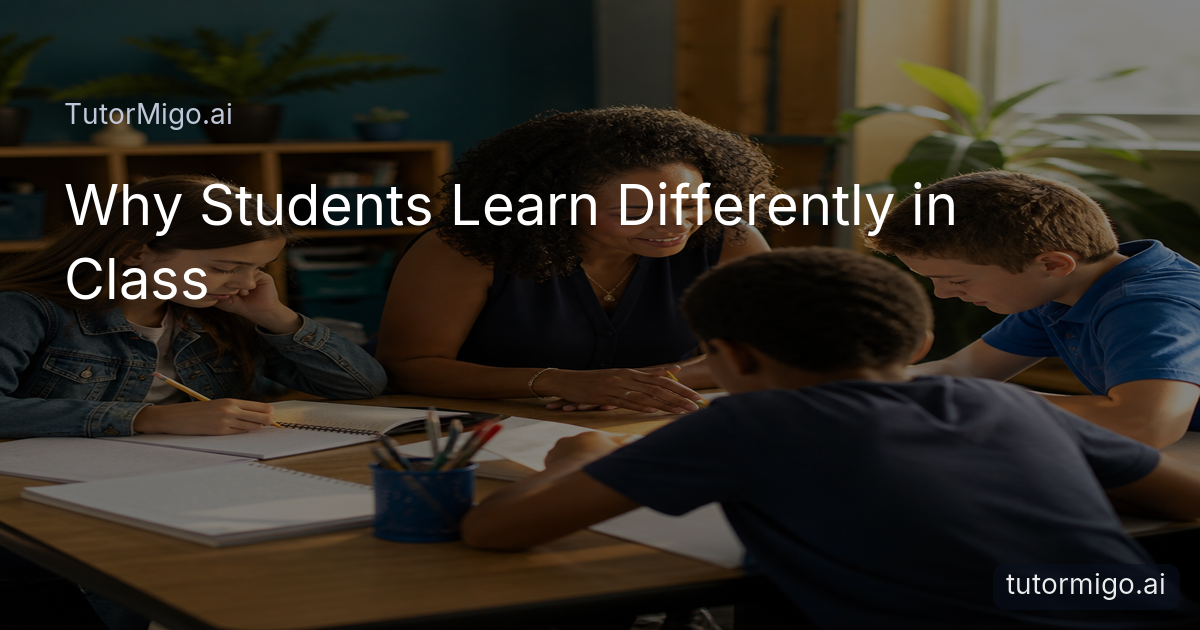
Same Classroom, Different Learning Needs
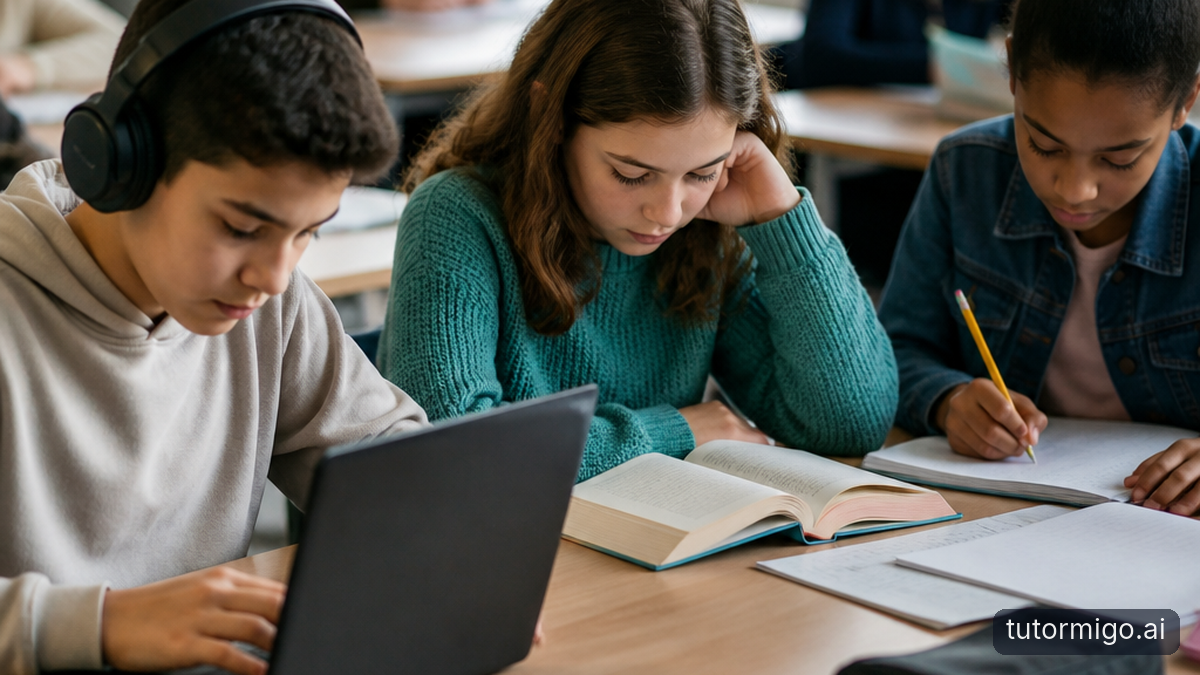
Your class may be working on the same assignment, yet the work on each desk can tell a different story. One student may remember the prerequisite skill from last year. Another may be meeting it for the first time. A third may understand the idea but hesitate to show the work because confidence is low. When you give all three the same explanation, they do not begin from the same place.
This is the practical reason personalized learning for students matters. Personalization starts with individual learning needs, not with a label or a completely separate lesson plan. Look at a fraction exercise: one student needs a visual example of equivalent fractions, another needs five more problems for fluency, and another is ready to compare fractions in a word problem. Their questions are different because their prior knowledge, pace, practice history, and areas of difficulty are different.
For a teacher, the challenge is noticing those differences without turning every lesson into three unrelated lessons. A quick check for understanding, a review of student work, or a short conference can reveal whether a wrong answer reflects a missing concept, a rushed step, or uncertainty. That information gives you a more useful starting point than assuming the whole class needs the same next step.
Personalized Learning Doesn’t Mean a Separate Teacher for Every Student

Personalized education is often misunderstood as one-to-one teaching for every learner, all day long. In a real classroom, it usually means making purposeful adjustments within a shared structure. You might keep one learning objective for the class while offering two examples, a short review task, and an extension question. Students still belong to the same lesson, but the route toward understanding is more responsive.
For example, after teaching how to support a claim with evidence, you could assign a common paragraph task. Students who need support might receive a model paragraph to annotate. Students who are nearly ready might use a checklist to select evidence. Students who are secure could compare the strength of two sources. The objective stays coherent; the amount of scaffolding changes.
This is also where student-centered learning becomes practical rather than theoretical. You can use student questions and completed work to decide what to revisit, who needs a brief conference, and which students can work independently. Differentiation does require planning, but it does not require writing a totally new curriculum for every child. The practical approach to differentiated instruction can help you make those decisions within normal planning time.
Why Pace Matters in Learning
Learning pace affects both understanding and confidence. When a student moves on before a key idea is secure, later tasks can feel mysteriously difficult. A student who has not yet connected multiplication to equal groups may struggle with fractions, not because the new topic is inherently out of reach, but because an earlier connection remains incomplete. Repeating the same explanation faster will not necessarily fix that gap.
The opposite problem matters too. If a student has already mastered the skill but spends several lessons repeating identical practice, attention can drop. That student may begin doing the work mechanically or stop taking intellectual risks. A useful response is not simply “go faster.” It is to offer a meaningful next challenge while checking that the core understanding is genuine.
In practice, monitor pace through small signals: exit responses, error patterns, completion time, and the questions students ask. If half the class makes the same place-value error, pause for a shared clarification. If only two students need that clarification, provide a short targeted example while others continue. A teacher dashboard can support this process by helping you review student monitoring information and reports rather than relying only on memory after a busy lesson.
Useful rule: Move students forward when the next step builds on secure understanding—not merely because the calendar says it is time.
Meeting Students Where They Are—and Keeping Progress Central
Meeting students where they are does not mean lowering expectations. It means making the path to the expectation clear enough for students to enter it. A student who cannot begin a multi-step equation may need one worked example with the first step explained. Another may need to identify where their reasoning changed direction. A third may benefit from a less familiar problem that tests whether the method can transfer.
Appropriate examples and practice reduce unnecessary barriers. You can change the numbers, context, reading load, or amount of guidance while keeping the essential thinking intact. Then ask students to explain what they did and why. That explanation helps you distinguish a lucky correct answer from durable understanding and gives students language for their own progress.
Personalized learning for students should therefore be measured by learning, not by how many custom options appear on a screen. Are students correcting misconceptions? Can they apply the idea in a new context? Are they becoming more independent? These questions keep personalization connected to outcomes. Research from the OECD and guidance from the Education Endowment Foundation on metacognition both reinforce the value of helping learners understand and manage their learning process.
Where Technology Can Support Personalized Learning
Educational technology can provide useful support when classroom time is limited, especially between lessons or during independent practice. An AI Tutor can give a student another explanation, ask a follow-up question, or provide guided practice without requiring the teacher to stop working with the whole class. That support is most useful when it complements your judgment rather than trying to replace it.
TutorMigo.ai’s AI Tutor Workspace provides personalized tutoring chat with streaming responses, expert personas, and session history. A student who is stuck on a concept can use the workspace to ask for a different example and review the conversation later. You can then use classroom work and your own observations to decide whether the student needs reteaching, more practice, or a new challenge. The tool does not determine a fixed learning style or guarantee that an explanation will fit every learner.
For teachers, the teacher dashboard supports class management, student monitoring, knowledge base assignment, and reporting. Those functions can help you connect individual practice with the broader class picture: who completed an assignment, where work is accumulating, and which students may need a conversation. Used carefully, AI tutoring extends access to help; it does not remove the need for clear instruction, feedback, or professional decisions about next steps.
What Personalized Learning Should Not Mean
Personalized learning should not mean every student receives a completely different curriculum. A shared goal gives a class common purpose and makes collaboration possible. Personalization can change the support, examples, practice amount, or timing while preserving the important knowledge and skills students are expected to develop.
It also should not mean technology replaces teachers. A tool can provide an additional explanation or record a tutoring session, but it cannot take responsibility for your curriculum, relationships, classroom culture, or professional interpretation of student work. An AI Tutor may help a student practice, while you decide whether the student’s reasoning is accurate and what instruction should follow.
Nor should personalization protect students from every productive struggle. Some difficulty is part of learning. The goal is to remove confusion that blocks entry, not to remove the effort required to think. Finally, avoid fixed “learning styles” labels such as declaring that one student can learn only visually. Students may benefit from varied representations, and their needs can change by topic, task, and prior knowledge. Keep asking what support helps this student understand this concept now.
The next step is manageable: choose one upcoming assignment, identify two likely points of difficulty, and prepare one support and one extension. After students work, review the evidence and adjust. That cycle—notice, respond, and check—is the heart of effective personalized learning.
Frequently asked questions
Personalized learning for students is an approach that adjusts explanations, support, practice, or pacing to fit a learner’s current understanding while keeping clear learning goals. It does not require a separate curriculum for every student or rely on fixed learning-style labels.
Keep a shared objective, then vary scaffolds, examples, practice amounts, or extension tasks. Use exit tickets, student work, and short conferences to decide who needs reteaching, guided practice, or a more challenging application.
Not necessarily. Students can work toward the same essential goal with different supports or degrees of challenge. The teacher can regroup students temporarily, provide targeted examples, and bring everyone back to shared discussion and assessment.
No. AI tutoring can offer additional explanations, guided practice, and session history outside direct instruction, but teachers remain responsible for curriculum, feedback, classroom relationships, and interpreting student progress.
A teacher dashboard can support class management, student monitoring, knowledge base assignment, and reporting. These functions help teachers review work and progress so they can make informed decisions about follow-up instruction.
Related reading
Enjoyed this read?
Like, share, or comment below.
Comments
0Sign in required · respectful discussion · replies supported
Loading comments…