

Science Fair Hypotheses: From “Plants” to a Testable Question
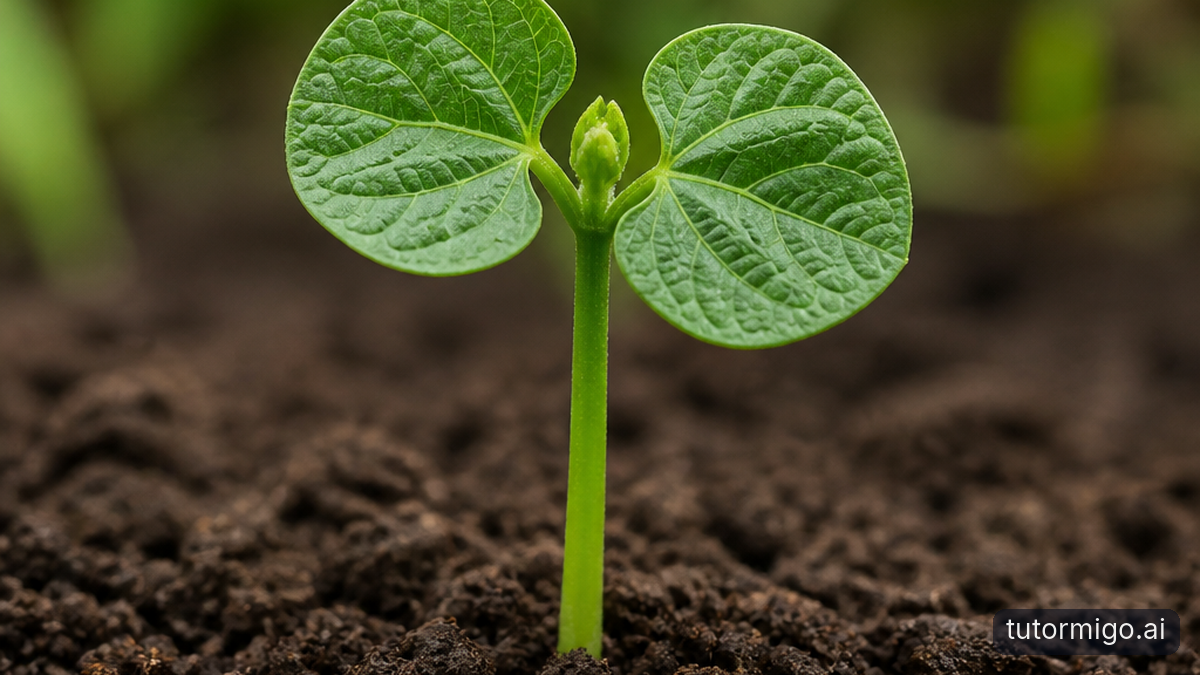
“Plants” is an interest, not yet an experiment. Even “What helps plants grow?” leaves too many possibilities open: light, water, soil, temperature, seed variety, and fertilizer could all affect the outcome. When everything seems relevant, students often choose an elaborate setup before deciding what they actually want to learn.
Start by narrowing the question to one change and one observable outcome. For example: “How does the amount of water given each day affect the height of bean seedlings over two weeks?” Now your student can identify what they will deliberately change, what they will measure, and how long they will observe it. Check that the available time allows for germination and enough growth to measure.
A useful hypothesis adds a reason: “I predict seedlings receiving a moderate amount of water will grow taller than seedlings receiving very little water because plants need water for growth.” This is a prediction to investigate, not a conclusion to prove. If the evidence disagrees, the project can still demonstrate strong scientific thinking.
Soil acidity could also become a testable variable, but it brings extra demands: suitable measurement equipment, safe materials, and a way to avoid changing several soil properties at once. For a first independent project, choose a variable your student can control reliably with available supplies.
Before buying anything, ask your student: “What will you change, what will you measure, and what will you keep the same?” If those answers are unclear, keep refining the question.
Parents can protect ownership by asking those questions instead of supplying answers. Your job is to check feasibility and safety; your student's job is to make and explain the scientific choices.
Brainstorming with Zera: Make Curiosity the Starting Point

Begin with something your student already notices. Does condensation collect on one drinking glass but not another? Why do some paper towels seem better at cleaning spills? Why does a seedling near the window lean? These everyday puzzles provide better starting material than a search for the most spectacular science fair display.
In the tutor workspace, ask the AI Tutor to take on the role of Zera, a curious science buddy: “Help me brainstorm through questions and short stories. Don't choose my project for me.” Treat the Zera AI buddy as a conversational role you request, rather than a substitute for your student's decisions.
A storytelling prompt might be: “Imagine two seedlings on the same kitchen counter. One grows taller. What could explain the difference?” Ask for one follow-up question at a time. Your student can suggest water, light, or seed differences, then decide which possibility would be practical to investigate. This makes project based learning AI support a conversation about reasoning, not just a source of project titles.
Use interactive science thought experiments to expose hidden problems before setting up materials. Ask, “What if I water one plant more but also move it closer to the window?” Your student should recognize that either change could explain a difference. Then ask how to redesign the comparison so the result is easier to interpret.
Finish brainstorming with a small shortlist. For each idea, have your student explain the required supplies, measurable outcome, likely difficulty, and safety concerns. Choose the question they genuinely want to answer and can investigate within school rules. If the conversational approach helps them speak up, this guide to more confident learning with an AI study buddy offers related encouragement.
Using Step-by-Step Guidance for the Scientific Method
Once your student chooses a question, request a step-by-step conversation rather than a complete experimental design. Try: “Guide me through planning a fair test. Ask one question, wait for my answer, and help me check my reasoning before moving on.” This describes how you want the chat to work; it doesn't depend on a separately named mode.
First, define the independent variable: the factor your student intentionally changes. In the bean experiment, that is the daily amount of water. Next, define the dependent variable: the outcome they measure, such as seedling height. Ask your student to describe each in ordinary language before introducing the scientific terms.
Then identify controlled conditions. Use the same seed variety, similar containers, equal amounts of the same soil, and comparable light exposure. Measure at a consistent time using the same method. If one group sits beside a heater, that temperature difference could complicate the interpretation. A comparison group receiving a usual watering amount can provide a baseline; your student should explain why that baseline makes sense.
Plan repeated observations and more than one seedling per condition when space and school guidance allow. One unusually vigorous seed can otherwise dominate the story. Ask the tutor to challenge the plan: “What could make these groups different besides watering?” Your student should evaluate the suggestions rather than accept every response automatically.
Next, decide exactly how to collect data. A notebook table can include the date, plant identifier, watering amount, height, and observations such as wilting or yellow leaves. Define where height measurement starts and ends before the experiment begins. Keep original measurements, including inconvenient ones, and record missed watering or accidental damage instead of silently correcting the record.
Finally, discuss interpretation before collecting results. What outcome would support the prediction? What outcome would challenge it? What limitations would remain? TutorMigo.ai's session history lets your student revisit earlier planning conversations, but the experiment notebook should remain the record of actual observations. Never ask AI to fill missing measurements with plausible numbers.
Have an adult approve materials and follow school safety rules. Avoid unknown microbial cultures, mixed cleaning products, and experiments involving ingestion or harm. Ask the teacher before involving people or animals. AI guidance does not replace supervision or the fair's requirements.
What to Do Next: Keep the Project Student-Owned
Your next step doesn't need to be a supply run. Set aside a short brainstorming session and ask your student to bring three everyday observations. Open TutorMigo.ai, request the Zera-style curious science buddy role, and explore which observation could become a safe, measurable question. Leave with one candidate question and a list of things your student still needs to check.
Agree on a simple family boundary: your student owns the question, measurements, and explanation; you help with permission, safe materials, and scheduling reminders. If conversations regularly turn into arguments, this guide to calmer AI co-learning at the kitchen table offers a useful way to rethink your supporting role.
Among the TutorMigo.ai benefits relevant here are personalized tutoring conversations and session history your student can revisit when explaining how their plan changed. Those features support continuity, but the learning comes from making decisions, observing carefully, and questioning the evidence.
Before preparing the display, ask your student to explain the experiment without reading a script. Can they describe the comparison, defend the controls, and admit uncertainty? That is a stronger foundation than polished claims. Start brainstorming your next independent science project with a Zera-style conversation on TutorMigo.ai today—and aim for clear thinking before an award.
Frequently asked questions
It can suggest possibilities, but you should choose the question and explain why it interests you. Check feasibility, safety, and your school's AI-use rules before proceeding.
A prediction that isn't supported can still lead to a strong project. Report the evidence honestly, consider limitations, and explain what you would investigate next.
Help with safety, permissions, materials, and realistic scheduling. Let your student make scientific decisions, collect measurements, and explain the results in their own words.
Follow your school's and fair's policies. Keep a record of how you used AI, distinguish planning assistance from your own observations, and ask your teacher if the rules are unclear.
Related reading
Enjoyed this read?
Like, share, or comment below.



Comments
0Sign in required · respectful discussion · replies supported
Loading comments…