

Can AI Make Learning More Fun When Studying Feels Like a Chore?
When studying feels like rereading the same page without taking anything in, another worksheet rarely helps. AI can make learning more fun by turning practice into challenges, conversations, and quick quizzes. The useful part is not the novelty: it is getting you to think, try, and use feedback instead of passively scrolling.
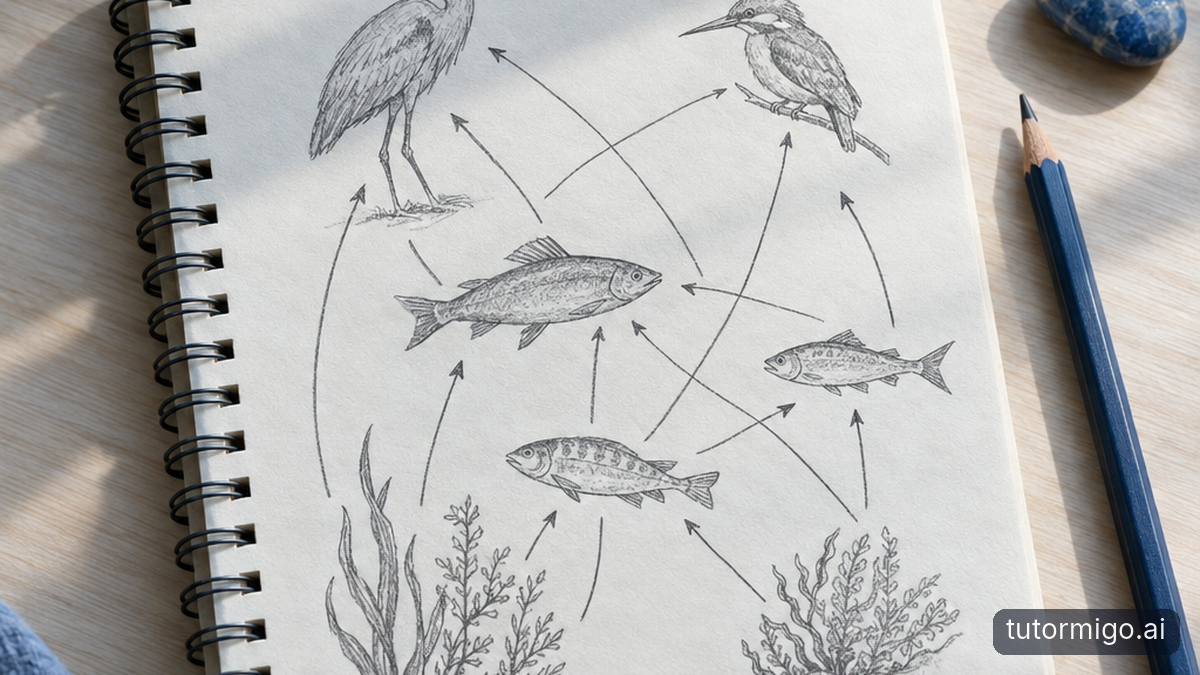
Fun does not have to mean animated rewards or elaborate games. Sometimes it means having a question worth answering. If you are learning about ecosystems, identifying why fish disappeared from an imaginary pond gives the facts a purpose. You still need to understand food webs, but now you are using that knowledge to investigate something.
AI can help generate these scenarios and respond to your choices, although the quality varies. A clear request usually works better than “make this fun.” Name the topic, your current understanding, and the action you want to practice: explaining a cause, recalling a fact, or choosing between possible solutions.
Start with a small test. Try an activity for ten minutes, then close it and explain what you learned without assistance. If you enjoyed the session but cannot explain anything new, change the activity. Enjoyment can help you begin and keep going; it is not, by itself, proof that learning happened.
AI Learning Games: Turn Practice Into Missions and Challenges
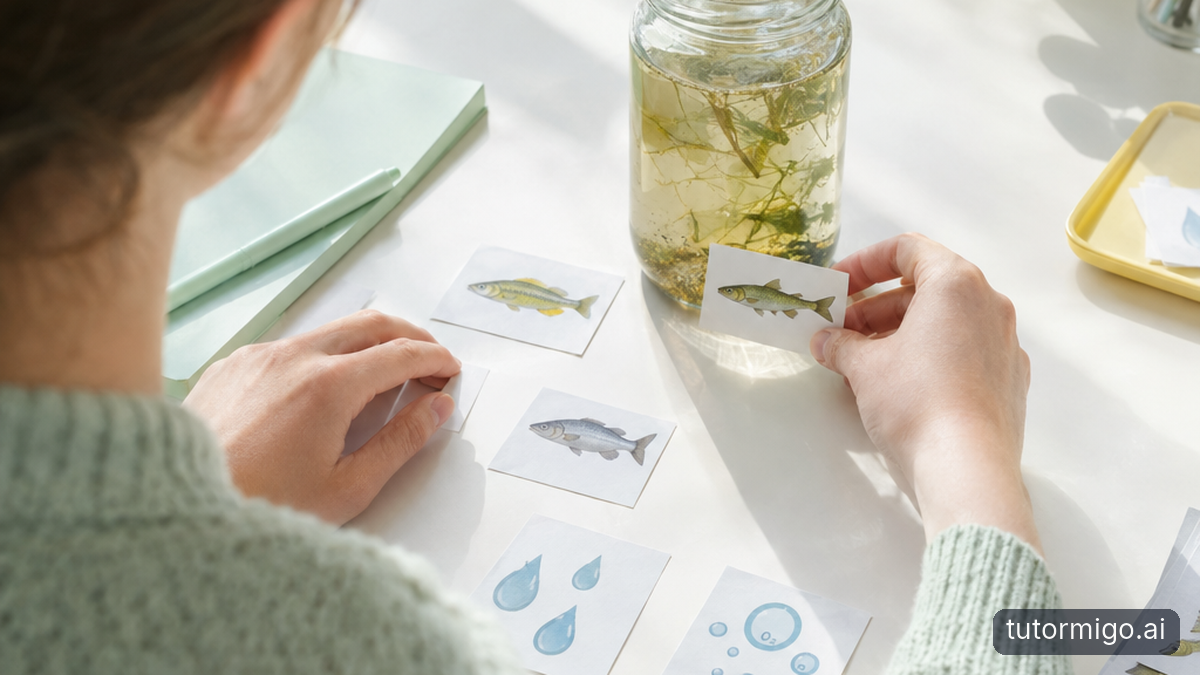
A useful learning game gives you a clear goal, meaningful choices, and a chance to improve after mistakes. Ask AI to build those elements around the skill you need, rather than putting points on top of unrelated questions. A detective mission works well for evaluating evidence; a planning challenge can help you compare possible solutions.
For example, try: “Create a short mystery about a pond where the fish population has fallen. Give me three clues to start. Let me request evidence and propose an explanation. Keep the science accurate, and finish by checking my reasoning.” Your task becomes investigating oxygen levels, pollution, and habitat changes, not guessing which answer earns a badge.
Keep the rules simple. You might earn a clue by explaining a concept correctly, or unlock a harder case after defending your conclusion. Avoid penalties that discourage trying. Losing all your progress after one mistake can turn useful practice into frustration, especially when the AI itself may misunderstand a reasonable response.
After the mission, remove the story. Explain the same concept in an ordinary situation, such as a real pond during hot weather. That final transfer matters: the game should help you use knowledge beyond its fictional setting. If writing the adventure takes longer than practicing, shorten the setup and get to the decisions sooner.
Adaptive Quizzes: Get Questions at Your Level and Feedback You Can Use
A quiz is more useful when its next question responds to your understanding. In an adaptive quiz, difficulty or question type changes based on your answers. General-purpose AI can attempt this through conversation, but it may misjudge your level. Treat the adjustment as a starting point, not a precise diagnosis of what you know.
Give it explicit instructions: “Quiz me on food webs, one question at a time. Start with basic relationships. If I answer correctly and explain why, increase the challenge. If I struggle, give one hint and then a similar question. Do not show the answer before I try.” This keeps you actively retrieving information instead of recognizing an answer already on screen.
Useful feedback names the gap. If you confuse a predator with a competitor, “incorrect” tells you little. Ask for an explanation of the distinction, followed by a fresh example. You could then compare two birds that eat the same insects with a bird that eats another animal. Explaining the relationship shows more understanding than memorizing a label.
Revisit missed ideas later, not only immediately after seeing the solution. Keep a short record of what confused you and try again the next day. Also check occasional correct answers: confident guessing can look like mastery unless you explain your reasoning or answer a differently worded question.
Interactive Learning: Explore Ideas Through AI Role-Play and Simulations
Role-play makes you use knowledge in a conversation with a purpose. Instead of asking for a summary of water conservation, ask AI to play a skeptical community member while you explain a proposed plan. Request one objection at a time so you have space to respond, check your thinking, and revise your explanation.
A useful prompt might be: “Play a resident concerned about a proposed pond restoration project. Ask me about costs, wildlife, and water use. Keep your objections realistic. After four exchanges, step out of character and identify where my explanations need stronger evidence.” The final debrief separates persuasive wording from a well-supported answer.
Simulations work differently: you change a condition and consider what might happen. For the pond example, predict the effects of less shade or more fertilizer runoff before asking AI to describe possible consequences. State your reasoning first. Otherwise, watching a fluent explanation can feel interactive even though you have not made a prediction yourself.
Remember that a generated scenario is not automatically a scientific model. AI may describe plausible outcomes without calculating them or using verified data. Use conversational simulations to explore relationships and form questions. When an exact result matters, check it against trusted references or an appropriate validated model. Finish by naming which parts were established facts and which were assumptions made for the activity.
Keep the Fun Focused: Check Accuracy, Protect Privacy, and Look for Real Learning
The biggest risk of an enjoyable AI activity is accepting a convincing mistake. Check important explanations against your textbook, course materials, or a reliable reference. If an answer conflicts with what you have learned, ask what assumptions it uses, then verify independently. Asking the same AI whether it is sure is not an independent accuracy check.
Protect privacy before you begin. You can describe a learning need without sharing your full name, school, location, grades, or someone else's work. Replace personal details in scenarios with fictional ones. If a child is participating, an adult should check the service's age requirements, privacy settings, and suitability before the activity starts.
Watch what the game rewards. Speed bonuses may encourage rushing when you need careful reasoning. Long streaks can encourage continuing after concentration has faded. Replace those goals with a learning target, such as explaining why an answer works or correcting a misconception without help. You can also ask for untimed questions and shorter instructions.
Use a simple before-and-after check: answer one question before playing, then tackle a different question testing the same idea afterward. Can you explain more clearly, apply the concept somewhere new, or spot an error you previously missed? Those changes tell you more than points. If the activity creates pressure or distraction, a quiet explanation and ordinary practice may be the better choice.
Try It Next: Turn One Study Topic Into a Game, Quiz, or Interactive Activity
Choose one topic you already need to study, not an entire subject. Then identify the action you find difficult. If you cannot recall key terms, try a short quiz. If you know the terms but struggle to connect them, try a mystery. If you understand an idea until someone challenges it, use role-play to practice explaining.
Give the activity a clear boundary: “Help me practice food webs for ten minutes. Use only the concepts in this short summary. Ask me to make decisions and explain them. Offer hints before answers, and finish with one new question I must answer without help.” Share only material you have permission to use, with personal information removed.
Afterward, write down one thing you understand better and one thing that still needs checking. Return to the uncertain point in your regular study materials. Next time, adjust only what was unhelpful: shorten the story, request clearer feedback, or reduce the difficulty. You do not need a complicated game for practice to feel more inviting.
If you want somewhere to continue, TutorMigo.ai offers interactive study tools and spaced-repetition flashcards for working through ideas and revisiting what you have learned. Choose whichever supports the topic in front of you, rather than adding more tools than you need.
Frequently asked questions
Yes. A short conversation, a realistic problem, or a quiz with helpful feedback can make studying more engaging. Choose an activity that makes you recall, explain, or apply something rather than simply watch.
After the activity, answer a new question without hints or explain the concept in a different situation. Look for clearer reasoning and better recall, not just a higher score or a completed challenge.
No. They can contain incorrect answers, ambiguous questions, or misleading explanations. Check important points against reliable learning materials, and do not assume that confident feedback is correct.
Ask for one adjustment at a time: harder application questions, a simpler example, one hint, or shorter instructions. Explain what you found difficult so the next attempt targets the problem rather than merely changing the wording.
Enjoyed this read?
Like, share, or comment below.



Comments
0Sign in required · respectful discussion · replies supported
Loading comments…