


Learning Confidence: Did the Idea Click?

Your child gives the right answer, and you’re ready to celebrate—but you can’t tell whether the idea clicked or they followed a familiar pattern. You don’t need another test to find out. A relaxed invitation to explain, followed by noticing a specific strategy, can help you recognize and celebrate real understanding.
For parents who already encourage their child’s learning, this can feel like a surprisingly tricky distinction. You’re showing up, offering reassurance, and noticing effort. Still, “That’s right!” tells your child something about the result, not what helped them reach it. You want to recognize the thinking without making every successful answer the start of another assessment.
Imagine your child correctly identifies how a character feels in a story. They might have guessed from the illustration. They might have remembered your explanation yesterday. Or they might have connected the character’s actions with a clue in the text. The answer alone doesn’t reveal which happened.
You don’t need to investigate every response. Instead, occasionally make room for the story behind an answer. Listen for a connection, a reason, or a change of mind. Those small details give you something meaningful to celebrate: not simply “You got it,” but “You found something that helped it make sense.”
What Understanding Looks Like: Explaining Why an Answer Works
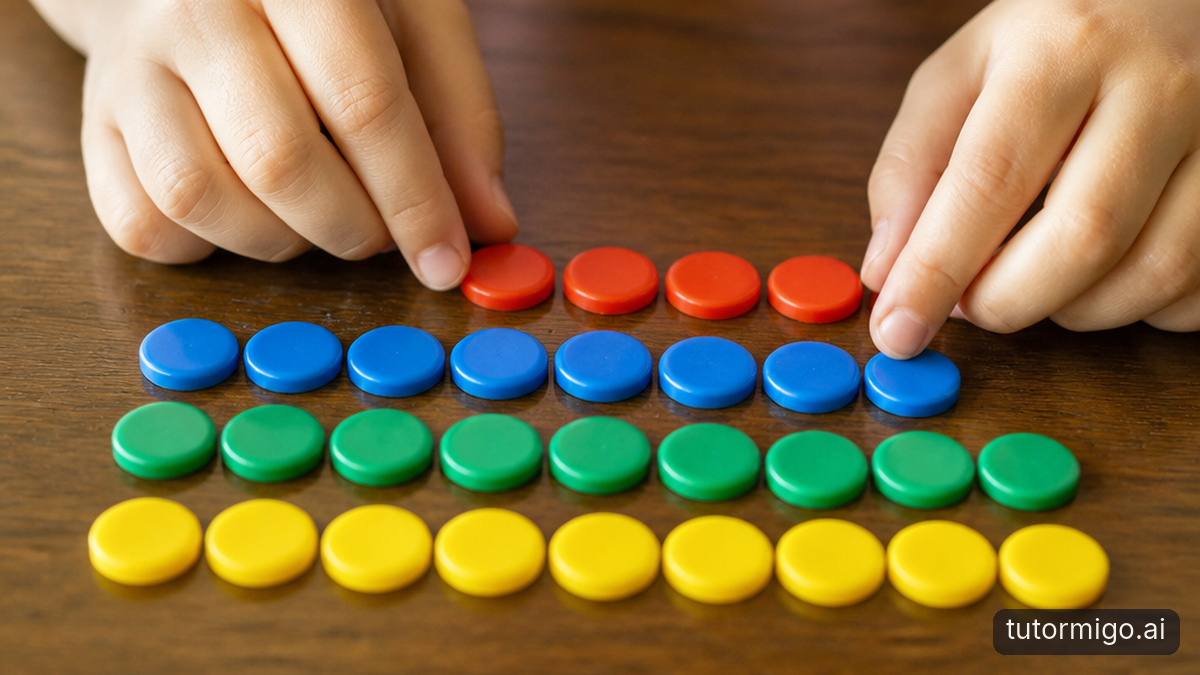
Understanding often shows up when your child can connect an answer to a reason. They might explain why a method fits, point to evidence, or show the same idea using objects instead of words. Their explanation doesn’t have to sound polished. “These groups have to match, or someone gets more” can reveal more than a fluent recitation of a rule.
Picture your child sharing counters equally among toy animals. They announce that the sharing is finished. When you wonder how they know it is fair, they line up each animal’s counters side by side: “See? They all have the same.” They aren’t merely reporting a result; they’re showing the condition that makes it work.
Another useful sign is noticing when an idea doesn’t fit. During reading, your child might say, “I thought she was angry, but she’s hiding because she’s scared.” That revision connects an interpretation to evidence. It can show more understanding than sticking confidently with the first answer.
No single explanation proves complete understanding, and difficulty explaining doesn’t prove its absence. Your child may need time, a drawing, or a chance to demonstrate. If you’re wondering about the difference between understanding and memorization, look for reasons and connections across several ordinary moments rather than expecting a perfect explanation on demand.
Invite Your Child to Share Their Thinking Without Turning It Into a Quiz
The invitation matters as much as the question. “Explain how you know” can sound like a challenge when it follows every answer. Try sharing genuine curiosity instead: “I noticed you looked back at that sentence. What did you spot?” You’re asking about something your child actually did, not requesting a performance to satisfy you.
Choose one opening and leave space. “Would you show me?” works well when talking feels difficult. “Which part helped it make sense?” invites your child to identify a useful clue. You can also offer a choice: “Want to tell me, draw it, or show me with these pieces?” Then wait without immediately supplying a hint.
Suppose your child sorts shapes correctly. Rather than asking them to name every category, say, “I see you moved that shape into a different group. I’m curious about that.” They might explain that they first sorted by color, then noticed that the task asked for matching shapes. Your observation gives them a starting point without revealing the explanation.
If they shrug or say, “I just knew,” don’t turn up the pressure. You can say, “Okay—we can come back to it.” A conversation isn’t always available on cue. This is part of helping without taking over homework: keeping the thinking with your child while making your interest feel safe.
Spot the “I Figured It Out” Moment When Your Child Changes Approach
The moment of understanding isn’t always a delighted announcement. Sometimes it’s a pause, an erased mark, or a quiet “Wait.” Your child notices that the current approach isn’t helping and tries something more suitable. Watch what changes and, when possible, listen for why they changed it.
For example, your child is trying to work out how many objects remain after some are removed. They repeatedly lose track while counting in their head. Then they collect small blocks, move some aside, and count what remains. The important shift isn’t simply using blocks. It’s recognizing that making the situation visible helps them keep track.
You might say, “You noticed it was hard to hold everything in your head, so you made it something you could see.” If they respond, “Yes, because I kept counting those again,” you’ve heard the link between the difficulty and their new strategy.
A changed approach doesn’t have to produce the right answer immediately to deserve recognition. Perhaps the blocks reveal another mistake. You can still notice the useful decision while leaving room to continue: “That helped you see what was happening. What do you notice now?” Celebrate the adjustment without pretending the work is finished. Persistence becomes more useful when it includes checking, choosing, and changing—not just repeating the same unsuccessful attempt.
What to Say to Celebrate Strategy and Persistence, Not Speed or Talent
Specific recognition gives your child information they can use again. “You’re so clever” expresses affection, but it doesn’t identify what worked. “You checked the picture against the sentence before deciding” names a repeatable action. The goal isn’t to ban warm praise. It’s to make some of your encouragement precise enough to support the next challenge.
After your child revises an approach, try: “You noticed that wasn’t working and chose a different way.” After they explain an answer, say: “You showed why it works, not just what you got.” When they return after a break, you might say: “You came back and tried using a drawing.” Each response ties recognition to something you observed.
Be careful not to make persistence mean enduring frustration indefinitely. “You kept going!” can miss the most useful part if your child actually benefited from slowing down, asking a question, or taking a break. Name that decision instead: “You asked for help with the confusing instruction, then worked out the next part yourself.”
Keep your tone proportionate. A quiet “Oh, I see what you noticed” may feel more comfortable than a big celebration. You can also leave room for your child’s own satisfaction: “What feels clearer now?” If they’re proud of the discovery, share that feeling. They don’t need a speech every time an idea clicks.
Try This Next Session: Pause, Invite an Explanation, and Name What You Noticed
During the next learning session, try this routine once, at a natural stopping point: pause, invite, notice. Choose a moment when your child has reached an answer or changed direction, rather than interrupting while they’re concentrating. One brief exchange is enough; you aren’t adding a second assignment.
First, pause before giving your usual response. Then offer one invitation: “What helped you figure that out?” If talking isn’t appealing, ask whether they would like to show you instead. Listen without correcting each phrase. You’re looking for the connection they made, not a perfectly worded explanation.
Finally, name one thing you genuinely noticed. For example: “You went back to the story when the picture didn’t give you enough information.” If their explanation reveals a gap, stay matter-of-fact: “We’ve found the part that still feels confusing.” You can acknowledge the useful strategy and return to the unfinished idea without withdrawing your encouragement.
Let the exchange end there unless your child wants to continue. Over time, these small conversations give you a clearer view of their thinking and help make discovery worth noticing, even when it takes a while. If you’d like a shared place to stay involved, TutorMigo.ai’s Parent Dashboard offers progress visibility and co-learning features alongside—not in place of—these conversations.
Frequently asked questions
Avoid treating that as proof they don’t understand. Offer time or another way to respond, such as drawing or using objects. If they aren’t interested, return to the idea in a later session and look for connections across more than one attempt.
No. Warm encouragement still belongs in learning. Occasionally add a specific observation, such as “You noticed the groups didn’t match and checked them again,” so your child knows which action helped.
Yes. Recognize the useful action without calling the answer correct: “Drawing it helped you organize the information. Let’s look at the part that still doesn’t fit.” That keeps encouragement honest and leaves room to continue.
Related reading
Enjoyed this read?
Like, share, or comment below.



Comments
0Sign in required · respectful discussion · replies supported
Loading comments…