

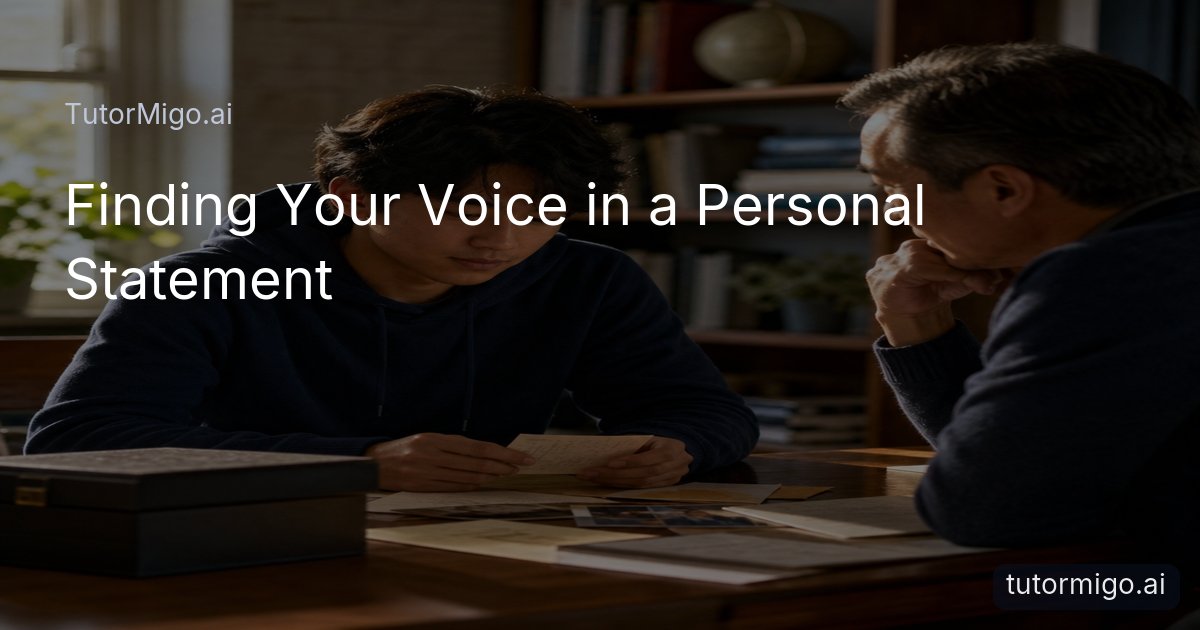
Why Strong Academic Writers Freeze on Personal Statements

Academic writing usually rewards distance, evidence, and control. A personal statement asks for something more exposed: a specific moment, an honest reaction, and a connection between the two. That shift can make a student who writes excellent research papers suddenly stare at a blank page. The problem is not a lack of ideas. It is the feeling that every idea must prove something impressive.
Students also worry about choosing the “right” story. They may dismiss a bus ride, a family routine, a part-time job, or a small mistake because it does not sound dramatic enough. In reality, admissions readers often learn more from how you noticed and interpreted an ordinary moment than from a polished list of achievements. A student who describes repairing a neighbor’s broken radio may reveal patience, curiosity, and a habit of listening.
Try replacing the question “What is my most impressive experience?” with “When did I see myself, another person, or a problem differently?” That question lowers the pressure and points toward reflection. You do not need to reveal everything about yourself. You need to choose one truthful doorway into how you think.
Personal voice is not a performance of uniqueness. It is the clear, precise sound of your own attention.
How to Find Meaningful Experiences and Usable Anecdotes
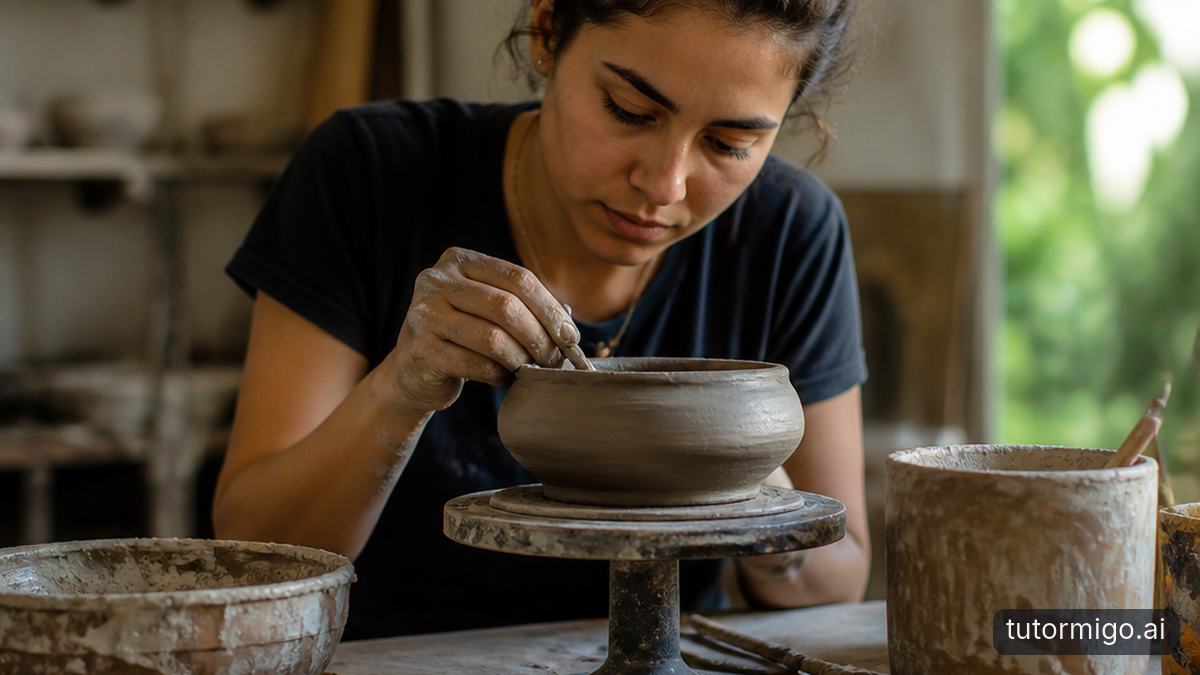
Start with a memory inventory rather than a list of accomplishments. Write down moments connected to five prompts: a time you changed your mind, a task you kept returning to, an unexpected conversation, a mistake that changed your behavior, and a place where you felt responsible for someone or something. Give yourself five minutes per prompt. Do not judge the ideas while collecting them.
Next, test each memory for usable detail. Can you remember where you were, what someone said, what you did with your hands, or what you noticed afterward? “I learned leadership through volunteering” is a topic. “I kept rearranging the food pantry shelves because older visitors could not reach the heavier cans” is an anecdote. The second example gives you action, setting, and a question about responsibility.
Look for tension, not trauma. A useful story may involve wanting two different things, misunderstanding a situation, or discovering that your first solution was incomplete. A student might write about translating for a relative at an appointment, then realizing that translating words was not the same as making someone feel heard. That small distinction can lead to thoughtful reflection without exaggeration.
If you are stuck, ask a parent, teacher, or trusted friend what moments they remember you talking about with unusual energy. Their answer is a prompt, not a script. Keep the final interpretation yours.
How to Shape One Experience Into a Clear, Specific Story
Once you have an anecdote, build around a simple movement: before, during, and after. Before establishes the situation and what you expected. During shows the choice, obstacle, or discovery through concrete action. After explains what changed in your understanding or behavior. This structure is flexible, but it prevents the essay from becoming either a résumé summary or a collection of unrelated memories.
For example, imagine a student who describes helping a younger sibling prepare for a difficult presentation. The opening might show the student taking over because it seems faster. The middle could show the sibling becoming quieter and less confident. The turning point arrives when the student stops correcting every sentence and starts asking questions. The reflection is not “I became a better leader.” It is the more specific realization that support can mean making room for someone else to solve a problem.
Use details selectively. One sound, object, line of dialogue, or physical action can make a scene real; ten details can bury the point. After each paragraph, ask: “What does this show about how I notice, decide, or respond?” If a sentence only announces a virtue, replace it with evidence. Instead of saying “I am resilient,” show the revision, return, apology, or second attempt that lets the reader reach that conclusion.
Keep the scale honest. A personal statement does not need to claim that one afternoon changed your entire life. It can show that one afternoon changed one assumption, and that the change still influences what you do now.
TutorMigo Benefits: Personalized Guidance That Keeps Your Voice Central
The TutorMigo benefits are most useful when you treat the platform as a thinking partner rather than a replacement author. In the AI Tutor Workspace, you can explain that you have three possible memories, share rough notes, and ask for questions that help you compare them. Personalized guidance can help you notice missing context, vague claims, or a reflection that arrives too late, while the experience and interpretation remain yours.
Session history supports continuity. Instead of re-explaining your topic every time, you can return to earlier questions, review how your idea developed, and continue from a specific decision. For example, one session might identify a story about the food pantry; another might test whether the essay focuses on the student’s choices rather than the organization’s mission. That record makes revision more deliberate and reduces the temptation to accept the first convenient idea.
Interactive study tools can support the surrounding process without taking over the personal statement. You might use a whiteboard to map the before-during-after structure or create spaced-repetition flashcards for recurring terms such as scene, action, reflection, and transition. Those tools are especially helpful when a student is balancing several academic priorities and needs a visible way to return to the same plan.
Parents and teachers can support the process through appropriate visibility and conversation. They can ask whether the essay sounds like the student, rather than trying to supply a more impressive story. The goal is guidance with ownership: clearer thinking, stronger evidence, and a voice that remains recognizably the student’s.
TutorMigo vs. General-Purpose Chatbots: A Fair Comparison
A general-purpose chatbot can be useful for brainstorming prompts, explaining a phrase, or offering an outside reaction to a paragraph. It may produce possibilities quickly, but the quality of the process depends heavily on what context you provide and how you manage the conversation. That does not make it useless; it means the student must be especially careful not to confuse fluent suggestions with personal truth.
TutorMigo is designed around personalized learning continuity. Its AI Tutor Workspace provides tutoring conversations, expert personas, and session history in one learning space. That can make it easier to return to an unfinished line of thinking, ask for a question instead of a finished paragraph, and keep feedback connected to the student’s stated goal. The difference is organization and learning context, not a claim that a general-purpose chatbot can never give useful feedback.
The surrounding tools also matter. TutorMigo includes interactive study tools, spaced-repetition flashcards, structured exam preparation with progress tracking, and dashboards for parent or teacher visibility. A chatbot may support some of these tasks through separate prompts or services, but TutorMigo brings its listed learning features into a focused platform. Choose based on the kind of support you need: quick general output, or a more continuous tutoring workflow that keeps the learner’s process visible.
| Area | TutorMigo | General-purpose chatbot |
|---|---|---|
| Conversation continuity | Personalized AI tutoring with session history supports returning to earlier questions and decisions. | Can continue a conversation, but continuity depends on the tool, settings, and context the user provides. |
| Guidance style | Expert personas and a focused tutor workspace can support questioning, feedback, and structured reflection. | Can provide brainstorming or feedback when prompted, with results shaped by the prompt and supplied context. |
| Connected learning tools | Includes interactive study tools and spaced-repetition flashcards alongside the tutor workspace. | May require separate prompts, tools, or services for related study activities. |
| Progress visibility | Parent and teacher dashboards provide listed visibility and reporting features for supported learning contexts. | Visibility depends on the specific chatbot, account setup, and sharing choices. |
Concrete Next Steps for Beginning Your Personal Statement With TutorMigo
Begin with a short, private inventory before asking for polished language. In your TutorMigo Workspace, list three moments under these labels: “I changed my mind,” “I kept trying,” and “I noticed something others missed.” Add two concrete details to each moment. Do not write an introduction yet. The goal is to collect material without turning your memories into achievements.
Then ask the AI Tutor to help you compare the moments using questions such as: Where is the clearest tension? What choice did I make? What could a reader understand about how I think? Ask for follow-up questions and structural options, not a finished personal statement. Review the session history afterward and mark the questions that led to details only you could provide.
Choose one experience and sketch three short paragraphs: the expectation before the event, the specific action or discovery during it, and the meaning you carry forward. Use a whiteboard from the study tools when the sequence feels tangled. After writing a rough version, return to the Workspace and request feedback on specificity, pacing, and whether the reflection is supported by the scene.
Finally, invite a trusted parent or teacher to read for authenticity. Ask them to underline places that sound like you and circle places that sound generic. Revise those areas with your own details. Save the next question or decision in your session history, then schedule another focused session rather than trying to perfect everything at once.
Pros and cons
Pros
- Personalized tutoring conversations can keep questions connected to the student’s goal.
- Session history supports continuity across brainstorming and revision sessions.
- Interactive study tools and flashcards can help organize the surrounding learning process.
- Parent and teacher dashboards can support appropriate progress visibility.
Cons and limitations
- Students still need to supply truthful experiences and make the final writing choices.
- A focused tutoring platform may be more than needed for a single quick brainstorming question.
- Feedback is only useful when the student checks it against their own voice and experience.
Frequently asked questions
An academic essay usually develops an idea with evidence for a reader who expects analysis. A personal statement uses a specific experience to reveal how you notice, choose, change, or reflect. It still needs structure and precision, but your perspective is part of the subject.
Look for tension, detail, and reflection rather than scale. An ordinary responsibility, misunderstanding, or repeated effort can become a strong anecdote when it shows a specific change in how you think or act.
Use the <a href="tutormigo.ai">AI Tutor</a> Workspace for questions, comparisons, structural feedback, and revision prompts. Session history helps you return to your reasoning, while you remain responsible for the experiences, interpretation, and final wording.
Yes. They can ask whether the story sounds authentic, help a student notice concrete details, and encourage steady progress without supplying the story or taking over the writing. TutorMigo dashboards can also provide appropriate visibility into learning progress.
Explore TutorMigo
Enjoyed this read?
Like, share, or comment below.

Comments
0Sign in required · respectful discussion · replies supported
Loading comments…