

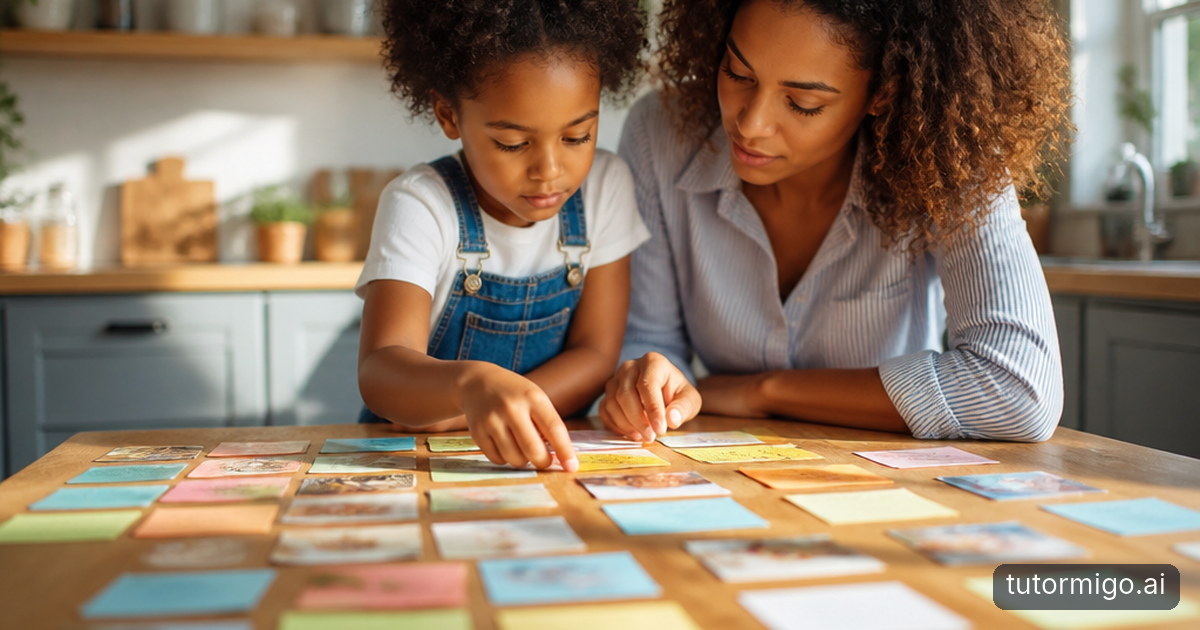
Maths offline learning: sketch a balanced equation
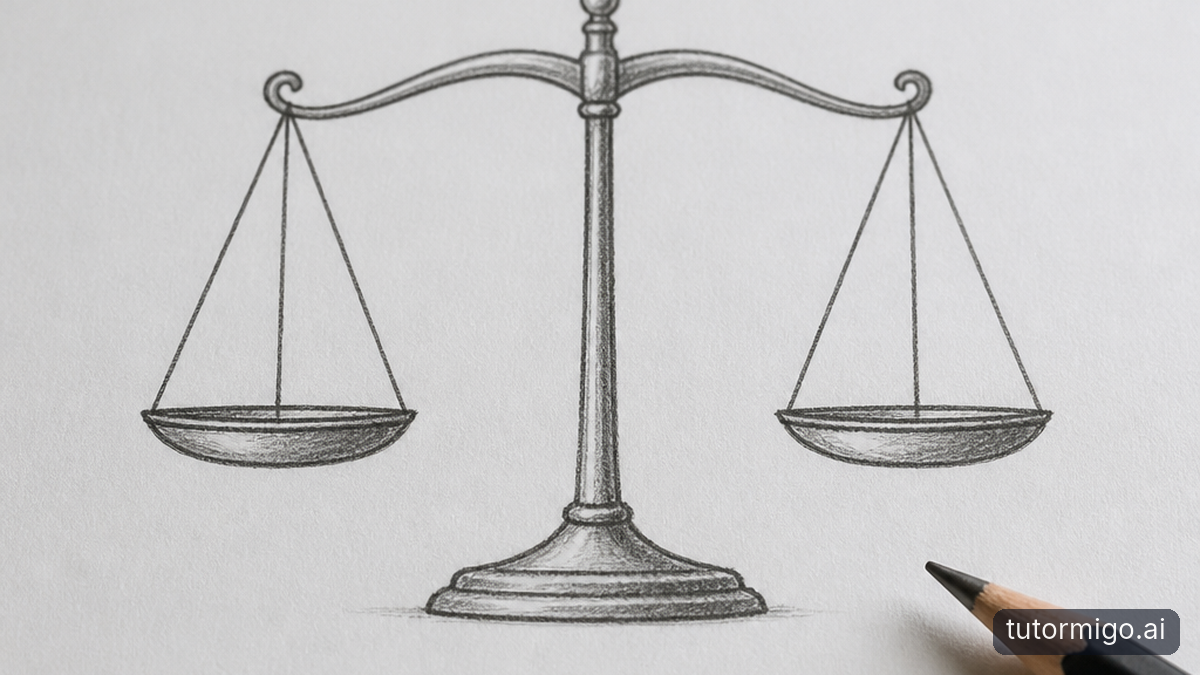
If an equation caught your child’s attention, invite them to turn it into a picture of a balanced scale. You need paper and a pencil; small counters or scraps of paper are optional. Start with something manageable, such as . Draw a level beam with a pan at each end. On one side, sketch a mystery parcel and three dots. On the other, draw seven dots.
Your invitation can be playful: “Could we draw what keeps this parcel balanced?” Let your child choose the parcel’s appearance. It might be a treasure chest, a lunchbox, or a suspiciously heavy birthday present. Explain that the parcel stands for the unknown amount, while the dots represent individual units. The decoration is theirs; the relationship between the two sides is the important part.
Next, ask what would happen if you removed three dots from each pan. Cross them out together, keeping the parcel untouched. The remaining picture represents . Rather than asking only for the answer, try, “Why did we take the same amount from both sides?” This revisits the meaning of equality: both sides name the same amount, so a matching change preserves that relationship.
If your child suggests removing dots from just one side, treat that as something to explore, not a mistake to announce. “Would our drawing still show equal amounts?” is enough. You can also put the answer back into the original relationship by drawing four dots inside the parcel and counting both sides. Stop after that single example if it feels complete. The useful follow-up is explaining the balance, not filling a page with equations.
Science: draw a solar system you can explain
For a solar-system follow-up, gather a sheet of paper and whatever pencils or crayons are nearby. Invite your child to make a model someone else could understand: “How could we show where Earth belongs?” A long strip made from scrap paper can help, but an ordinary page works. No printing, special craft supplies, or carefully cut circles are necessary.
Begin with the Sun, then place the planets outward in order: Mercury, Venus, Earth, Mars, Jupiter, Saturn, Uranus, and Neptune. Your child could draw a winding sightseeing route or imagine a postcard from each planet. Keep the creative layer separate from the science: a cartoon spaceship is make-believe, while Earth’s position relative to its neighbours is something the model should represent accurately.
Say plainly that this is a simplified model, not a picture drawn to scale. The planets are not equally sized, and their distances from the Sun are not evenly spaced. A page cannot easily show both sizes and distances accurately. If your child draws enormous rings around Saturn or squeezes Neptune into a corner, use that to ask, “What does our picture show well, and what does it leave out?”
This revisits more than planet names. It helps your child explain order, compare objects, and notice that scientific models highlight some information while simplifying other details. Ask them to give you a short tour, perhaps starting with Earth and travelling outward. If they cannot remember a detail, leave a question mark rather than guessing. You can return to the question later if interest lasts. For another occasion, these family solar-system science ideas offer a related direction; today’s drawing does not need to grow into a whole evening.
Language: write one phrase for a real moment
For language learning, choose one short phrase connected to what your family explored. You need only paper and a pen. Pick something useful in your home rather than a phrase that sounds impressive but never comes up. If you explored Spanish, for example, you might write “¿Me pasas el agua, por favor?” alongside “Could you pass me the water, please?” Use a phrase whose meaning you already understand.
Invite participation with a choice: “Would you like to write it, draw a clue, or have me write while you choose where it goes?” A tiny picture of a glass can provide the clue. Keep the paper near the table if everyone is comfortable with that, rather than displaying it as evidence of completed work. Your child can also keep it tucked inside a sketchbook.
At a suitable moment, offer to try the phrase together. You might say it first, then pass the water when your child wants a turn. There is no need to repeat it on command or insist on a polished accent. If pronunciation feels uncertain, save that question for a later learning session rather than confidently teaching a guess. Meaningful use matters more here than putting on a performance.
The activity revisits the connection between the written phrase, its meaning, and the situation where someone would say it. Later, ask, “Do you remember what we could say here?” Keep the written version available as a helpful prompt, not something to hide for a surprise test. If your child prefers to point, listen, or leave it for another day, that is fine. An AI Tutor can be part of learning a language, while an ordinary family exchange gives a familiar phrase a reason to be used.
Choose one small idea—or leave it for another day
The best next step is the one that fits the energy you have. If your child wants to explain how something works, offer the balance sketch. If they enjoy imagining places, try the solar-system drawing. If an everyday phrase has stuck in their mind, give it a small place in your routine. You do not need to rotate through all three or keep a record of completion.
Start with a simple invitation: “Would you like to show me that on paper?” Then listen to the answer. You can offer to draw alongside your child, hold the paper, or simply watch. Avoid turning their explanation into a string of questions. One interested response—“I see why you put that there”—can make the exchange feel shared rather than assessed.
If a question remains, jot it down only if that helps. TutorMigo.ai’s AI Tutor Workspace offers personalized tutoring and session history, which can support returning to an earlier conversation. An offline sketch is not automatically part of that history; you can describe the question yourself if you choose to revisit it.
That is a practical way to think about TutorMigo benefits: the platform can support learning, while your family decides whether an offline extension is useful today. A single sketch, one spoken phrase, or no follow-up at all can be a comfortable ending. Close the sketchbook whenever you are ready.
Frequently asked questions
No. Scrap paper and a pencil or pen are enough for all three ideas. Colours and counters are optional. Use what is already nearby rather than buying materials.
Skip it without making it a missed task. You can offer another time if interest returns, but exploring a demo does not create an obligation to do more work.
Focus on the learning point rather than neatness or performance. Ask a gentle question about an uncertain detail. If neither of you knows, leave it as a question to revisit instead of guessing.
No. They are optional paper-based extensions inspired by the subject you explored. They do not depend on demo controls, exporting content, or automatically recording offline work.
Enjoyed this read?
Like, share, or comment below.



Comments
0Sign in required · respectful discussion · replies supported
Loading comments…