
Why Tutormago AI Points to a More Flexible Education Model

You may have seen the same problem from different angles: a student understands one lesson quickly but gets stuck on the next, a teacher has too little time to support everyone, or an adult learner needs to study around work and family commitments. Most education systems still organize learning by age, schedule, and shared pace, even though people do not learn in identical ways.
AI could help make education more responsive by noticing patterns in a learner’s work and suggesting what to do next. A student who repeatedly misses questions involving fractions might receive another explanation, a visual example, and a short set of practice problems rather than being moved ahead with an unresolved gap. Another student who already understands the idea could move to a harder application.
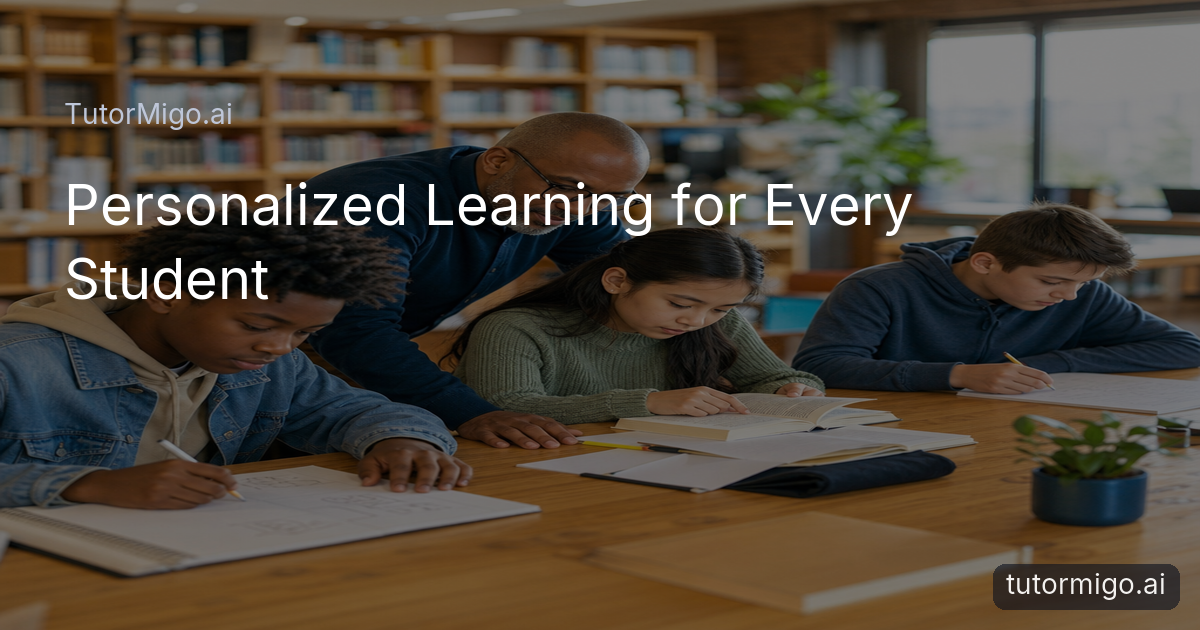
This does not mean replacing classrooms or removing teachers. It means giving learners more useful support between lessons and giving educators clearer information about where attention is needed. The most important shift may be from asking, “What should the whole class cover today?” to also asking, “What does each person need next?”
AI is most useful in education when it expands the time available for human attention instead of trying to imitate the whole learning experience.
Personalized learning could become practical

Personalized learning has been discussed for years, but it is difficult to deliver when one teacher is managing thirty different starting points. AI could make small, continuous adjustments that would be hard to track manually. It might vary the wording of an explanation, change the difficulty of a question, or recommend a review session after a learner forgets an earlier concept.
Imagine two students preparing for the same biology assessment. One needs help distinguishing cellular structures, while the other can name them but struggles to apply the ideas to an unfamiliar experiment. A flexible system could give the first student labeled diagrams and retrieval questions, while giving the second a scenario that requires evidence and reasoning. Both students work toward the same goal, but their routes are different.
For this approach to work, personalization must go beyond making tasks easier or harder. Good learning depends on spacing, practice, feedback, explanation, and opportunities to make connections. AI could coordinate those elements over time, while teachers check whether the recommendations make sense for the individual learner. For a deeper look at this shift, read how personalized learning may evolve with AI.
The practical benefit is not constant novelty. It is less wasted time: fewer exercises that are already mastered and fewer confusing leaps past knowledge that has not yet settled.
Teachers may gain time for higher-value work
Teachers do far more than deliver information. They build trust, interpret confusion, lead discussion, encourage persistence, and notice when a learner is anxious or disengaged. Yet routine tasks such as sorting practice results, preparing alternate examples, and responding to repeated questions can consume hours that might otherwise go to those human responsibilities.
AI could assist with the preparation layer. For example, after a class discussion about persuasive writing, it might help group common errors in thesis statements or suggest three different examples for students who need another way into the topic. The teacher would still decide which examples fit the class, correct misleading suggestions, and choose how to address sensitive or complicated issues.
This distinction matters. A generated explanation can sound confident while being incomplete, culturally narrow, or simply wrong. Teachers need to review important material rather than treating an automated output as an authority. They also need visibility into how a recommendation was made, especially when it affects support, assessment, or access to advanced work.
Practical test: Before adopting an AI tool, ask whether it gives you more time to observe, question, and encourage learners. If it only adds another dashboard to monitor, its educational value may be limited.Used carefully, AI could shift teacher effort away from repetitive preparation and toward the judgment and relationships that technology cannot replace.
Learning could become more active and useful
The strongest educational uses of AI will not simply provide faster answers. They will make it easier for you to practice thinking. A learner studying history, for instance, could compare competing interpretations of an event, defend a position, and receive questions that expose weak evidence. Someone learning to code could test an idea, inspect an error, and explain why a change fixed the problem instead of copying a finished solution.
That design requires a clear boundary between assistance and substitution. If a system completes every difficult step, you may finish an assignment without building the skill it was meant to measure. If it asks useful follow-up questions, offers a partial hint, or invites you to explain your reasoning, the same technology can support deeper understanding.
Schools and families can make this boundary concrete by setting rules for different kinds of work. During first attempts, a learner might use AI only for hints. During revision, they might request feedback on clarity or structure. During an assessment, they might work without assistance. These rules should be discussed openly so that students learn responsible judgment rather than simply trying to avoid detection.
Over time, education may place greater value on demonstrations of reasoning, reflection, and revision. The question will not only be whether you reached the correct answer, but whether you can explain the path, evaluate a suggestion, and apply the idea in a new situation.
Access, trust, and privacy will shape the outcome
AI could widen educational opportunity, but it could also deepen existing gaps if reliable tools, devices, or internet access are unevenly distributed. A well-funded school may be able to provide training and careful oversight, while another may be asked to adopt technology without support. Any vision of the future has to include affordability, accessibility, language support, and alternatives for learners who cannot use the same tools.
Privacy is equally important. Learning systems may collect information about mistakes, attention, reading patterns, or personal circumstances. You should know what is collected, why it is needed, how long it is kept, and who can see it. A student should not be permanently defined by an early difficulty, and sensitive information should not be used for decisions without human review.
Accuracy and fairness also require ongoing checks. If a system recommends harder work more often to some students than others, educators need to investigate whether that reflects real learning differences or a biased pattern in the data. The goal should be support, not hidden labeling.
A sensible adoption process starts small: test one clear use, compare results with teacher judgment, ask learners what helped, and review unexpected effects. Trust grows when people can question a recommendation and when institutions explain decisions plainly. The future of education will be shaped as much by governance and public confidence as by technical progress.
What to do next as education changes
You do not need to predict every future classroom to prepare for change. Start by identifying a real learning problem. Is a student forgetting material between lessons? Is a teacher spending too much time making several versions of the same practice task? Is an adult learner unsure how to plan short study sessions? A specific problem makes it easier to judge whether AI is genuinely useful.
Next, define the human part of the process. Decide when a teacher, parent, tutor, or learner must review the output. Keep important decisions explainable, and ask the learner to show their reasoning rather than accepting a polished answer. Track outcomes that matter, such as stronger recall, clearer explanations, better persistence, or more productive teacher conversations.
It is also worth building basic AI literacy: check claims against trusted sources, look for missing context, protect personal information, and treat confident language as a prompt to verify rather than proof of accuracy. These habits will matter whether you are in school, teaching a class, supporting a child, or learning independently.
If you now want to try structured AI-supported learning for yourself or someone you support, TutorMigo.ai is one place to explore that next step. Use it as a supplement to thoughtful teaching and study, not as a replacement for human judgment.
Frequently asked questions
AI is more likely to change how teachers spend their time than eliminate the role. Teachers provide judgment, relationships, motivation, context, and care that automated systems cannot reliably provide.
It can use patterns in a learner’s responses to suggest different explanations, practice levels, review timing, or examples. Those suggestions still need human review and should not define a learner permanently.
A major risk is treating automated output as accurate or neutral without checking it. Privacy loss, unequal access, biased recommendations, and overreliance can also undermine learning.
Use it for explanation, questioning, practice, and feedback while keeping ownership of the thinking. Follow the rules for each assignment, verify important claims, and be able to explain your own work.
Related reading
Enjoyed this read?
Like, share, or comment below.
Comments
0Sign in required · respectful discussion · replies supported
Loading comments…