

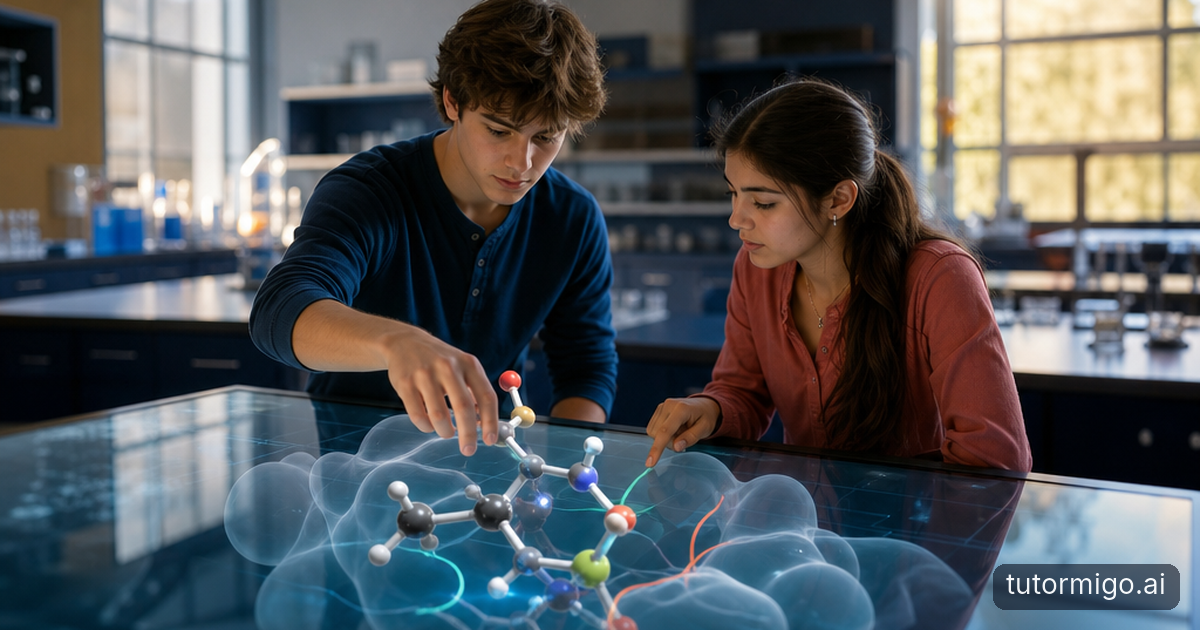
Why interactive 3D models for biology and chemistry can support retention
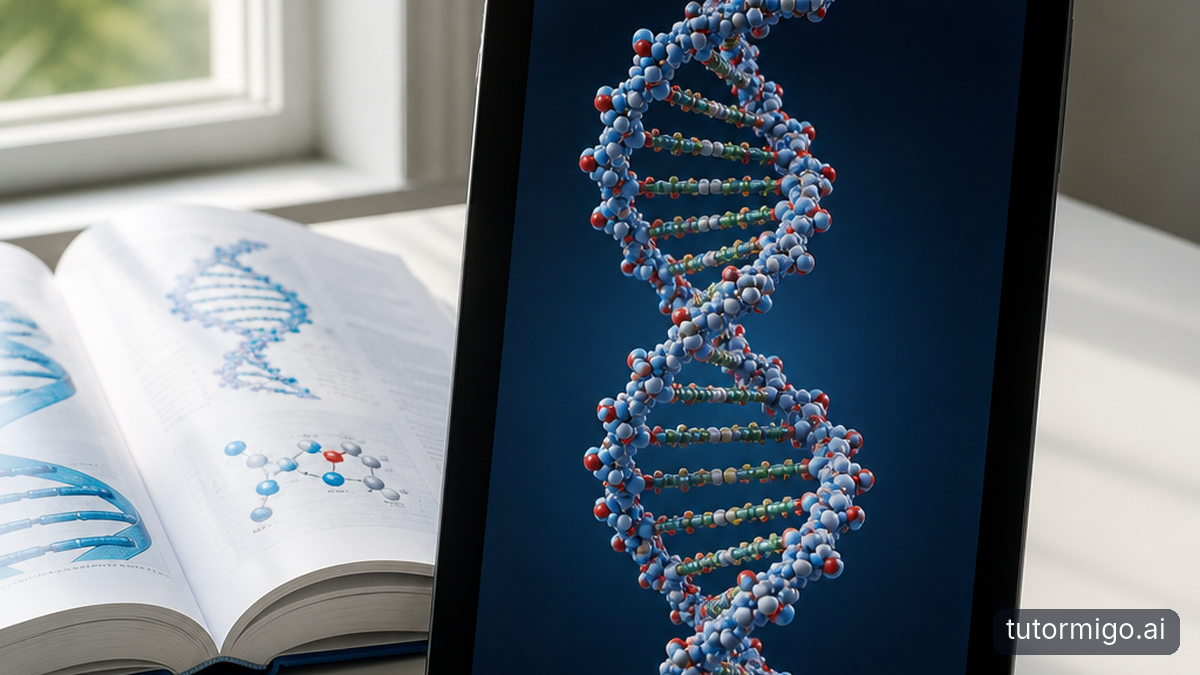
Interactive models can support retention by making spatial relationships visible and letting you test predictions through rotation. They reduce unnecessary mental reconstruction when controls are simple and tasks are focused. Learning improves most when manipulation is paired with explanation, retrieval practice, and application to unfamiliar problems.
The textbook barrier is real, but a universal claim that half of students struggle because of weak visualization would require evidence. Instead, diagnose your own difficulty: can you identify individual structures but struggle to explain their positions relative to one another?
Mental rotation theory describes how you imagine an object turning while preserving its identity. Physically rotating a digital molecule can externalize part of that work. You no longer have to reconstruct every hidden bond before considering the scientific question.
Under cognitive load theory, that can leave more working-memory capacity for understanding mechanisms. However, complicated controls, excessive labels, and decorative motion can increase load instead. Start with one structure and one question.
Use interactive 3D models for biology and chemistry to strengthen spatial reasoning in science, not replace it. Predict what you will see after a turn, rotate, then check. Finally, close the model and sketch the relationship from memory. That last step reveals whether you learned the structure or merely recognized it on screen.
Breaking the Textbook Limit in Molecular and Cellular Science
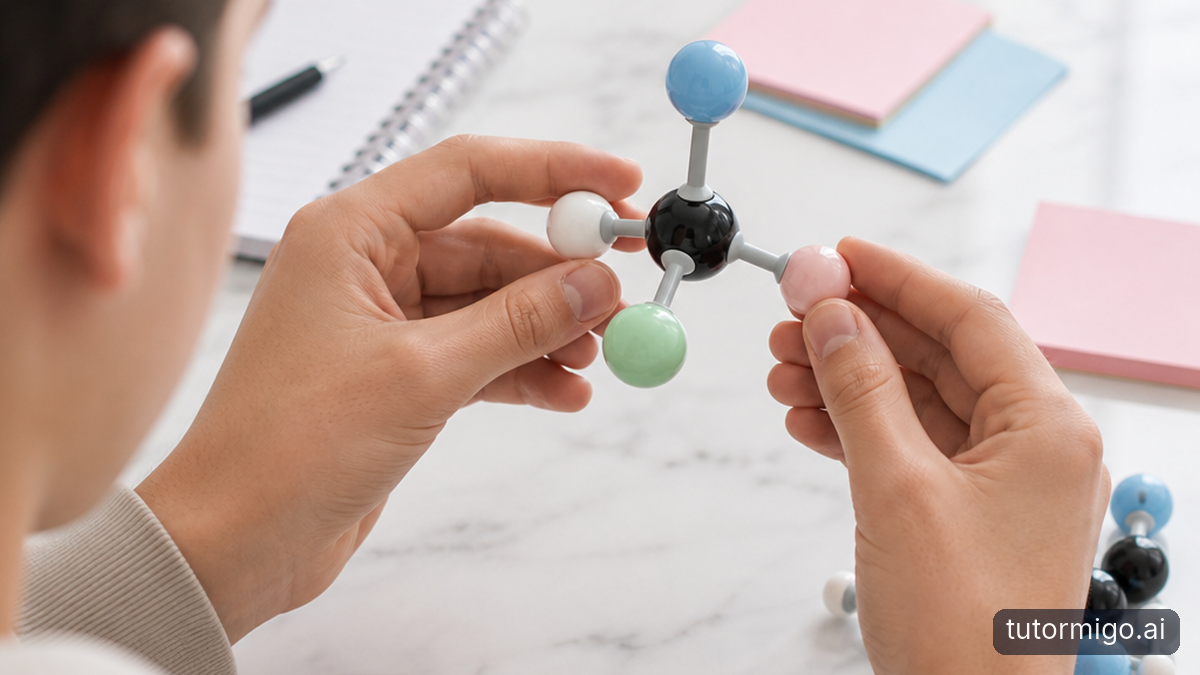
Three-dimensional models reveal relationships that flat diagrams compress: substituent orientation around a chiral center, contacts stabilizing a folded protein, and membrane organization supporting ATP production. Their value comes from connecting visible structure to a scientific explanation, not from treating a realistic appearance as proof of accuracy.
For AP Chemistry, begin with molecular geometry. Compare electron-domain geometry with molecular shape, then explain how lone pairs affect bond angles. Rotate a model to check whether an apparently bent arrangement is actually a tetrahedral structure viewed from an unfamiliar direction.
Chiral centers offer a useful stereochemistry visualization extension, although detailed organic stereochemistry is not a central AP Chemistry requirement. A tetrahedral carbon bonded to four different substituents can produce nonsuperimposable mirror images. Rotation changes your viewpoint; it does not convert one enantiomer into the other.
For AP Biology, connect protein folding to interactions among amino-acid side chains. A model may reveal a pocket, but shape alone cannot establish binding specificity: charge, polarity, flexibility, and the surrounding environment also matter.
Cellular organelle anatomy becomes especially useful at the mitochondrion. Identify the matrix, inner membrane, and intermembrane space. Then trace how electron transport establishes a proton electrochemical gradient and how proton movement through ATP synthase supports ATP production. Keep the outer membrane distinct from the folded inner membrane; confusing them undermines an otherwise correct explanation of chemiosmosis.
2D Textbook Diagrams vs. Prerecorded 3D Videos vs. Interactive Models
Textbook diagrams emphasize selected relationships, prerecorded videos demonstrate a fixed sequence, and interactive models let learners choose viewpoints. No format guarantees better retention. Choose the resource that matches your question, then test learning without it; active explanation and retrieval matter more than visual sophistication by itself.
A diagram is often the fastest way to review a labeled pathway. Its simplification is useful: an AP question may deliberately omit structural detail so you can focus on a mechanism. Do not discard diagrams simply because they are flat.
A prerecorded animation helps when sequence matters, such as following a change in protein conformation. Pause before each transition and predict the next event. Otherwise, a clear animation can feel understandable without leaving you able to explain the process independently.
An interactive model is strongest when viewpoint is the obstacle. You can inspect a hidden surface or compare two orientations, provided the resource actually supports those controls. Compare results using the same closed-resource question rather than assuming interaction always wins.
TutorMigo.ai’s supplied feature list does not establish an interactive 3D viewer, molecular rotation, or organelle slicing. The comparison therefore describes interactive models generally, not an unverified TutorMigo feature. Use a teacher-approved model alongside the platform’s supported tutoring and AP preparation tools.
Hands-On STEM Exploration with TutorMigo.ai
Use a teacher-approved model to investigate a focused structural question, then use TutorMigo.ai’s tutoring workspace to examine your explanation. Predict before rotating, identify evidence after each change, and finish with an AP-style response. This separates visual exploration from the reasoning your exam response must demonstrate independently.
Manipulating Molecular Chirality and Reaction Mechanisms in Real Time
Choose a classroom model with rotation and manipulation controls. For molecular geometry, predict the shape before touching the controls. For a chirality extension, track each substituent while rotating the molecule and ask whether its mirror image can be superimposed without breaking bonds.
Do not confuse turning a model with running a reaction. Static structures cannot demonstrate electron movement, reaction rates, or transition-state energies unless the resource explicitly represents those processes. In your AP notes, separate observed geometry from inferred mechanisms.
Interactive Cross-Sections: Exploring Cell Organelles Layer-by-Layer
If your chosen resource supports cross-sections, expose the mitochondrial compartments one layer at a time. Before revealing each layer, predict its location and function. If it lacks slicing controls, use successive views instead; do not assume every model supports the same interactions.
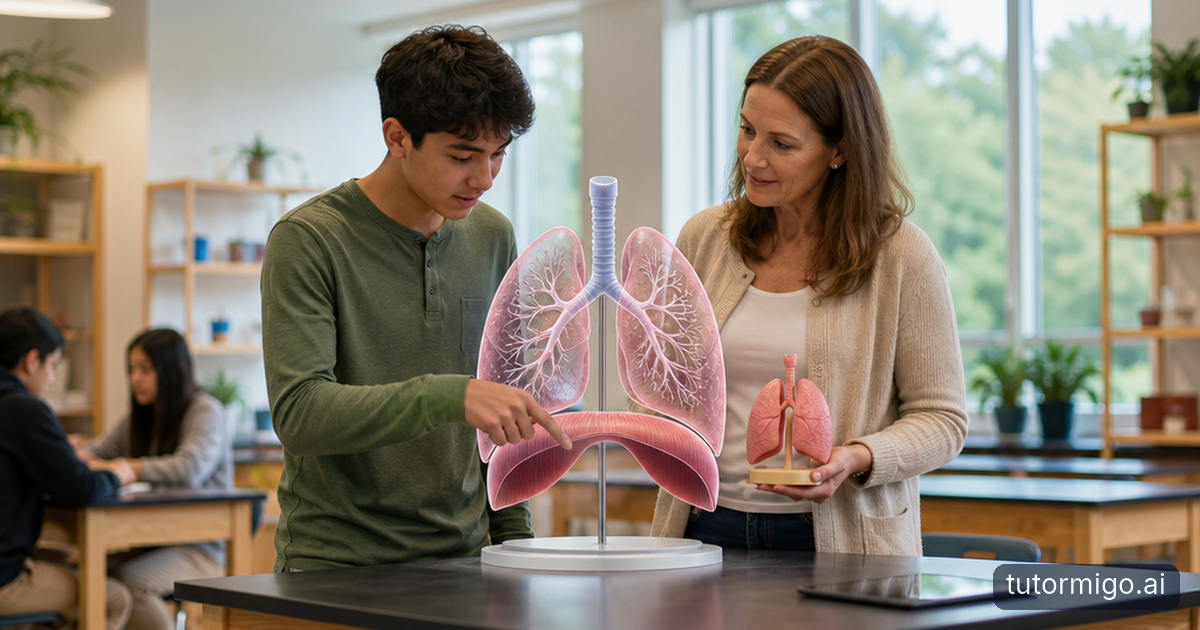
Next, investigate an enzyme–substrate active site. First, locate the pocket without the substrate visible. Predict which surface properties could support binding. Reveal the substrate, rotate the complex, and identify contacts consistent with your prediction. Explain how induced fit could alter the interaction; a static fit does not prove that a reaction occurs.
In TutorMigo.ai, ask the AI Tutor: “Question my explanation of how active-site chemistry affects substrate binding, one question at a time.” Use Socratic science tutoring as a questioning approach, then write an independent explanation linking a structural change to a possible change in enzyme activity. This turns tactile digital learning—through touch or pointer input—into testable scientific reasoning.
What to Do Next: Turn Model Exploration into AP Exam Prep
Convert model exploration into exam preparation by retrieving the structure from memory, explaining its function, and answering an unfamiliar application question. Revisit mistakes after a delay. Use models to resolve spatial uncertainty, but use independent written responses to check whether that understanding transfers to AP assessment tasks.
Start with one current weakness: molecular polarity for AP Chemistry or membrane organization for AP Biology. Spend five minutes predicting and checking viewpoints in your chosen model, then close it. Draw the essential relationships and write a short explanation without labels or hints.
Next, answer a relevant practice question. For chemistry, explain how geometry affects whether bond dipoles cancel. For biology, predict how disrupting the inner mitochondrial membrane could affect ATP production. Distinguish a justified prediction from simply naming a structure.
Use TutorMigo.ai’s structured AP practice sets and progress tracking to organize your review. Ask the AI Tutor to challenge an unclear explanation in the tutoring workspace, and turn recurring errors into spaced-repetition flashcards. Revisit those cards after a delay rather than repeatedly rereading immediately.
Make interactive 3D models for biology and chemistry one part of that cycle. Open a teacher-approved model and rotate it now; then bring your explanation to TutorMigo.ai for further study. Accurate prediction—not confident clicking—is your measure of progress.
| Format | Spatial Manipulation | Conceptual Retention | Self-Paced Inquiry |
|---|---|---|---|
| 2D textbook diagrams | Fixed viewpoints; selected relationships are emphasized. | Can support retention when paired with explanation and retrieval. | Inspect and annotate freely, but cannot rotate the depicted structure. |
| Prerecorded 3D videos | Viewpoints and movement are chosen by the producer. | Can clarify sequences; passive viewing does not establish learning. | Pause and replay, but cannot independently change the viewpoint. |
| Interactive 3D models from a teacher-approved resource | User-controlled rotation; other controls depend on the resource. | Can support spatial understanding when paired with focused tasks and retrieval. | Investigate available views independently; slicing and other functions vary. |
Frequently asked questions
Three-dimensional models can clarify bond orientation and nonsuperimposable mirror images because you can inspect multiple viewpoints. They are not automatically more effective than diagrams: benefits depend on model accuracy, task design, and active reasoning. For AP Chemistry, prioritize assessed molecular geometry before optional stereochemistry extensions.
Not necessarily. Many educational models work in a standard browser with mouse or touch controls, while others require specific software or hardware. Check the individual resource’s requirements before starting. TutorMigo.ai’s supplied features do not establish a native 3D viewer or any requirement for VR equipment.
Interactive models can support AP Biology preparation when they clarify assessed relationships, such as membrane organization, enzyme structure, or protein function. Pair exploration with data interpretation and written explanations. Models supplement practice questions; they do not replace learning how to justify predictions using biological evidence.
Models can externalize spatial transformations, allowing you to inspect relationships instead of reconstructing everything mentally. Begin with simple structures, predict one rotation, and compare the result with your prediction. Gradually remove labels and model access so that support develops independent reasoning rather than continued dependence.
Enjoyed this read?
Like, share, or comment below.
Comments
0Sign in required · respectful discussion · replies supported
Loading comments…