


Understand math anxiety before adding more practice

Math anxiety is more than disliking homework. Your child may dread being wrong, freeze when asked to answer, or develop a stomachache before practice. It can grow after repeated confusion, public mistakes, pressure to work quickly, or hearing adults describe themselves as hopeless at math. No single experience explains every child’s distress.
Worry also competes for the attention your child needs to hold numbers and instructions in mind. A child who understood something yesterday may struggle to retrieve it while upset today. That does not automatically mean the learning has disappeared. Before deciding they need more repetition, notice whether they can discuss the same idea when the pressure is lower.
Try saying, “This feels frustrating. Let’s find the part that stopped making sense.” Avoid “This is easy” or “You knew this already,” which can make confusion feel embarrassing. If your child avoids asking for help elsewhere too, these suggestions for supporting a child who is afraid to ask questions may help.
Ask one gentle question: “Are you worried about the answer, the time, or not knowing where to start?” Listen before offering a solution. If distress is persistent or severe, involve your child’s teacher and consider appropriate professional support.
Find the missing building block, not a label
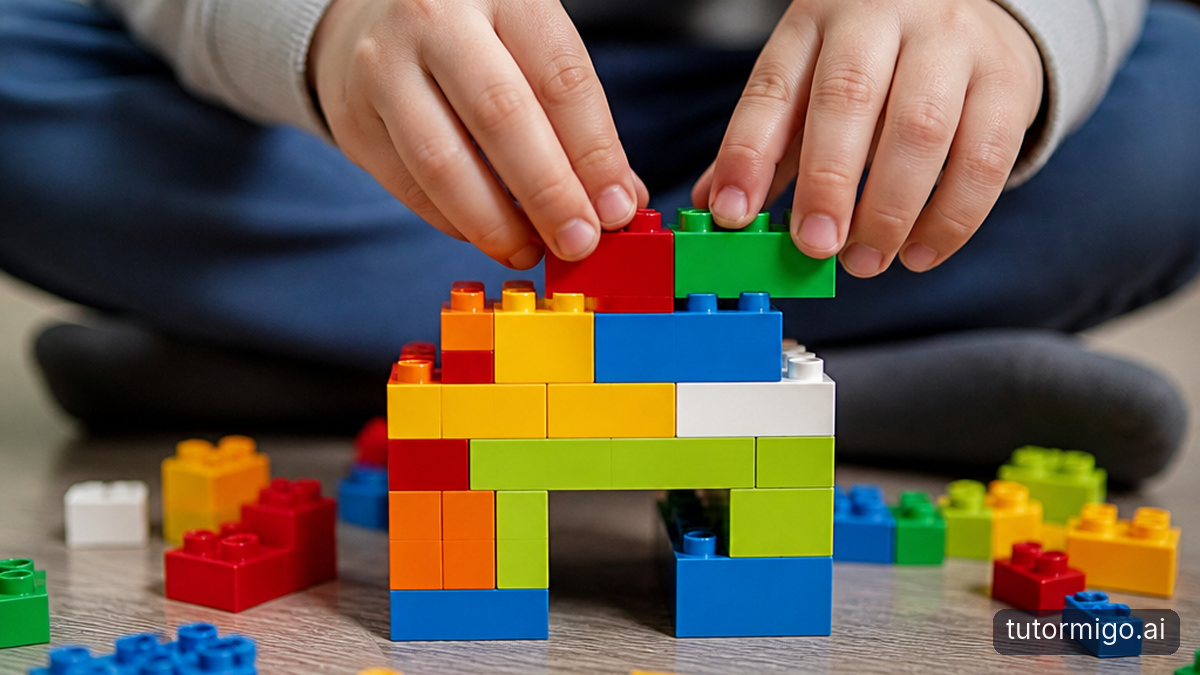
Math skills build on earlier understanding. A child struggling with fractions may actually be unsure about equal groups or what counts as one whole. If that uncertainty stays hidden, each new procedure adds another instruction to memorize. More practice at the newest topic can then repeat the confusion rather than resolve it.
Choose one recent mistake and investigate together. If your child adds fraction denominators, ask what the denominator tells them. Can they show equal parts? Can they explain why pieces must have a common size before combining them? Their explanation gives you a more useful starting point than the number of wrong answers on a page.
Memorizing a formula is not inherently bad; remembering useful relationships can reduce effort. The difficulty comes when a formula is disconnected from meaning. A child may reproduce steps in a familiar question but have no way to decide whether those steps fit a different one.
Build a tiny review deck around the missing concept, not the entire worksheet. One card might ask, “What does the denominator describe?” Another could ask your child to draw equal parts. Keep these prompts narrow enough to reveal understanding. Introduce new cards only after you have explored what their answers mean.
Make fractions visible, then invite an explanation
Before asking your child to remember fraction rules, give the quantities something they can touch. Cut two identical paper circles into equal pieces: one into halves and another into quarters. Ask your child to cover one half with quarter pieces. Let them move the pieces before naming the relationship .
Point out that both circles represent the same-sized whole. Unequal wholes can make a fraction demonstration misleading. Ask, “What changed: the amount covered, or the size and number of pieces?” This shifts attention from reciting a rule to noticing why the relationship works.
Then connect the objects to a written example, such as . Ask your child to explain each step: “What do we have? What are we combining? Why does the piece size stay the same?” If they cannot explain a step, return to the paper rather than supplying a longer rule.
Later, turn the activity into a retrieval card: “Show why two quarters cover the same amount as one half.” In TutorMigo.ai, the math step editor offers a place to work through written steps. You can ask your child to explain each one alongside their work, keeping the hands-on model nearby whenever the symbols stop making sense.
Replace timed drills with low-pressure flashcard reviews
If a timer makes your child panic, remove it from home practice. Pick a few manageable questions and allow thinking time. Say, “We’re checking what makes sense, not how fast you are.” Pause after an error, explore it, and try a similar question without treating the retry as a test.
For calmer flashcards study, build a small deck from concepts your child has already explored. Give each card one clear job. Instead of “Explain fractions,” ask, “What makes these parts equal?” Include a drawing prompt, a short calculation, and a question about why a step works. Keep answers brief enough to check without hiding the reasoning.
Invite your child to attempt an answer before turning the card over. That is active recall: bringing an idea to mind rather than simply recognizing it. If they are stuck, offer a small cue or return to the objects. After checking, ask them to explain the answer in their own words.
Revisit cards across different days rather than repeating the whole deck in one sitting. TutorMigo.ai’s Flashcards supports spaced-repetition decks, AI-assisted card creation, and review scheduling. Check suggested cards for clarity and accuracy together. Scheduling can organize review, but it cannot determine whether your child understands an answer; their explanation still matters.
Use tutoring support to make thinking easier to see
Personalized support is most useful when it starts with a specific uncertainty. Instead of asking for the answer to a worksheet, your child could tell the TutorMigo.ai AI Tutor, “I can name the denominator, but I don’t understand why it stays the same when I add equal-sized pieces.” That gives the conversation a concrete starting point.
You can also help your child request a smaller explanation: “Explain one step, then ask me a question.” An AI Tutor can provide another way to explore a concept, but responses should still be checked against the problem, a physical model, or guidance from your child’s teacher. An explanation that sounds clear is not proof of understanding.
The workspace’s session history gives you something specific to revisit together. Ask your child to show you a helpful exchange and explain the idea without reading it aloud. Notice which questions recur and which explanations they can now give independently. This offers a practical view of their work without turning every session into an inspection.
Use those observations to adjust the review deck. Add one card for a recurring gap, revise a confusing prompt, or revisit a concept with objects. Keep the focus on what support is useful next, rather than expecting a tool or a streak of correct answers to remove anxiety.
Start with one calm, repeatable routine
For your next practice session, set aside about ten quiet minutes and let your child know the plan has an end. Begin with a check-in: “How does math feel today?” Then choose one recent problem and ask them to show where they became unsure. Your aim is to identify one gap, not diagnose everything at once.
Spend the middle of the session exploring that gap with an object, drawing, or short explanation. Ask your child to talk through each step. If tension rises, pause or simplify the task. A useful stopping point might be understanding what the question asks, even if you do not finish the calculation.
Finish with a few familiar review cards and, if appropriate, one new card connected to the discovery. Let your child answer before checking, discuss any uncertainty, and arrange to revisit the idea another day. Keep a brief note such as “understands equal parts; needs another look at the whole.” That is more actionable than “bad at fractions.”
Close by naming something observable: “You showed me exactly where it became confusing.” Ask what helped and what felt pressuring. Repeat the routine with small adjustments, not escalating demands. The next step is simply one clearer explanation and another manageable opportunity to recall it—not a promise that fear will disappear overnight.
Frequently asked questions
If timing triggers distress, use untimed practice at home while you rebuild understanding. Discuss required timed activities with your child’s teacher rather than adding more pressure yourself.
Include focused prompts about concepts your child has explored: explain a step, draw a quantity, or solve a short example. Avoid cards that encourage repeating an unexplained rule.
Ask them to explain their reasoning, show it with objects, and try a slightly different example. A correct answer alone may not reveal how they reached it.
Agree on a brief check-in. Review one example or tutoring exchange together, ask what became clearer, and choose one idea to revisit. Avoid correcting every response as it happens.
Related reading
Enjoyed this read?
Like, share, or comment below.



Comments
0Sign in required · respectful discussion · replies supported
Loading comments…