

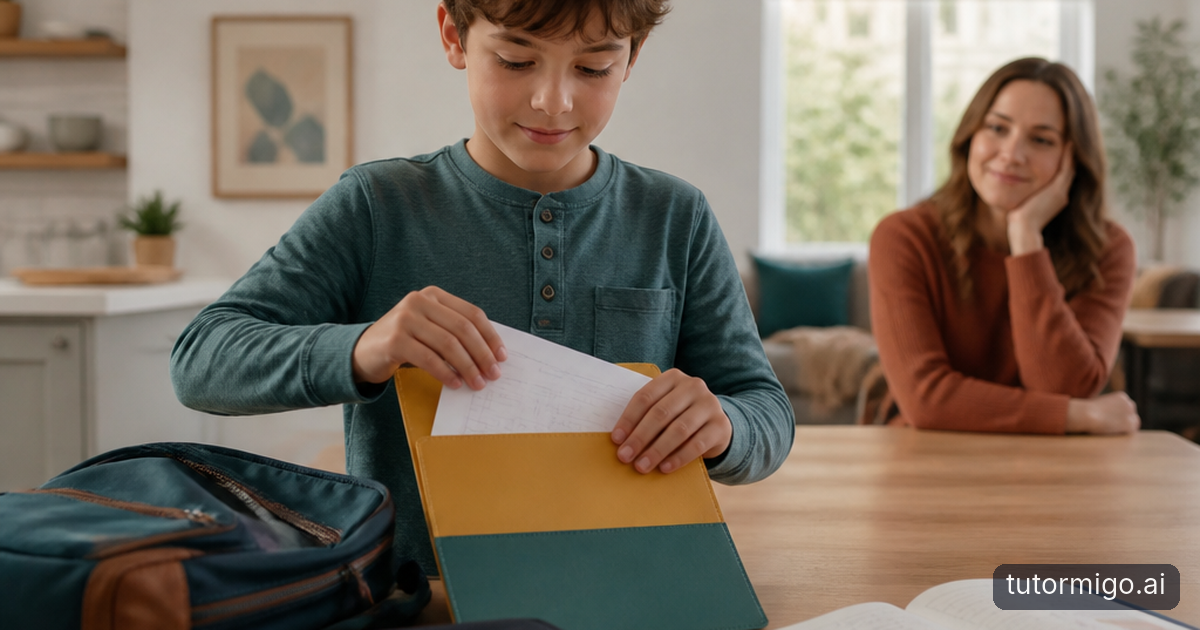
Homework Routines: Missing Materials or Forgotten Deadlines?
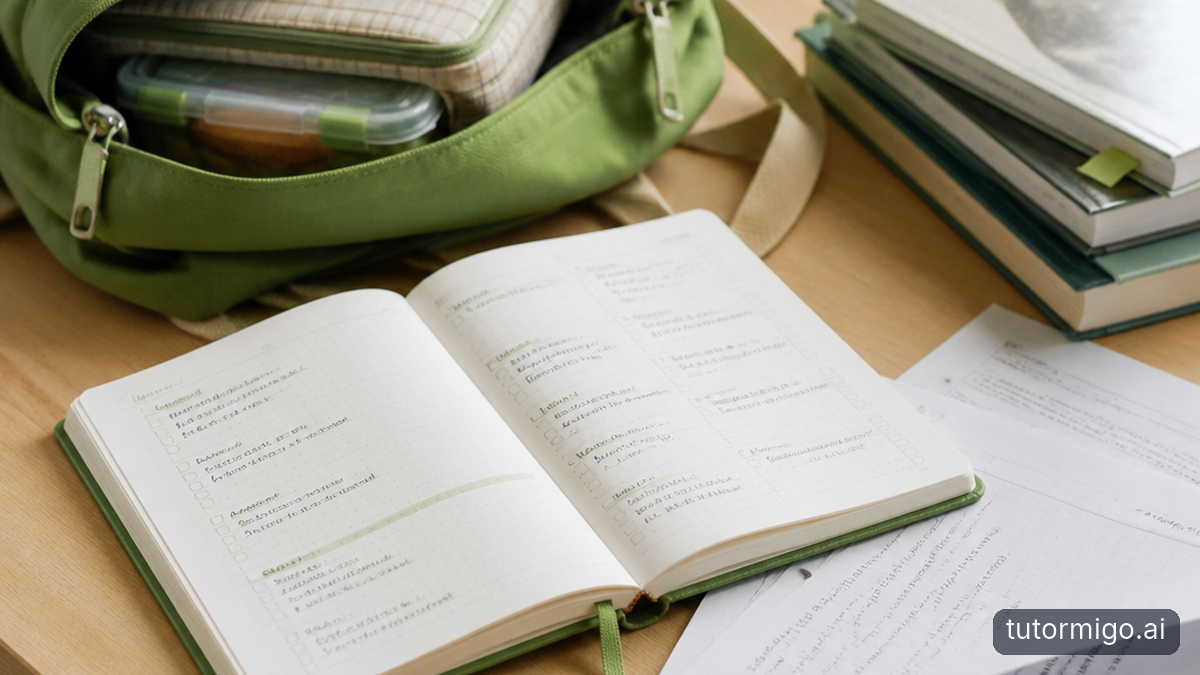
“I forgot my homework,” your child says as you reach school. Instead of adding another reminder, find out what went missing: the worksheet, the deadline, or the plan. A child-owned system gives every assignment one recording place, every project dated steps, and every school day a short packing check.
The same sentence can describe different problems. Your child might have completed a worksheet but left it on the kitchen table. That is a materials problem: the work needs a reliable route into the backpack. Or your child might have brought the worksheet home without realizing it was due the next morning. That is a deadline problem: the task and due date were never captured or checked.
Ask, “Show me where the plan stopped working,” rather than “Why do you always forget?” Look together at the assignment, planner, and bag. If the due date was recorded correctly but the book stayed at school, another calendar reminder will not solve the problem. A materials check before leaving class might.
Keep the response small and specific. For missing materials, teach a packing action. For forgotten deadlines, teach recording and checking. If both happened, practice both separately. You are helping your child identify a repairable gap, not treating a missed assignment as proof that they are careless.
Choose One Place Your Child Can Record Every Assignment and Due Date
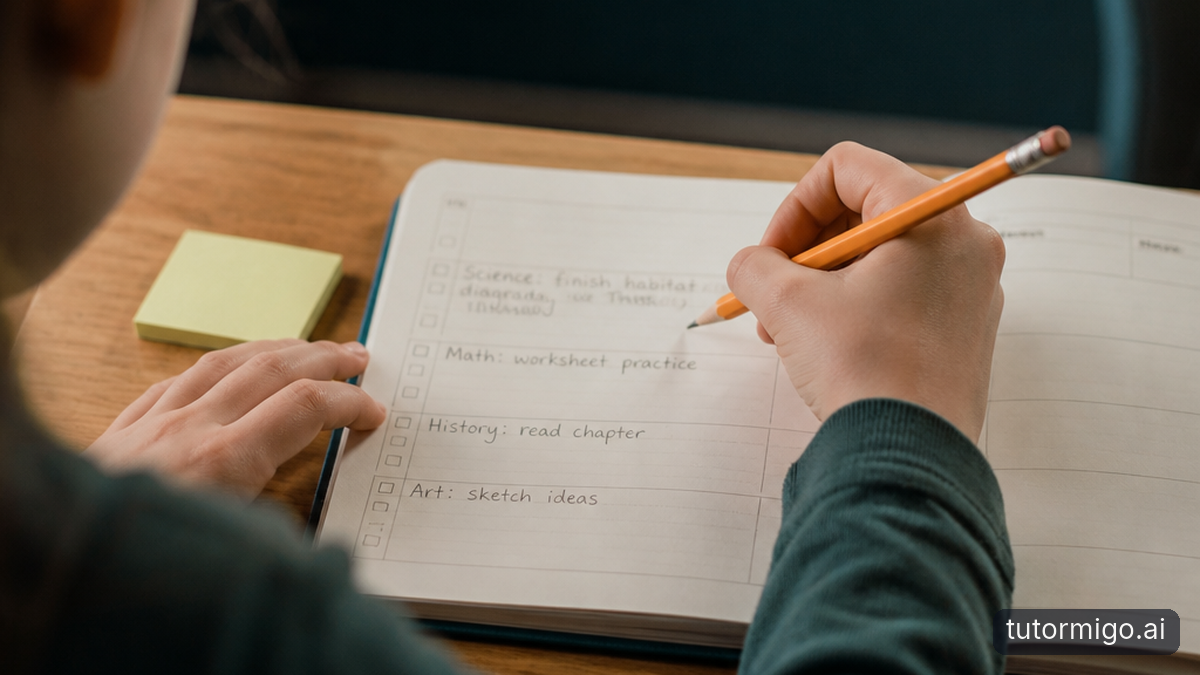
Choose one place your child can actually use when assignments are given. A paper planner works well when devices are unavailable during lessons. A simple digital task list can work when school rules allow access. Let your child choose between workable options, then keep that choice steady while the habit develops. Teaching kids to track homework starts with reliable capture, not an elaborate color system.
Each entry needs the subject, a clear action, and the due date. “Science” is too vague. “Science: finish the habitat diagram; due Thursday” tells your child what to do and when it must be ready. Add necessary materials when they are easy to overlook: “Bring science notebook home.” Record tasks as they are assigned, rather than relying on memory until the end of the day.
If teachers post work in different places, make the planner the child's single overview. The original instructions can stay in the school system; the planner needs a short task description and a note about where to find details. An adult may demonstrate this transfer, but the child should make the entry.
Teachers can help by reserving a brief recording pause and asking students to check their entries against the posted instructions. At home, ask your child to show you the tracker instead of creating a competing parent-maintained list.
Turn Big Projects Into Small Steps With Dates Your Child Can Track
A deadline tells your child when a project ends, but not how to begin. Sit together with the instructions and identify the pieces of work the project requires. Ask, “What would you need to have finished before you could do the next part?” Let your child name the steps, and help only when a step is unclear or too large.
Suppose a habitat poster is due Friday. Your child might gather facts on Monday, choose pictures on Tuesday, draft the layout on Wednesday, and assemble and check the poster on Thursday. Record each action on its own date in the same planner used for everyday homework. Include gathering supplies early enough to avoid discovering on Thursday evening that there is no poster board.
Make steps concrete enough that your child can tell when they are finished. “Work on habitat project” invites uncertainty. “Write three short sections using my notes” gives the session a clear purpose. Before setting dates, check existing homework and family commitments together. A plan that ignores a busy evening is unlikely to survive it.
Leave some room before the final deadline for missing information, corrections, and packing. If a step takes longer than expected, help your child move the remaining steps deliberately. Student task management includes updating a plan when circumstances change, not pretending the original schedule still works.
Teach a Daily Backpack-and-Planner Check: Tasks, Materials, Deadlines, and Finished Work
Attach the check to something that already happens: before leaving school and before putting the backpack by the door at home. Use the same short sequence each time. Your child opens the planner, identifies the next tasks and deadlines, gathers the matching materials, and checks where completed work needs to go. During the first few days, demonstrate the sequence aloud, then let your child lead it.
At school, the question is, “What must come home so I can follow my plan?” A reading response may require the novel, instructions, and notebook. At home, the question becomes, “What must return tomorrow?” That includes finished assignments, borrowed books, and any materials needed for class. Looking at the planner before looking inside the bag gives the packing check a purpose.
Give papers a predictable route. A two-pocket folder can separate work to complete from work ready to return. Your child moves a finished worksheet into the return pocket immediately, rather than leaving it beside the backpack. Use a consistent home for books and supplies, too, so packing does not begin with a search.
Include submission in the check. A completed digital assignment may still need to be uploaded, and a paper assignment still needs to be handed in. Teach your child to distinguish “finished,” “packed,” and “submitted” instead of treating them as the same event.
Build Independent Organizational Skills for Students by Gradually Reducing Reminders
Independence develops through supported practice, not a sudden announcement that your child is now responsible for everything. Begin by doing the check together while your child handles the planner and materials. Describe the action rather than giving a string of commands: “The planner says you need your reading book. Where will you check for it?” Your goal is to make the process visible.
Next, switch from instructions to one neutral cue: “It's backpack-check time.” Let your child use a small checklist inside the bag or planner to supply the remaining prompts. Once they can complete the routine with that cue across several ordinary school days, try letting the usual event, such as finishing homework, trigger it. Reduce support based on what you observe, not an arbitrary deadline.
Agree on a brief review rather than hovering. Your child might show you the packed return folder after completing the check. Notice specific actions: “You checked tomorrow's deadline and packed the book without me naming it.” That tells your child which behavior helped.
When something is missed, return to the broken step and briefly increase support there. Avoid taking over the entire system. If these conversations regularly turn into arguments, these ways to ease daily homework battles can help you keep the review calm while maintaining clear expectations.
Try a One-Week Starter Routine, Then Review and Adjust It Together
Introduce this as a short experiment, not a permanent set of rules. On Monday, let your child choose the recording place and set up a folder for unfinished and returning work. Practice recording one real assignment with its due date and needed materials. Agree on when the daily check will happen and what help you will provide.
On Tuesday, have your child lead the backpack-and-planner check while you watch. On Wednesday, choose one upcoming project or longer assignment and divide it into dated steps. If there is no project, practice planning an existing assignment across the available evenings. Keep the same tracker rather than adding another chart.
On Thursday, reduce your help to the agreed cue if your child is ready. On Friday, review the week together for a few minutes. Ask, “What was easy to record? What did we still have to search for? Which deadline surprised you?” Look at actual entries and materials rather than relying on a general impression of success.
Choose one adjustment for the following week: a clearer task description, an earlier packing check, or a better place for finished papers. Keep what worked. If you also want visibility into learning progress, TutorMigo.ai's Parent Dashboard offers that broader view; keep the child-owned planner as the assignment record. The immediate goal is a routine your child can explain, use, and gradually manage with less help.
Frequently asked questions
Choose whichever your child can access when assignments are given and check consistently. School device rules matter more than extra features. Keep one main record rather than maintaining competing lists.
Practice matching each task to the materials needed before leaving school. A recorded deadline cannot replace a packing check.
Reduce prompting when your child can carry out the routine with the current level of support across several school days. If a step breaks down, briefly restore help for that step.
Enjoyed this read?
Like, share, or comment below.



Comments
0Sign in required · respectful discussion · replies supported
Loading comments…