


Why personalized learning uses different approaches

Children bring different experiences, interests, vocabulary, and background knowledge to the same lesson. Your child might explain a science idea clearly but struggle to organize a written answer. Another child might calculate confidently yet need help understanding what a word problem asks. These differences are useful clues, not measures of overall ability.
When people discuss different learning styles in children, they often mean preferences: listening to an explanation, seeing a diagram, or trying something hands-on. Those preferences can make learning more comfortable, but they are not permanent categories. Research reviewing learning-style matching found insufficient evidence to justify assigning instruction according to a diagnosed style.
Instead, match the approach to the task and your child's response. A diagram can clarify fractions; speaking aloud can help rehearse an explanation; physical objects can make grouping concrete. Your child may benefit from all three during the same week.
A single teaching approach cannot always address every starting point at once. Classroom teachers balance many needs, so support at home can offer another explanation or extra practice. Personalized education works best when it expands your child's options rather than narrowing them to “a visual learner” or another fixed label.
How does learning pace affect understanding?
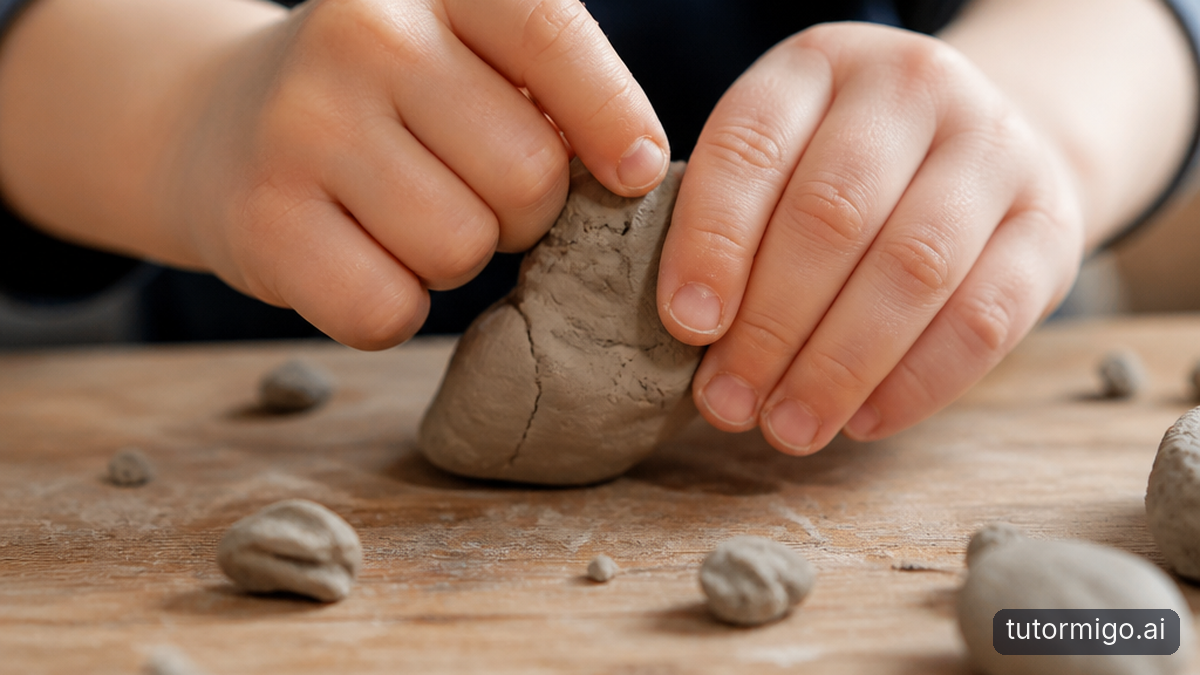
Moving quickly is not the same as understanding deeply. If your child is still working out why a method works, another page of harder questions may reinforce confusion. Equally, repeating something already understood can make practice feel pointless. A useful pace leaves room for both challenge and successful independent attempts.
Imagine your child can name fractions but cannot explain why two differently divided shapes show the same amount. Before introducing a harder worksheet, return to paper folding or fraction tiles. Ask your child to compare the pieces and describe what stays the same. Then try a fresh example without the materials.
Self-paced learning for kids should mean adjusting support, not removing structure. Agree on a small goal, such as explaining one idea and completing a few relevant questions. Pause when mistakes reveal confusion; move forward when your child can explain the reasoning and use it in a new situation.
Revisit the skill on another day, too. Immediate success may reflect familiarity with an example rather than lasting understanding. For more ways to balance flexibility with routine, explore learning at your own pace. The aim is steady progress without turning every study session into a race.
How can you discover strengths and knowledge gaps?
Start with observation rather than a label. Ask your child to show you a recent task that felt manageable and one that felt difficult. Listen for the point where confidence changes. “I don't understand fractions” may actually mean “I lose track when the denominators are different,” which gives you a much clearer starting point.
Use three simple prompts: “What is the question asking?”, “How would you begin?”, and “Why does that step make sense?” Your child's answers help distinguish a missing concept from unfamiliar vocabulary, forgotten facts, or difficulty organizing the work. Avoid supplying the answer before you hear their thinking.
Notice strengths with the same care. A child who invents a clear example has useful reasoning skills, even if the written answer needs work. You can build from that strength by asking for an oral explanation first, then helping turn it into a short written response.
Keep a brief record of what your child can do independently, what needs prompting, and what remains unclear. Bring specific examples to the teacher rather than a broad concern about ability. If difficulties persist across repeated explanations and practice, discuss appropriate support with the school. Individual learning needs deserve attention without expecting an app or a parent to diagnose their cause.
What can you do at home without taking over?
Choose a predictable, manageable study routine with your child. A short session with a clear purpose is often more useful than an open-ended instruction to “keep studying.” Offer limited choices: review vocabulary first or explain yesterday's lesson first. Choice supports involvement while you keep the overall goal clear.
When your child gets stuck, change one part of the approach. Read the question aloud, sketch the situation, or work through a simpler example together. Then return responsibility: “Now show me how you would try this one.” If you complete every difficult step, you lose the chance to see what your child actually understands.
Make feedback specific. Instead of only saying “You're clever,” try “You checked your answer against the question and spotted the missing detail.” That points to an action your child can repeat. When frustration rises, take a brief break and return to a smaller task rather than extending the session as a punishment.
Build independence gradually: model a strategy, practise together, and then step back. Our guide to helping a child study independently explores that transition. End by asking what helped and what still feels unclear; your child's answer can shape the next session.
How can AI and interactive tools complement school?
AI personalized learning tools are most useful when you give them a specific job. Your child might need another explanation of a classroom concept, a chance to discuss their reasoning, or a different way to represent a problem. Keep the school learning goal in view rather than collecting unrelated activities.
TutorMigo.ai's AI Tutor Workspace provides personalized tutoring chat and session history. Your child can ask the AI Tutor to explain a confusing step or approach an idea differently. Session history provides a record to revisit when returning to a topic, supporting continuity without requiring a completely fresh conversation each time.
Interactive tools offer other ways to work. TutorMigo.ai's Study Tools Hub includes a whiteboard, code sandbox, and math step editor. Choose the tool that serves the task: sketching a relationship on a whiteboard may help your child make their thinking visible. Its spaced-repetition flashcards provide scheduled review, with AI-assisted card creation, for material that needs remembering.
General-purpose chatbots can also explain ideas. When comparing tools, look at the study workflow around the conversation, including review scheduling, session history, and parent visibility. An AI Tutor should complement your child's teacher and your judgment; check important explanations against class materials, and never treat a fluent answer as proof of accuracy.
What should you try next with TutorMigo.ai?
Start with one current learning need, not a complete overhaul. Ask your child to choose a classroom topic that feels uncertain. Agree on a small goal, such as explaining a concept in their own words, and select one suitable activity. Afterwards, try a fresh question to see whether the activity helped.
One of the practical TutorMigo benefits is having different forms of support available without assuming every task needs the same approach. A tutoring conversation can support explanation; scheduled flashcard review can support recall; an interactive workspace can help your child show their reasoning. Use each selectively rather than adding more screen time by default.
TutorMigo.ai's Parent Dashboard offers visibility into child progress, learning controls, and co-learning features. Use that visibility to start supportive conversations, not comparisons with other children. Ask, “What feels clearer now?” and “Where would another explanation help?” Progress information is a starting point; your child's work and the teacher's feedback add important context.
Review the approach after several sessions. Keep what helps your child work more independently and change what does not. To explore flexible support alongside classroom learning, visit TutorMigo.ai and choose one tool to try together.
Frequently asked questions
It means adjusting explanations, practice, pace, and support to a child's current understanding. The goal is to address specific needs while building on strengths, not to assign a permanent learning-style label.
Notice preferences, but avoid fixed categories. Try different approaches and check which helps your child understand the particular task and apply the idea independently.
Look for difficulty explaining steps, repeated guessing, or trouble applying an idea to a new question. Revisit the underlying concept and ask the teacher about persistent difficulties.
TutorMigo.ai offers personalized tutoring chat with session history, spaced-repetition flashcards, interactive study tools, and parent visibility. Choose support that fits the current learning goal and check understanding beyond the tool.
Enjoyed this read?
Like, share, or comment below.



Comments
0Sign in required · respectful discussion · replies supported
Loading comments…