

At 7:45 p.m., Maya is staring at the same page of science notes she opened twenty minutes ago. Her pencil is in her hand, but her attention is somewhere else. She is not unwilling to learn. She is tired of being taught in a way that never seems to meet her where she is.
Her parent tries encouragement, reminders, and a quick snack. Maya tries to answer the questions, but every mistake makes her quieter. What she really needs is not another command to concentrate. She needs a learning conversation—one that can slow down, explain the idea differently, celebrate a useful question, and make the next step feel possible.
This is where the idea of an AI tutor for kids becomes more interesting. The value is not simply receiving an answer. It is having a responsive learning companion that can support curiosity, practice, and confidence while adults remain involved.
Sometimes the first sign thWhen Studying Feels Like a Chore: Try an ai tutor
at a child is ready to learn is not a correct answer. It is a better question.

Why One Teaching Style Does Not Fit Every Child
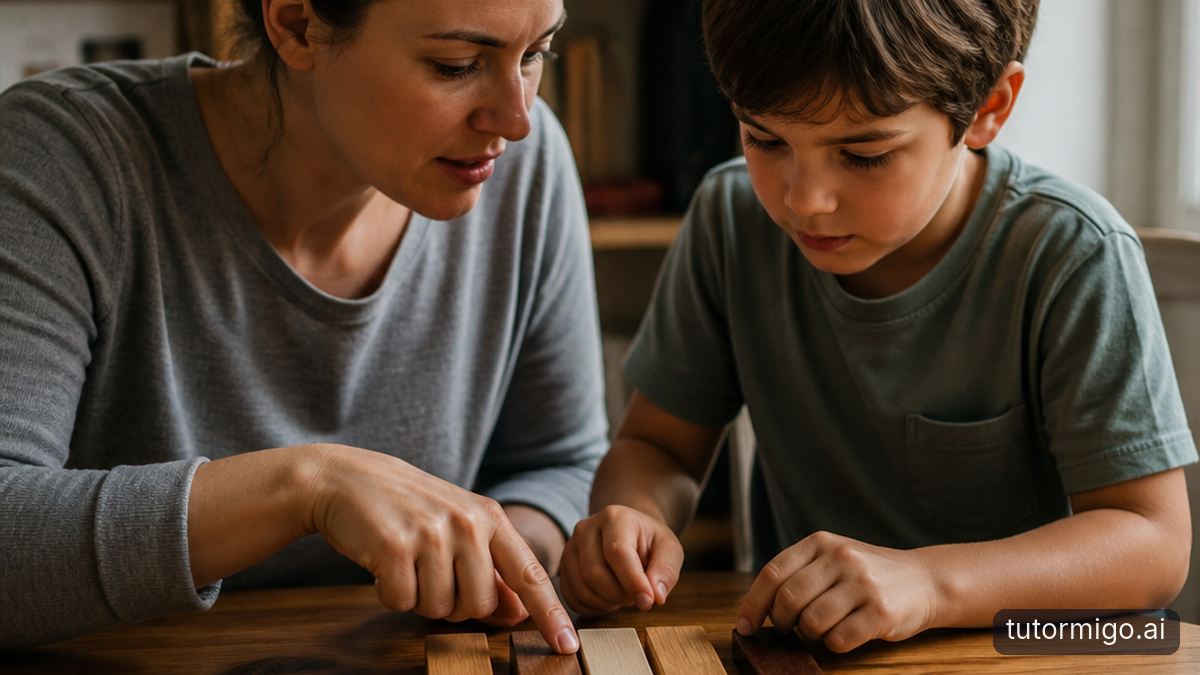
Children bring different personalities to the same assignment. One child may want a clear sequence of small steps. Another may understand a concept after seeing a real-world example. A third may need to talk through the idea before writing anything down. Some students ask questions immediately; others need time and a low-pressure way to test their thinking.
A one-size-fits-all approach can miss those differences. A long explanation may overwhelm a child who needs a quick demonstration. A worksheet may feel dull to a learner who becomes interested when a topic connects to music, sports, animals, or a practical problem. Personalized learning for kids starts with noticing these preferences rather than treating them as distractions.
Parents and teachers already make these adjustments every day, but time is limited. An AI learning companion for children can offer another place to explore an idea, revisit a confusing step, or practice without the pressure of performing in front of others. It does not know a child perfectly, and it should not replace adult judgment. It can, however, help make learning more flexible and conversational.
For a broader look at this approach, parents can also explore how AI tutors support personalized learning.
What Does It Mean for a Tutor to Have a Personality?
An AI tutor with personality is not a pretend friend or a character added only for entertainment. Personality can describe the tutor’s teaching manner: patient and encouraging, curious and exploratory, structured and direct, or calm and reassuring. Each style can shape how a child approaches a difficult question.
Imagine a student working on a tricky math problem. A structured tutor might ask the student to identify the known information first. An exploratory tutor might ask what pattern the student notices. A supportive tutor might normalize the pause and invite the child to try one small step. The content remains important, but the path into it feels different.
TutorMigo’s AI Tutor Workspace brings personalized AI tutoring into a dedicated space with expert personas, streaming responses, and session history. That combination matters because a learning conversation can continue instead of feeling like a brand-new question every time. A child can ask, “Can you explain that another way?” and keep working through the idea.
Compared with a general-purpose generative chatbot, a dedicated learning workspace gives families a clearer context for study. The goal is not to make every interaction entertaining. It is to make questions easier to ask and practice easier to return to.
How TutorMigo Makes Learning More Interactive
TutorMigo can support several different moments in a child’s learning routine. During homework, the AI Tutor can help a student unpack a confusing prompt, talk through a concept, or examine a mistake without simply rushing to the final answer. During review, spaced-repetition flashcards can help a learner return to important material over time, with AI-assisted card creation and review scheduling.
For children who understand best by doing, the Study Tools Hub adds interactive options such as a whiteboard, code sandbox, and math step editor. A student might sketch a geometry idea, test code, or work through a math solution step by step. These tools give the child something to manipulate rather than requiring every lesson to happen through paragraphs of explanation.
This is one of the practical TutorMigo benefits: learning can move between conversation, practice, and visual or hands-on work. A child who says, “I still do not get it,” has more than one route to try. Families can also use structured exam preparation with practice sets and progress tracking when a specific test becomes the focus.
The best AI tutor for kids is not necessarily the one with the most dramatic personality. It is the one that helps a child keep thinking, asking, and practicing while the learning goal stays visible.
Using an AI Learning Companion Responsibly
Parents do not need to hand over the entire study routine to an AI learning companion. Start with a small, clear purpose. Ask your child to use TutorMigo to explain a confusing term, create a short flashcard deck from reviewed material, or compare two possible approaches to a problem. Then ask the child to describe what they learned in their own words.
It also helps to set simple boundaries. AI can support brainstorming, practice, and explanation, but schoolwork should still reflect the student’s thinking. Encourage your child to check important information, show their reasoning, and ask a teacher when the topic remains unclear. A useful companion should make a child more involved in learning, not less.
Parents can stay connected through the Parent Dashboard, which provides visibility into child progress, learning controls, and co-learning features. That visibility can turn “How was homework?” into a more specific conversation: “Which topic felt easiest today?” or “Where did you want another explanation?”
Teachers also have an important role. The Teacher Dashboard supports class management, student monitoring, knowledge base assignment, and reporting for educators. In this model, AI complements the adults who understand the child’s context, goals, and wellbeing. It offers another layer of support without becoming the final authority.
For practical guidance on keeping AI use honest and productive, read this guide to using an AI tutor without cheating.
A More Human Next Step for Learning
Personality cannot solve every learning challenge. A child may still feel tired, frustrated, or unsure. But the right teaching style can change what happens next. Instead of closing the book after one confusing explanation, a student may ask for an example, try a new tool, review a few flashcards, or return to the conversation later.
That is the heart of personalized AI tutoring: not replacing the relationship between children and the adults who care for them, but giving learning more ways to begin again. Parents can encourage. Teachers can guide. Children can question, practice, make mistakes, and discover what helps them understand.
If your child sees studying as a chore, try starting with curiosity rather than pressure. Explore TutorMigo.ai together, choose one topic, and notice which tutor style or study tool helps your child stay engaged. The goal is not to make every lesson perfect. It is to help your child feel that learning can respond to them—and that they do not have to face the difficult parts alone.
Explore TutorMigo.ai as a supportive AI tutor for kids and find a more personal way to learn, practice, and keep going.
Parents can also read about making homework time calmer at home for ideas that work alongside an AI learning companion.
Frequently asked questions
An AI tutor with a personality uses a recognizable teaching manner, such as patient, structured, curious, or encouraging. The style can make explanations and practice feel more comfortable while keeping the learning goal central.
Yes, an AI tutor can make learning more engaging by offering conversation, alternative explanations, interactive practice, and study tools. Engagement still depends on the child, the topic, and the support provided by parents and teachers.
TutorMigo supports personalized learning through its AI Tutor Workspace, expert personas, session history, flashcards, interactive study tools, and structured practice options. Families can choose the tools that fit a child’s current learning need.
No, an AI tutor is not a replacement for a teacher or parent. TutorMigo is designed to complement adult guidance by providing additional practice, explanations, and visibility into learning.
Related reading
Enjoyed this read?
Like, share, or comment below.

Comments
0Sign in required · respectful discussion · replies supported
Loading comments…