


Fix Common Mistakes in IELTS Listening Before They Hurt Your Score
If IELTS preparation feels like a maze of rules and formats, you're not alone. Many candidates struggle to reach their desired band without the right guidance. Unlock smarter success by focusing on skill-specific practice, fixing common errors, and building a solid study plan. This approach empowers students while providing parents with the confidence that comes from clear, practical steps.
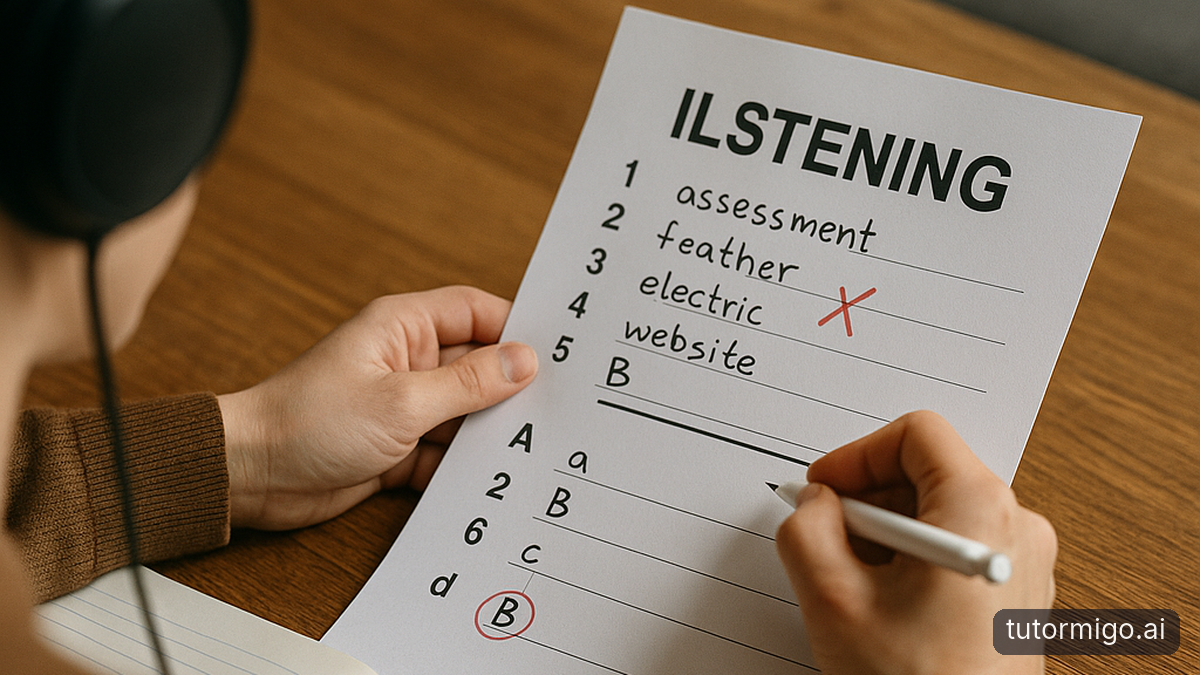
The IELTS Listening test includes four sections with 40 questions in 30 minutes. It starts with a conversation between two people and ends with a lecture. A common mistake is not reading the questions ahead of time. For example, during a recording about a job interview, the question might ask for the starting salary, but if you are not prepared, you could overlook the figure when it is mentioned quickly.
Spelling and grammar errors also reduce scores. Candidates often misspell words like "environment" or forget articles. To fix this, review your answers in the 10-minute transfer period and practice transcribing short audio clips. Another issue is losing focus when speakers use different accents or change topics. Stay engaged by noting key words that match the questions.
Simulate the test by using headphones and timing yourself. Review mistakes by listening again to the audio and seeing where you went wrong. This builds accuracy over time.
Tip: Predict answers by looking at the question type, such as expecting a name or a number.
Working with an AI Tutor allows you to practice listening exercises and receive targeted feedback on the exact mistakes you are making.
Use These Proven Strategies to Boost Your IELTS Reading Score
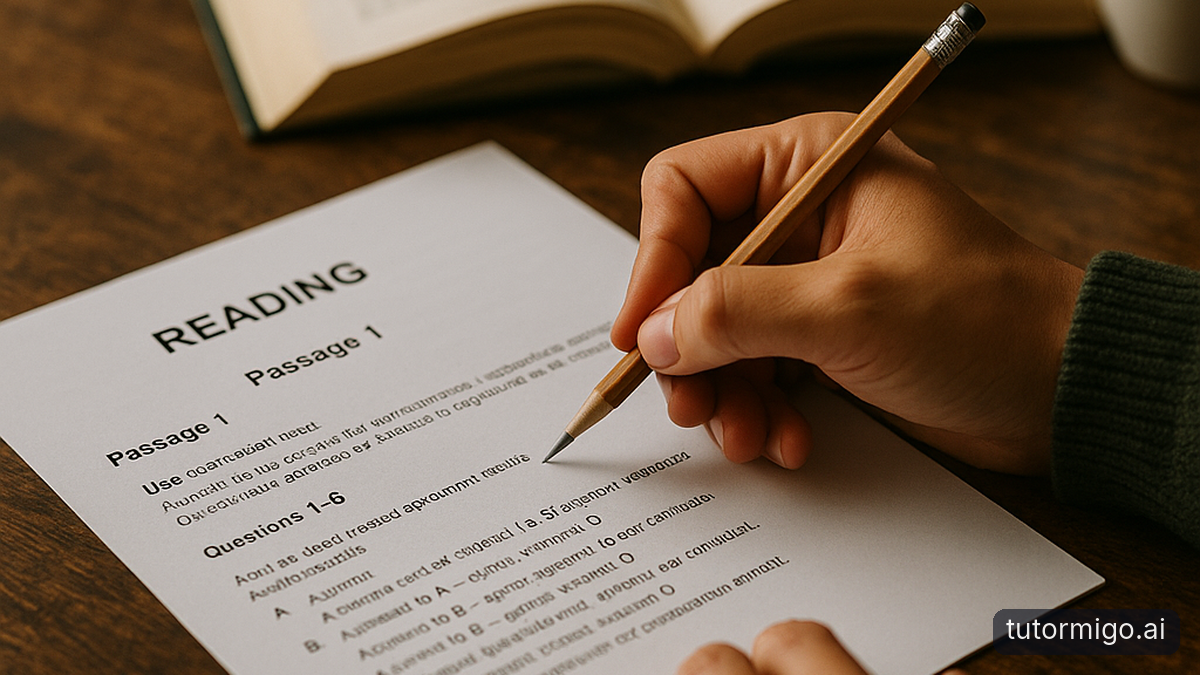
The IELTS Reading section has three passages with 40 questions to complete in 60 minutes. Passages can be from books, journals, or newspapers. Proven strategies include skimming for the main idea in the first two minutes and then scanning for specific details to answer questions.
One effective approach is to identify the question type quickly. For true, false, or not given questions, look for exact matches or contradictions in the text. For example, if the passage says "The study was conducted in 2015" and the question claims "The research took place before 2010", the answer is false. Matching headings requires reading the first sentence of each paragraph to match the theme.
Building your vocabulary helps with paraphrasing, which is common in the test. Learn synonyms for common words like "increase" as "rise" or "grow". Practice with timed sessions to improve speed, aiming to finish each passage in 20 minutes. Review incorrect answers to understand why you chose the wrong option.
Parents often ask how to support their child here. Encourage daily reading of English articles and discussing main points. This not only builds skills but also confidence for the actual exam day.
Tip: Do not spend more than one minute on a difficult question; move on and return later if time allows.
Cut Writing Time in Half While Improving Your IELTS Band
IELTS Writing requires you to complete two tasks in 60 minutes. Task 1 needs at least 150 words, often describing a chart or process, while Task 2 is an essay of 250 words on a given topic. To cut writing time in half, start by spending just five minutes planning your structure before you begin writing.
Use a standard format for Task 2: an introduction that paraphrases the question, two body paragraphs with main ideas and examples, and a short conclusion. For instance, if the topic is about technology in education, your first body could discuss benefits with an example of online learning, and the second could cover drawbacks like reduced social interaction. This keeps you on track and avoids rambling.
Improving your band score comes from addressing all parts of the task and using a range of vocabulary and grammar. Avoid repeating words; instead of "important" use "crucial" or "essential". Common mistakes include writing less than the word count or not giving opinions clearly in Task 2. Practice by timing yourself and checking against band descriptors for coherence and task achievement.
Many students find that outlining key points first saves time during the actual writing. After drafting, spend two minutes editing for errors. Over time, this method can help you complete both tasks comfortably within the limit while aiming for a band 7 or higher.
Tip: Use linking words like "furthermore" and "in addition" to improve coherence without adding extra time.
Sound More Confident in IELTS Speaking with Simple Techniques
The IELTS Speaking test is an interview lasting 11 to 14 minutes divided into three parts. Part 1 covers familiar topics like your home or work, Part 2 is a two-minute talk on a cue card, and Part 3 involves deeper discussion. To sound more confident, practice extending your answers beyond simple yes or no responses.
In Part 1, when asked about your hobbies, do not just say "I like reading." Instead, add "I like reading because it allows me to explore new worlds, and my favorite genre is science fiction which I find inspiring." This shows fluency and lexical resource. For Part 2, use the one minute preparation to note three main points and examples.
Simple techniques include using discourse markers like "first of all" and "another thing is" to organize your thoughts. Record yourself speaking and listen back to check for hesitation or pronunciation issues. Focus on clear enunciation and natural rhythm rather than perfect grammar in every sentence.
Parents can help by having regular conversations in English about various topics to build comfort. Avoid memorizing answers as examiners can tell, and instead develop the ability to speak naturally on any subject.
Tip: If you do not understand a question, politely ask for clarification by saying "Could you please repeat that?"
Create Your Own Smarter 30-Day IELTS Study Plan
Creating your own 30-day IELTS study plan can make a big difference in your preparation. Divide the time into focused blocks for each skill while including regular review and mock practice. This structured approach helps you cover all areas without feeling overwhelmed.
In the first week, dedicate time to Listening. Spend 45 minutes daily on practice tests, then 15 minutes reviewing mistakes using transcripts. Focus on one section per day to build familiarity. The second week shifts to Reading, where you work on speed and accuracy with three passages daily, analyzing why you got questions wrong.
Week three is for Writing. Complete one task each day, planning quickly and writing under time. Use feedback to improve structure and vocabulary. In the final week, practice Speaking by recording responses to sample questions and self-assessing or getting input from others. Include full mock exams on days 25 and 30 to simulate the real test.
Do not forget vocabulary building. Learn 10-15 new words daily and review them using spaced repetition. Adjust the plan based on your diagnostic test results at the start. Consistency is key, so schedule study sessions at the same time each day.
You can use an AI Tutor to review your writing and speaking practice for detailed feedback on areas to improve.
Tip: Take a full practice test every Sunday to track progress and adjust your plan accordingly.
Choose Study Tools That Offer Expert Guidance at Transparent Prices
Choosing the right study tools is essential for effective IELTS preparation. Look for platforms that provide expert guidance on all four skills with clear explanations of the test format and scoring bands. Transparent prices are important so you know exactly what you are paying for, whether it is a monthly subscription or pay-per-session model.
Innovative tools can make practice more engaging, such as interactive exercises that mimic the real exam. For example, tools that offer instant scoring for writing and speaking based on official criteria help you see your band level quickly. When selecting, read reviews and check if there are sample lessons or free trials available.
Expert insights often come from resources that break down common pitfalls and offer strategies tailored to different band targets. For more details on what to expect, see the tutoring cost for IELTS in 2026 full breakdown. This can help you budget effectively while choosing quality support.
Compare options to find what suits your learning style. See AI Tutor vs human tutor for IELTS prep for a balanced view. Also explore IELTS prep tutors costs strategies for student success to understand how different approaches fit your goals.
Ultimately, the best tools empower you to practice regularly and track improvement, giving parents the reassurance that you are using reliable resources at fair prices.
Frequently asked questions
There are 40 questions in total across four sections. You have 30 minutes to listen and answer, plus 10 minutes to transfer answers if it is the paper test.
Skim the passage in 2-3 minutes to get the gist, then answer questions by scanning for keywords. Allocate about 20 minutes per passage to stay on track.
Plan your response in 5 minutes before writing. Use a clear structure and practice typing or writing under timed conditions to build speed without sacrificing quality.
Dedicate time to each skill daily, review mistakes, take mock tests weekly, and use spaced repetition for vocabulary. Adjust based on your weak areas.
Explore TutorMigo
Enjoyed this read?
Like, share, or comment below.


Comments
0Sign in required · respectful discussion · replies supported
Loading comments…