


IELTS Preparation: Test Format and Scoring Bands
Preparing for the IELTS exam can be stressful if you don't know the test format or how to practice effectively. As a student or parent, you might be unsure about tutors, costs, and the best strategies. This guide provides the practical steps you need.
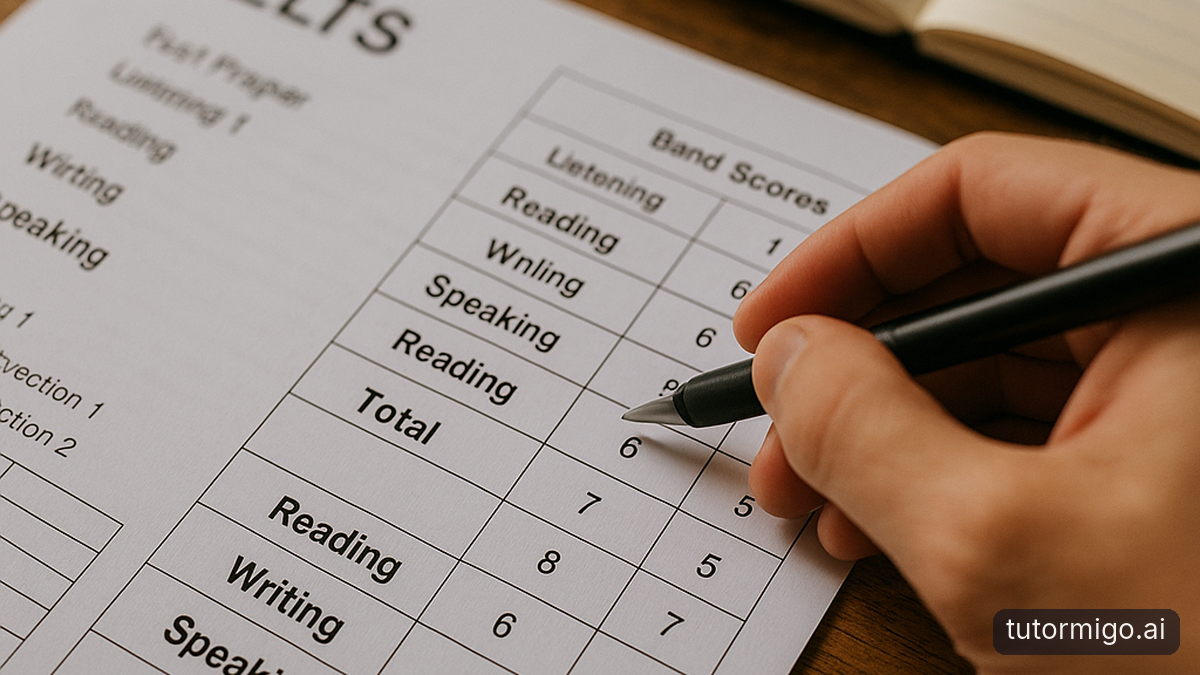
The IELTS test is split into four sections. Listening takes 30 minutes with 40 questions from four audio recordings. Reading lasts 60 minutes with three passages and 40 questions. Writing is 60 minutes with task one for describing visuals in 150 words and task two for an essay in 250 words. Speaking lasts 11 to 14 minutes with an examiner in three parts.
Scoring uses bands from 0 to 9 for each skill, with the overall being the average rounded. For example, 7 in Listening, 6.5 in Reading, 7.5 in Writing, and 6 in Speaking averages to 6.75 and rounds to 7. A band 6 shows competent use with some errors. This helps you set goals like no band below 6.5 for university admission.
Imagine you are a parent helping your child prepare for university in the UK needing an overall band of 7. A diagnostic test shows writing at band 5.5 due to poor structure. Focus practice on planning and linking words. Regular mock tests will track your progress and keep you on track for the real exam.
How to Choose an IELTS Tutor That Matches Your Needs

When choosing an IELTS tutor, start by identifying your specific needs based on your current practice test scores. If you are weak in speaking, look for someone who specializes in conversation practice and can provide mock interviews with feedback on pronunciation and fluency. Check their qualifications, such as being a certified IELTS examiner or having years of experience helping students reach band 7 or higher. Ask for references or success stories from past students to see real results in band score improvements.
Consider the format that works for you and your schedule. Online tutors offer flexibility and often lower rates, allowing sessions from home at convenient times. In-person sessions provide more personal interaction but may require travel. Try a trial lesson to see if their teaching style matches your learning preferences. For example, if you need lots of feedback on writing, ensure the tutor reviews your essays in detail rather than just giving general advice on structure.
Many students also turn to an AI Tutor for flexible practice sessions between human tutor meetings. This can help reinforce what you learn. Look for tutors who use current materials and focus on the latest test changes. Discuss your target band score upfront so they can tailor the sessions to your goals, such as improving from band 5.5 to 7 in three months.
A parent supporting a teenager might interview several tutors and ask questions like how they handle common mistakes in reading. Choose someone who encourages regular practice and tracks progress with practice tests. This way, you can ensure the investment leads to measurable improvements in your IELTS performance.
Breaking Down the Costs of IELTS Tutoring
IELTS tutoring costs vary widely depending on location, tutor experience, and session format. Individual online sessions often range from $25 to $60 per hour, while in-person rates in major cities can reach $80 or more. Group classes are usually cheaper at $15 to $30 per person but offer less personalized attention. Many tutors offer package deals, such as 10 sessions for $400 to $550, which can save money compared to paying hourly.
Factors like the tutor's background affect pricing. A former IELTS examiner with a track record of helping students achieve band 7 might charge more, but the faster progress can justify the expense. Online platforms tend to be more affordable since there are no travel costs. Parents should factor in the cost of materials or additional mock tests, which might add $50 to $100 over the course of preparation.
Consider a scenario where a student needs to improve from band 5.5 to 7. Investing in 15 hours of targeted tutoring at $40 per hour totals $600. This could prevent the need to retake the exam, which costs around $200 to $250 each time. Compare this to self-study resources that are free or low cost but may take longer without guidance on specific weaknesses like writing coherence.
Budgeting also means looking at value rather than just the lowest price. Ask tutors about their methods for tracking progress and whether they include practice tests in the fee. Some packages cover full mock exams and feedback, providing better return on your investment for IELTS success.
Practical Exam Strategies for Each IELTS Skill
For Listening, practice with a variety of accents by listening to podcasts and news from different English-speaking countries. Focus on keywords and take notes during the audio to capture details like names and dates. In a real test scenario, a conversation about booking a hotel might include questions on room types and prices, so train yourself to listen for numbers and specifics without getting distracted by unfamiliar words.
Reading strategies include skimming the passage first for the main idea and then scanning for answers to specific questions. Allocate 20 minutes per passage to avoid running out of time on the last one. For instance, if a text is about environmental changes, identify the writer's opinion quickly by looking for words like 'however' or 'in contrast' that signal shifts in argument.
In Writing, plan your response for five minutes before starting. For task one, use an overview sentence and then detail the key features in 150 words. Task two requires a clear introduction, body paragraphs with examples, and a conclusion in 250 words. Practice using a range of vocabulary and complex sentences, but avoid errors by sticking to structures you know well.
Speaking benefits from daily practice recording yourself on cue card topics. Expand answers beyond short replies by giving reasons and examples. During the test, use natural fillers like 'let me think' to buy time while staying fluent. A common practice is to discuss a topic like 'a memorable journey' by describing what happened, how you felt, and why it mattered.
Common Mistakes to Avoid in IELTS Prep and How to Fix Them
One common mistake is not practicing under timed conditions, which leads to poor time management on test day. To fix this, complete full mock tests at least once a week and review your answers immediately after. For example, if you spend too long on reading questions, set strict timers for 20 minutes per passage during practice to build the habit.
Another error is ignoring weaker skills and only practicing strengths. If your writing is at band 5.5, dedicate extra time to it instead of repeating listening exercises you already do well. Use targeted drills like rewriting paragraphs for better coherence and get feedback to identify patterns in your mistakes.
Students often use overly complex vocabulary incorrectly, which lowers their band. Fix this by learning collocations and phrases in context rather than memorizing lists. Practice incorporating new words into full sentences during writing and speaking sessions to ensure natural use.
Finally, skipping regular review of mistakes means repeating them. Keep a journal of errors from practice tests and revisit them weekly. This spaced approach helps you remember corrections and apply them in the next mock exam, leading to steady band score gains over time.
Smart Study Tools to Make Your IELTS Practice More Effective
Smart study tools can transform your IELTS preparation by making practice more targeted and efficient. Flashcards help you build vocabulary and collocations through spaced repetition, so you review words just before you forget them. Create decks for common IELTS topics like education or environment and test yourself daily to improve reading and writing scores.
Interactive tools like whiteboards let you plan essays visually before writing, helping organize ideas for task two. For listening and speaking, record and playback your responses to self-assess fluency. These hands-on methods keep you engaged and allow you to simulate exam conditions at home.
The AI Tutor can simulate speaking tests and give feedback on your responses in real time. Combine this with structured exam prep that includes full practice sets and tracks your progress toward target bands. For a structured approach, see this SAT Study Plan: 8 Weeks to IELTS Success that can be adapted for your needs.
Explore the TutorMigo Benefits for Smarter Daily Studying to build better habits. Using these tools consistently turns scattered practice into a clear path to higher IELTS bands, whether you are working alone or with support from parents and tutors.
Frequently asked questions
It depends on your current level, but most students benefit from 8 to 12 weeks of dedicated study. Consistent daily practice of 1-2 hours can help you improve by one band.
Many universities require an overall band of 6.5 or 7. Check the specific requirements for your chosen program and aim for no skill below 6 if possible.
Look for measurable progress in your practice tests and ask for regular feedback on your weak areas. Effective tutors adjust plans based on your mock exam results.
Tools like flashcards and the AI Tutor supplement practice well but work best alongside human guidance for complex feedback on writing and speaking.
Explore TutorMigo
Enjoyed this read?
Like, share, or comment below.

Comments
0Sign in required · respectful discussion · replies supported
Loading comments…