

Understanding the IELTS Test Format and Scoring Bands
If you're curious about the tutoring cost associated with IELTS preparation in 2026, it's essential to first grasp the test structure so you can focus your efforts and budget wisely on what matters most for reaching your desired band score. Knowing the format helps you avoid wasting resources on unnecessary practice.
The IELTS has four sections. Listening is 40 minutes with four parts that get harder. You listen to conversations and lectures and answer 40 questions. For example, you might hear about renting a flat and need to write down the address and rent amount.
Reading takes 60 minutes with three passages and 40 questions. Passages cover various topics, and you practice skimming and scanning to find answers quickly.
Writing is 60 minutes too. Task 1 is describing a graph or map in 150 words. Task 2 is a 250 word essay giving your opinion on a social issue.
Speaking is 11-14 minutes with an examiner. You answer personal questions, speak on a topic for two minutes, and discuss ideas in depth.
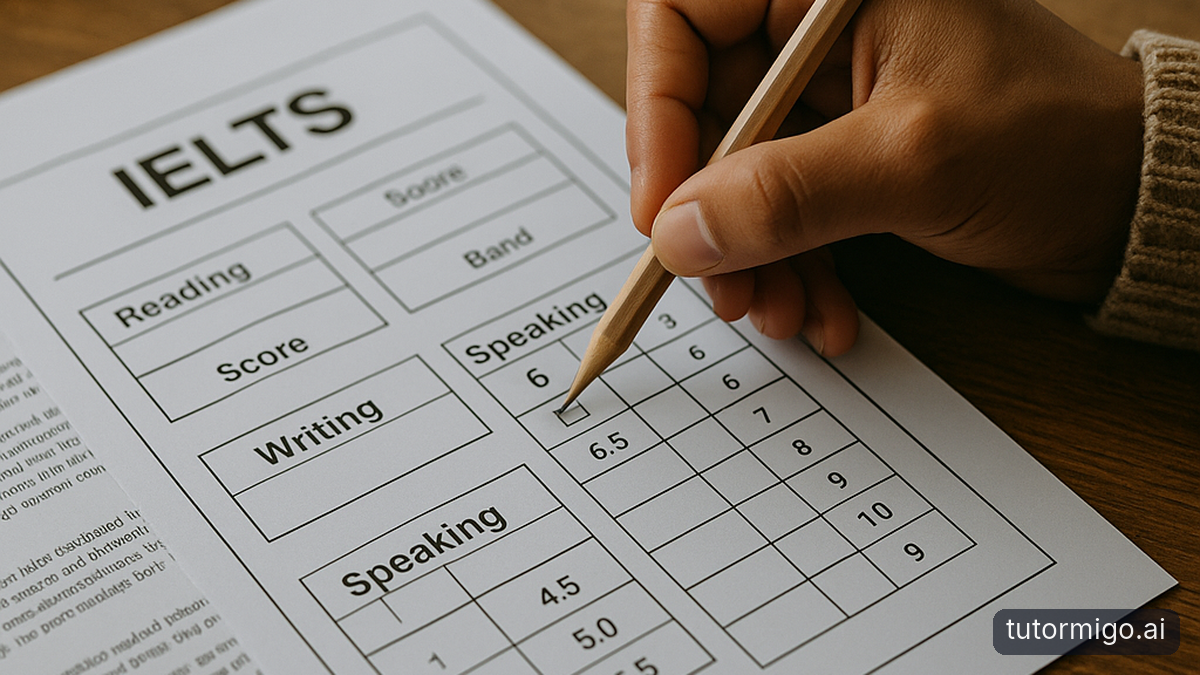
The scoring is in bands 0-9. The overall band is the average, rounded. If you get 6, 7, 6.5, and 7.5, the average is 6.75 which rounds to 7. This helps you see where to improve to meet university requirements like 6.5 overall. This understanding is crucial because it allows you to set realistic goals and allocate your preparation time and any tutoring cost more effectively toward the skills that will have the biggest impact on your overall result.
Skill-Specific Practice for Listening and Reading
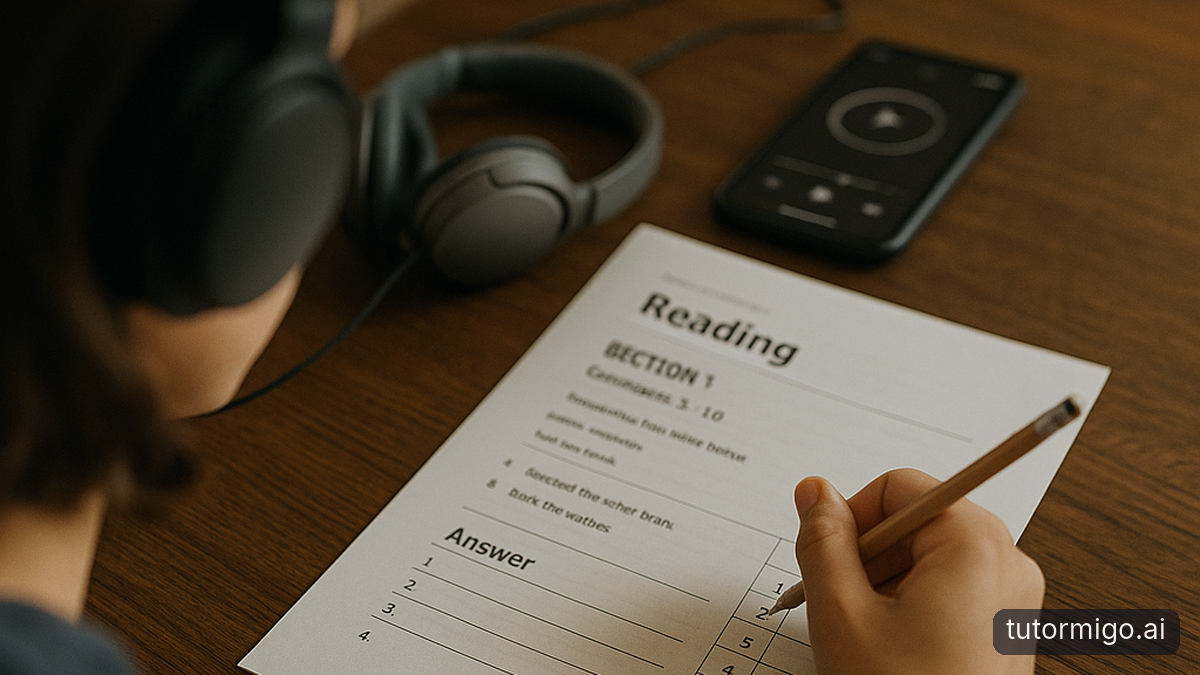
Practicing listening requires specific techniques to build speed and accuracy. Familiarize yourself with different accents since the test includes British, Australian, and North American speakers. Use practice recordings and focus on predicting what comes next. In a scenario like listening to a university orientation, note the library location and club meeting times. Listen once without pausing, then check answers and listen again to catch missed details.
Another tip is to read the questions before the audio starts. This way, you know what information to listen for. Avoid getting stuck on one question and move on if you miss something.
For reading, time management is crucial as you have only 20 minutes per passage. Skim the title and first paragraph for the main idea. Then scan for keywords from the questions. For example, search for dates if the question asks when a law was passed.
Practice with scientific articles and ads. A typical mistake is confusing 'true' with 'not given'. True means the statement matches the text, not given means it is not mentioned at all.
Regular timed practice helps you handle the pressure. Review mistakes after each session to see if it was vocabulary or instruction misunderstanding. This builds skills for better scores. Additionally, build your vocabulary by noting new words from the texts and using them in context to help in both reading and listening comprehension.
Tutoring Cost Breakdown for IELTS Preparation in 2026
When thinking about tutoring cost for IELTS preparation in 2026, consider what you are paying for in terms of personalized guidance across the skills. Tutors charge based on their experience and whether sessions are one on one or in groups. Online options often help manage the tutoring cost compared to traveling for in person meetings, but the key is finding someone familiar with the band descriptors for each skill.
For listening and reading, a tutor can provide targeted exercises and explain why certain answers are correct. This saves time compared to self study where you might repeat errors. In a scenario where your listening score is stuck at band 5.5, sessions focused on note taking strategies could be a good use of resources. For example, they might play a recording and pause to discuss key phrases.
Writing often requires detailed feedback because the tutor reviews essays for coherence, lexical resource, and task response. You work on ensuring you address every part of the prompt. The tutoring cost here pays off if it leads to consistent improvement in your writing over several weeks.
Speaking practice with a tutor simulates the real interview setting. They can correct your pronunciation and encourage you to give fuller answers rather than short ones. If your goal is a band 7 in speaking, regular sessions can build the confidence needed for the discussion part.
Ultimately, evaluate the tutoring cost by the results you see in practice tests. If after a month your overall band has not moved, it may be time to adjust the approach or add more self directed practice to complement the sessions. Remember that the goal is not just to pass but to achieve the band required for your specific purpose, whether for study or work.
Effective Study Plans and Mock Practice for IELTS
Creating a study plan for IELTS preparation helps you cover all skills without feeling overwhelmed. Start by assessing your current level with a diagnostic test. Then allocate time each day to different sections. For example, spend 30 minutes on listening in the morning when you are fresh, followed by 30 minutes of reading in the evening.
A good plan includes variety to keep you engaged. One day focus on writing task one by describing several graphs, the next on task two essays. Include speaking practice by recording yourself answering cue cards and listening back to check for fluency.
Mock practice is essential to simulate test day conditions. Set aside a full three hours for a complete test, including all sections. After finishing, spend time reviewing every mistake. For reading, note if you ran out of time on the last passage and adjust your pacing next time.
Include the SAT Study Plan: 8 Weeks to IELTS Success as a guide for organizing your weeks leading up to the exam. It can provide a roadmap for building skills gradually.
An AI Tutor can help by creating custom practice questions based on your performance. Use it to get quick feedback on a sample speaking response or to generate ideas for a writing topic. Consistent mock tests every two weeks will show if your study plan is working and help you adjust before the real test.
Common Mistakes in IELTS and How to Fix Them
Many candidates lose points due to avoidable errors in each skill. In listening, a frequent issue is not reading the instructions carefully, leading to wrong answer formats like writing more words than allowed. To fix this, always check the word limit before writing your answer and practice with sample answer sheets.
In reading, people often spend too much time on difficult questions and run out of time for easier ones later. The fix is to answer the simple questions first and return to hard ones if time permits. For example, if a matching heading question takes too long, skip it and come back.
Writing mistakes include not planning before starting the essay, resulting in disorganized ideas. Spend five minutes outlining your main points and examples before writing. Also, make sure to use a range of vocabulary and not repeat the same words from the prompt.
Speaking errors often involve giving memorized answers or speaking too fast due to nerves. Practice with an AI Tutor to get used to natural conversation flow. Record your responses and time them to ensure you speak for the full two minutes in part two.
Another common problem is ignoring the band descriptors when preparing. For writing, focus on task response by fully answering the question. To see real improvement, review your work against the official criteria. To build better habits, check out resources on smarter daily studying. In the end, balancing the tutoring cost with effective strategies is key to success in your IELTS preparation. To get started without any upfront commitment, try TutorMigo.ai for free and experience how an AI Tutor supports your journey to a higher band score.
Frequently asked questions
The overall band is the average of your four skill bands, rounded to the nearest 0.5 or whole number. For example, an average of 6.75 rounds up to 7.0.
Focus on different accents, read questions first, and practice with timed tests. Review mistakes to understand why you missed certain details.
Plan your essays, use varied vocabulary, and ensure you address all parts of the task. Get feedback on coherence and grammar.
It depends on your current level and goals. Targeted tutoring can help address weak skills efficiently, but combine it with self-study and mock tests for best results.
Explore TutorMigo
Enjoyed this read?
Like, share, or comment below.



Comments
0Sign in required · respectful discussion · replies supported
Loading comments…