


Why Soft Robots Move Differently
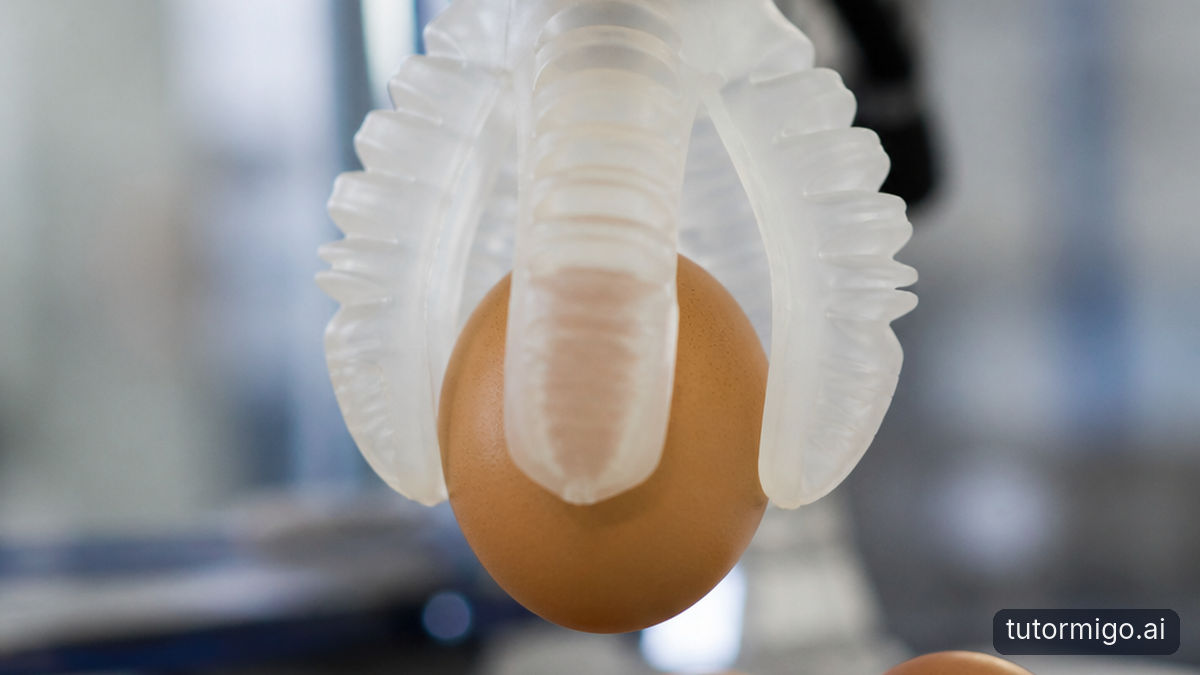
A conventional industrial robot depends on rigid links, metal joints, and carefully controlled geometry. That structure is excellent for repeating a precise task, such as moving a component between two fixed points, but it can become a liability when the robot meets an unpredictable surface or a person. A rigid arm that presses too hard may bruise a fruit, damage tissue, or injure a worker.
Soft robotics takes a different approach. Its bodies may be built from silicone, rubber-like elastomers, fabric, gels, or other compliant materials that deform under force. Instead of treating deformation as an error, engineers design around it. A soft finger can wrap around an object, distribute pressure across a larger area, and adapt to shapes that were not programmed in advance.
This compliance does not mean a soft robot is uncontrolled. The robot still needs a useful source of movement, a way to sense its surroundings, and a control system that coordinates its actions. The important difference is that some of the mechanical intelligence is built directly into the body. When a flexible chamber expands or a segmented arm bends, the material itself helps produce a safer response.
Key idea: Soft robotics is not simply “robotics made from rubber.” It is a design philosophy in which flexibility, deformation, and physical contact are central parts of how the machine works.
The Materials That Give Soft Robots Their Flexibility
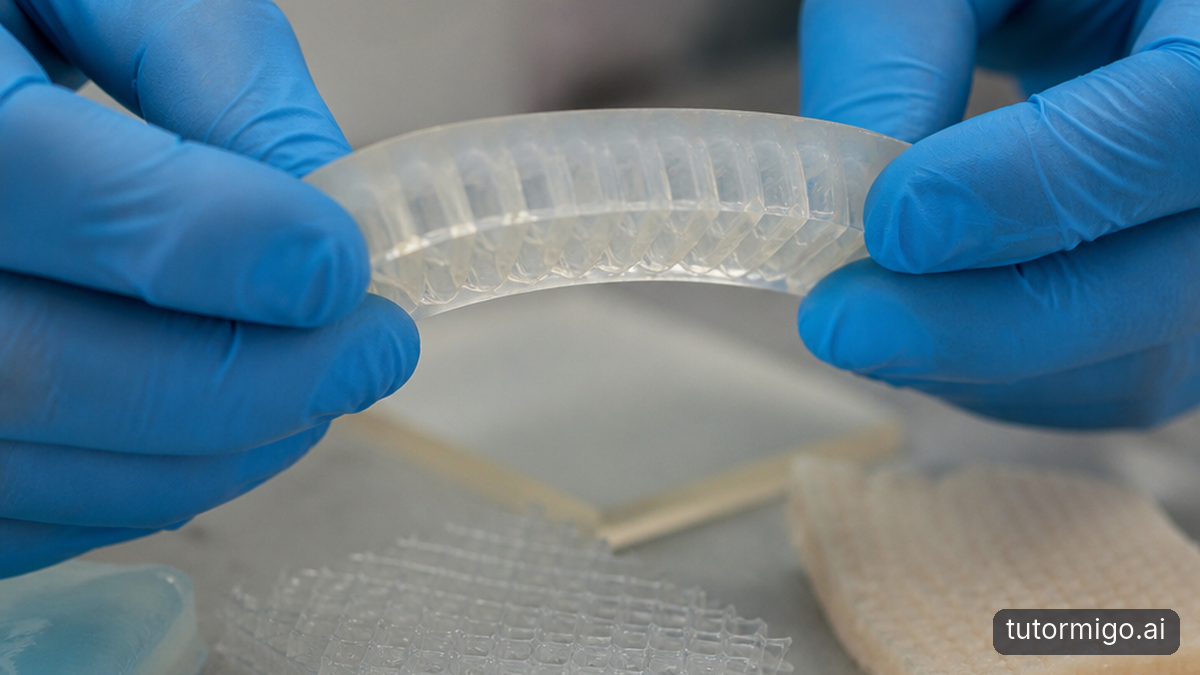
Elastomers are among the most recognizable materials in soft robotics. These stretchable polymers can bend repeatedly without behaving like brittle solids. Silicone is especially useful because it can be molded into thin walls, rounded fingers, bellows, and internal channels. Different formulations can provide different levels of softness, durability, chemical resistance, and transparency.
Material choice depends on the task. A gripper designed for peaches may need a soft outer surface and enough elasticity to conform to uneven skin. A device intended to move through the body may require materials that are compatible with biological tissue and safe for the intended duration of contact. A robot used in a factory may instead prioritize abrasion resistance, cleaning, and resistance to oils or heat.
Researchers also combine materials rather than relying on one uniform body. A flexible skin can surround stiffer fibers that limit motion in selected directions. Fabric layers can reinforce a silicone actuator so it expands outward without stretching lengthwise. Thin films, braided sleeves, embedded fibers, and molded channels all let engineers tune how a soft structure bends, twists, or contracts.
That tuning is important because softness is not a single number. A device can be very compliant in one direction and comparatively stiff in another. By controlling geometry and reinforcement, designers can create a robot that yields when it touches a delicate object but still produces a reliable pulling or lifting motion.
How Fluidic Actuators Create Motion
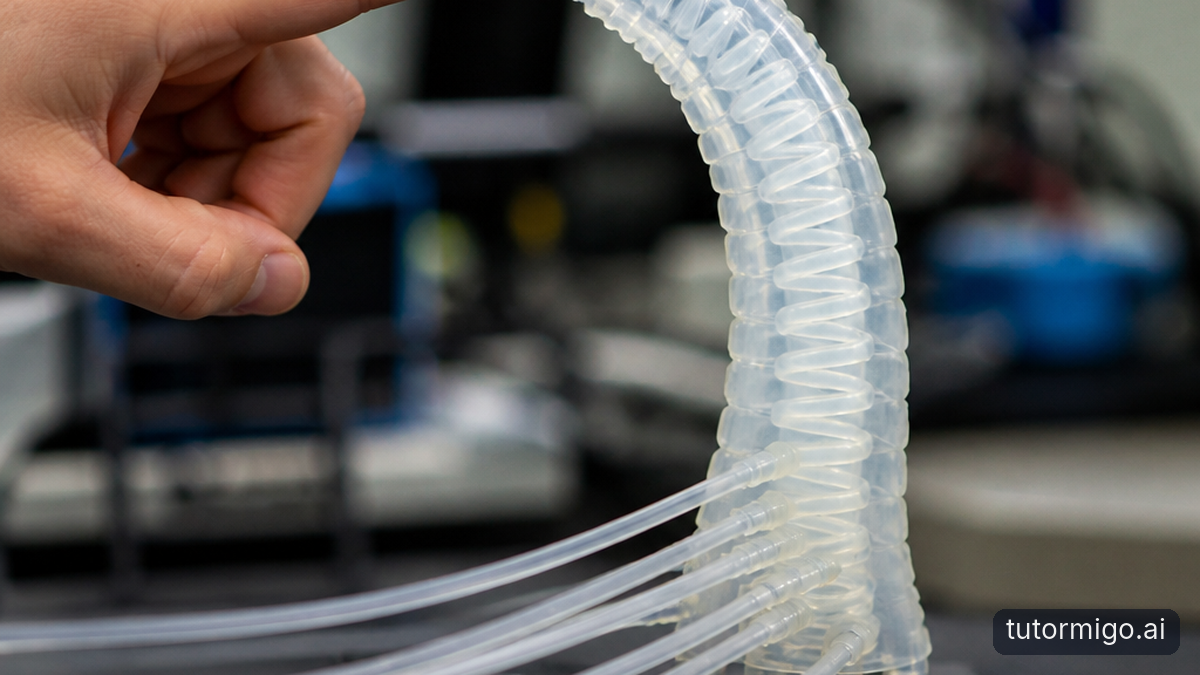
Many soft robots move through fluidic actuation. In a pneumatic actuator, compressed air enters an internal chamber. The chamber expands, but its surrounding shape or reinforcement determines where that expansion goes. If one side stretches more than the other, the actuator bends. If several chambers are arranged around a central axis, the robot can curve in multiple directions.
Hydraulic actuators use a liquid instead of air. Because liquids are much less compressible, hydraulic systems can provide smooth, controlled forces in compact designs. They may be useful when a device needs stable contact or must operate in an environment where air bubbles would create problems. The choice between air and liquid depends on pressure requirements, response speed, packaging, safety, and the consequences of a leak.
A simple example is a soft pneumatic finger with several connected chambers. Increasing pressure may curl the finger around a strawberry. Reducing pressure lets it relax and release the fruit. A controller can coordinate several fingers so they close at different times, creating a grip that conforms to an object rather than pinching it between hard surfaces.
Fluidic systems also introduce engineering challenges. Pumps, valves, tubing, reservoirs, and seals add weight and complexity. Air compressibility can make timing less predictable, while narrow channels may restrict flow. Engineers therefore study both the actuator’s material behavior and the complete fluid circuit, since a flexible mechanism is only as responsive as the system supplying it.
Gentle Grippers for Fragile Objects
One of the clearest applications for soft robotics is handling objects that are easily bruised, scratched, crushed, or misshaped. A rigid parallel gripper may hold a box securely, but the same gripping strategy can damage a tomato or peach. A soft gripper can use several flexible fingers, a compliant membrane, or a vacuum-driven surface to make contact over a broader area.
Imagine a packing line sorting ripe fruit. The objects vary in size, orientation, and firmness, so a fixed mechanical jaw would need frequent adjustments. A soft gripper can deform around each piece and spread its force across the surface. Sensors may help detect contact or estimate grip pressure, while the flexible structure provides a mechanical buffer if the fruit arrives slightly off-center.
Softness alone does not guarantee safe handling. If the actuator applies excessive pressure, a soft finger can still bruise an object. Engineers must select appropriate materials, regulate pressure, test different contact shapes, and account for friction. Surface texture matters too: a high-friction coating may allow a lower gripping force, while a smooth surface may require more force to prevent slipping.
These systems are promising for agriculture, food processing, and logistics because they can reduce damage while handling objects with natural variation. They also show why soft robotics is valuable: the machine does not need to identify and model every irregular detail before making contact. Its body can absorb some of that variation directly.
Working Safely Beside Human Bodies
Human-robot interaction creates a demanding problem. People are not rigid components with predictable dimensions, and physical contact can have serious consequences. A soft robot can reduce risk because its body deforms instead of transferring all of an impact through a hard link. That makes compliance useful for wearable devices, assistive machines, rehabilitation equipment, and robots intended to share workspaces with people.
Medical robotics adds another layer of difficulty. Biological environments are delicate, crowded, and often inaccessible to conventional mechanisms. Soft catheters, continuum robots, and flexible surgical tools can navigate curved pathways more naturally than rigid instruments. A device may bend through a sequence of gentle curves rather than forcing tissue to accommodate a straight shaft.
The engineering target is not maximum softness. A medical tool still needs enough force, positional control, sterilization compatibility, and feedback to perform its job. Designers must understand how the material behaves under repeated loading and how it interacts with tissue, fluids, and temperature. They also need safeguards against puncture, leakage, unexpected buckling, and loss of control.
Soft robots can make contact safer, but they do not eliminate the need for careful testing. A flexible actuator may hide internal damage, and its motion can be difficult to predict from external appearance alone. Reliable systems combine compliant materials with pressure limits, sensing, mechanical stops, and control strategies that detect when an action is moving outside safe conditions.
Sensing and Controlling a Deformable Machine
Rigid robots are often modeled with a small number of joints and known link lengths. Soft robots may have nearly continuous deformation, which makes their position harder to calculate. A bent silicone arm does not always return to exactly the same shape after every cycle. Its behavior can depend on pressure, friction, temperature, material fatigue, and the load at its tip.
To manage this uncertainty, engineers use sensors that measure pressure, stretch, curvature, force, or contact. A flexible strain sensor embedded in a finger can indicate how far the material has elongated. Pressure sensors can reveal whether an actuator is receiving the expected input. Tactile sensors can help distinguish a secure grip from a collision or a slipping object.
Control systems then connect those measurements to action. Rather than commanding a rigid joint to rotate to one exact angle, a controller may adjust pressure until the robot reaches a desired bend or contact force. Feedback is especially important when the object varies. A gripper handling an empty plastic container should behave differently from one holding a dense glass bottle.
The challenge is that sensing can change the soft body. Embedded electronics may reduce flexibility, create stiff spots, or complicate manufacturing. Researchers are developing stretchable conductors, optical sensing, fluidic sensing, and materials that respond to deformation. The goal is to make the robot aware of its own shape and contact without sacrificing the compliance that makes it useful.
Where Soft Robotics Still Falls Short
Soft robots offer clear advantages, but they are not universal replacements for rigid machines. Their flexibility can make them harder to model, manufacture, repair, and control. A rigid arm may repeat the same trajectory thousands of times with small variation. A soft arm can change behavior as its elastomer ages, develops a small tear, or accumulates material fatigue.
Force and speed can also be limiting factors. A large rigid actuator may move a heavy payload quickly, while a compact soft actuator may produce less force or respond more slowly. Pneumatic systems need pumps and valves, and hydraulic systems need fluid management. Those external components can make a supposedly simple robot bulky or difficult to deploy outside a laboratory.
Manufacturing consistency is another concern. Small differences in wall thickness, curing conditions, embedded fibers, or channel geometry can change how an actuator bends. For applications involving food, medicine, or human contact, cleaning and sterilization requirements may narrow the available materials and construction methods.
The most practical designs often combine soft and rigid elements. A robot may use a rigid base, compact valves, and electronics while reserving flexible materials for the part that touches the world. This hybrid approach keeps the benefits of compliance without asking every component to be soft. The result is not a contest between rigid and soft robotics, but a question of where flexibility provides the greatest value.
What Comes Next for Flexible Actuators
Future progress will depend on making soft actuators more durable, controllable, and easier to manufacture. Researchers are exploring materials that heal after damage, structures that change stiffness on demand, and actuators that combine multiple modes of motion. A robot might remain soft while navigating a delicate space, then become more rigid when it needs to support a load.
Wearable robotics is one area where this combination could matter. A flexible assistive device could follow the movement of an arm or leg without forcing the user to align with a rigid frame. To be useful, it would need to be lightweight, quiet, comfortable against skin, and able to deliver assistance without restricting natural motion.
In medicine, smaller and more precise soft tools may help clinicians reach difficult locations while reducing damage to surrounding tissue. In agriculture and food handling, adaptive grippers could accommodate crops that differ in size and firmness. In search-and-rescue settings, flexible robots may pass through narrow gaps or conform to irregular surfaces where a rigid machine cannot operate effectively.
The central design question will remain practical: where should a machine yield, and where must it resist? Soft robotics answers the first part with compliant materials and fluidic actuation, but successful systems still require structure, sensing, power, and dependable control. The strongest future designs will use flexibility selectively rather than treating softness as an end in itself.
A Practical Way to Understand the Field
To understand any soft robot, start by separating four questions: what is the body made from, what creates motion, how does the structure direct that motion, and how does the system know what is happening? For a pneumatic gripper, the answers might be silicone chambers, compressed air, asymmetric reinforcement, and pressure or tactile sensors. This framework works across laboratory prototypes and commercial machines.
Next, examine the contact problem. Is the robot lifting a fragile object, navigating a confined biological space, assisting a person, or adapting to an irregular surface? The application explains why flexibility matters. It also reveals the trade-offs: a fruit gripper needs low damaging force, a medical device needs biocompatibility and precision, and a wearable actuator needs comfort and alignment with human movement.
Finally, ask what could go wrong. Consider leaks, fatigue, uncontrolled deformation, insufficient grip, sensor failure, and the difficulty of cleaning or repairing the system. These questions prevent an overly simple conclusion that soft automatically means safe. A soft robot earns that description through tested materials, appropriate pressure limits, useful feedback, and a design matched to its environment.
That is the field’s most important lesson. Soft robotics changes the relationship between a machine and the world: instead of relying only on rigid precision, it uses controlled compliance to manage uncertainty. Flexible actuators are powerful not because they remove engineering challenges, but because they make new kinds of contact possible.
Pros and cons
Pros
- Gentle contact with people, tissue, and fragile objects
- Adaptation to irregular shapes and uncertain environments
- Potentially safer interaction through mechanical compliance
- Useful designs for wearable, medical, agricultural, and food-handling applications
Cons and limitations
- More difficult modeling and control
- Material fatigue, tearing, and changing performance over time
- External pumps, valves, tubing, or fluid-management hardware
- Manufacturing and cleaning challenges in demanding applications
Frequently asked questions
Soft robotics is the design of robots using compliant materials such as elastomers, silicone, fabrics, gels, and flexible composites. These materials allow the robot to deform and adapt during movement or contact instead of relying entirely on rigid links and joints.
Fluidic actuators use pressurized air or liquid to deform an internal chamber or flexible structure. The chamber’s geometry and reinforcement determine whether it bends, contracts, twists, or expands when pressure changes.
Soft robots can reduce injury and product damage because they distribute contact forces and deform around people or fragile objects. They are not automatically safe, however; pressure limits, sensors, reliable materials, and extensive testing are still necessary.
Soft robots can be difficult to model and control, and their materials may fatigue or tear over time. They may also produce less force, require external pumps or valves, and be harder to manufacture consistently than conventional rigid mechanisms.
Related reading
Related reading
Enjoyed this read?
Like, share, or comment below.



Comments
0Sign in required · respectful discussion · replies supported
Loading comments…