


ACT prep: Why balanced equations can feel invisible
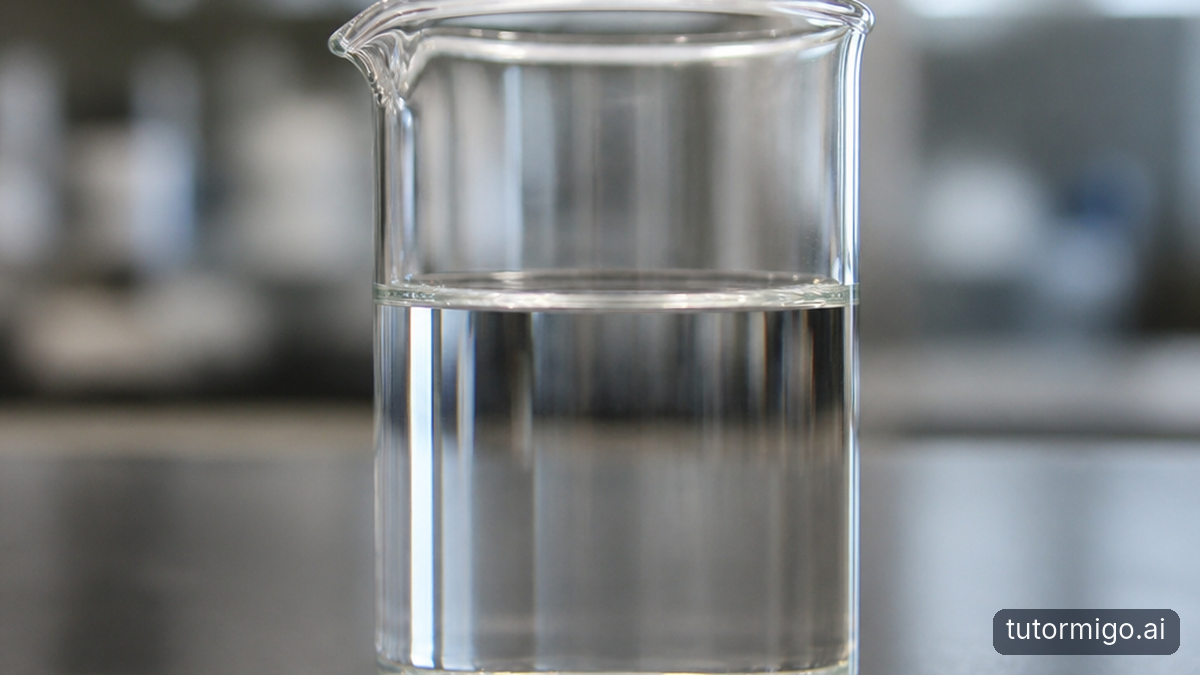
You can balance a chemistry equation and still have no idea what is happening in the beaker. For ACT science practice, that gap matters: memorized steps cannot replace interpreting an unfamiliar experiment. Connecting particle models to graphs and tables gives you a more useful starting point than another formula sheet.
Consider water formation: The equation records the relative amounts involved, but it does not show molecules moving, bonds changing, or energy being transferred. You might correctly balance it while still imagining that atoms disappear when a reactant runs out. A particle model makes that misunderstanding easier to spot.
If you are taking the ACT Science section, the goal is not to become a molecular-animation expert. It is to explain a setup, identify what changes, and predict an outcome supported by evidence. Check whether Science is part of your testing plan, then make these activities serve that section rather than displacing practice for your other ACT sections.
Useful high school chemistry help connects three views: what you observe in a beaker, what a particle model represents, and what an equation summarizes. Switching between those views builds intuition. It also helps you recognize when a question asks for data interpretation rather than a remembered chemistry fact.
The barrier of abstract science: what flat diagrams miss

A textbook diagram freezes one moment. Its tidy spacing and bright colors make molecules readable, but they can also suggest that particles sit still, react on contact, or occupy equal distances from one another. Those are drawing choices, not necessarily properties of the experiment. A useful first question is: what does this picture leave out?
Take a hypothetical experiment comparing gas formation at different reactant concentrations. A static picture might show more particles in one container. A moving model could help you imagine why particles encounter one another more frequently. However, the model alone does not establish the measured reaction rate. You still need the experimental conditions and the evidence supplied in the passage.
This distinction matters in ACT prep. A visually convincing explanation can become a distraction if you use it to override a table. If the question asks which trial produced the most gas after a specified interval, locate that interval and compare the recorded values. Use molecular reasoning to understand the pattern, not to replace the measurement.
Teachers can make the connection explicit by asking students to describe the same trial in ordinary language, sketch its particles, and identify its data point. This is one reason rote memorization can fall short in ACT Science: recognizing a formula is different from explaining what evidence supports an answer.
Use a curious guide's questions to make chemistry concrete
A helpful guide does not begin by reciting the rule. Instead, the guide asks a question you can picture: if a sealed reaction container has plenty of one reactant but very little of another, can the reaction keep producing material indefinitely? That question gives the equation a purpose before you start calculating.
Return to the water-formation model. Imagine six hydrogen molecules and two oxygen molecules in a simplified particle-counting exercise. Following the balanced ratio, the available oxygen can account for four water molecules, with two hydrogen molecules remaining. The point is not to demonstrate a safe classroom procedure; hydrogen and oxygen mixtures can be hazardous. This is a representation for reasoning about conservation and limiting reactants.
Before checking an answer, predict what you would see in the final particle inventory. Which atoms must still exist? Which reactant is left over? What would change if you added more of the reactant that was already in excess? Each question exposes whether you understand the relationship or are merely applying a memorized calculation.
An AI Tutor can support this questioning through conversation in the TutorMigo.ai tutor workspace. Ask it to challenge your explanation with one what-if question at a time. For conceptual chemistry prep, a useful response is not simply the right number: it is an explanation of why the outcome changes, or why it stays the same.
Interactive 3D science: predict, manipulate, explain
A browser-based WebGL scene can make spatial relationships easier to inspect, but the interaction needs a learning purpose. If your teacher supplies an appropriate molecular simulation, begin by identifying its controls and assumptions. Can you rotate the view, change particle counts, or adjust a condition? Does it represent reaction outcomes, or only display molecular structures? Do not assume every 3D viewer simulates chemistry.
In a suitable model, use drag-and-drop controls to arrange the starting particles, then rotate the scene to check your count. Predict the final inventory before running any animation. Afterward, compare the displayed outcome with your prediction and account for every atom. If the model does not support a particular manipulation, use a sketch or physical model instead.
Change only one input in the next trial. For example, increase the amount of the excess reactant while holding the limiting reactant constant. Record whether the product amount changes. This turns interactive 3D science into a controlled reasoning exercise rather than an animation you watch passively.
Keep the model's limits visible. Sphere sizes, colors, motion, and reaction pathways may be simplified, and a balanced equation does not describe every intermediate step. The aim is stronger interpretation, not the belief that molecules literally behave like colored balls. For more on transferring this approach to test questions, see using 3D science models to strengthen ACT reasoning.
Turn molecular intuition into timed ACT practice
Understanding a model is useful only if you can transfer that understanding to unfamiliar evidence. After a short modeling exercise, complete a science practice set involving reaction data, experimental conditions, or competing explanations. The passage does not need to reproduce your model. Transfer happens when you recognize the reasoning task beneath a different surface story.
Start untimed and label each error. Did you misread an axis, confuse the changed variable with the measured outcome, overlook a controlled condition, or bring in an unsupported assumption? These errors call for different fixes. Rewatching a molecular animation will not necessarily help if the real problem is reading the wrong column.
Next, repeat the process under the timing conditions for the ACT version you will take. Use its current official directions and question counts to set your practice budget. Track how long you spend understanding the setup versus answering questions. If one difficult item absorbs too much time, practice moving on and returning when your testing format permits.
Tie your score goal to a specific behavior. Instead of saying only that you want a higher Science score, aim to reduce table-reading mistakes or finish a practice set without rushing its final questions. TutorMigo.ai's structured ACT exam preparation includes practice sets and progress tracking. Use those tools to monitor practice, while separately recording the error patterns and pacing decisions you want to improve.
What to do next: test one prediction, then check the evidence
Choose one chemistry relationship that still feels abstract, such as the connection between reactant amounts and product amounts. Write a prediction in plain language before calculating anything. Then test it with a teacher-selected model, a particle sketch, or a carefully counted set of physical pieces. You do not need an elaborate animation to discover a mistaken assumption.
Bring your explanation to the AI Tutor workspace on TutorMigo.ai. A focused prompt is: “I think adding more of the excess reactant will increase the product. Ask me questions that help me check that prediction.” Include the balanced equation and starting amounts when relevant. Check the resulting explanation against your course materials rather than treating any generated answer as experimental evidence.
Finish with an ACT Science practice set if that section is part of your testing plan. Record one accuracy issue and one pacing issue, then decide which deserves your next session. Teachers and supporting adults can ask students to explain why an answer follows from the passage instead of judging understanding by how quickly they produce it.
Start with one prediction in TutorMigo.ai's tutor workspace, then move to structured ACT practice. The practical goal is simple: make the invisible relationship understandable, and prove that understanding by interpreting evidence accurately under time pressure.
Frequently asked questions
Some foundational science knowledge is useful, but formula memorization alone is not enough. Practice interpreting experimental setups, tables, graphs, and explanations, using the information supplied in each passage.
Live WebGL molecular simulations are not among the listed TutorMigo.ai features. The modeling activities described here use teacher-selected simulations, sketches, or physical models; TutorMigo.ai supports tutoring conversations and structured ACT practice.
Ask students to predict an outcome before manipulating the model, explain any mismatch afterward, and answer a new data-based question. Look for reasoning that transfers beyond the original scene.
Use modeling primarily to build understanding before timed practice. During a timed set, prioritize the passage evidence and your pacing plan rather than reconstructing an elaborate molecular scene.
Enjoyed this read?
Like, share, or comment below.



Comments
0Sign in required · respectful discussion · replies supported
Loading comments…