


Metacognition: Why Familiarity Feels Like Learning
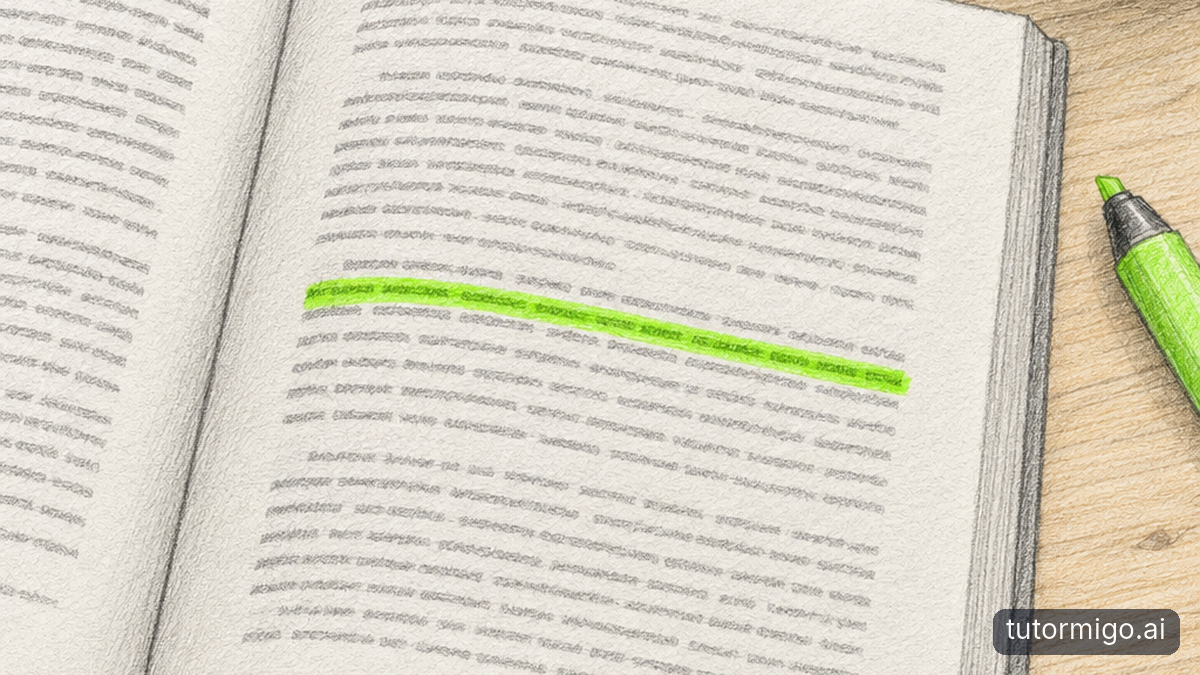
When you reread a passage, the wording may become easier to follow. Your eyes move smoothly, the examples look familiar and nothing seems surprising. That ease can become a misleading message: “I know this.” Researchers describe this kind of mix-up as a fluency illusion. Easy-to-read material can feel learned even when you would struggle to recall it independently. [VERIFY]
Highlighting can add to that feeling because the important information stays right in front of you. You identify a useful sentence, colour it and move on. But you have not necessarily practised producing the idea yourself. Recognising an explanation while looking at it is different from explaining it with the page closed. [VERIFY]
Reviews of study techniques, including Dunlosky and colleagues’ 2013 review, have judged highlighting alone as having limited usefulness compared with stronger approaches such as practice testing. That does not mean every highlighted sentence is wasted. It means highlighting is not a dependable readiness check by itself. [VERIFY]
Think of the colour as a bookmark for your attention, not a receipt proving learning happened. A page becoming brighter tells you what you selected. A correct explanation without the page tells you something different. For a closer look at that distinction, explore rereading versus retrieval practice.
One textbook page, two ways to study it

Suppose your textbook page explains the water cycle. It describes evaporation, condensation and precipitation, with a diagram showing water moving between the ground and atmosphere. Your task is to explain the stages and how they connect. Here are two ways you might spend the same study session.
The highlighting approach: you colour each stage name yellow and its definition green. You underline the sentence about cooling water vapour, then reread the page. Everything seems clear because each explanation is available when you need it. Close the book, though, and ask, “Why do droplets form?” You might discover that you remember the coloured sentence’s location more clearly than its meaning.
The margin-question approach: you read the same page, then write, “What changes during evaporation?”, “Why does condensation happen?” and “How are condensation and precipitation different?” You close the book and answer on scrap paper. When an answer is vague, you reopen the page to check it.
Suppose you write that condensation is water falling from clouds. Checking the page reveals that you have mixed up two stages. You correct the answer, close the book and try explaining the difference again. The question has exposed a specific gap that a familiar-looking definition might have hidden. [VERIFY]
Neither method requires messy notes. The difference is the job your notes do: one marks information; the other gives you a way to check whether you can retrieve and explain it.
Some difficulty helps, but confusion needs support
Answering with the book closed probably feels harder than highlighting. That does not automatically mean it is working better, but it does explain why useful practice can feel less comfortable. Desirable difficulties are manageable challenges that can support learning, even when they make practice feel slower or less smooth. [VERIFY]
Trying to remember a definition before checking it is one example. You have to search for the answer rather than simply recognise it. That effort, followed by checking and correction, can support later recall. The important words are “manageable” and “correction.” Struggling without understanding or feedback is not the goal. [VERIFY]
If your water-cycle question leaves you completely stuck, make it smaller. Instead of “Explain the whole cycle,” start with “What happens to liquid water during evaporation?” Check the explanation, then try again without looking. Build towards the larger question once the smaller pieces make sense.
You can also ask an AI Tutor to help you unpack one confusing step rather than requesting another long explanation of the entire topic. In TutorMigo.ai’s personal tutoring chat, you can describe exactly where you got stuck and ask for guidance. Then attempt your own explanation again. Keep the answer attempt yours, so the next check tells you what you can actually explain.
Try this now: compare confidence with answers
Choose one small topic you have already studied, such as the water cycle. Before opening your notes, rate your confidence from 1 to 5. Let 1 mean “I would need lots of help” and 5 mean “I could explain this clearly without notes.” Write down the rating before testing yourself.
Next, answer three questions without looking: What are the main stages? How are condensation and precipitation different? What causes water to evaporate? Use complete thoughts rather than a list of familiar words. If your topic is different, write questions that ask you to name, explain and distinguish its key ideas.
Now compare each answer with your textbook. Mark it accurate, partly accurate or missing. Be specific: “I named condensation correctly, but did not explain it.” Confidence and accuracy do not always match, so use these checked answers rather than your feeling alone to judge readiness. [VERIFY]
A confidence rating of 5 followed by two incomplete answers is not embarrassing. It tells you where to spend your next few minutes. Equally, a nervous rating followed by clear answers gives you evidence that you know more than you thought. Once you have repaired a gap, try a fresh question. For a larger check, turn your chapter into a ten-question self-quiz.
| Approach | What you do | Readiness check |
|---|---|---|
| Highlighting alone | Mark selected textbook passages. | Selection alone does not demonstrate recall. [VERIFY] |
| Written margin questions | Close the book, answer and check. | Compare your explanation with the source. |
| TutorMigo.ai tutoring chat | Request questions and discuss your answers. | Attempt answers independently; check uncertain details against your textbook. |
Keep the colours, change what happens next
You do not need to throw away your highlighters. Try reading a short passage before choosing what to mark. Highlight less, focusing on an idea you need to explain rather than colouring most of the paragraph. Then turn each highlight into a question that you can answer without seeing the original sentence.
A highlighted definition could become “What does this mean in my own words?” A highlighted example could become “Why is this an example?” After answering, check for missing details and correct them. Leave the question available for another attempt later. The highlight now starts a learning task instead of ending one.
Key Takeaways
- Familiar wording is not the same as an independent explanation. [VERIFY]
- Use closed-book answers to check your confidence.
- Highlight less, then question what you highlight.
Your next step 👉
A tutor that quizzes you can help show the gap between “feels known” and “is known.” Tell TutorMigo.ai a topic you feel 5/5 on and ask it to test you, one question at a time. Ask the AI Tutor to wait for your answer before discussing it. Relevant TutorMigo benefits include personal tutoring chat and session history, giving your questions and explanations a place to continue.
Keep your textbook nearby to check uncertain details, and treat any unclear answer as something to investigate rather than accept automatically.
Comment question: Which topic looks familiar in your notes but becomes harder when you close the book?
Tonight: The Blank-Page Test — find out what you actually know in 5 minutes.
Frequently asked questions
Not necessarily. It can help you select information to revisit, but highlighting alone does not reliably show whether you can recall or explain it. Turn selected passages into questions and check your answers. [VERIFY]
Reopen the textbook, find the missing explanation and make the question smaller if needed. Then close the book and try again. You are identifying the next thing to practise, not giving yourself a final grade.
Try: “I feel 5/5 confident about the water cycle. Ask me one question at a time, wait for my answer and help me examine anything incomplete.” Check uncertain details against your textbook.
Enjoyed this read?
Like, share, or comment below.



Comments
0Sign in required · respectful discussion · replies supported
Loading comments…