

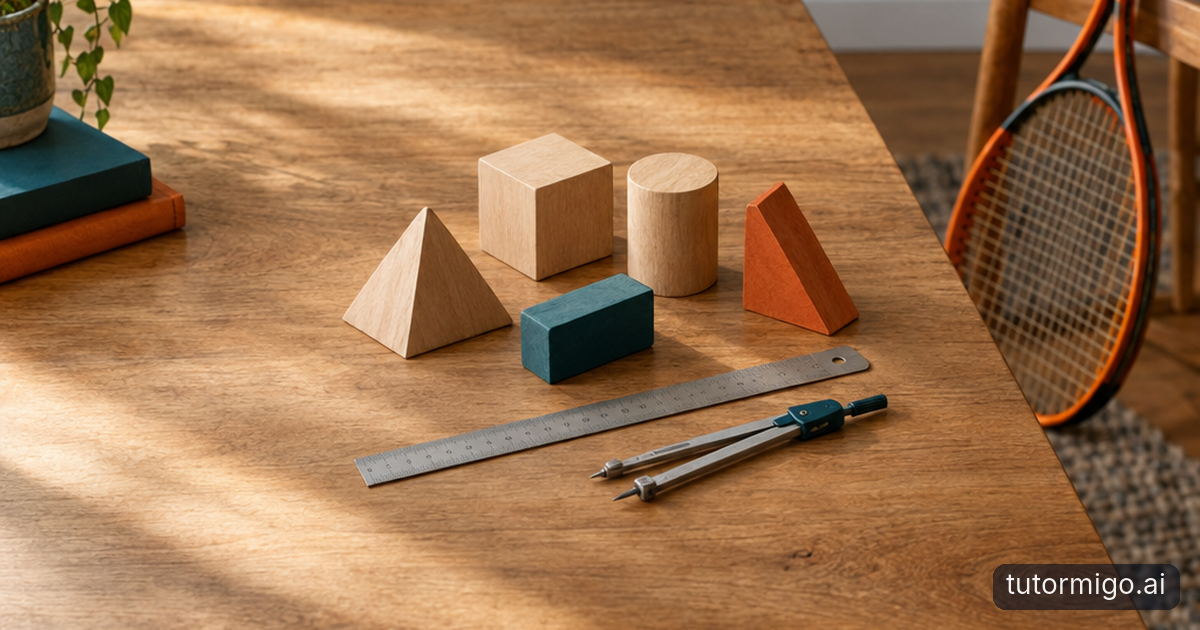
Interleaving: practise choosing the right method
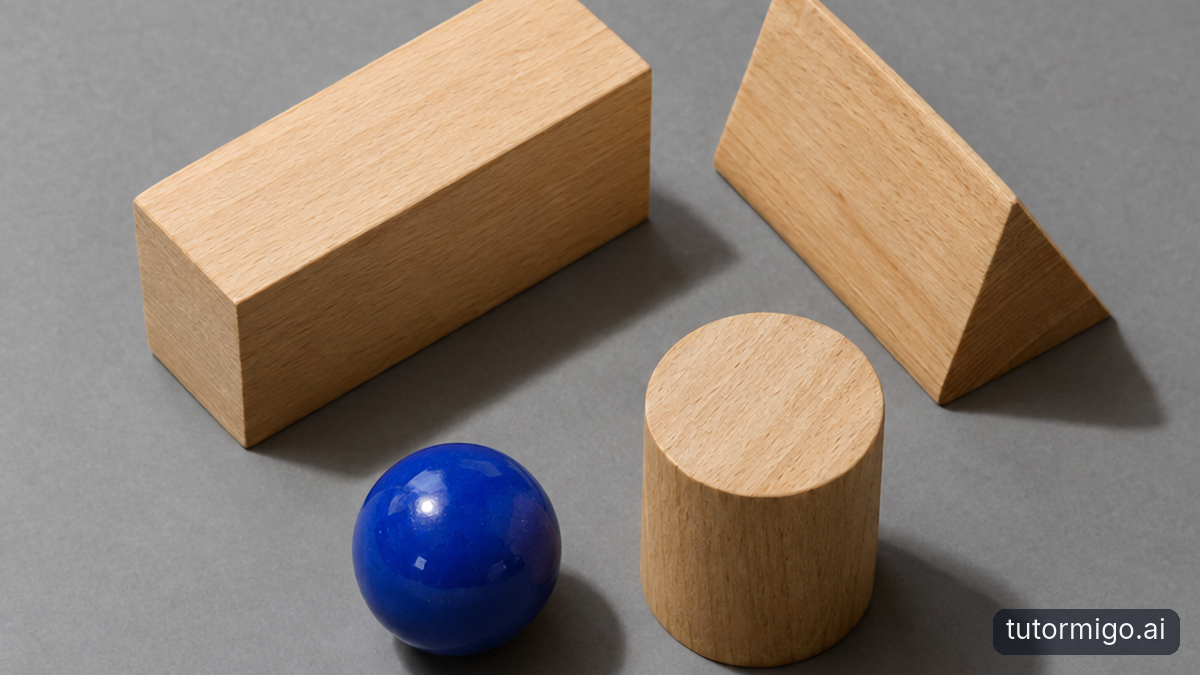
Imagine completing nine questions: three about area, three about perimeter, then three about volume. Once you recognise the first area question, you can keep repeating the same approach. The next question barely needs an introduction. Its neighbours have already given you a clue.
This is blocked practice: AAABBBCCC, where each letter represents a problem type. Interleaved practice changes the order to something like ABCBACCAB. You still practise the same topics, but you cannot assume the previous method will work again. The comparison table below shows that change in practice.
On a test, nobody necessarily announces, “Use the area formula here.” You must read the question, decide what it asks, and choose a method. Blocked practice lets you skip much of that choice because the order supplies it. You might become fluent at carrying out a procedure without getting much practice recognising when it belongs.
Think about science homework, too. A page containing only density calculations practically labels the method for you. Mix density, speed, and interpreting a graph, and you must inspect the information before starting. Interleaving is not about making questions confusing. It is about removing a clue that a test may not provide. As you continue from Day 2, today’s experiment is to change the order of practice, not simply do more.
Think like a tennis player, then look at the research

Picture a tennis player practising only forehands. A coach sends the ball to the same side again and again. The player can focus on the swing, which is useful when learning it. But a match does not promise another forehand. The next shot might require a backhand or a volley.
Now picture a coach sending varied shots. Before swinging, the player must watch the ball and decide how to respond. The practice includes both selecting a shot and performing it. Mixed maths practice has a similar aim: learn to recognise the situation before reaching for a familiar procedure.
Research by Doug Rohrer and colleagues has investigated interleaving in mathematics. Their studies have reported better performance on later tests for students using mixed practice than for students using blocked practice under the conditions studied. [VERIFY] Check the original papers for the exact tasks, student ages, schedules, and findings before making a more specific claim.
That does not mean every mixed worksheet is automatically better. Results can depend on what students already know and how practice is arranged. [VERIFY] The useful idea is narrower: when you must distinguish between methods, practising that distinction may help. [VERIFY] You are training the moment before the calculation, when you ask, “What kind of problem is this?”
Why slower practice can be useful, and when to wait
Mixed practice can feel awkward. You finish a volume question, reach for the same method again, and then notice the next question asks for a distance around a shape. You pause, reread, and switch. That pause can make the session feel less successful than a smooth run of identical calculations.
But smoothness during practice and learning that lasts are not the same thing. Interleaving can create useful difficulty by making you retrieve and compare methods instead of continuing on autopilot. [VERIFY] The effort of choosing is part of the intended practice, not necessarily evidence that you are getting worse.
Difficulty alone is not the goal. If you cannot explain any of the methods, shuffling them will not fix the missing understanding. On your very first exposure to a method, study a worked example and try a few similar questions. Check that you understand the steps before adding that method to a mixed set.
For example, learn how perpendicular height works in triangle area before mixing those questions with perimeter and volume. Later, if you choose the wrong method, identify the clue you missed. If you choose correctly but make an arithmetic error, correct the calculation. Those are different problems, and separating them makes your next attempt more purposeful.
Try this now, then choose your next step
Open your last maths or science homework and label each problem by type. Use labels that describe the method you needed, such as “triangle area,” “rectangle perimeter,” or “cuboid volume.” If nearly every question has the same label, you have found a blocked set.
Choose eight questions covering your last three familiar topics. Rearrange them so the types are mixed, then put the labels out of sight. Before answering each question, name the method and give one reason it fits. Afterwards, check both your choice and your working. Do not count a correct method with a calculation slip as the same mistake as choosing the wrong method.
Key Takeaways
Blocked practice repeats a method; interleaving also practises selecting it. Start with familiar methods, expect some pauses, and use mistakes to identify whether you need help choosing or calculating. Keep the questions manageable while you change their order.
Your next step 👉
Building mixed practice sets by hand takes time. TutorMigo.ai is an adaptive AI Tutor that can generate practice across several topics and offer step-by-step guidance when you pick the wrong method. One of the practical TutorMigo benefits to explore is using that guidance to examine your choice, rather than just requesting an answer.
Start at TutorMigo.ai and ask: “Give me a mixed 8-question set covering my last three topics: rectangle area, perimeter, and cuboid volume. Hide the topic labels. If I choose the wrong method, guide me step by step.” Tell the AI Tutor which methods you have already learned.
Which two problem types do you most often mix up?
Tonight: Build an Interleaved Practice Set from Your Own Homework.
| Practice choice | Blocked practice | Interleaved practice |
|---|---|---|
| Question order | Area, area, area; perimeter, perimeter, perimeter; volume, volume, volume | Area, perimeter, volume, perimeter, area, volume, volume, area, perimeter |
| Clue from neighbouring questions | The previous method usually applies again | The previous method may not apply |
| Main task | Carry out a repeated method | Choose a method, then carry it out |
| Using personalized tutoring chat | Discuss the steps of one method | Discuss why different questions need different methods |
Frequently asked questions
No. Start with a worked example and a few similar questions when a method is completely new. Add it to mixed practice once you can explain its basic steps.
No. A mixed set can contain two questions of the same type together. The point is to avoid a predictable sequence that gives away which method comes next.
Use fewer questions and check why you paused. Choosing between familiar methods is useful practice; being unable to explain a method means you should revisit an example.
Related reading
Related reading
Enjoyed this read?
Like, share, or comment below.



Comments
0Sign in required · respectful discussion · replies supported
Loading comments…