


Why personalized learning needs different explanations
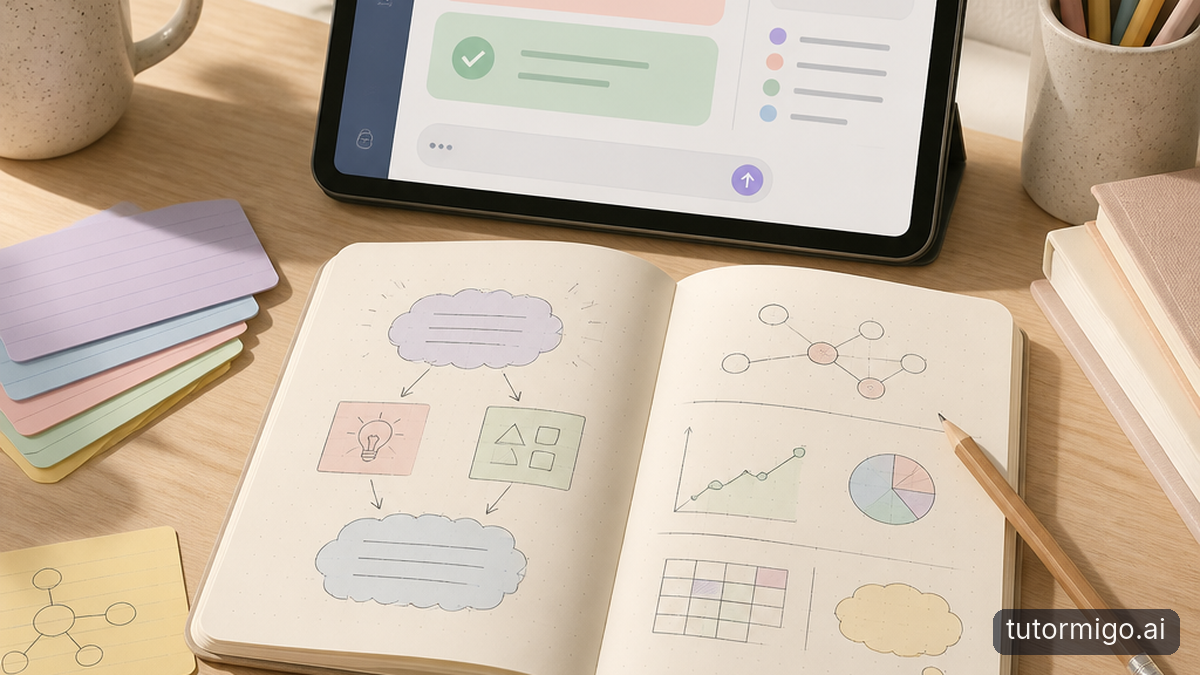
A classroom has a shared pace. An app may have a fixed sequence. Both can be useful, but neither approach always matches what you need in a particular moment. You might understand the example yet struggle to explain the idea yourself. Someone beside you might need a simpler example before attempting a question. Giving both of you another identical explanation misses that difference.
Personalization should mean more than making an answer longer or shorter. It should help you change how you approach the material: asking smaller questions, trying an example, discussing a misunderstanding, or testing what you can recall. An AI Tutor becomes useful when that exchange helps you do something you could not do before, rather than simply producing more text.
That does not mean you have one permanent learning style. You may want a direct explanation when starting an unfamiliar topic and a challenging conversation once you understand the basics. Your preferences can change with the task, your confidence, and how tired you feel. The practical goal is flexibility: keep the learning objective steady while changing the route when your current approach stops helping. A good match supports your effort rather than replacing it.
Choose a personality that helps you engage

It is easier to ask a follow-up question when the conversation feels comfortable. TutorMigo.ai offers 11 distinct AI Personas, including Sofia, Marcus, and Dr. Reza. The point is not to pick the most impressive name. It is to find an interaction that helps you stay curious, admit confusion, and keep working through a difficult idea.
Try comparing responses to the same request: “Explain this idea briefly, give me one everyday example, then ask me to explain it back.” Notice whether the wording feels accessible and whether the conversation encourages you to participate. You do not need to assume a particular personality has a particular subject specialty. Evaluate the help you actually receive rather than making that judgment from a name.
For a parent or teacher, the useful question is not simply, “Did you like the tutor?” Ask, “What did you understand afterward that you could not explain before?” Enjoyment matters because it can make starting easier, but understanding is the stronger signal. Our discussion of why a tutor’s personality matters offers another way to think about that relationship. Your best match should make productive effort feel approachable, not make every task feel effortless.
Change the activity when the explanation stalls
Sometimes you do not need a different voice; you need a different activity. TutorMigo.ai’s seven Learning Modes, including Roleplay and Quiz, give you ways to move beyond reading an explanation. Choose according to what you are trying to accomplish, rather than assuming one approach should carry an entire study session.
Suppose you understand an argument about reducing waste but struggle to discuss it. With Roleplay, you could ask to practice a conversation with someone who disagrees. Your job is to explain your position, respond to a question, and notice where your reasoning becomes vague. Keep the scenario focused: “Ask one question at a time, and let me answer before continuing.” That request makes your preferred pace explicit.
If you can follow an explanation but are unsure whether you remember it, try Quiz. Answer before requesting help, then ask for an explanation of anything you missed. The distinction matters: recognizing a clear answer is not the same as producing one. Switching activities gives you a practical way to investigate the gap. You are not searching for the most entertaining format; you are choosing the activity that reveals what needs attention next.
Keep a useful thread between study sessions
A helpful conversation loses value if your next study session starts with, “What was I doing?” The AI Tutor Workspace includes session history, giving you a record to revisit. That supports continuity without requiring you to assume the system will automatically remember every preference or bring every earlier detail into a new exchange.
Make that record easier to use. At the end of a session, ask for a short recap of what you practiced, what remains unclear, and one sensible next task. Read the recap and correct anything that does not match your understanding. When you return, reopen the relevant conversation or bring that summary into your next request. For example: “Last time I could describe the process, but I mixed up the order. Help me practice that part first.”
This is where an AI Tutor can fit into a repeatable study routine rather than becoming a series of disconnected answers. You can also note which tone and activity helped you participate. If a shorter explanation followed by questions worked well, request that combination again. Continuity is most useful when it preserves the next learning step, not just a long transcript you never read.
Match the support to the work you need to do
A good conversational match is valuable, but some tasks need more than conversation. If you understand a concept today and forget its key terms next week, spaced-repetition Flashcards offer scheduled review. You can use AI-assisted card creation to help prepare cards, then check that each question is clear and its answer is accurate before relying on it.
If the difficulty is working through a process, choose a tool suited to that process. The Study Tools Hub includes a whiteboard, code sandbox, and math step editor. For example, you might sketch relationships on the whiteboard rather than describe every connection in prose. The useful question is, “What action would help me understand this?” rather than, “How can I get another explanation?”
This also gives you a fair way to compare dedicated tutoring tools with general-purpose chatbots. General-purpose tools can explain ideas, adopt tones, and generate practice questions too. Compare the actual workflow: how easily can you choose an approach, revisit previous work, practice actively, and review later? The relevant TutorMigo benefits are the options you can put to work consistently, not a claim that one category of AI always teaches better.
Find your fit with one focused session
Start with a small, observable goal: explain a concept without notes, answer a question independently, or apply an idea to a new example. Avoid beginning with “Help me get better at everything.” A narrow goal makes it easier to judge whether your chosen approach is helping. Bring the material you are studying and identify the exact point where you lose confidence.
Next, choose one of the AI Personas and state your preferences directly: “Keep the explanation brief, ask one question at a time, and give me room to try.” Choose a Learning Mode that suits the goal. If the exchange is not helping, change one thing first—perhaps the pacing or activity—so you can tell what made a difference.
Finish with an independent attempt. Close the explanation and describe the idea in your own words, or tackle a fresh example. Students and lifelong learners can use that attempt as a reality check; parents and teachers can ask the learner to show what changed. Then write down the next task. Your perfect match does not have to be permanent. It is the combination that helps you make progress today—and gives you a clear place to begin tomorrow.
Frequently asked questions
Treat your choice as a starting point. Compare the available <a href="https://tutormigo.ai/r/CCREF-622NL4WL">AI Personas</a> against the same learning goal, and judge the fit by your understanding and willingness to ask questions.
Start with an explanation when the idea is unfamiliar. Try <a href="https://tutormigo.ai/r/CCREF-622NL4WL">Quiz</a> when you want to check recall, or <a href="https://tutormigo.ai/r/CCREF-622NL4WL">Roleplay</a> when you need to practice a conversation.
No. A friendly tone is not proof of correctness. Check important explanations against trusted course materials, and test whether you can apply the idea independently.
Related reading
Enjoyed this read?
Like, share, or comment below.



Comments
0Sign in required · respectful discussion · replies supported
Loading comments…