


Tailor parent support to your child’s learning difficulty
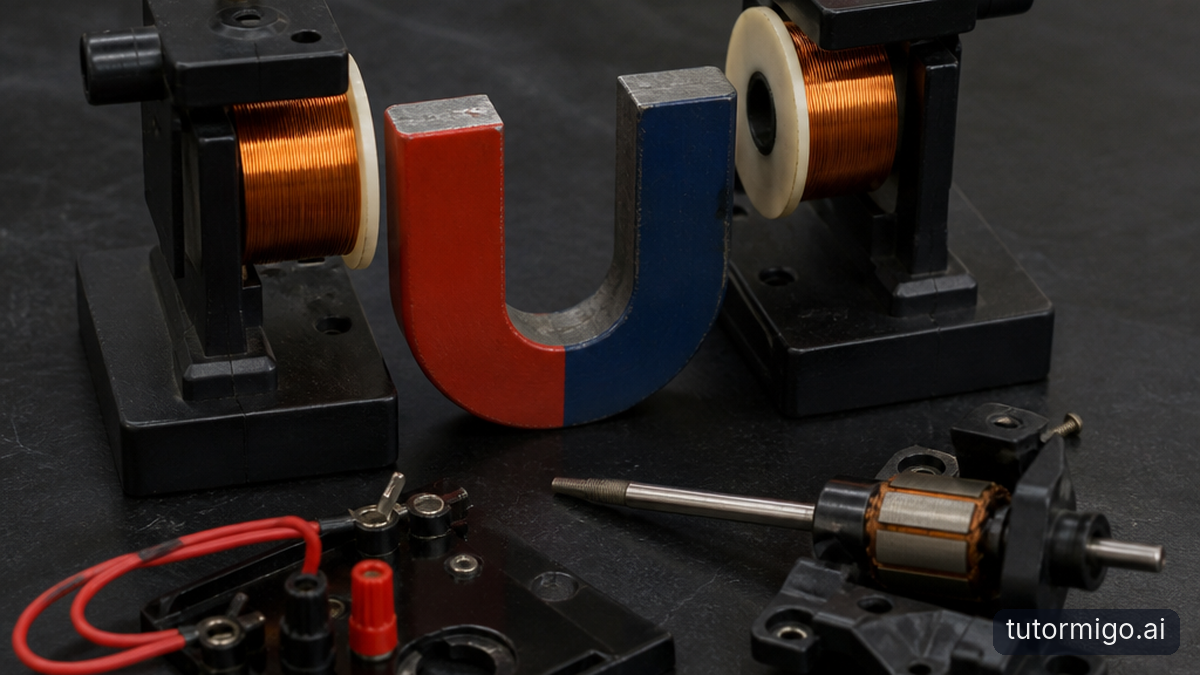
“I don’t understand” is a starting point, not a diagnosis. Your child might understand a science concept but struggle with unfamiliar vocabulary. They might know a calculation method yet feel unsure about when to use it. Personalized tutoring becomes useful when it helps you separate those problems rather than repeat the same explanation more loudly.
In TutorMigo.ai, the AI Tutor Workspace offers personalized tutoring chat and session history. Encourage your child to describe what they have tried and where their understanding breaks down. A useful prompt is: “I can describe what happens in this experiment, but I can’t explain why. Ask me a question before giving me a hint.” This makes the conversation more focused than simply requesting an answer.
Session history also gives you a practical way to revisit earlier work. Before starting another session, your child can look back at the explanation they found helpful and identify what still feels uncertain. That creates continuity without assuming every new conversation automatically understands everything that happened before.
Your role is to help your child frame the problem, then step back. Ask them to explain the new idea in their own words. If they can only repeat the tutor’s wording, they probably need another example rather than another completed answer.
Use progress visibility to find weak subjects

A disappointing result does not always mean an entire subject is a weakness. Your child might struggle with interpreting questions rather than remembering facts, or with explaining reasoning rather than understanding the lesson. Look for repeated difficulties across several pieces of work before deciding what needs attention.
TutorMigo.ai’s Parent Dashboard provides visibility into your child’s progress, alongside learning controls and co-learning features. Use that visibility as a conversation starter, not a surveillance routine. Once a week, sit together and ask: “What feels easier now? What still needs help? Can you show me an example?” Compare what you see with schoolwork and your child’s own experience.
For example, if science keeps coming up as difficult, ask your child to explain one recent question. You may discover that the sticking point is reading a graph, not understanding the scientific idea. That gives you a smaller, more useful target for the next tutoring session.
If the difficulty continues, bring a specific example to the teacher. Where educators use TutorMigo.ai, its Teacher Dashboard supports student monitoring and reporting; do not assume your parent view and a teacher’s view are identical. For more ideas on keeping these conversations constructive, explore how parents can track learning progress with AI.
Turn homework assistance into guided practice
Homework help works best when your child still does the thinking. Agree on a simple boundary: the tutor can explain, question, or offer a hint, but your child should attempt the task and explain the final response. This reduces the temptation to treat a polished answer as evidence of understanding.
Suppose your child is stuck on a problem involving fractions. Before opening the tutor, ask them to show the last step they understood. Then they can ask the AI Tutor to discuss that step or offer a similar example. Afterward, have them return to the original task and try it without copying the example.
TutorMigo.ai’s interactive study tools give children different ways to work through an idea. The whiteboard can support a visual explanation, while the math step editor provides a place to work through mathematical steps. If the homework involves programming, the code sandbox offers a space to try code. Choose the tool that matches the task rather than using every tool at once.
Keep the original assignment instructions nearby, and check school rules about AI assistance. AI explanations can contain mistakes, so compare uncertain points with class materials. Our guide to using AI homework help without handing over the work offers another way to frame these boundaries.
Build recall and independent study habits
A productive tutoring session is only part of learning. Your child also needs opportunities to remember an idea later, without an explanation in front of them. That is where spaced-repetition flashcards can fit: they make review a recurring activity rather than something saved for the night before a test.
TutorMigo.ai’s Flashcards feature includes AI-assisted card creation and review scheduling. After a lesson on plant biology, for example, your child could create a small deck covering key terms and explanations. Read a few cards together to check accuracy and make sure each question has a clear purpose. A card asking for one explanation is usually easier to review meaningfully than a card containing an entire textbook paragraph.
Encourage your child to attempt an answer before looking. If they remember a definition but cannot use it in context, return to the tutor for an example instead of adding more cards. Flashcards support recall; they should complement explanations and practice, not replace them.
Build independence through a predictable routine: choose a learning goal, complete a focused task, and finish with a brief review. At first, you might sit nearby. Later, ask your child to manage the routine and show you one thing they learned. Gradually reduce reminders as they become more confident managing their work.
Know when structured preparation adds value
If your child is preparing for a supported exam, a structured practice route can be more useful than a series of disconnected questions. TutorMigo.ai’s Exam Preparation feature provides practice sets and progress tracking. Use those features to make preparation purposeful: choose an area to practice, review what went wrong, and decide what to revisit next.
For example, your child might complete a practice set and notice that questions involving evidence are consistently difficult. Rather than immediately starting another set, ask them to examine one mistake. Did they misunderstand the passage, overlook a detail, or struggle to justify their choice? Bring that specific issue into tutoring, then return to practice after reviewing it.
This also illustrates a practical difference between an educational platform and a general-purpose generative chatbot. A general chatbot can explain topics and suggest practice activities. When comparing tools, look beyond the quality of one answer: consider whether the product provides session history, scheduled flashcard review, structured exam practice, and parent visibility in the places you need them.
Those are concrete TutorMigo benefits to evaluate, not a promise of higher scores. Check whether the available preparation matches your child’s actual exam, and use practice progress alongside school feedback. More activity is not automatically better preparation; understanding mistakes is the important part.
Start small and review what helps
You do not need to reorganize your child’s entire study routine to find out whether AI support is useful. Start with one recurring difficulty and a modest goal. For example: “This week, I want to explain the difference between these two science ideas without looking at my notes.” A clear goal makes it easier to recognize meaningful progress.
At the first session, help your child describe the difficulty in the tutor workspace. Let them attempt the work, ask for a hint when needed, and finish by explaining the idea back to you. If remembering key information is part of the problem, add a small flashcard deck rather than a large review burden.
At the end of the week, review the experience together using the Parent Dashboard and a sample of your child’s work. Ask whether they needed fewer prompts, understood a previous mistake, or could start a similar task independently. These observations matter alongside results.
Keep what helps and change what creates friction. If tutoring becomes answer-copying, reset the boundaries. If the same confusion persists, involve the teacher. The aim is not to remove you from your child’s education: it is to make your involvement more focused while your child takes increasing ownership of learning.
Frequently asked questions
TutorMigo.ai combines personalized tutoring, session history, spaced-repetition flashcards, interactive study tools, and parent progress visibility. These features can help you focus support on specific difficulties while encouraging independent learning.
Ask your child to attempt the task first, request hints rather than completed responses, and explain their final answer. Follow school rules and check uncertain explanations against class materials.
No. Progress information can help you notice patterns, but it is not a diagnosis. Combine it with schoolwork, your child’s explanations, and teacher feedback before deciding what support is needed.
Enjoyed this read?
Like, share, or comment below.


Comments
0Sign in required · respectful discussion · replies supported
Loading comments…