


Shared Goals, Different Starting Points in Personalized Learning
Personalized learning starts with a simple distinction: students can work toward the same important goal without needing the same first step. Instead of assuming everyone is ready because a topic appears on the schedule, you check what they already understand. That check might be a short conversation, a few carefully chosen questions, or an explanation of how they solved a problem.
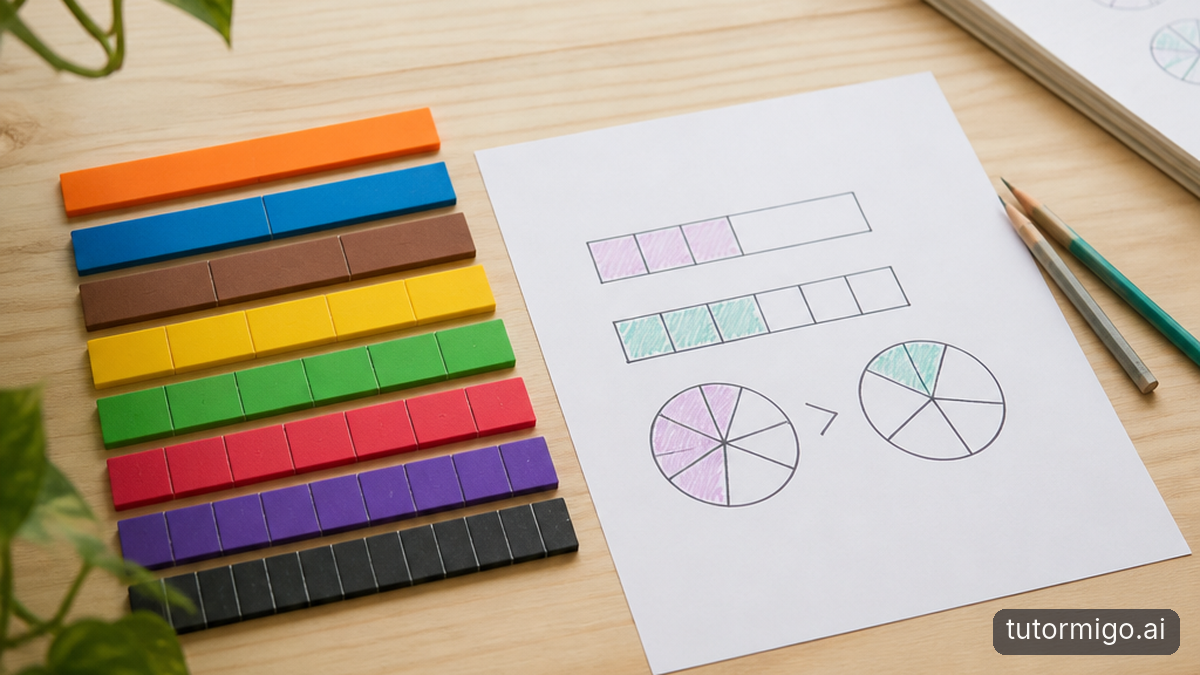
Imagine a class learning to compare fractions. One student understands equal parts but struggles to compare their sizes. Another can follow a procedure without explaining why it works. A third is ready to defend a comparison using several representations. They share a destination, but repeating one explanation for everyone would miss different needs.
You might offer fraction strips to the first student, ask the second to connect a drawing to their method, and challenge the third to analyze an incorrect argument. Then everyone comes together to discuss the underlying idea. This is not about assigning students permanent identities such as “visual learner” or “slow learner.” It is about responding to evidence that can change tomorrow. Understanding why students learn differently in class helps you separate a current learning need from an assumption about ability.
Practice Becomes More Targeted—and Less Wasteful

When practice matches a specific need, students spend less time repeating what they already know or struggling with work they cannot yet approach. That does not mean every activity becomes easier. Useful practice often feels demanding, but the difficulty should come from the skill being developed rather than a missing foundation nobody has noticed.
Consider a student whose paragraphs contain strong ideas but little supporting evidence. Assigning another complete essay may create more work without addressing the bottleneck. A better next step could be choosing evidence for one claim, explaining why it supports that claim, and revising a single paragraph. Once that becomes more reliable, the student can apply it across a longer piece.
The feedback matters as much as the task. “Add detail” is vague; “Explain how this example supports your claim” gives the learner something concrete to do. After the revision, ask them to try a fresh paragraph without the same prompt. That reveals whether the support helped build understanding or simply helped finish one assignment.
You can use this pattern in ordinary study sessions: identify one obstacle, choose a small practice task, give actionable feedback, and check again. A study plan built around current needs should change as those needs change, rather than becoming a fixed schedule of extra work.
Confidence Grows When Students Can Explain Their Progress
Personalized learning can change how students interpret difficulty. If every task feels too hard, a learner may decide they are simply bad at the subject. If every task is easy, they may never develop the habit of working through uncertainty. A better match gives students opportunities to experience effort that leads somewhere—and to notice what made the difference.
Suppose a student avoids reading aloud because unfamiliar words repeatedly interrupt their flow. Rather than asking them to “be more confident,” you identify a recurring word pattern, practice it briefly, and return to a suitable passage. When the student reads with fewer interruptions, you can name the improvement: “You recognized that pattern without stopping this time.” The encouragement rests on evidence, not general praise.
Students also need a role in deciding what comes next. Ask, “Which part can you do independently?” and “Where would another example help?” Their answers may be incomplete, so compare their judgment with actual work. Over time, this builds the ability to assess understanding more accurately.
Choice works best inside clear boundaries. A student might choose which passage to practice with, while the learning goal remains understanding unfamiliar vocabulary in context. The point is not unlimited freedom. It is helping learners understand the goal, recognize useful strategies, and gradually take responsibility for their next step.
The Classroom Becomes More Flexible, Not More Isolated
A personalized classroom does not have to mean a room full of students silently completing different assignments. Shared discussion, collaboration, and teacher explanation still matter. Personalization changes how you prepare students to participate and how you respond afterward. It should expand access to the shared learning experience, not replace that experience with isolated work.
For example, everyone might investigate the same question about a character’s decision. Before discussion, some students receive a short vocabulary preview. Others reread a key passage with a partner. Students who already understand the passage prepare competing interpretations supported by evidence. During the discussion, everyone contributes to the same intellectual task rather than being separated into unrelated lessons.
This approach also needs manageable routines. You might begin with a brief check, bring together a temporary group for focused instruction, and give other students purposeful independent or collaborative work. Groups should change when the evidence changes. Yesterday’s need for support should not determine next month’s opportunities.
To keep the workload realistic, personalize the parts that matter most rather than creating a unique curriculum for every learner. Several students may need the same explanation or practice task. A small set of well-chosen options can be more useful than dozens of custom worksheets, especially when you preserve time to listen, observe, and respond.
Better Outcomes Depend on Guardrails, Not Just Good Intentions
Personalization is an approach, not a guarantee of better learning. A system can look individualized while doing little more than assigning different amounts of work. It can also hold students back if an early mistake leads to weeks of easier tasks. You need to check both whether support is helping and whether students still have access to demanding, worthwhile learning.
One useful test is transfer: can the student use the skill in a new situation? A learner who succeeds on familiar practice questions may still struggle when the wording changes. Include occasional unfamiliar examples and ask for explanations. Look at work completed independently, not only work finished with hints, prompts, or a partner.
Fairness also requires attention. If one student has quiet space and regular support outside lessons while another does not, a plan that depends on extensive homework may deepen the gap. Build essential support into learning time wherever possible. If you use digital tools, check what student information they collect, who can access it, and whether a suitable alternative is available.
Finally, keep human judgment involved. A score may reveal a pattern, but a conversation can reveal confusing instructions, fatigue, or a misconception the score cannot explain. Use evidence to ask better questions, not to turn a temporary difficulty into a permanent label.
Start With One Goal and One Feedback Loop
You do not need to redesign everything at once. Choose one learning goal and examine a recent piece of work. Ask what the student can already do, where their understanding breaks down, and what evidence would show improvement. Keep the goal narrow enough that you can act on the answer during the next few learning sessions.
For example, if the goal is supporting a written claim, collect a short paragraph before giving additional instruction. Choose one response: model how to select evidence, practice explaining a quotation, or challenge a student to weigh conflicting evidence. After practice, request a new paragraph on a different prompt. Compare the two samples for the specific skill you targeted, rather than relying only on an overall grade.
Then involve the learner in reviewing the result. What became easier? Which strategy helped? What still needs attention? Keep what worked, adjust what did not, and repeat. That cycle is the practical heart of personalization: notice, respond, and check again. Consistent, modest adjustments are more useful than an elaborate plan nobody has time to maintain.
If you want a place to support that review process across a class, TutorMigo.ai offers a Teacher Dashboard with student monitoring and reporting.
Frequently asked questions
No. Students can share a learning goal, discussion, and core task while receiving different preparation, practice, or feedback. Personalize around meaningful differences in understanding, not differences for their own sake.
No. Its value depends on accurate checks, appropriate challenge, useful feedback, and opportunities to apply learning independently. Different assignments alone do not demonstrate better learning.
Look for stronger independent work, clearer explanations, and successful use of a skill in unfamiliar situations. Compare work over time and ask students which strategies helped, rather than relying only on task completion.
Yes. Brief conversations, work samples, temporary small groups, targeted feedback, and varied practice materials can all support personalization. Technology is optional; responding thoughtfully to evidence is essential.
Related reading
Enjoyed this read?
Like, share, or comment below.

Comments
0Sign in required · respectful discussion · replies supported
Loading comments…