

Parenting When Your Child Gives Up on a Puzzle
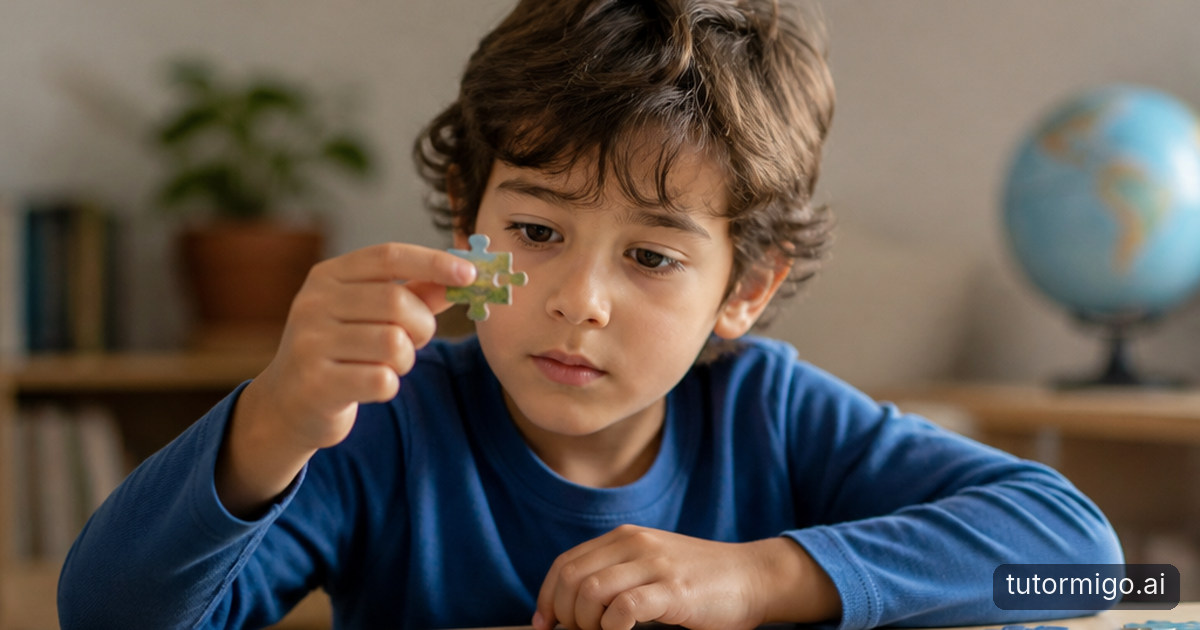
Your child drops a puzzle piece after one awkward try. “I can’t do this.” You want to help, but you don’t want to finish the puzzle yourself. Start by acknowledging the frustration, finding the exact snag, and offering one small prompt. Then leave room for your child to act.
It can happen so quickly that you barely see an attempt: a piece won’t fit, a zipper separates, or your child looks at the task and pushes it away. You’re left wondering whether they need encouragement, practical help, or a little more time before you say anything.
You don’t have to decide whether your child is “really trying.” That question can turn a small difficulty into an argument about effort. Instead, notice what happened just before they stopped. Did they turn the piece once? Did the zipper catch? Did they seem unsure where to begin?
Your job in that moment isn’t to guarantee success or persuade them that the whole task is easy. It’s to make the next action clear enough to attempt. That might mean noticing a straight puzzle edge together, then leaving the piece in their hand. A useful intervention gives them a foothold without taking the task away.
Focus on the Moment: Acknowledge Frustration Before Offering Help

When you focus on the moment, rather than the unfinished task, you can respond to what your child is experiencing. Start with something brief and observable: “That piece didn’t fit, and you’re frustrated.” With a zipper, you might say, “You’ve pulled it, but it’s still stuck. That’s annoying.”
Acknowledging frustration doesn’t mean agreeing that the task is impossible. You can accept the feeling without accepting the conclusion. “It feels too hard right now” leaves more room than either “Yes, you can’t do it” or “Of course you can; it’s easy.” Something that looks simple to you may genuinely feel difficult to them.
Keep your voice ordinary and your words short. A long speech about perseverance gives an upset child more to process. You also don’t need to name their feelings perfectly. If they say, “I’m not frustrated; I hate this puzzle,” you can answer, “You really don’t want to work on it right now.”
Then pause. Let the acknowledgment land before adding advice. Your child might pick the piece back up without another word. If they don’t, you can gently ask, “Want to show me where it got tricky?” The pause makes your response feel like listening rather than the opening line of a lesson.
Find the Sticking Point: What Part Feels Too Hard?
“I can’t do this” describes the whole task, but the difficulty may be much smaller. Your child might know where a puzzle piece belongs but struggle to rotate it. They might be able to pull a zipper but not hold the bottom steady. Different sticking points need different kinds of help.
Try one concrete question: “What happened when you tried?” or “Show me the part that won’t work.” If explaining feels like another task, invite them to point. You can also describe what you see: “The bottom of the zipper keeps slipping out. Is that the tricky part?” Treat your guess as something they can correct.
Avoid turning this into a string of questions. “Did you check the picture? What color is that? Where does it go?” can feel like a test when your child already feels stuck. Ask once, watch what they do, and give them time to answer.
Sometimes the sticking point isn’t the task itself. Your child may be tired, uncomfortable, or worried you’ll be annoyed if they get it wrong. If they can’t engage with even a small question, check those needs before offering another strategy. If “I can’t” comes up repeatedly, this guide to responding when your child says they can’t do it offers more ways to understand the reaction.
Offer One Small Prompt Without Solving It for Them
Once you understand the snag, offer the smallest hint that could help. For the puzzle, that might be, “Look for a straight edge on that piece.” For the zipper, try, “Can you hold the bottom still with your other hand?” Each prompt points toward an action while leaving your child to carry it out.
Useful help sounds specific, calm, and unfinished. “Try turning it once” is more usable than “Think harder.” “Which side matches that blue patch?” gives direction without announcing the answer. You’re not trying to explain everything you know. You’re offering just enough information for another attempt.
Resist stacking prompts together. “Turn it, check the picture, move it left—no, the other way” quickly becomes adult-directed work. Give one cue, then stop talking. Keep your hands away unless your child asks for physical help or there’s a safety concern.
If a verbal hint isn’t enough, ask permission to demonstrate one part. “Would you like me to show you how the zipper pieces line up, then you can try?” Show that movement and return the task. Don’t quietly finish fastening the coat. The same boundary matters in learning tasks; these ideas for building confidence without taking over explore how to keep the child’s role intact.
When to Pause and Let Your Child Try—and When to Help Again
After your prompt, watch before speaking again. A child who is looking between the puzzle and the picture, changing their grip, or turning the piece is doing something useful—even if nothing fits yet. Silence, slow movement, and an incorrect attempt aren’t automatic signals that you should step in.
You don’t need a stopwatch. Give them enough space to act on your suggestion without you narrating every movement. If they glance up, a quiet “I’m here” may be enough. Avoid hovering your hand over theirs or saying “Almost!” with every attempt; both can make your attention feel like pressure.
Help again when they ask, when the same snag keeps blocking them without a new approach, or when frustration is clearly rising. Check before adding more: “Would you like another hint, or a minute to try?” If they want a hint, make it about the remaining obstacle rather than restarting the whole explanation.
A pause can also mean putting the task down. If your child is crying, exhausted, or unable to take in what you’re saying, pushing for one more attempt may not help. And if you need to leave now, it’s fine to fasten the coat: “We’re short on time, so I’ll help today. You can practise when we’re not rushing.” Independence doesn’t require turning every difficult moment into practice.
Next Time, Try: “Which Small Step Could You Do on Your Own?”
The next time you hear “I can’t do this,” you don’t need a perfect response. Take a breath and start simply: “That’s frustrating. Show me the tricky part.” Once you understand the snag, ask, “Which small step could you do on your own?” Then wait for an answer or an action.
If that question is too broad, make the choice more concrete: “Could you find one edge piece, or turn the piece you’re holding?” With the zipper, you might ask, “Could you put the two bottom pieces together?” Choose an action that seems within reach, not a disguised request to complete the whole task.
When your child attempts it, notice what they actually did: “You held the bottom steady that time.” If it still doesn’t work, you can say, “That part stayed in place. Let’s look at what’s catching now.” Their attempt can give you both useful information without needing to end in immediate success.
For learning tasks where you’d like another source of conversational support, TutorMigo.ai offers a personal tutoring workspace. Whether you use outside support or not, keep the immediate goal small: acknowledge the feeling, offer one useful cue, and leave the next manageable action in your child’s hands.
Frequently asked questions
Avoid arguing about whether they tried. Ask them to show you where they would start, or offer a very small first action, such as picking up one puzzle piece. Uncertainty about how to begin may be the obstacle.
There isn’t a fixed waiting time. Watch for engagement: looking closely, adjusting their grip, or testing an idea. While they’re working on it, stay quiet. If they ask for help or become increasingly upset, check what they need.
Yes. Time pressure, tiredness, and safety can make direct help appropriate. Explain briefly why you’re helping, without criticizing their ability. You can offer another opportunity to practise when the situation is calmer.
Don’t turn the prompt into a contest. Acknowledge that they aren’t ready, check whether they need a break, and return to the task when appropriate. You can support another attempt without demanding it immediately.
Related reading
Enjoyed this read?
Like, share, or comment below.


Comments
0Sign in required · respectful discussion · replies supported
Loading comments…