
Tutormigo Benefits for Urgent Sunday Nights

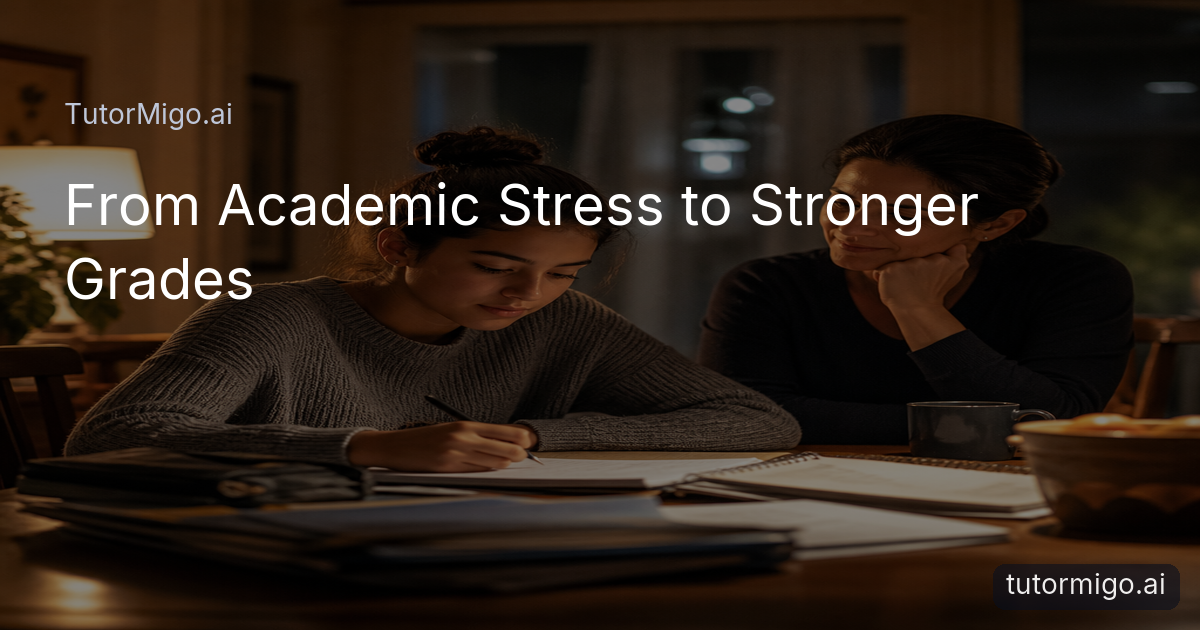
On a Sunday evening in October, Maya sat at the dining-room table with three notebooks open and her phone turned face down. A history quiz waited on Monday, a biology lab report was due Tuesday, and algebra problems filled the last page of her planner. Her exam calendar showed two more tests the following week. She had spent most of the weekend working, but she could not explain what she had actually learned.
Her mother noticed the pattern before Maya said anything. Maya was not avoiding schoolwork; she was moving constantly between assignments without a clear way to decide what came next. When she got stuck on one algebra step, she searched for an answer, copied a few notes, and then worried that she still did not understand the idea. By bedtime, the unfinished work felt larger than it had that afternoon.
This was the starting point for Maya’s story with TutorMigo.ai. The goal was not to make school effortless or hand over her homework. It was to create a steadier process: ask focused questions, keep track of what needed practice, and make preparation feel possible before the pressure peaked. Those practical TutorMigo benefits became visible one small study session at a time.
A tutoring routine replaced the nightly scramble
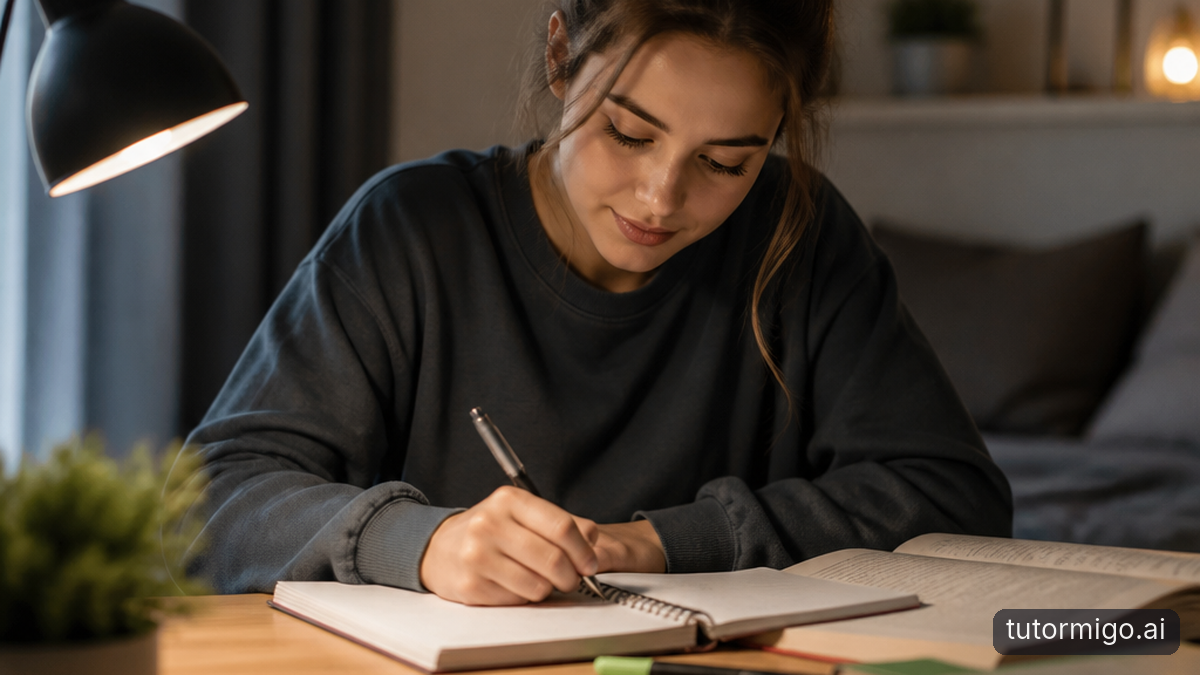
Maya began using the AI Tutor in the Tutor Workspace for short, focused sessions instead of waiting until she had a full evening free. On Monday, she brought the algebra problem that had stalled her and explained where her reasoning stopped. The personalized tutoring conversation helped her examine the next step rather than jumping straight to a finished response. She worked through a similar problem afterward, then wrote a brief note about the mistake she had made.
That distinction mattered. A general-purpose generative chatbot might be useful for brainstorming an explanation, but Maya’s routine needed a learning conversation that could continue from earlier work. With session history, she could return to the same topic and pick up the thread instead of reconstructing the entire problem each time. Her questions became more specific: “Why does this sign change here?” replaced “I do not get any of this.”
Her new routine was modest: twenty minutes after dinner for the most urgent subject, followed by five minutes to record what still felt uncertain. If an assignment took longer, she paused rather than treating midnight as the plan. The AI Tutor became a guide for working through confusion, not a shortcut around the thinking Maya needed to do herself.
Small review sessions made memory less fragile
Biology was where Maya noticed the next change. She could read a chapter and recognize the terms during class, yet forget them when a quiz asked her to explain a process in her own words. Instead of rereading the entire chapter the night before the test, she used spaced-repetition flashcards to review a smaller set of concepts across several days.
After finishing the lab report, Maya created cards for the vocabulary and asked herself questions about cause and effect. One card asked her to describe a process without looking at the diagram. Another asked her to compare two related terms. The review schedule brought the difficult cards back more often, while familiar material appeared less frequently. That made a ten-minute session feel purposeful rather than like another large assignment.
She also used the interactive study tools when a static page of notes was not enough. For math, working through steps in the math editor helped her see exactly where an error began. For a science explanation, she sketched relationships on the whiteboard before turning them into sentences. These tools gave her different ways to make an idea visible. By the following quiz, Maya was not simply hoping that recognition would return; she had practiced retrieving and explaining the material.
Exam preparation became a map instead of a countdown
As the month continued, Maya’s test anxiety changed shape. She still felt nervous before an exam, but the fear was no longer based on guessing how much she had forgotten. For her next major test, she used structured exam preparation to work through practice sets and monitor progress by topic. The preparation gave her a place to start and a way to notice patterns in the questions she missed.
On the first practice set, Maya rushed through reading-based questions and lost points on details she understood during review. She marked those results in her study plan, then reserved two short sessions to practice slower reading and checking evidence. In math, she returned to the concepts behind missed questions rather than repeating the same set immediately. Her progress tracking helped her see improvement as a sequence of adjustments, not a single score that defined her.
This was one of the most important TutorMigo.ai benefits for her family: preparation became visible. Maya could tell her mother, “I need to review these two areas,” instead of saying, “I have to study everything.” Her mother did not need to hover over each assignment. The plan gave them a shared picture of what Maya was practicing and why.
Support around Maya became clearer and calmer
Maya’s teachers had also noticed that she was capable but inconsistent under pressure. In class, she sometimes handed in polished work and sometimes submitted incomplete assignments after spending hours on them. With teacher visibility into learning progress, her teacher could see which areas Maya was revisiting and use a few minutes of class time to address a recurring misconception. The conversation shifted from “Why are you behind?” to “Which step is still getting in the way?”
At home, the Parent Dashboard helped her mother stay informed without turning every evening into an inspection. She could see Maya’s progress and discuss a realistic plan at dinner. On difficult nights, they used co-learning time to review a flashcard set or look at the next study target together. Maya still owned the work, but she no longer had to explain her entire academic week while already feeling overwhelmed.
The change was subtle in the house. Maya began leaving her planner open on the table instead of hiding unfinished pages under a book. Her mother asked about the process, not only the grade. Her teacher saw more consistent preparation. These were not dramatic transformations; they were signs that the adults around her had better context and could offer support before stress became a crisis.
Stronger grades followed a more positive learning experience
By the end of the grading period, Maya’s biology quiz scores had moved from the low 70s into the mid-80s, and her algebra test was her strongest result of the semester. The numbers mattered, but they were not the only outcome. She was finishing assignments earlier, asking clearer questions in class, and recovering more quickly when a problem did not make sense.
Her study routine was not perfect. She still postponed work after a long day, and some topics required help from her teacher or a longer session. The difference was that one missed evening no longer erased the entire plan. She could return to her session history, review the cards scheduled for that day, and choose the next manageable step. A general-purpose chatbot could still be one source of explanation, but TutorMigo.ai gave Maya a connected place to practice, revisit, and track her learning.
“I used to think being stressed meant I was not good at school,” Maya said. “Now I can usually tell whether I need more practice, a different explanation, or a break.” That is the heart of her story: the AI Tutor did not remove challenge. It helped turn challenge into a sequence Maya could understand, continue, and eventually manage with more confidence.
I used to think being stressed meant I was not good at school. Now I can usually tell whether I need more practice, a different explanation, or a break.
Explore TutorMigo
Enjoyed this read?
Like, share, or comment below.

Comments
0Sign in required · respectful discussion · replies supported
Loading comments…