

The Algebra II Pattern Maya Couldn’t Break
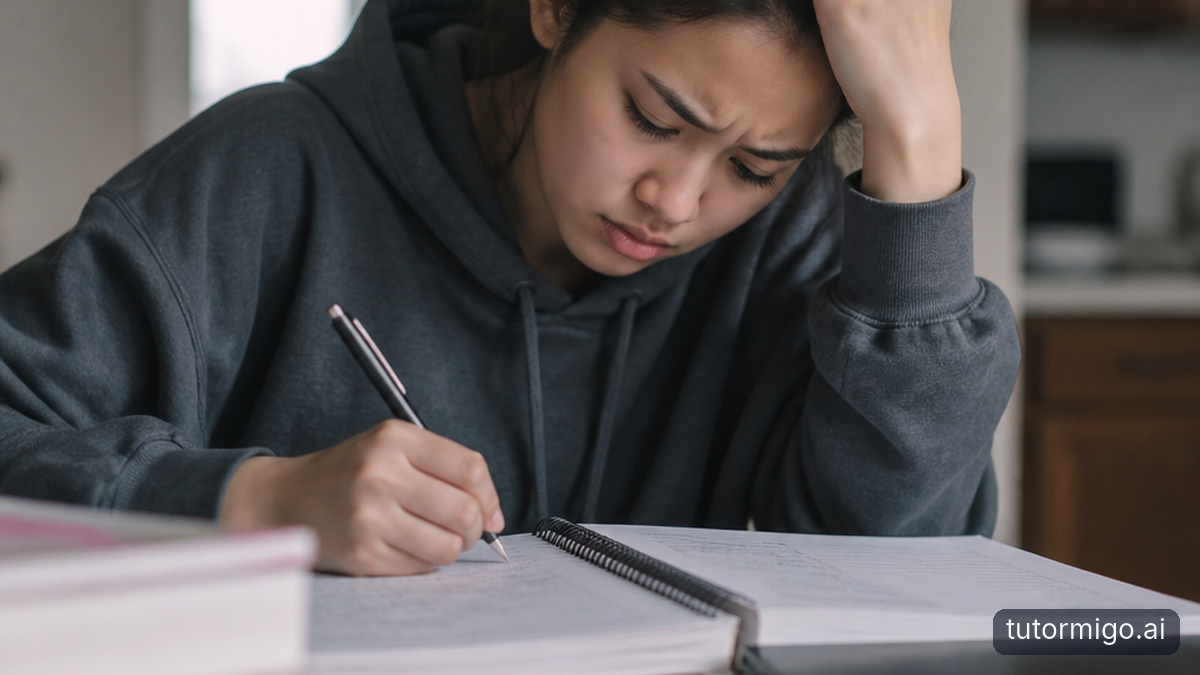
By October, Maya had stopped trusting her Algebra II answers. She understood examples during class, then froze when a worksheet changed the numbers or required two steps instead of one. Her first-quarter grade was a C+, and her latest test score was 68%. At home, she spent nearly seven hours a week rereading notes without knowing which mistakes mattered most. This TutorMigo.ai success story began with a very ordinary problem: Maya was working hard, but her practice was not connected to what she actually misunderstood.
Her teacher noticed that Maya often began correctly, then lost track while rearranging an equation or checking a solution. Maya’s notebook showed several nearly identical errors, including treating a negative coefficient as positive. She was embarrassed to ask the same question again, especially when classmates seemed to move ahead.
Her mother wanted to help but could not always tell whether Maya needed more examples, a different explanation, or simply a shorter practice session. They agreed to try an AI tutor for high school that could give Maya a place to ask questions privately and return to the same learning thread later.
Meta title: Algebra II Success Story: From C+ to B+ with TutorMigo.ai
Meta description: See how Maya raised Algebra II from C+ to B+ in eight weeks with TutorMigo.ai, cutting study time and building confidence through guided practice. Try it.
A Smaller, More Personal Starting Point
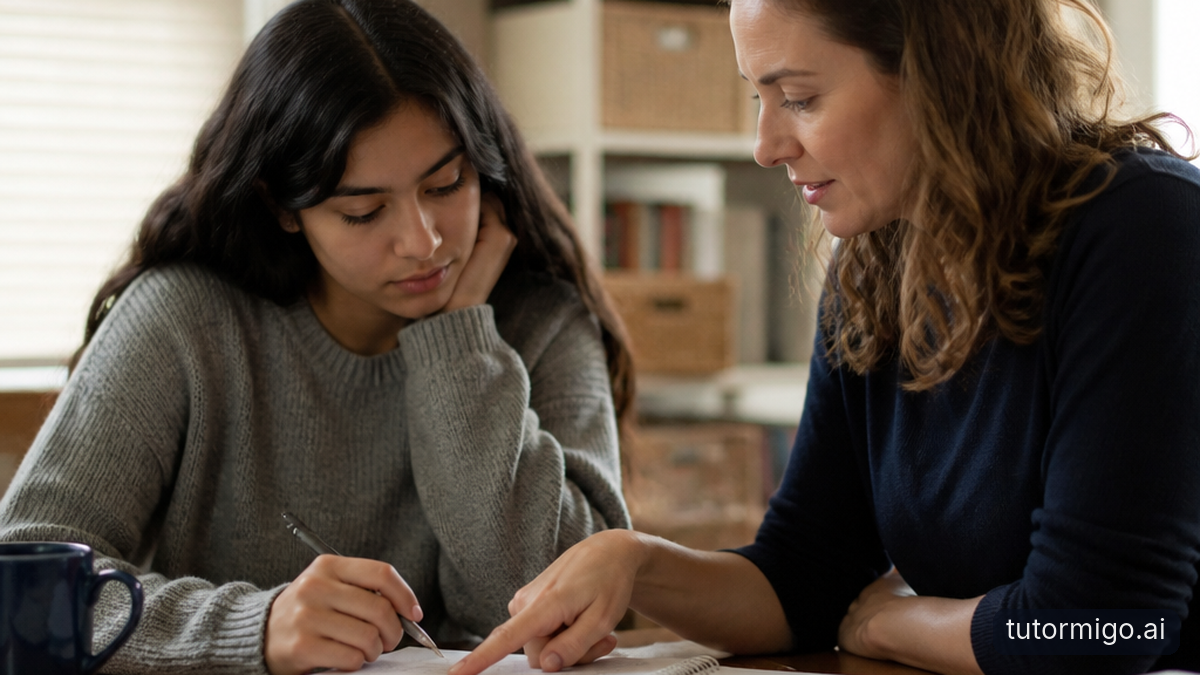
Maya’s first session did not begin with a long lesson. She typed a problem involving a quadratic equation and admitted that she did not know where to start. Instead of copying a solution, she asked the TutorMigo.ai workspace to help her identify the first step and explain why it was useful. When Maya said the explanation felt too fast, she asked for a simpler version and then tried the next step herself.
That back-and-forth became the most important change in her routine. The AI Tutor could respond to the exact line where Maya got stuck, rather than making her search through an entire chapter. She kept the session history, so the next evening she could return to the same type of problem and see how her earlier question had been answered.
Her routine settled into three 25-minute sessions each week. On Mondays, she reviewed the class topic. On Wednesdays, she practiced mixed problems and explained one solution in her own words. On Sundays, she reviewed mistakes before starting new work. The goal was not to finish the largest worksheet. It was to make each session answer one specific question.
After the first week, Maya’s mother noticed that “I don’t get it” had become more specific. Maya was now saying, “I know how to factor, but I lose the sign when I substitute the values.” That precision gave both of them a practical place to begin.
The Aha Moment: Checking the Meaning of Each Step
Maya’s breakthrough came during a practice problem that asked her to solve . She quickly wrote factors that multiplied to , but her first pair added to incorrectly because she was watching the numbers and not their signs. In the past, she would have looked at the answer, copied the factorization, and moved on.
During the session, the AI Tutor asked her to test the factors against both conditions: their product and their sum. Maya then wrote and checked the result by expanding it. The important moment was not getting the answer. It was realizing that every factorization could be verified before she committed to it.
She explained the idea aloud to her mother: “I was treating the signs like decoration. They actually tell me whether the middle term will be negative.” That sentence became a checkpoint she reused on later assignments. When she made a similar error two days later, she caught it before submitting the work.
For Maya, this was the difference between being told that an answer was wrong and understanding how to prevent the mistake. The guided practice gave her a repeatable habit: choose a method, complete a step, then check what that step means in the original equation.
Practice That Finally Followed Her Weak Spots
Once Maya could name her recurring errors, she changed how she reviewed. She created spaced-repetition flashcards for concepts rather than copying whole problems. One card asked, “What should be checked after factoring?” The answer reminded her to multiply the factors and confirm that the result matches the original quadratic. Another card asked her to distinguish between a coefficient and a constant.
She also used the interactive math study tool when a written page became confusing. On the digital step editor, Maya separated each transformation onto its own line. Seeing the equation change gradually helped her identify the exact point where she had distributed a negative sign incorrectly. The tool did not replace her written homework; it gave her a clearer rehearsal space before she completed similar problems on paper.
By the fourth week, her study time had fallen from about seven hours to four and a half hours per week. She was not doing less because she was skipping practice. She was spending less time rereading material that she already understood and more time working on the two or three skills that were still unstable.
Her quiz results reflected that shift. A 68% test became 78% on the next assessment, followed by 84% on a unit quiz. Maya still missed questions, but the mistakes were less random. She could usually explain what happened and choose a correction strategy.
What Her Parent and Teacher Could See
Maya’s improvement was easier to support because her progress was visible beyond the final grade. Her mother used the Parent Dashboard to see when Maya was studying, which areas she was reviewing, and whether her practice was becoming more consistent. That changed their conversations at home. Instead of asking, “Did you do your math?” her mother could ask, “Do you want to review factoring or substitution tonight?”
Maya’s teacher also saw a difference in class participation. She began volunteering to explain the checking step in front of a partner, something she had avoided earlier in the semester. Her teacher’s feedback was specific: Maya was showing more work, correcting errors before turning in assignments, and using mathematical vocabulary more accurately.
The visibility did not turn studying into surveillance. Maya still chose the pace and topics for her sessions. It simply gave the adults around her enough context to offer useful help. Her mother could recognize a steady week, and her teacher could notice that confidence was growing before the report card showed it.
This is one practical distinction between a general-purpose chatbot and a dedicated learning workspace for Maya: her questions, practice pattern, flashcard reviews, and session history supported one continuous Algebra II routine. The value was not a dramatic shortcut. It was having the right context available when she returned to work.
Eight Weeks Later: A Grade, a Habit, and More Confidence
After eight weeks, Maya’s Algebra II grade had risen from a C+ to a B+. Her latest unit test score was 91%, up from the original 68%, and her weekly study time had stabilized at roughly four and a half hours. She still had difficult chapters ahead, but she no longer interpreted every missed problem as proof that she could not do the subject.
The confidence change was measurable in a quieter way. At the start, Maya rated her confidence before a test at 3 out of 10. Before the next major assessment, she rated it 7 out of 10 and wrote a short plan: review sign errors, practice two factoring problems, and check each solution in the original equation. The plan took less than a minute to make because her routine had become familiar.
Maya’s story does not suggest that an AI tutor for high school replaces a classroom teacher or guarantees a particular grade. It shows what can happen when personalized explanations, session continuity, spaced review, and focused practice meet a student who needs a manageable next step. For families comparing Algebra II tutoring online, those details may matter more than a flashy promise.
Maya still keeps her original C+ test in a folder. She uses it as evidence of where she started, not as a label. Her new goal is simple: when a problem feels unfamiliar, slow down, identify the step, and check the meaning before asking for the answer. Visit: Tutormigo.ai
I was treating the signs like decoration. They actually tell me whether the middle term will be negative.
Related reading
Enjoyed this read?
Like, share, or comment below.



Comments
0Sign in required · respectful discussion · replies supported
Loading comments…