

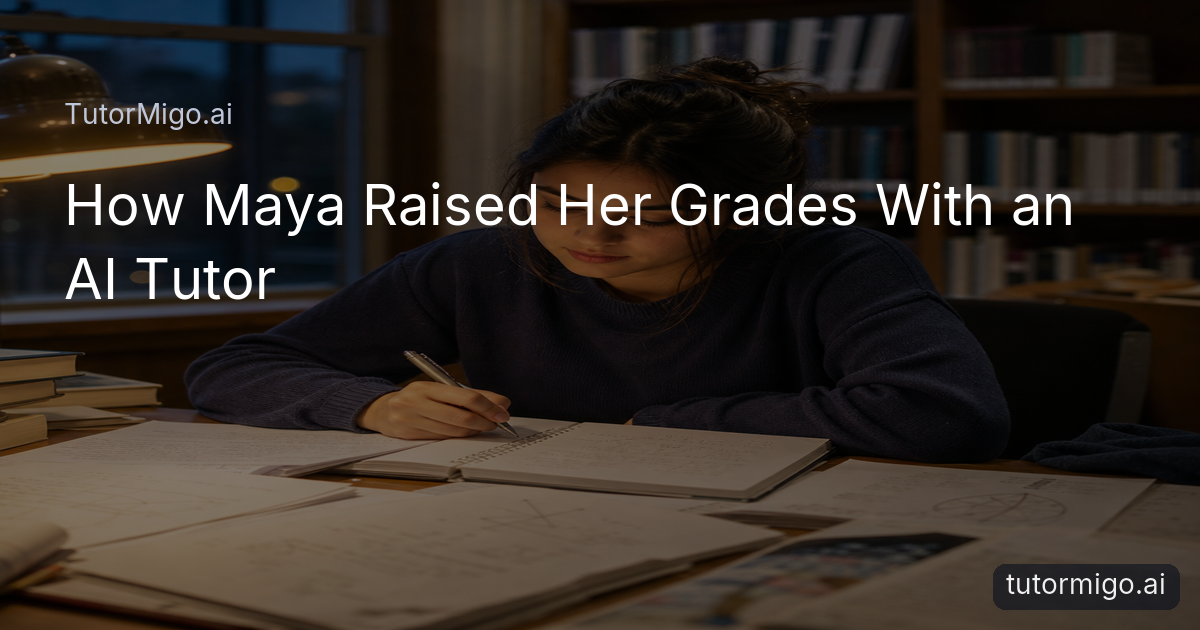
The Week Maya Realized Her Study Plan Wasn’t Working
By the middle of her first college term, Maya had developed a familiar routine: attend lectures, copy down everything she could, and spend Sunday night rereading her notes. It looked like studying, but her grades told a different story. A 68 on a calculus quiz and a low score on her biology lab report left her staring at two deadlines and no clear starting point.
She was not short on effort. What she lacked was timely support when a concept stopped making sense. The campus tutoring center had limited evening hours, and waiting until the next appointment meant carrying the same confusion through several assignments. Maya also felt uncomfortable sending her professor a long list of basic questions after every class.
Her older brother suggested trying TutorMigo.ai as a supplement, not as a shortcut. Maya decided on a simple test: use it during her next study session to work through one calculus problem, then explain the solution herself without looking back. She wanted more than an answer. She wanted to know where her reasoning had gone off track and what to practice next.
A Fast Answer Became a Patient Explanation
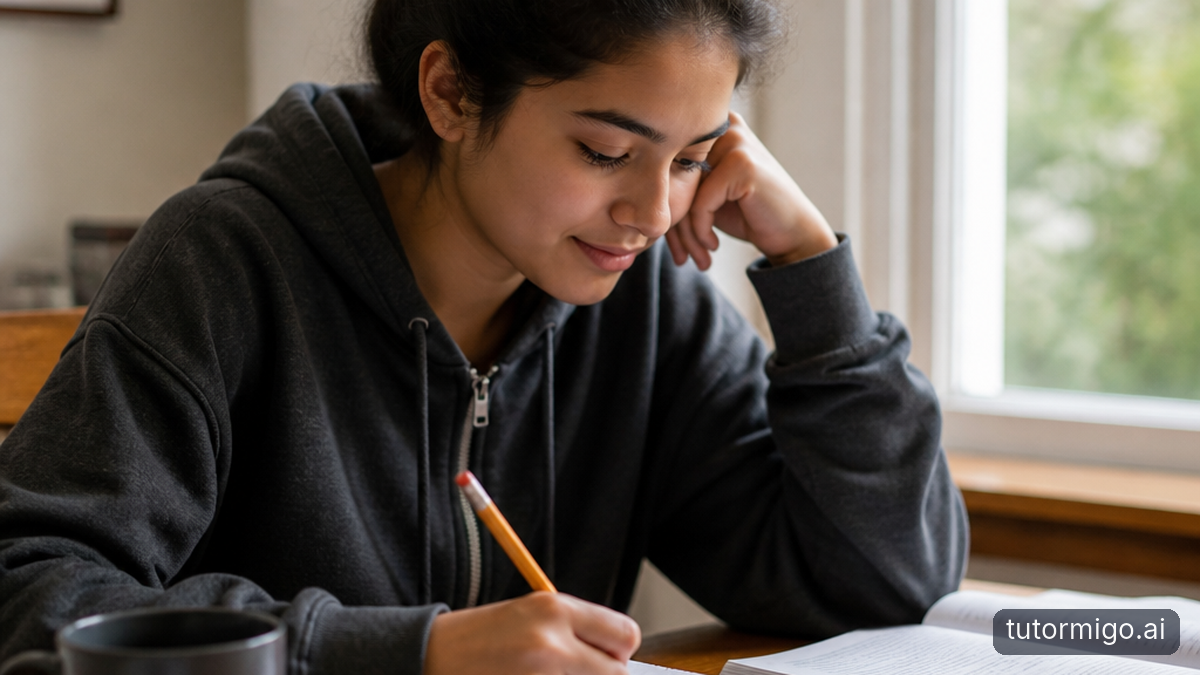
That first session began with a photo-free, typed description of a calculus problem about rates of change. Maya asked for help identifying the first step, rather than requesting a completed solution. The AI Tutor responded quickly and broke the problem into smaller decisions: identify the known quantities, choose the related relationship, and check whether the units made sense.
When Maya said she still did not understand why a particular variable belonged in the equation, she could ask immediately. The explanation changed direction without making her restart the conversation. Instead of receiving a dense paragraph, she worked through one step, answered a short check-in question, and then moved to the next.
That exchange showed Maya a practical difference between a general-purpose chat and a tutoring workspace designed around an ongoing learning session. The value was not simply getting instant answers. It was having the answer connected to her question, her previous attempt, and the point where she was stuck. The session history also meant she could return the following evening and continue instead of reconstructing the whole problem.
For readers comparing tools, this is one of the clearest TutorMigo benefits: support can arrive at the moment confusion appears, while the student remains responsible for understanding and completing the work.
Turning One Difficult Class Into Daily Practice
After calculus, Maya brought the same approach to biology. Her textbook was full of terms that seemed familiar during reading but disappeared during quizzes. Rather than highlighting another chapter, she used TutorMigo’s flashcards to turn her lecture notes into a short review deck. The cards focused on distinctions she had missed, such as the difference between transcription and translation, instead of repeating every definition equally.
The spaced-repetition schedule changed the shape of her week. On Monday, she reviewed a small set after class. On Wednesday, the cards she had missed returned while the easier ones appeared less often. On Friday, she practiced before opening her notes, which made gaps visible sooner. Five or ten minutes felt manageable on days when a two-hour study block did not.
For calculation-heavy work, Maya moved into the Study Tools Hub and used the math step editor to lay out her reasoning. Seeing each line beside the next made it easier to spot an algebra mistake before it reached the final answer. She also used the whiteboard to sketch a biology process from memory, then checked the steps with her tutor.
The habit was modest but consistent: ask, attempt, review, and return later. Her preparation became active practice rather than repeated rereading.
The Tutor Remembered the Thread of Her Questions
By the fourth week, Maya’s questions had become more specific. Instead of writing, “I don’t understand derivatives,” she asked why her interpretation of a graph conflicted with the sign of the derivative. Her earlier sessions gave the AI Tutor useful context about the explanations she had already tried and the vocabulary she preferred. That continuity made each new session feel connected to the last one.
It also helped her notice patterns in her mistakes. She was not consistently failing because she could not do the mathematics. She was skipping the step where she translated the wording of a problem into a relationship. Once that pattern was visible, Maya asked for practice questions that emphasized setup rather than speed. After each attempt, she explained her choice before seeing the next hint.
This was the second meaningful TutorMigo benefit for Maya: personalized tutoring did not mean the system simply adjusted the difficulty upward or downward. It gave her a place to describe her thinking, receive a step-by-step explanation, and keep working from the same academic goal across several evenings.
She still attended office hours and compared her notes with classmates. The AI Tutor filled the gaps between those supports, especially at 10:30 p.m. when the next morning’s assignment was due.
Progress Became Visible to the People Helping Her
Maya’s professor noticed the change before Maya trusted it herself. Her next calculus assignment was not perfect, but the work showed complete setups and clearer checks. Instead of only seeing a final score, her instructor could discuss the kind of errors she was making and recommend another practice set. That conversation was more useful because Maya had a record of the questions she had been asking and the topics she had reviewed.
For a student who wants outside support, visibility can matter as much as convenience. A teacher using tutormigo.ai teacher dashboard can monitor student progress, assign knowledge resources, and review reports. In Maya’s case, the point was not surveillance or replacing office hours. It was creating a more informed conversation about where she needed help and what she had already attempted.
Her parents were also less likely to ask the vague question, “Are you studying?” Maya could explain that she was reviewing flashcards, practicing calculus setups, and returning to missed concepts. That made their check-ins calmer and more practical. They could encourage a routine without pretending to know the content of every college course.
These shared signals helped Maya turn improvement into a process others could support, rather than a private struggle measured only by the next exam.
The Grade Improvement Started With a Smaller Win
At the end of the month, Maya earned an 84 on her next calculus quiz, up from 68. Her biology lab report rose from a low passing mark to a solid B. The numbers mattered, but the more lasting change was visible in how she prepared. She began studying earlier, brought precise questions to class, and used short review sessions before confusion had time to accumulate.
There was no single dramatic breakthrough. Maya still made mistakes and still needed her professors. What changed was the distance between getting stuck and finding a productive next step. A quick explanation could become a worked example; a worked example could become a flashcard; a missed flashcard could guide the next study session.
For students, families, and teachers comparing AI learning tools, her experience offers a grounded way to think about the benefits. A platform is most useful when personalized tutoring, session continuity, interactive practice, and progress visibility fit together around the learner’s real routine. It should help a student do more of the thinking, not hide the thinking behind a polished answer.
Maya still keeps her library table, her paper notes, and her Sunday planning session. The difference is that she no longer treats confusion as proof she cannot succeed. She has a way to work through it, one question and one manageable step at a time.
Students who want to build a similar routine can explore how TutorMigo benefits a study routine while deciding which support fits their own classes.
The biggest change was not that I got answers faster. It was that I stopped losing an entire night to one question I could not untangle.
Explore TutorMigo
Enjoyed this read?
Like, share, or comment below.

Comments
0Sign in required · respectful discussion · replies supported
Loading comments…