

After HSC, the next test shaped student success
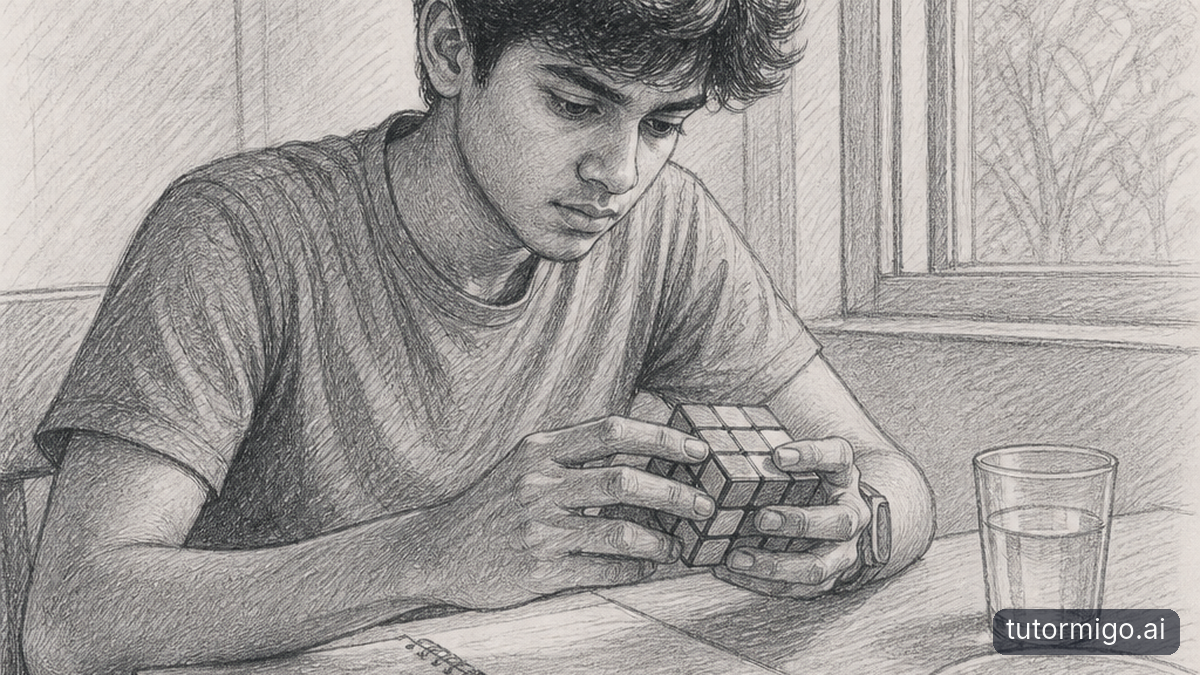
When Tanvir finished his HSC exams in Bogura, the certificate brought relief for only a few days. Engineering university admission tests were still ahead, and the questions demanded more than remembering chapters. A familiar Physics principle could appear in an unfamiliar situation; a Higher Math problem could become difficult after one small change in its conditions.
Many of his friends were considering coaching centers in Dhaka. The classrooms promised a fixed routine, frequent tests, and access to experienced instructors, but moving to the capital meant another layer of pressure. There would be tuition, transport, food, accommodation, and the emotional cost of leaving home. Tanvir’s family wanted to support his ambition without turning preparation into a financial strain.
So he stayed in Bogura and built a quieter routine. After dinner, he cleared a space on the table, opened his notebook, and chose one problem that had resisted him earlier. Some nights ended quickly. Others continued past midnight, with the house silent around him and a fresh page covered in diagrams, substitutions, and corrections.
He was not looking for shortcuts. He needed a way to ask questions at the exact moment confusion appeared, return to earlier reasoning, and keep working until a formula made sense rather than merely looking familiar.
Turning a difficult problem into a conversation
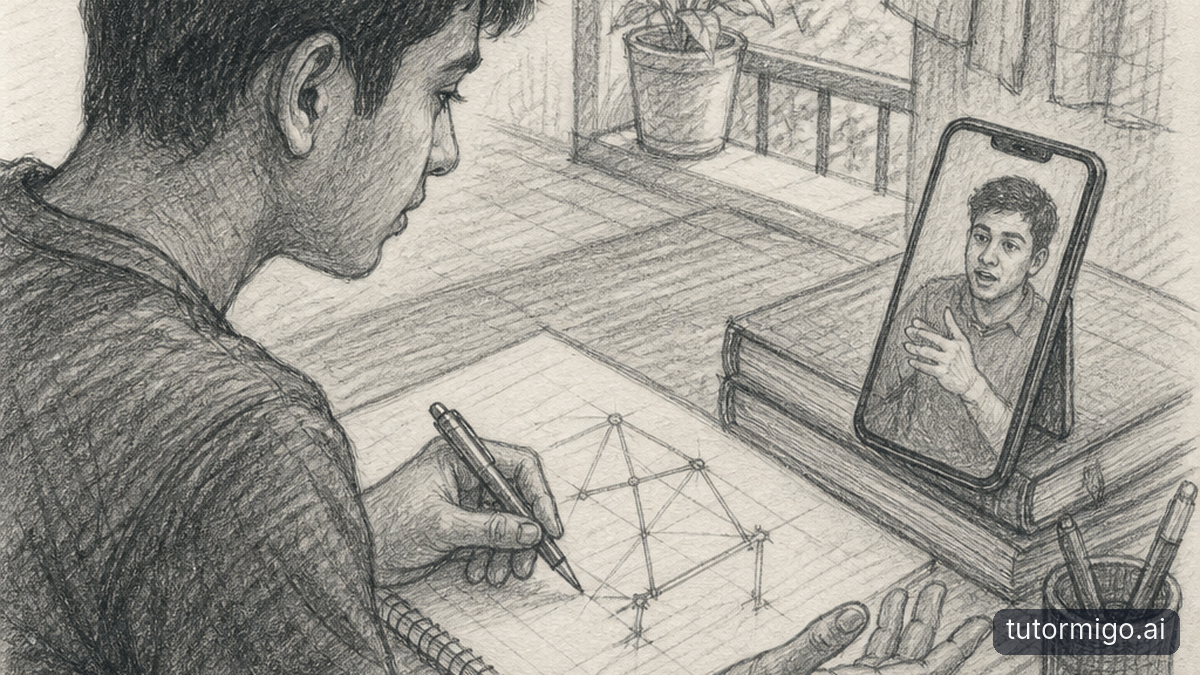
Tanvir began using TutorMigo as an AI Tutor during those late-night sessions. Instead of copying a full solution and moving on, he described where his reasoning stopped. In a Physics problem, he might explain which force he had considered first and ask why the next step depended on a different relationship. In Higher Math, he could show the line where an algebraic transformation no longer seemed justified.
The value was in the back-and-forth. A difficult question became a sequence of smaller questions: What is known? What must be found? Which concept connects them? What changes if one assumption is removed? When Tanvir returned to a problem the following night, the session history helped him continue from the earlier explanation instead of reconstructing the entire conversation.
That continuity mattered because his study time was irregular. A family responsibility, a tired evening, or a long problem could interrupt him without ending the thread. He could pause after understanding one step and return when he had enough attention for the next.
Over time, he noticed a change in the way he asked for help. He stopped writing, “I cannot solve this,” and started identifying the exact concept that needed checking. That shift was small on paper, but it made independent study feel possible.
From memorised steps to conceptual clarity
Tanvir’s strongest improvement came when he began testing whether he understood an idea beyond one worked example. After studying a Physics concept, he would try a related problem with different values or conditions. If the result looked wrong, he went back to the diagram and examined his assumptions rather than immediately searching for another answer.
The interactive study tools gave him a more practical way to do that. He could use a whiteboard-style workspace to lay out a force diagram or organise a geometry argument, then use the math step editor to inspect the order of a calculation. The process resembled the scratch work he already used in his notebook, but it gave the session a clearer path from the first observation to the final result.
He also created flashcards for ideas that repeatedly slipped away: definitions, common conditions, relationships between quantities, and the reason a particular method worked. Spaced repetition brought those cards back before they disappeared from memory. Instead of rereading an entire chapter, Tanvir faced a short review and had to retrieve the idea himself.
These tools did not replace his judgement. They made it easier to notice whether he was genuinely reasoning through a problem or simply recognising a familiar pattern. That distinction became especially important as admission-test questions grew less predictable.
A routine he could measure without rushing
At first, Tanvir measured progress by the number of questions he completed. That approach made a difficult night feel like failure. One complex problem might take an hour, while several easier questions could be finished quickly. With a more structured routine, he began tracking what he had actually learned: which Physics concepts were secure, which Higher Math methods needed another review, and where careless errors appeared most often.
He divided his evenings into focused blocks. One block revisited a weak concept, another worked through fresh problems, and a shorter final block reviewed flashcards. The arrangement was flexible enough to fit life at home but specific enough to prevent him from spending every night on the topics he already liked.
TutorMigo’s personalised AI Tutor sessions supported that continuity, while saved study work gave him something concrete to return to. A question he had struggled with on Monday could become a warm-up on Thursday. When he solved it without prompting, the improvement felt earned rather than accidental.
His confidence did not arrive as constant certainty. It appeared in smaller moments: opening a difficult chapter without postponing it, explaining why an answer made sense, or correcting an error before anyone else pointed it out. For an engineering admission candidate, those moments were evidence that preparation was becoming a habit rather than a daily emergency.
Support at home, visibility beyond the desk
Tanvir’s decision to study from Bogura did not mean he had to prepare in isolation. His mother could see that some nights were productive and others were heavy, even when he did not talk much about the difference. Parent visibility helped turn vague worry into a more useful conversation: Was he keeping a steady routine? Which subjects were taking the most energy? Did he need rest, a quieter room, or help planning the next day?
That kind of visibility was not about checking every answer or watching the clock. It gave the family a clearer picture of effort and progress without making Tanvir defend every late-night session. When he spent several days returning to the same topic, the pattern became a prompt to adjust his approach rather than a reason to assume he was falling behind.
A teacher or mentor could offer similar support by looking at areas that needed attention and discussing the reasoning behind recurring mistakes. This is one practical difference between a general-purpose generative chatbot and a learning workspace: the goal is not only to produce a response, but to preserve the path a learner is taking and make that path easier to review.
For Tanvir, that balance mattered. He remained responsible for the work, while the adults around him had enough context to encourage him in specific, respectful ways.
Confidence that travelled with him
As the admission tests drew closer, Tanvir still felt nervous. No study tool could remove the uncertainty of a competitive exam, and he did not expect preparation to make every problem easy. What changed was his response to difficulty. A long Physics question no longer automatically signalled that he was unprepared. He knew how to separate the information, identify the governing concept, and ask a precise question when his reasoning stalled.
In Higher Math, he became less dependent on seeing a familiar pattern. He practised explaining why a method worked and checking whether each step followed from the previous one. Flashcard reviews kept essential ideas active, while the interactive tools gave him a place to work through diagrams and calculations instead of leaving all his reasoning hidden in scattered pages.
Most importantly, the routine belonged to him. He had not copied the schedule of a Dhaka coaching center or measured his worth against a crowded classroom. He had built a sustainable system around his home, his family’s circumstances, and the pace at which he could understand difficult material.
Tanvir’s story shows the TutorMigo benefits that matter when a student needs more than instant answers: an AI Tutor that carries context forward, tools that make thinking visible, and a study rhythm that turns uncertainty into steady progress. From a quiet room in Bogura, engineering admission began to feel like a challenge he could meet one problem at a time.
I stopped asking whether I was good enough for a difficult problem. I started asking which part I had not understood yet.
Related reading
Related reading
Related reading
Related reading
Related reading
Related reading
Related reading
Related reading
Related reading
Related reading
Related reading
Related reading
Enjoyed this read?
Like, share, or comment below.
Comments
0Sign in required · respectful discussion · replies supported
Loading comments…