
Personalized Learning for Every Student
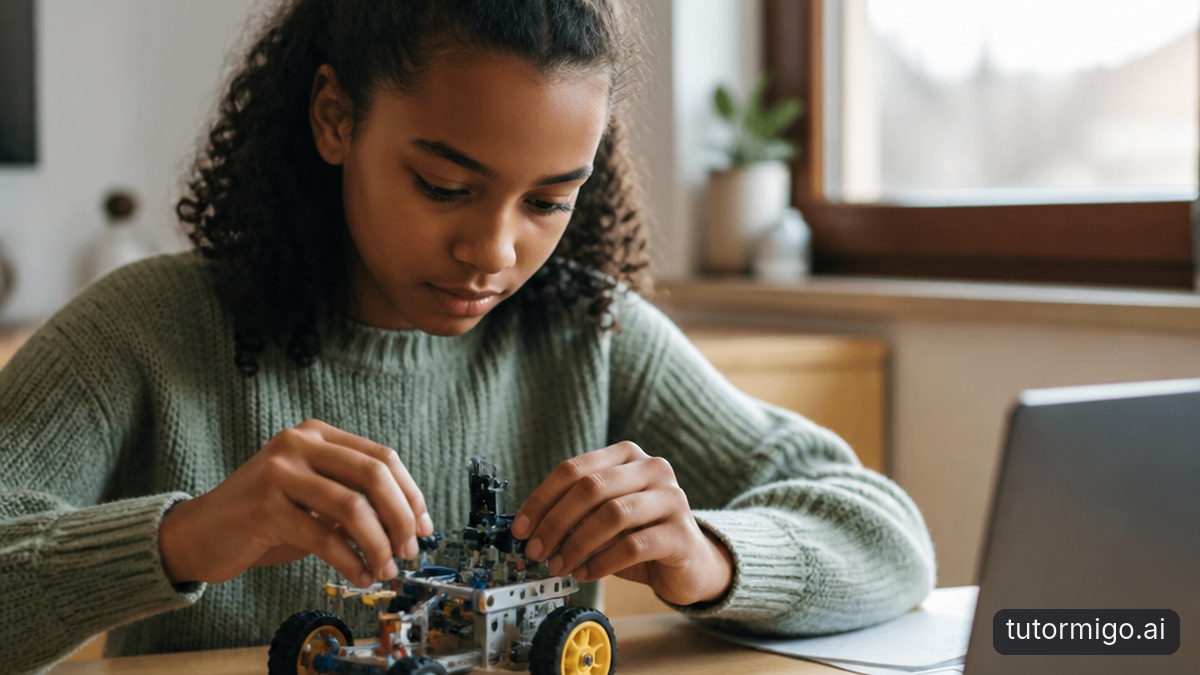
Two students sit down with the same algebra problem. Maya spots the pattern almost immediately. Daniel reaches the same line three times, makes the same sign error, and begins to assume that the entire topic is beyond him. A standard lesson may give both students identical examples and an identical quiz. Their needs, however, are no longer identical.
This small difference explains why digital tutoring is moving away from simply delivering the next page of content. Students bring different prior knowledge, study habits, levels of confidence, and revision needs to the same subject. One learner may need a shorter explanation; another may need a worked example, a visual step, or several rounds of practice before moving on.
Personalized learning does not mean lowering expectations or giving every learner a separate curriculum. It means paying closer attention to where a student is in the learning process. Useful signals can include the questions a student asks, the mistakes that recur, the topics they avoid, and the concepts they can already handle without help.
For students, the practical difference is important. Instead of treating a wrong answer as the end of a lesson, a more responsive system can treat it as information about what support may be useful next. That is the central promise of personalized digital tutoring: not more content for its own sake, but better-matched help at the moment it is needed.
What Makes Digital Tutoring More Personal?
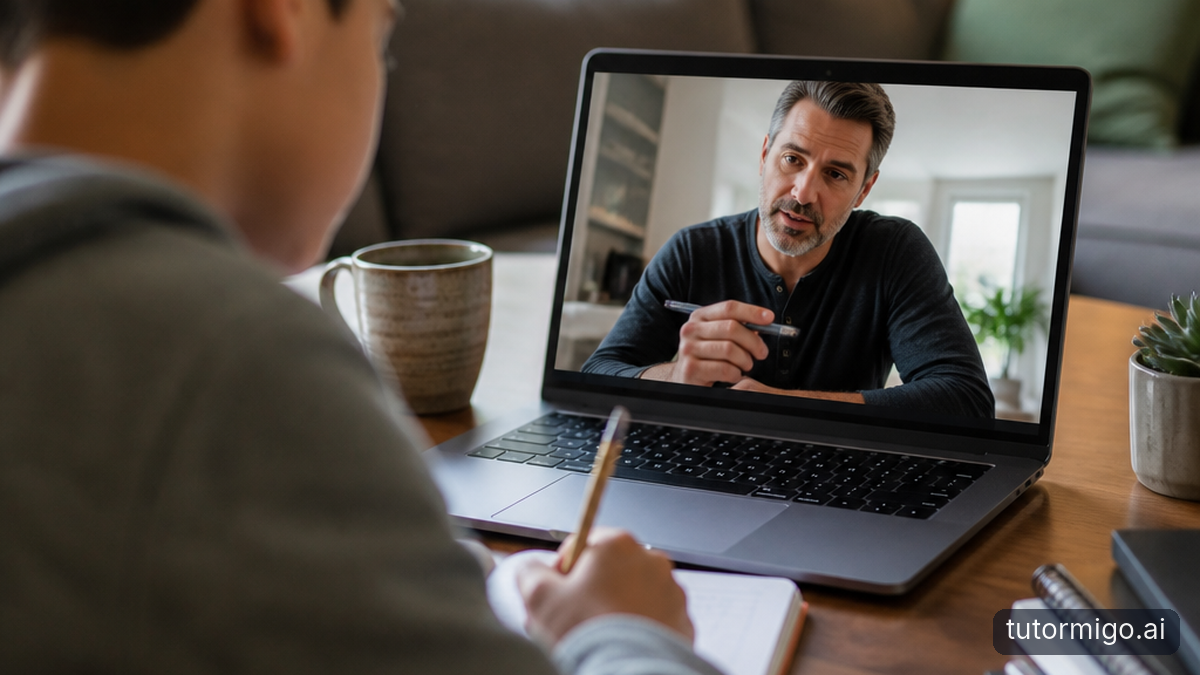
Personalized digital tutoring is an online learning experience that adjusts explanations, practice, and revision support to a learner’s needs, pace, and activity. Rather than presenting every student with the same sequence, it can use interaction and progress signals to suggest what to revisit, how to practise, or when to move forward.
In practical terms, personalization may involve explaining a difficult idea in a different way, offering an additional example, or returning to a concept after a repeated mistake. A learner who understands the basic rule may need a challenge, while someone still confusing two steps may benefit from a slower walkthrough and a smaller practice set.
That does not make an AI tutor a replacement for judgment from a teacher, parent, or student. The quality of the experience depends on the platform, the information available, and how thoughtfully the learner uses the feedback. Personalization is best understood as a process of responding to evidence rather than guessing what a student needs.
It can also support continuity. A student may ask a question after school, return to the same topic the next day, and use spaced-repetition flashcards later in the week. When those activities are connected to a broader study routine, revision can feel less like starting over and more like continuing a conversation.
AI Is Changing the Digital Tutor
AI personalizes tutoring by examining learning interactions and using them to shape the next explanation, question, or practice activity. Depending on the platform, an AI system may consider questions asked, answers given, repeated mistakes, progress through a topic, practice activity, and areas that appear to need revision.
This is different from assuming that every incorrect answer has the same cause. A student may misunderstand a definition, rush a calculation, or know the concept but struggle to apply it in a new context. Some AI-powered tutoring systems are designed to respond with a clarification or another example, although the usefulness of that response depends on the system and the student’s prompt.
AI can also make interaction more immediate. In a tutor workspace, a learner might ask why a solution took a particular step, request a simpler explanation, or work through a problem without waiting for a scheduled session. Session history can help preserve context, so the student has a clearer path back into the topic rather than a blank conversation each time.
That responsiveness is one reason the phrase AI Tutor is becoming common in education technology. But an AI Tutor should be judged by more than fluent answers. Students and adults also need to consider whether the tool supports practice, revision, continuity, and appropriate visibility into progress instead of functioning only as a general-purpose chatbot.
From Digital Lessons to Learning Companions
The older model of digital learning is often easy to describe: student, lesson, quiz, score. That sequence remains useful for introducing material and checking recall, but it can leave a learner with little guidance about what to do after an incorrect answer. A score tells a student something happened; it does not always explain what should happen next.
Personalized digital tutoring follows a more interactive pattern: student, question, feedback, practice, adaptation, progress. In that model, the student can ask for another explanation, test the idea in an interactive study tool, review a flashcard deck, and return to the topic later. The path is not necessarily linear, because learning itself is not always linear.
For example, a student preparing for an exam may use structured practice sets and progress tracking to identify a weak area. They might then use a whiteboard or math step editor to work through the underlying skill, followed by spaced-repetition cards to keep key ideas available for later recall. Each tool serves a different part of the same study process.
This does not mean every traditional online tutoring service is inflexible, or that every AI system is genuinely adaptive. The broader change is a shift in emphasis: from delivering a fixed lesson to supporting a sequence of decisions about explanation, practice, revision, and pace.
Where TutorMigo.ai Fits In
TutorMigo.ai sits within this wider movement toward personalized AI tutoring. Its AI Tutor Workspace gives students a place for personalized tutoring chat, expert personas, and session history. That combination can make a study exchange feel more continuous: a learner can return to a difficult question, ask for a different explanation, and keep the conversation connected to earlier work.
The platform’s role is broader than chat alone. A student can use spaced-repetition flashcards for scheduled review, while the Study Tools hub provides interactive options such as a whiteboard, code sandbox, and math step editor. These features matter because understanding often develops through doing, not just reading an answer.
For learners working toward a defined test, TutorMigo.ai also includes structured exam preparation for SAT, ACT, AP, and IELTS, with practice sets and progress tracking. The value of those tools depends on consistent use and the accuracy of the student’s own work; the platform should not be presented as a guarantee of a particular result.
Personalized support also involves the adults around a learner. The Parent Dashboard provides visibility into child progress, learning controls, and co-learning features. In that context, the potential TutorMigo benefits are less about replacing people and more about giving students, parents, and teachers a shared view of how study is unfolding.
What Personalized Tutoring Could Mean for Students
The immediate benefit of personalized tutoring is often practical rather than dramatic. A student who is stuck can ask a follow-up question instead of abandoning the topic. A student who has mastered the basics can spend less time repeating material and more time applying it. A learner preparing for a test can see which areas deserve another round of practice.
There may also be a confidence benefit, although it should be described as a possibility rather than a guaranteed outcome. When feedback is specific, a mistake can become a next step: revisit the definition, try a new example, complete a short practice set, or schedule the idea for later review. That is more useful than treating every low score as a verdict on ability.
Students may gain more targeted practice, faster clarification, relevant revision, and more opportunities to ask questions at their own pace. Parents and teachers may gain clearer visibility into patterns that are difficult to notice during a single homework session, especially when dashboards or progress records are available.
Still, personalization works best when students remain active participants. They need to check explanations, attempt problems themselves, and notice when an answer does not make sense. The strongest digital tutoring experience is not an automatic shortcut; it is a structured way to make practice and feedback more relevant.
The Future of Digital Tutoring
The next generation of tutoring may not simply deliver more content. It may become better at understanding how individual students interact with that content: where they pause, which explanations help, what they forget, and when they are ready to try a harder problem.
That future will require more than impressive conversation. It will depend on useful session continuity, careful progress tracking, meaningful practice, and clear roles for parents and teachers. It will also require restraint. An AI system should support learning without pretending to know more about a student than the available evidence shows.
For families comparing online tutoring tools, the practical questions are straightforward. Can students ask follow-up questions? Can they revisit difficult ideas? Are revision tools connected to a wider routine? Can adults see progress without taking over the learning? And does the platform support the subjects and study methods the learner actually needs?
TutorMigo.ai offers one example of how those pieces can sit together: an AI Tutor Workspace, spaced-repetition flashcards, interactive study tools, structured exam preparation, and visibility for parents and teachers. The larger story, however, is bigger than any one platform. Digital tutoring is becoming more personal when it responds to the learner in front of it—not just the lesson on the screen.
“The next useful lesson is not always the next lesson in the sequence; sometimes it is the explanation that makes the last one finally make sense.”
Pros and cons
Pros
- More targeted explanations and practice
- Support for revision at an individual pace
- Interactive study tools beyond chat
- Progress visibility for parents and teachers
Cons and limitations
- Personalization depends on the platform and available learning signals
- AI feedback still requires student judgment and active practice
- Potential benefits are not guaranteed outcomes
The next useful lesson is not always the next lesson in the sequence; sometimes it is the explanation that makes the last one finally make sense.
Enjoyed this read?
Like, share, or comment below.

Comments
0Sign in required · respectful discussion · replies supported
Loading comments…