


Turn Classroom Debate From Noise Into Learning
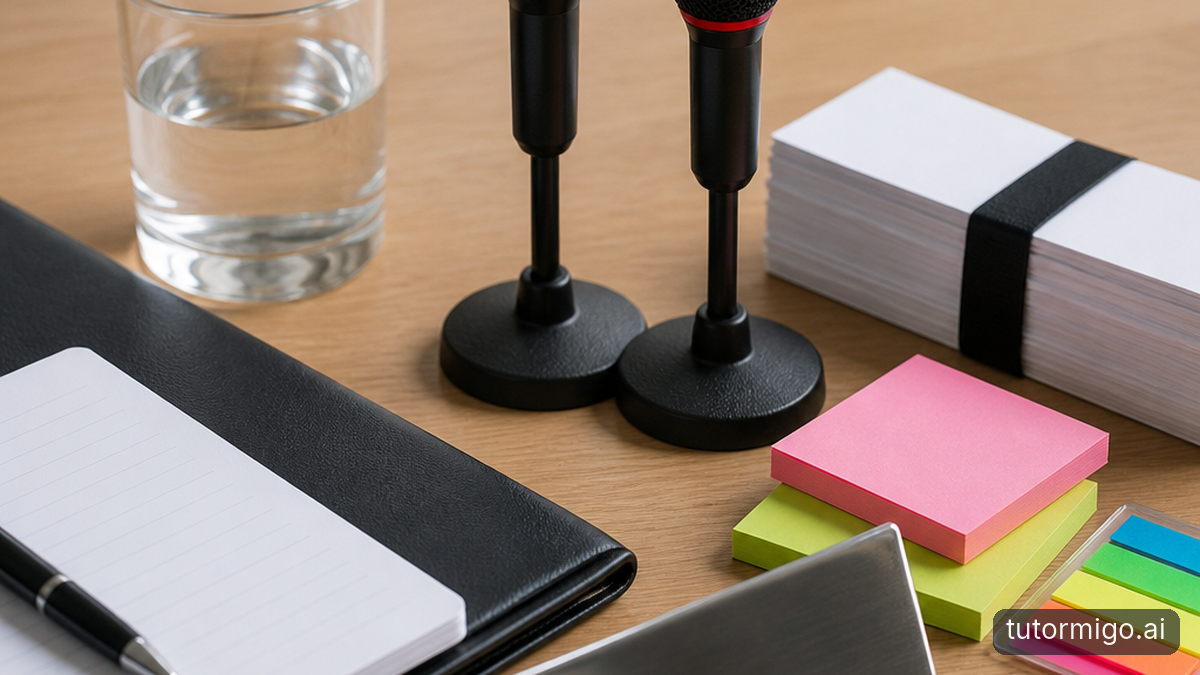
Debate can look energetic while producing very little learning. A few confident students dominate, quieter students disappear, and the final activity leaves you with no reliable record of who researched, listened, or changed their thinking. The solution is not to remove spontaneity; it is to give every part of the discussion a visible purpose.
Start by naming the skills students will practise: making a claim, selecting relevant evidence, explaining reasoning, listening for an opposing point, responding respectfully, and building on a teammate’s idea. Share these goals before assigning the topic. For example, tell a class debating whether school uniforms should be required that success means more than persuading the room. Students must use two credible sources, accurately summarize one opposing argument, and ask a useful question.
Keep the first debate short enough to manage: 10 minutes of preparation, two three-minute opening rounds, four minutes of questions, and two-minute closing statements. Explain that volume, speed, and confidence are not scoring categories. This immediately changes the atmosphere from performance to practice. For additional ideas on helping students speak with confidence, connect the activity to strategies for building debate confidence.
Build Groups With Clear, Rotating Roles

Use groups of four or five, and assign roles before students begin researching. A useful four-person structure includes an opener who states the claim, an evidence lead who explains sources, a questioner who prepares and asks follow-up questions, and a summarizer who identifies the strongest reasoning at the end. In a five-person group, add a process observer who tracks whether the team shares speaking time and responds to opposing ideas.
Roles should rotate across debates. A student who is comfortable speaking might become the evidence lead in the next round, while a quieter student can begin as summarizer before taking an opening role. Give each role a small checklist, not just a title. The questioner, for example, should prepare two clarification questions and one challenge question. The observer should record each member’s contribution using initials and brief notes.
Keep groups balanced by considering prior participation, preparation habits, and communication needs rather than placing all confident speakers together. You can also create mixed-side preparation pairs so students rehearse with someone outside their team. Explain that collaboration includes improving a teammate’s reasoning, not simply dividing the research. A structured team routine can also draw on ideas from learning squads that make group responsibility visible.
Design Prompts That Require Evidence
A strong debate prompt creates room for reasoned disagreement without rewarding unsupported opinions. Avoid questions such as “Is technology good or bad?” Instead, frame a decision with a defined context: “Should our school replace one weekly homework assignment with a supervised study period?” Students can investigate time use, access to support, learning outcomes, and possible drawbacks while still reaching different conclusions.
Give every team the same assignment brief. Require a clear claim, two or three relevant pieces of evidence, an explanation of how each source supports the claim, one anticipated counterargument, and a proposed response. For the homework example, a team might use a student survey and a school attendance report, then explain why those sources are relevant rather than merely listing them.
Build in an evidence check before the live debate. Ask students to label each note as fact, interpretation, example, or opinion. They should also record the source, date, and context. During preparation, require a one-paragraph position brief or a shared evidence table. This creates an assessable checkpoint and helps you spot weak claims early. If students are working in teams, a shared assignment routine can make the preparation stage easier to follow and review.
Monitor Preparation and Participation
Do not wait until the debate begins to discover that half the class has not prepared. Use two short checkpoints. First, review each student’s source notes or evidence table. Look for relevance, accurate summaries, and a clear connection to the team’s claim. Second, hold a two-minute rehearsal in which every student must speak once. Walk between groups and record one strength and one question for each team.
During the debate, use a simple participation grid with student names down one side and observable actions across the top: contributes evidence, asks a question, responds to an opposing idea, invites a peer in, and listens without interrupting. You do not need to capture every sentence. Tallying a few specific behaviours gives you more useful information than a general impression of who seemed engaged.
A teacher dashboard can support this workflow when it is used for class setup, assignment monitoring, and progress records rather than as a substitute for observation. Set up the debate assignment, check which students have submitted preparation work, and add brief notes after rehearsal. If one student has not contributed, intervene privately with a defined entry point, such as asking them to present the team’s strongest source or pose the first clarification question.
Assess Argument Quality, Not Speaking Style
Use a rubric with four or five criteria and describe what evidence of success looks like. For example, score claim and reasoning, evidence use, response to counterarguments, listening and response, and collaboration on a four-level scale. A top score for evidence use might require accurate, relevant sources that are explained rather than dropped into the speech. A top score for listening might require accurately representing an opposing point before answering it.
Separate argument quality from delivery. A student can speak quietly and still offer excellent reasoning. Another student may sound confident while relying on vague examples. To make this distinction clear, assign different weights: argument and evidence could count for 40 percent, response and listening for 25 percent, preparation for 20 percent, and collaboration for 15 percent. Adjust the weighting to match your learning goals, but publish it before the activity.
Include self-assessment and peer evidence, while keeping teacher judgment central. Ask students to identify one claim they strengthened and one response they would revise. Then compare their reflection with your notes. This turns the grade into a record of decisions and improvement, not a verdict on personality. For a useful feedback routine, focus comments on the next observable move: “Explain why this source supports your claim,” rather than “Be more persuasive.”
Report Progress With Specific Next Steps
Reporting debate progress is most useful when it shows patterns across activities. Instead of writing “participates well,” record a specific strength such as “uses evidence accurately and invites a quieter teammate into the discussion.” For a developing skill, write an action such as “before responding, summarize the opposing point in one sentence.” These comments help students understand what to repeat and what to practise next.
After the debate, give each student a short progress snapshot with three parts: demonstrated strength, evidence from the activity, and next target. A student might receive: “You asked two precise follow-up questions and used the answers in your closing statement. Next time, prepare a counterargument before the question round so your response is less reactive.” For teams, report process separately from individual performance so a strong group result does not hide uneven preparation.
Keep records consistent across debates. A teacher dashboard is useful at this stage when it helps you review submitted work, store monitoring notes, and report progress by student or class. Look for trends: students may improve at using sources but continue interrupting, or they may listen carefully without taking risks in speaking. Use the pattern to plan the next mini-lesson, such as modelling how to disagree with an idea while acknowledging the speaker.
For immediate implementation, choose one prompt, four roles, and five rubric criteria for your next lesson. Share the criteria, collect a preparation checkpoint, run a brief rehearsal, and finish with one written next step per student. If you want support organizing those class setup, monitoring, and reporting routines, TutorMigo.ai ’s Teacher Dashboard is a practical option to explore.
Frequently asked questions
Four students is usually manageable: opener, evidence lead, questioner, and summarizer. Add a process observer for groups of five, and rotate roles across activities so each student practises different skills.
Give them a defined, prepared entry point such as presenting one source, asking a planned clarification question, or summarizing an opposing view. Rehearsal time and rotating roles reduce the pressure of improvising.
Assess claim and reasoning, evidence use, response to counterarguments, listening, preparation, and collaboration. Keep delivery separate from argument quality so confidence or volume does not determine the result.
Use a small participation grid with observable actions, review one preparation checkpoint, and record one strength plus one next step per student. Consistent categories make progress easier to compare across debates.
Related reading
Enjoyed this read?
Like, share, or comment below.



Comments
0Sign in required · respectful discussion · replies supported
Loading comments…