

Everyday Learning Through Daily Activities
You may think learning happens only when someone opens a textbook, sits in a classroom or completes a worksheet. Yet ordinary life is already asking you to measure, predict, compare, explain and revise your choices. The hidden education behind everyday life appears when you cook dinner, negotiate a price or work out why a drawer will not close.
Take a simple morning routine. You decide whether there is enough time to make breakfast, estimate how much food each person will eat and change your plan when someone leaves late. That is planning under uncertainty. When you explain a route to a visitor, you are organising information for another person. When you watch a ball roll across a floor and predict where it will stop, you are using observation and informal physics.
The useful shift is to stop asking, “What school subject is this?” and start asking, “What problem am I solving?” This question makes learning visible without turning every activity into a lesson. Notice the choice, the evidence behind it and the result. Then ask what you would change next time. That small pause turns routine experience into a repeatable way to think.
Cooking Turns Measurement Into Science
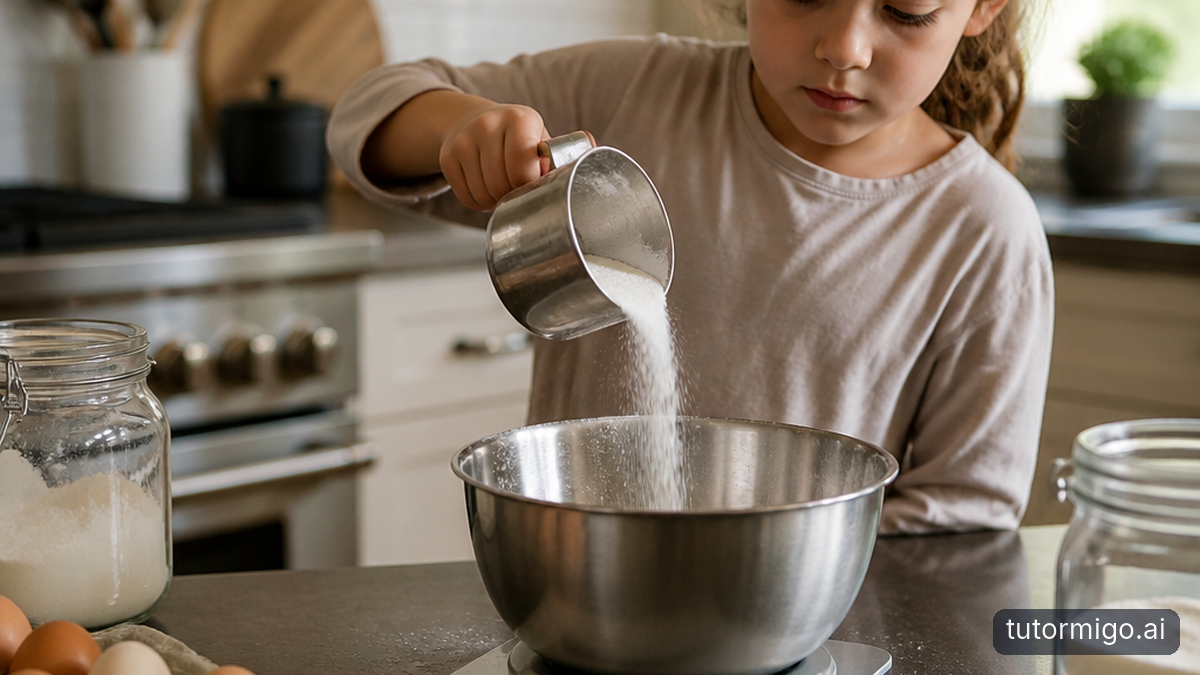
Cooking is one of the clearest places to see mathematics and science working together. If a recipe serves four people but you are feeding six, you need to scale each ingredient by , or . That adjustment is more than arithmetic: it also forces you to consider whether a larger pan, longer cooking time or different stirring pattern will change the result.
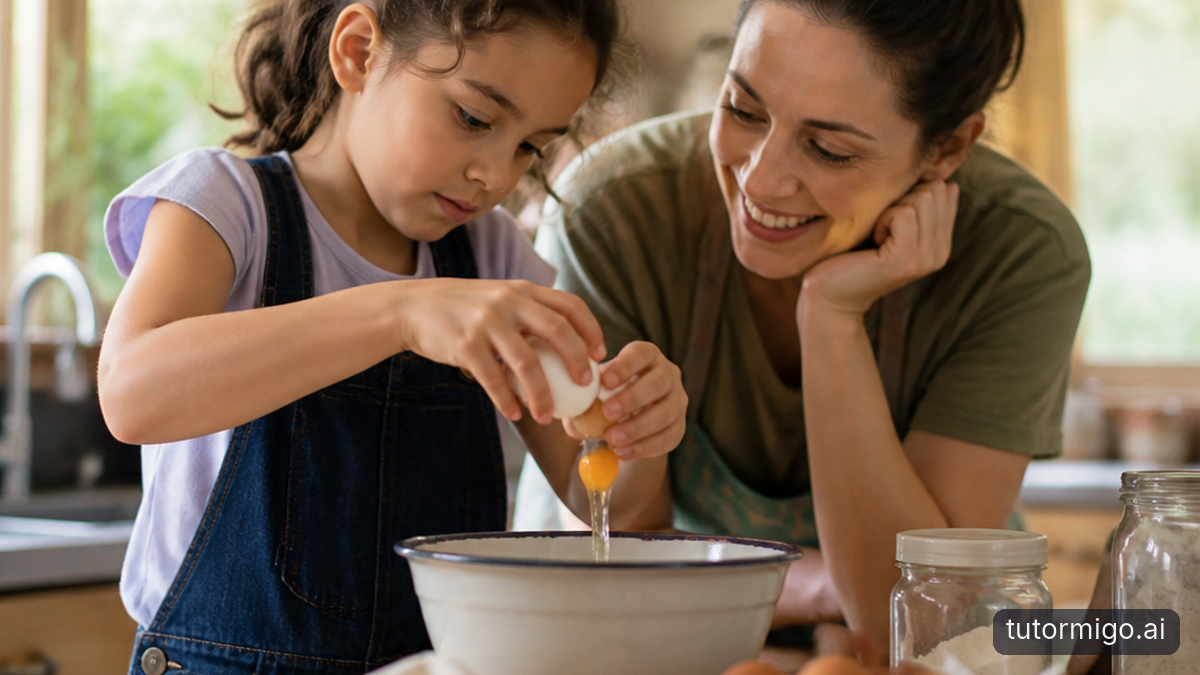
Temperature and timing reveal physics and chemistry. Water in a covered pot heats differently from water in an uncovered one because less heat escapes. An egg changes from liquid to firm as proteins respond to heat. Bread rises because gas expands and becomes trapped in a flexible structure. You do not need laboratory equipment to investigate these effects. Compare two batches, change one condition and observe what happens.
Try making the reasoning explicit. Before adding salt, predict how the flavour will change. Before opening the oven, predict what will happen to a cake if heat escapes. After tasting, describe the evidence rather than simply saying “it worked.” A useful kitchen note might be: “The vegetables browned more when they were spread out, probably because surface moisture escaped faster.” That is observation, hypothesis and revision in one ordinary meal.
Markets and Travel Teach Smart Decisions
A market or travel day is a live lesson in value, communication and probability. Suppose one shop sells three notebooks for 9 dollars and another sells one for 4 dollars. The first option costs dollars per notebook, so the bundle is cheaper if you need all three. But if you only need one, spending 4 dollars may still be the wiser choice. Comparing unit cost with actual need protects you from treating every discount as a saving.
Bargaining adds psychology and communication. You listen for the seller’s priorities, state your budget clearly and decide what matters more: the lowest price, quality, speed or a good relationship. A calm question such as, “What is your best price if I buy two?” invites information without turning the exchange into a contest. You are practising perspective-taking and learning how tone changes cooperation.
Travel adds decisions under uncertainty. You compare a cheaper route with a longer one, leave extra time for delays and choose which information to trust. Afterward, review the prediction: Was the crowded bus actually faster? Did the cheaper ticket create another cost? This kind of reflection builds judgment because it connects a decision with its consequences, not just with whether the outcome felt lucky.
Fixing Things Makes Physics Visible
When something breaks, you often learn more by testing it than by immediately searching for an answer. A loose chair, blocked drain or bicycle chain presents a system with parts, forces and possible causes. Before touching anything, describe the symptom precisely. “The wheel wobbles when turning” is more useful than “the bike is broken,” because it narrows what you need to inspect.
Physics becomes practical here. A longer handle gives you more leverage when turning a tight screw. Friction helps a tire grip the road but can also make a stuck part difficult to move. A load is easier to balance when its weight is spread or supported close to the centre. You can test one change at a time: tighten one connection, remove one obstruction or shift one support, then observe the result.
There is also a lesson in failure. If a repair does not work, that result is evidence, not wasted effort. Maybe the visible problem was only a symptom. Write or say three things: what you expected, what happened and what the difference suggests. For example, if lubricating a hinge does not stop a door from sticking, the frame may be misaligned. Careful troubleshooting builds patience and systems thinking, while also reminding you to stop and seek expert help when safety is involved.
Sport Combines Data, Psychology and Communication
Playing or watching sport brings several kinds of learning into one moving situation. You estimate distance, speed and timing when deciding whether to pass, shoot or wait. A runner adjusts pace after noticing fatigue. A goalkeeper studies the angle of a shot. These choices are not exact calculations on paper, but they rely on the same habit: gather information, predict an outcome and act before conditions change.
Sport also makes feedback visible. A player who misses three shots might change foot position, release timing or target selection rather than simply trying harder. Tracking one detail, such as successful passes out of total attempts, can reveal a pattern that emotion hides. If a player completes 8 passes out of 10, the success rate is , or 80 percent. The number is useful only when paired with context, such as pressure, distance and the quality of the pass.
Team play adds social learning. You must give instructions that are brief enough to use in motion, listen when a teammate calls for help and recover after a mistake without blaming someone. A strong post-game conversation asks, “What did we notice?” before asking, “Who caused the problem?” That order encourages honest analysis and creates a safer environment for improvement.
Make Hidden Learning Deliberate
You do not need to redesign your life to learn from it. Choose one ordinary activity this week and use a three-part routine: predict, notice and explain. Before cooking, predict how much food will be enough. While travelling, notice which delays or choices affect the journey. After repairing something, explain which change made a difference. Keep the question practical and the answer tied to evidence.
It also helps to vary the person doing the explaining. A child can estimate ingredients, a parent can ask why a route was chosen and an adult learner can teach someone else how to compare prices. The goal is not to perform expertise. It is to make thinking audible so that assumptions can be checked. If the explanation is unclear, return to the activity and collect one more observation.
Learning becomes easier to remember when you can point to the moment it mattered: the sauce needed adjusting, the bus was late, the wheel pulled sideways or the team changed its plan.
If you want structured support for exploring these ideas, TutorMigo.ai can help you turn a question from daily life into a guided study conversation or an interactive practice task. Use it as a next step after you have noticed the real-world problem, not as a replacement for observing and trying things yourself.
Frequently asked questions
It means the knowledge and skills embedded in ordinary activities, such as measuring while cooking, comparing value while shopping, using forces while fixing something and making predictions during sport.
Ask learners to predict what will happen, describe what they observe and explain what they would change next time. Use real tasks rather than turning every moment into a formal worksheet.
No. Plain explanations are enough to begin. Formulas and technical terms can be added when they clarify a real problem, such as comparing unit prices or tracking a sports success rate.
Choose one decision or problem, identify the evidence available, test one idea and review the result. Cooking, travel, repairs and games all provide natural opportunities to repeat this process.
Enjoyed this read?
Like, share, or comment below.
Comments
0Sign in required · respectful discussion · replies supported
Loading comments…