


Why autonomous fleets matter in the field
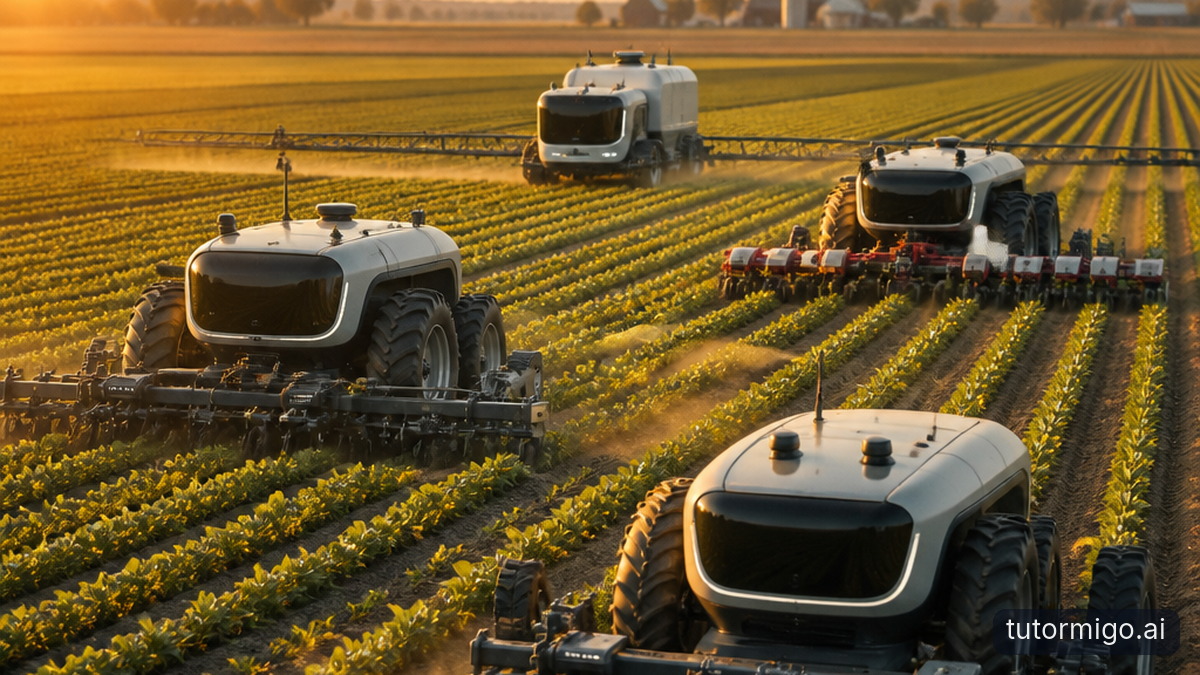
If you manage a large field, the hardest problem is often not getting a machine to move. It is getting every pass to happen at the right place, at the right depth, and with as little waste as possible. Overlapping tractor routes burn extra fuel, repeated wheel traffic compacts soil, and blanket spraying treats healthy plants along with weeds.
Autonomous agricultural fleets address those problems by coordinating machines around a field map and a defined job. An autonomous tractor might prepare a bed or pull an implement, an automated planter can place seed at consistent intervals, and a precision weeding robot can inspect individual plants as it travels. Each machine handles a narrower task, while the fleet’s route planning helps prevent unnecessary passes.
The result is not farming without people. You still set field boundaries, choose operating rules, check weather and soil conditions, and inspect work. The change is that routine movement and repetitive decisions can be handled continuously, even when a farm has more acres to cover than its available labor can comfortably manage.
How autonomous tractors navigate safely
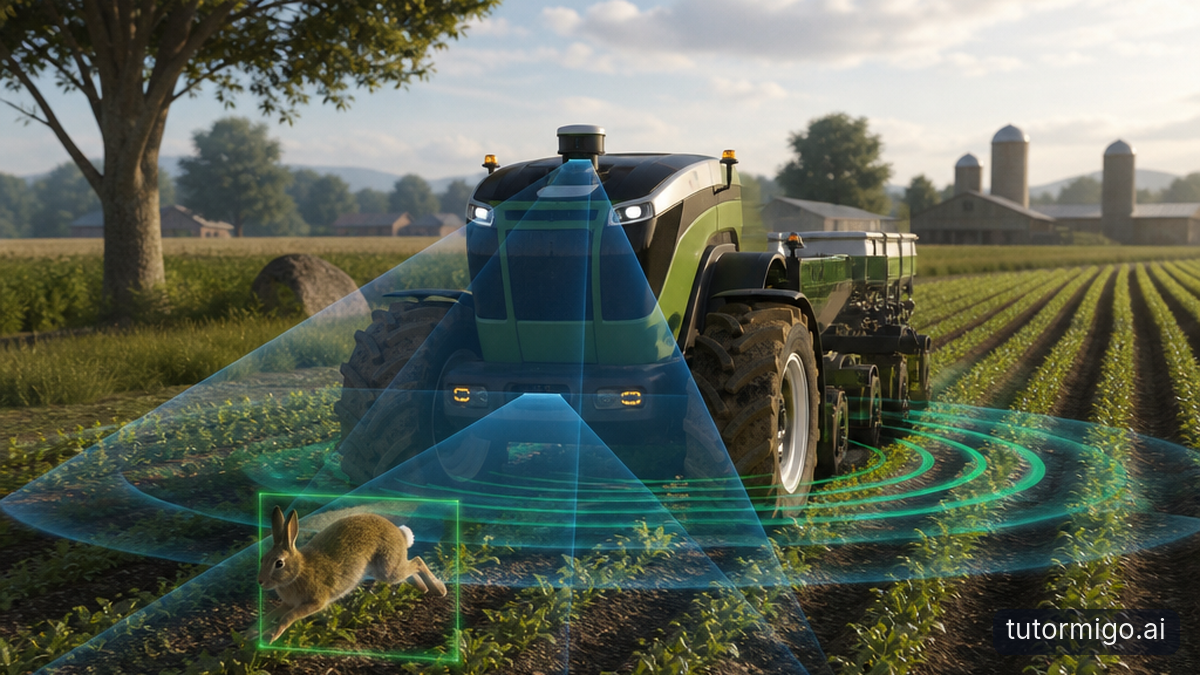
Autonomous tractors combine several forms of positioning rather than relying on one sensor. Satellite guidance can establish a machine’s location, while cameras, radar, lidar, or other proximity sensors help detect people, vehicles, fences, rocks, and unexpected changes in terrain. A digital field map adds boundaries, no-go zones, access lanes, and the lines the tractor should follow.
Computer vision is especially useful when the environment does not match the original map. A tractor may need to recognize the edge of a crop row after rain has softened the ground, or distinguish a parked trailer from an object that should trigger a stop. Its control system compares what the sensors see with the planned route, then adjusts speed or steering within preset safety limits.
Consider a planting pass on a gently curved field. Instead of asking an operator to correct the wheel position for every row, the tractor can follow a mapped path and maintain a consistent implement position. If a sensor detects an obstacle, the machine can slow or stop and request human attention. Reliable autonomy therefore depends as much on conservative safety behavior and clear intervention procedures as on accurate navigation.
Automated planting and better field coverage
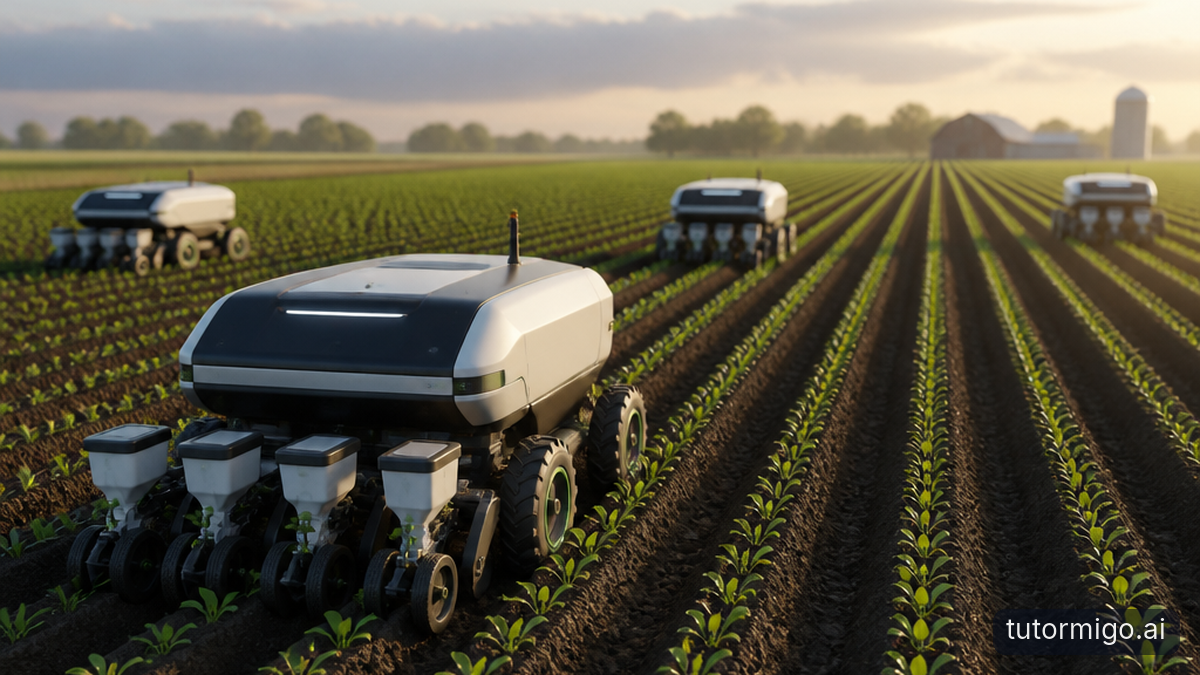
Planting is a strong use case for autonomous equipment because small errors are repeated across an entire field. A planter that drifts, overlaps, or leaves gaps can affect stand quality and make later cultivation more difficult. An autonomous tractor can follow prepared guidance lines while the planter maintains a steady path, helping place seed in an orderly pattern.
Fleet planning also changes how you schedule work. A tractor may prepare one block while a second machine plants another, provided the routes, boundaries, and timing are coordinated. The goal is not simply to keep every machine moving. It is to avoid traffic conflicts, reduce empty travel between fields, and assign each machine the work for which it is best equipped.
Before planting, map field entrances, wet areas, slopes, drainage features, and temporary obstacles. Then verify the route at a slow speed. A short test pass can reveal a boundary error or an implement offset before it is repeated across hundreds of acres. Consistent records from the planter also give you a useful reference for later scouting, cultivation, and harvest planning.
Precision weeding with computer vision
Conventional weed control often treats a whole crop block because identifying every weed by hand is too slow. A vision-guided weeding robot takes a different approach: it moves close to the crop, examines the plants in its path, and applies a mechanical action or a highly targeted treatment where the system identifies a weed.
That distinction can reduce chemical use, but performance depends on the conditions. Young crops and weeds may look similar, shadows can change their appearance, and dust or mud can obscure a camera. Row spacing, plant variety, lighting, and growth stage all affect how confidently a system can separate crop from weed. A robot should therefore be tested in representative parts of the field rather than judged from a demonstration in ideal conditions.
Use scouting data to identify areas with heavier weed pressure, then compare the robot’s results with untreated or conventionally managed sections. Check weed escapes, crop damage, labor time, and input use. Targeted treatment is most valuable when it is measured carefully; a lower spray volume is not a success if missed weeds later require a costly rescue pass.
Fuel savings and reduced soil compaction
Autonomous fleets can lower fuel consumption in two related ways. First, accurate paths reduce overlaps and unnecessary turns. Second, route planning can limit travel that does not contribute directly to the task, such as repeated trips to the same field edge or backtracking around an obstacle. The savings will vary with field shape, implement width, soil conditions, and how much overlap the previous system created.
Soil protection may be just as important. Every wheel pass presses soil particles together, potentially limiting air and water movement in the root zone. A fleet can use fixed traffic lanes, repeat established routes, and keep heavy equipment out of sensitive areas when conditions are too wet. Smaller robots can perform scouting or weeding tasks with less ground pressure than a full-size tractor, although their total impact still depends on how often they travel.
Track results by field rather than relying on a general promise. Record fuel consumed, distance traveled, number of passes, wet-weather delays, and visible compaction after comparable operations. A field map showing traffic concentration can reveal whether autonomy is genuinely reducing disturbance or merely moving it to a different part of the farm.
What to check before adopting a fleet
Start with one repeatable job that has a clear baseline, such as planting a defined block or scouting between rows. Document current fuel use, labor hours, pass count, chemical volume, crop damage, and weed pressure. Those measurements give you something concrete to compare when the autonomous system is operating under ordinary field conditions.
Next, evaluate the farm’s infrastructure. Reliable positioning may require correction services or better field mapping. Narrow gates, uneven terrain, tree cover, poor cellular coverage, and frequently changing boundaries can all affect performance. Ask how the system handles lost positioning, sensor failure, low battery, blocked routes, and a person entering the work area. A useful system should make those responses understandable and should provide a straightforward way for an operator to stop or redirect it.
Finally, build a human oversight routine. Inspect machines before each shift, review alerts, clean cameras and sensors, and walk the completed work. Autonomous agricultural fleets are most practical when they remove repetitive driving without removing accountability. Begin with a limited deployment, compare results across a full operating cycle, and expand only when the safety, agronomic, and financial evidence supports it.
Frequently asked questions
It is a group of agricultural machines that can perform defined field tasks with limited direct driving. The fleet may include autonomous tractors, automated planters, scouting vehicles, and precision weeding robots coordinated through maps, sensors, and operating rules.
They combine mapped field boundaries with sensors such as cameras, radar, or lidar. When the system detects an unexpected object or unsafe condition, it can slow, stop, or request human intervention, depending on its configuration and safety rules.
Not necessarily. Some systems use mechanical weeding, while others target treatment at individual weeds. Results depend on crop stage, weed species, lighting, soil, row spacing, and detection accuracy, so field trials and follow-up scouting remain important.
Choose a contained, repeatable task with measurable results, such as planting a mapped block, scouting crop rows, or weeding a defined area. Compare fuel, labor, pass count, crop damage, weed control, and safety outcomes before expanding the deployment.
Related reading
Related reading
Related reading
Related reading
Enjoyed this read?
Like, share, or comment below.


Comments
0Sign in required · respectful discussion · replies supported
Loading comments…