

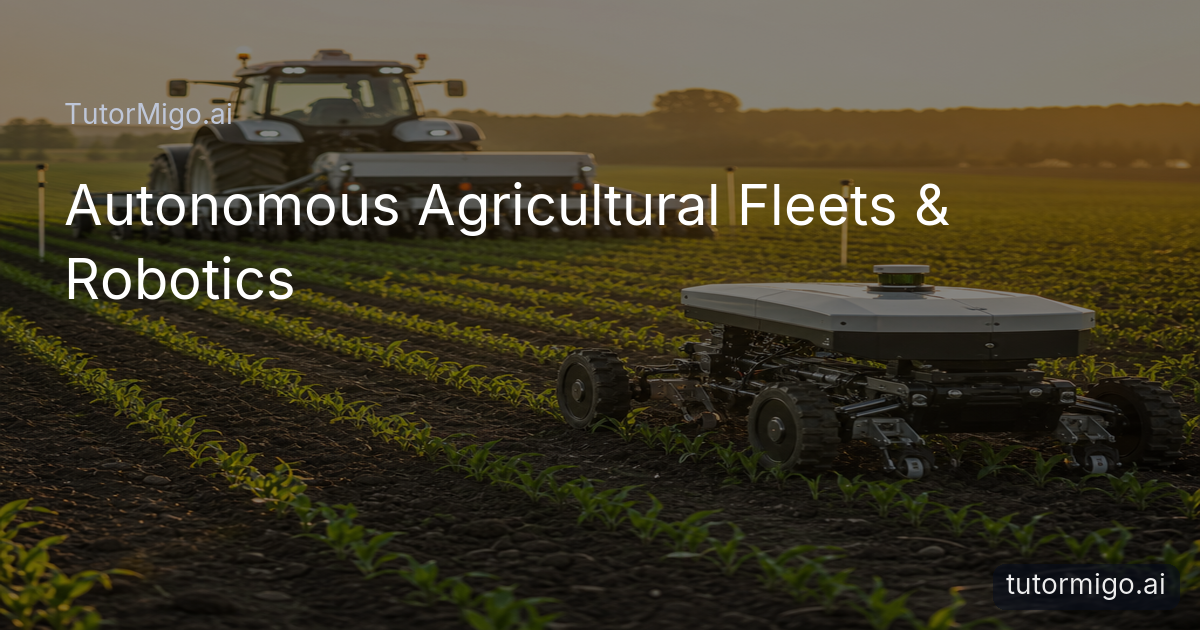
What Autonomous Farming Field Fleets Actually Do
If you are trying to cover more acres with fewer available operators, the appeal of autonomous agricultural fleets & robotics is straightforward: machines can take on repetitive fieldwork while a person supervises several operations. A self-driving tractor may pull a planter, cultivator, or sprayer along a preplanned route. A smaller robot can inspect individual plants or remove weeds between rows.
These machines are not all-purpose replacements for farm equipment. Each is usually designed around a defined task, crop pattern, implement, and operating area. The tractor needs to know where it may travel, where field boundaries and obstacles are located, and how to respond if a person, animal, or unexpected object enters its path. A weeding robot has a narrower job: identify crop plants and weeds, then move or activate a tool with enough precision to avoid damaging the crop.
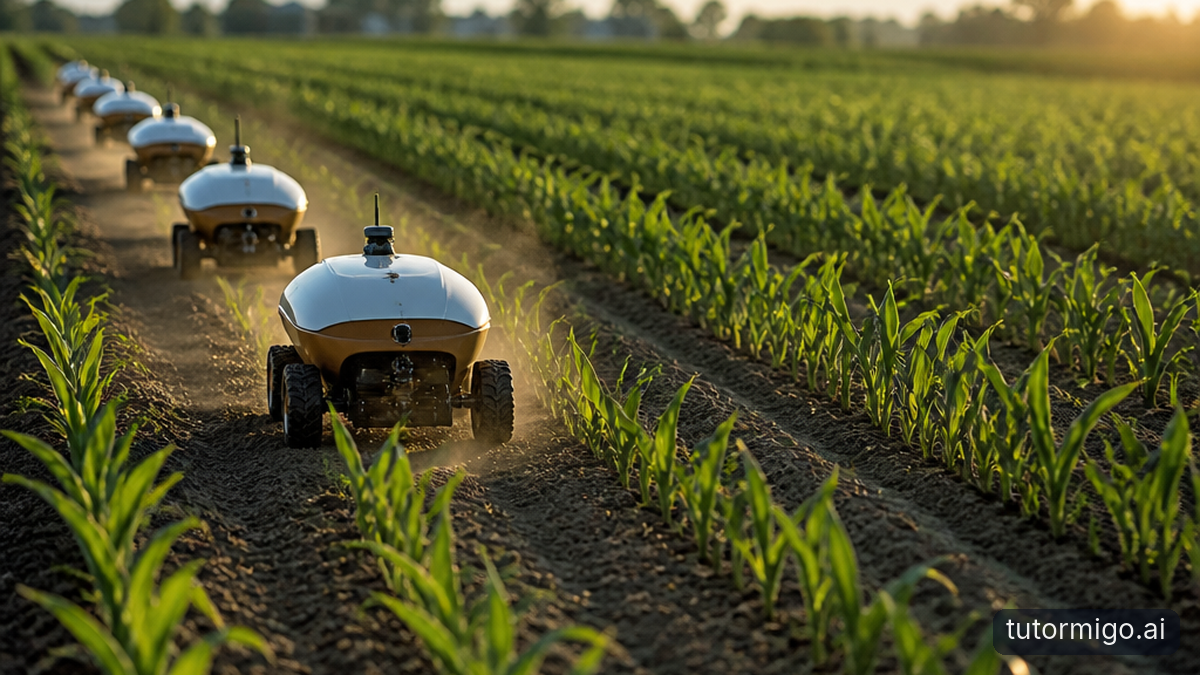
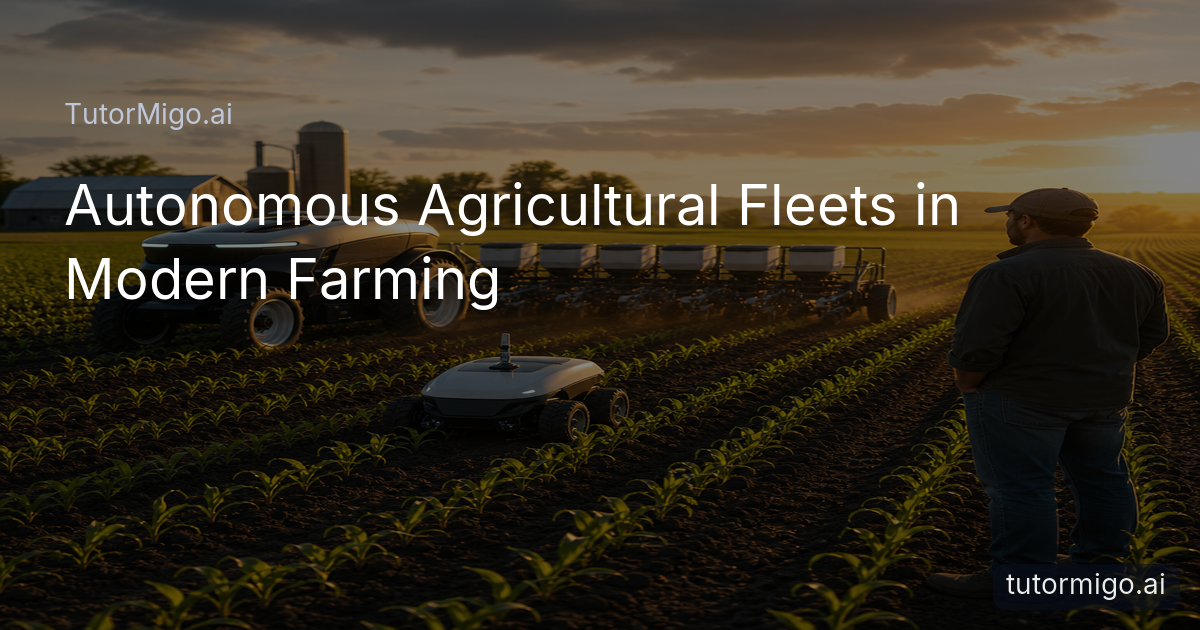
The fleet idea matters because separate machines can share field maps, boundaries, work records, and charging or fueling plans. Instead of treating automation as one expensive vehicle, you can evaluate a coordinated system: a tractor prepares the ground, a planter places seed, and a scouting or weeding unit follows with task-specific equipment.
How computer vision and spatial mapping guide machines
Autonomous field equipment combines several kinds of information rather than relying on a single camera. Global navigation satellite systems can provide a position, while real-time correction services can improve that position for highly accurate passes. Cameras and other sensors help the machine recognize crop rows, soil edges, rocks, people, and equipment that may not appear in an old field map.
Spatial mapping turns those observations into a working picture of the field. The system can store boundaries, drainage areas, headlands, obstacles, previous routes, and designated no-go zones. During a planting pass, the tractor compares its planned path with its measured position and adjusts steering or implement placement. Depending on the equipment and conditions, manufacturers may describe this control as capable of sub-inch accuracy; actual performance still depends on correction signals, terrain, visibility, calibration, and implement movement.
Computer vision is especially useful where a fixed map is not enough. A camera may distinguish green crop leaves from surrounding weeds, while depth information helps estimate plant location and spacing. Dust, glare, mud, residue, changing sunlight, and dense canopies can reduce reliability, so responsible systems include alerts, slow-down behavior, safe-stop rules, and human oversight rather than assuming perfect recognition.
Why precision can reduce fuel use and compaction
Fuel savings do not come simply from putting a computer in the cab. They come from reducing unnecessary passes, overlap, idle time, and inefficient turns. If guidance keeps a planter on the intended line, the next operation can follow the same path instead of creating additional traffic lanes. A tractor that works without an operator in the cab may also be scheduled for suitable windows, including longer shifts when field and safety conditions allow.
Consider a field where a tillage pass overlaps the previous pass by several inches or more. Across many rows, that overlap represents soil and fuel work that produces no additional planted area. Accurate guidance can narrow the overlap, while route planning can organize headland turns and avoid areas that do not need treatment. The result is not guaranteed savings, but it creates a measurable basis for comparing fuel, time, and hectares covered.
Soil compaction is a related concern. Heavy equipment repeatedly traveling over the same ground can compress pore spaces, affecting drainage and root growth. Controlled traffic keeps machinery on defined lanes where the crop layout permits it. Lighter robots may handle scouting or inter-row weeding with less ground pressure than a full-size tractor. You should still compare axle loads, tire or track design, weather, and traffic timing; a small machine operating in wet soil can also cause damage.
Where autonomous planters and weeding robots fit
Automated seed planters are most valuable when consistent spacing and depth matter. The tractor can maintain a planned line while the planter meters seed and places it at a configured depth. Sensors may monitor row position, seed flow, or missed sections, allowing the system to flag a problem instead of leaving an entire stretch undiscovered. Before trusting the result, operators should verify seed depth, emergence, row alignment, and shutoff behavior in a small test area.
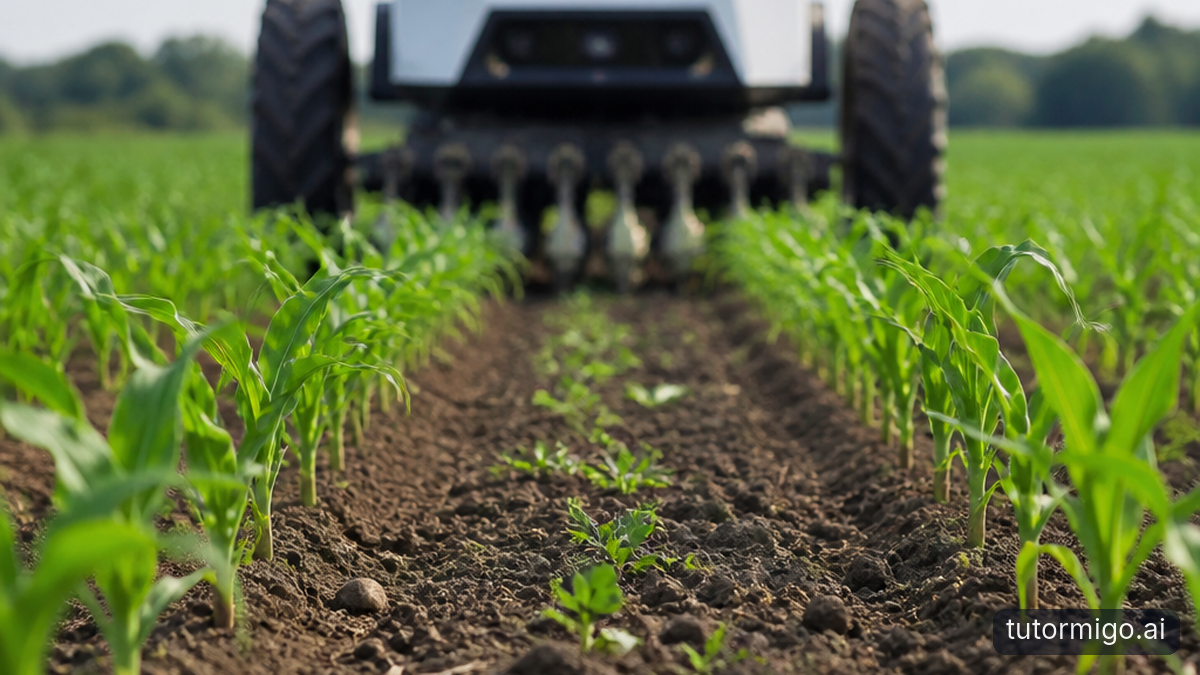
Weeding robots take a different approach. A vision system may identify the crop row and locate plants that do not belong there. The machine can then use a mechanical finger, blade, hoe, or another targeted tool to disturb weeds close to the crop. This is most effective when crop spacing, weed size, soil condition, and row geometry fall within the machine’s operating range. A robot that performs well in young, clearly separated rows may need a different setup once leaves overlap.
Self-driving tractors remain the flexible part of the fleet because they can carry multiple implements. Yet flexibility adds complexity: each implement changes dimensions, turning behavior, hydraulic demands, and safety limits. Treat the tractor, planter, and robot as a complete workflow. A good demonstration should show not only a machine moving through a field, but also the quality of the finished operation and the records needed for the next pass.
The practical limits you should plan for
Autonomy works best when the operating environment is predictable, mapped, and maintained. A broken correction signal can reduce positioning accuracy. Tall weeds, dust on lenses, low sunlight, standing water, rough ground, or an unmapped gate can force a machine to slow down or stop. Weather can also change the field after a route has been planned. These are normal operating conditions, not edge cases to ignore during procurement.
Human supervision remains essential. A remote operator or nearby worker may need to approve a route, respond to an alert, inspect a machine, or take control. You should ask how the system communicates a stop, how quickly a person can intervene, what happens when connectivity is lost, and whether the machine records the event. Physical safeguards, clear exclusion zones, emergency stops, and maintenance procedures matter as much as navigation accuracy.
Data governance deserves attention too. Field boundaries, yield information, imagery, machine logs, and work records may be stored by several vendors. Confirm who owns the data, whether you can export it, how long it is retained, and whether equipment from different manufacturers can exchange useful information. A fleet that cannot share maps or records may create extra work even when each individual machine performs well.
How to evaluate an autonomous fleet before buying
Start with one operation that is repetitive, measurable, and costly to perform manually. Planting a defined crop block or scouting a set of rows can provide clearer evidence than trying to automate every task at once. Record baseline fuel use, labor hours, pass overlap, field capacity, missed plants, weed pressure, and soil conditions. Then compare the automated run using the same measures.
Ask for a field demonstration on your terrain, not only a polished test track. Test boundaries, headlands, uneven ground, dust, poor visibility, and an intentional stop condition. Inspect the work afterward: check seed depth and spacing, look for crop injury from weeding tools, measure untouched or double-treated areas, and review the machine’s route data. A sub-inch positioning claim is meaningful only when you know the conditions and the point being measured.
Finally, calculate the whole operating cost. Include machine purchase or lease payments, correction services, connectivity, batteries or fuel, software, maintenance, training, insurance, and the labor required for supervision. Plan for a fallback method when autonomy is unavailable. The strongest deployment is not the one with the most independent machines; it is the one that safely delivers better fieldwork, lower unnecessary traffic, and reliable records over an entire season.
Frequently asked questions
It describes connected farm machines that can perform defined field tasks with limited direct control. Examples include self-driving tractors, automated planters, crop-monitoring units, and robots that remove weeds.
Some systems are designed or advertised for sub-inch positioning under suitable conditions, often using corrected satellite positioning and machine sensors. Results depend on signal quality, calibration, terrain, implement movement, and field conditions.
Accurate route planning can reduce unnecessary passes and keep traffic on controlled lanes. Smaller robots may also apply less ground pressure, but soil impact still depends on machine weight, tires or tracks, weather, and timing.
Test the machine on representative terrain and crops. Measure fuel, labor, overlap, field coverage, planting quality, crop injury, weed control, safety responses, connectivity, maintenance needs, and the quality of its work records.
Related reading
Related reading
Related reading
Enjoyed this read?
Like, share, or comment below.


Comments
0Sign in required · respectful discussion · replies supported
Loading comments…