


The limits of summer learning workbooks
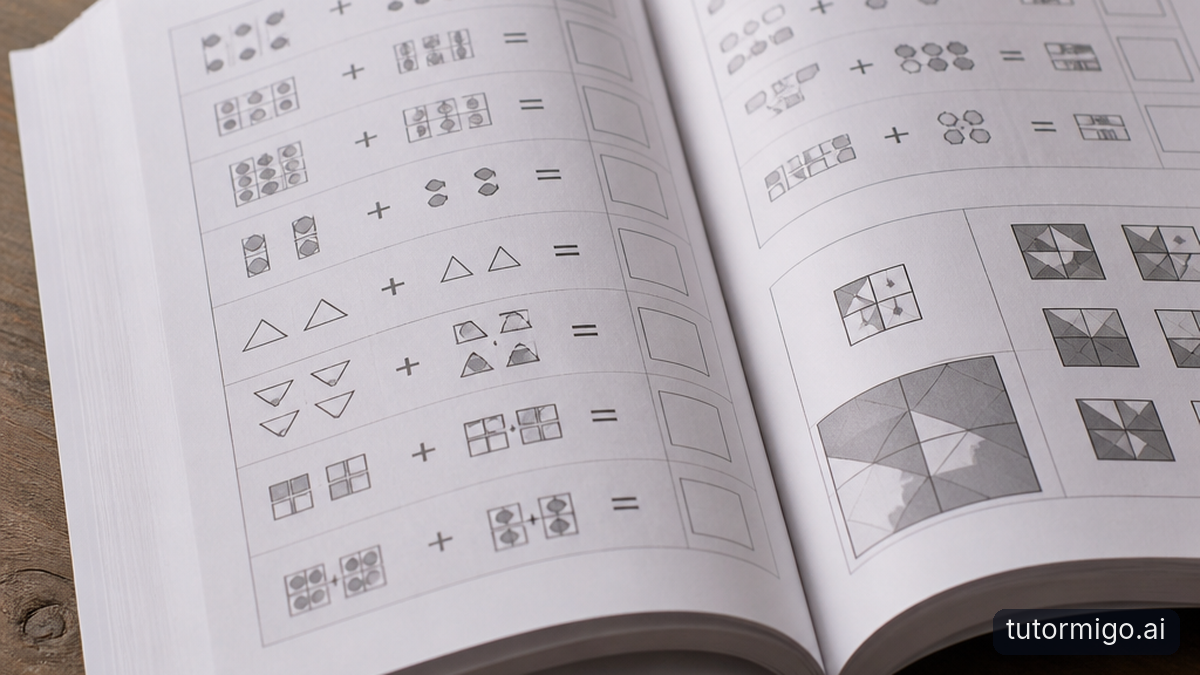
A thick summer workbook can look reassuring to a parent and overwhelming to a child. If the instruction is simply “finish two pages,” the finish line becomes page completion rather than understanding. Your child may rush through familiar questions, stall at one confusing example, and spend most of the session arguing about how much remains.
The problem is not paper itself. A well-chosen worksheet can be useful. The problem is assigning the same volume of practice whether your child already understands the skill or needs help with a single step. Repetition without a clear purpose can make summer slide math help feel like punishment for having a vacation.
Imagine your child completes several multiplication questions confidently but struggles when a division problem requires regrouping. Another page of multiplication is unlikely to address that difficulty. One worked division example, an explanation in your child's own words, and a similar independent problem make a more focused session.
Replace the page quota with a clear agreement: one skill, a short session, and a predictable stopping point. Let your child choose between practicing after breakfast or before an afternoon activity. Keep the learning goal steady while offering control over the timing.
If you need more ways to reduce resistance, these parent-friendly ideas for making learning fun can help. Start with a change you can sustain. A calm ten-minute attempt on a difficult day is more useful than turning a missed fifteen-minute session into an evening-long confrontation.
Tracking Mastery Without Adding Busywork
The useful idea behind adaptive micro learning is straightforward: let your child's responses influence what happens next. If an explanation is clear and an independent answer is correct, move on. If the same mistake returns, narrow the practice. Adaptation should mean responding to evidence, not simply making every question harder.
TutorMigo.ai's AI Tutor Workspace provides personalized tutoring chat and session history. You can use those features to maintain continuity between short sessions. Do not assume that chat history is an automatic mastery assessment or that the platform detects every forgotten skill without checking. Ask your child to show their reasoning, and use that work to guide the next question.
For example, begin with: “Help my child review long division. Ask one question at a time, let them attempt each step, and focus on any step they find difficult.” Try . If your child understands the division but mishandles subtraction, make subtraction the next small target rather than repeating the whole procedure indefinitely.
Use the final minutes to ask for a fresh problem without hints. A correct answer after extensive coaching is encouraging, but it is different from solving independently. At the next session, revisit the skill briefly before introducing something else. The AI Tutor can support the conversation; your child's independent attempt supplies the clearest evidence.
For facts, vocabulary, or short conceptual prompts, TutorMigo.ai's spaced-repetition flashcards offer review scheduling. Use them for questions such as “What does the denominator tell you?” rather than trying to compress an entire multistep solution onto a card. For a broader view, the Parent Dashboard provides visibility into child progress. These are practical TutorMigo benefits to consider: continuity, scheduled review, and parent visibility—not a promise that every learning gap is diagnosed automatically.
Game-Like Practice With Quiz and Roleplay Prompts
Practice can feel playful without points, leaderboards, or an elaborate reward system. A short challenge, a choice of scenario, and a satisfying explanation may be enough. In TutorMigo.ai's tutoring chat, you can request quiz-style questions or a roleplay scenario as conversation formats. These are prompt ideas, not claims about dedicated numbered modes or built-in game mechanics.
For a quiz-style session, ask: “Give us three questions about equivalent fractions, one at a time. Wait for an answer, ask how we know, and explain any mistake before continuing.” Keep the emphasis on reasoning. A child who guesses correctly should still explain; a child who answers incorrectly should get a manageable chance to retry.
For roleplay, turn the same skill into a small summer mission: “Pretend we are packing a picnic. Help us compare equal portions of food using fractions.” With an older student, try a bicycle-repair scenario involving measurement or a science conversation about which materials would keep a drink cool. Keep the scenario tied to a skill your child has already encountered at school.
Interactive tools can make the thinking more visible. Use the whiteboard to sketch equal parts or the math step editor to work through a calculation. For a child already learning programming, the code sandbox can support a tiny debugging task. Choose one tool that serves today's goal; switching among several can consume the whole session.
For science, ask your child to predict, explain, and then reconsider: “Would this material be a good insulator, and why?” The win is a clearer explanation, not merely a fast answer. End by asking your child to invent one question for you. That small reversal makes the session feel collaborative while revealing what they understand.
Your Next Step: Protect Fifteen Minutes, Then Go Play
Start with one skill your child learned during the school year and one dependable time of day. You do not need a complete summer curriculum. For the first session, choose something familiar enough to attempt but uncertain enough to discuss. Tell your child exactly when practice will end, and honor that boundary.
Use roughly three minutes to recall an earlier idea, eight minutes to work on one target, and four minutes for an independent check and a quick recap. Those timings are a flexible template. If one useful conversation takes the full session, stop there rather than adding questions to satisfy a quota.
Afterward, ask: “What feels easier now, and what should we revisit?” Use the answer and the session history to plan your next short check-in. This guide to tracking learning without pressure offers a helpful approach to keeping progress conversations supportive. If you miss a day, return to the routine without doubling the workload.
Protect your child's hard-earned academic progress with a fifteen-minute daily session on TutorMigo.ai. Begin in the AI Tutor Workspace, focus on one useful skill, and leave room for independent thinking. Then close the session and get back to summer. A routine that respects vacation is one your family is more likely to keep.
Frequently asked questions
Short, focused sessions can provide useful opportunities to recall and practice skills. Fifteen minutes is a manageable routine, not a guarantee. Focus on relevant tasks, independent attempts, and returning to skills over time.
Do not assume that. Personalized tutoring chat and session history support targeted practice, but you should use your child's explanations and independent work to decide what needs another look.
Here, quiz and roleplay describe conversational prompts you can try in tutoring chat. They are not presented as dedicated numbered product modes.
Offer a choice of timing or scenario, begin with something manageable, and keep the stopping point predictable. Avoid turning missed practice into extra work the following day.
Related reading
Enjoyed this read?
Like, share, or comment below.



Comments
0Sign in required · respectful discussion · replies supported
Loading comments…