


Tired of Repeated Reminders and Stalled Homework? Try Simple Gamified Learning for Kids

You’ve asked for the bedroom to be tidied three times, and spelling homework still hasn’t started. Gamified learning for kids can make those familiar tasks easier to begin: choose one small job, give it a clear finish, add a playful challenge, and let your child see their progress.
You don’t need an app, a costume, or a prize cupboard. Gamification simply means borrowing useful parts of games, such as missions, choices, and visible progress, for an ordinary activity. The task stays the same; the invitation changes from “Do your spelling” to “Can you crack today’s five tricky words?”
This isn’t a promise that every chore will become exciting. A tired child may still need rest, and confusing homework still needs explanation. The aim is to reduce friction around starting and finishing, not to disguise a workload that is too difficult or ignore a child’s frustration.
Start with a routine you already understand. Notice where it stalls: getting started, staying with it, or knowing when to stop. Your quest should address that sticking point. If starting is hardest, make the first move tiny and obvious, such as collecting just the clothes from the floor.
Choose One Familiar Task and Define What “Done” Looks Like
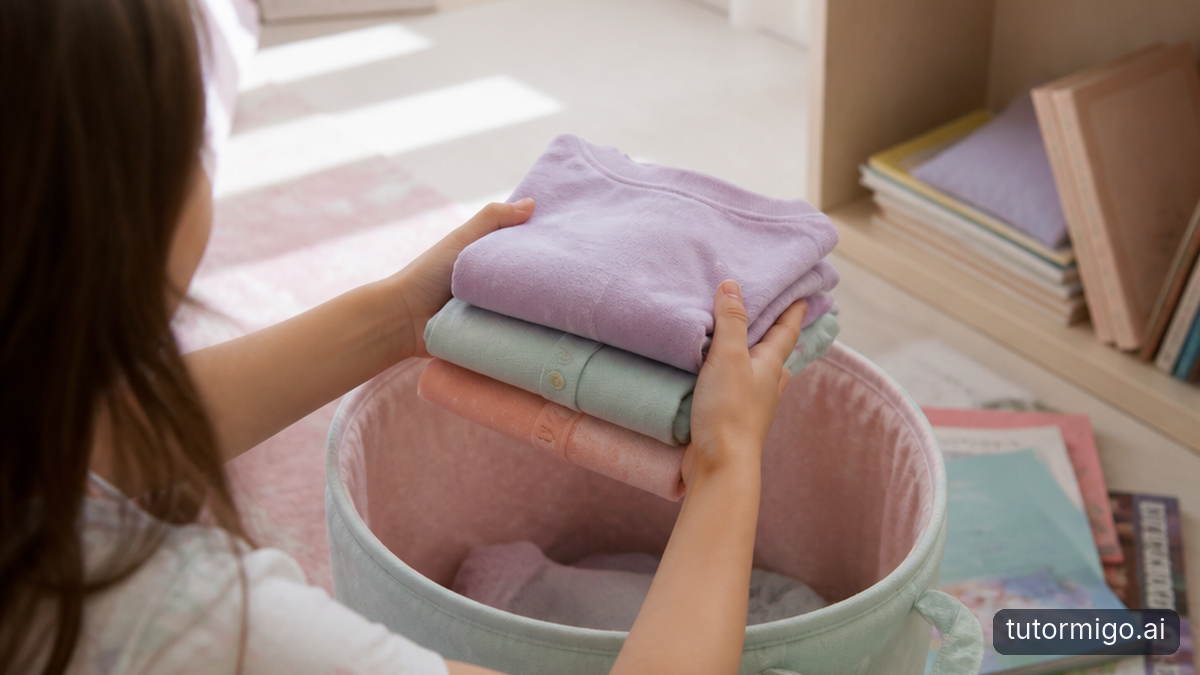
Choose something small enough to finish in one sitting. “Sort the whole bedroom” leaves too many decisions open. “Put the clothes in the hamper and the books on the shelf” gives your child a route through the job. For homework, choose one practice activity rather than turning the entire evening into a quest.
Before you add a story, agree on the finish line. Ask, “What will we see when this is done?” For cleanup, you might agree that the floor beside the bed is clear. For spelling, the goal could be attempting five words from memory, checking them, and correcting any mistakes.
Make success depend on useful actions, not flawless performance. “Get every word right” can make a child reluctant to try. “Try, check, and correct” rewards a practice process they can control. If an unfamiliar spelling pattern needs teaching, explain it before asking your child to practise independently.
Offer one small choice: which area to clear first, which pencil to use, or whether you sit beside them. Keep the rest predictable. A quest works best inside a realistic home learning routine, not as another complicated system you must manage.
Add a Simple Story: A Bedroom-Cleanup Mission and a Spelling-Practice Quest
A story only needs a sentence. For a bedroom-cleanup mission, try: “The rescue team needs a clear landing zone beside your bed.” Agree that the mission has three parts: clothes into the hamper, books onto the shelf, and toys into their basket. Point out the landing zone before starting so the boundary is clear.
Your child can choose a rescue-team name or skip the pretend play entirely. After each part, they move a pebble into a bowl. Once the agreed area is clear, inspect it together and declare the landing zone ready. You have changed the framing, not created extra work or hidden cleanup requirements.
For a spelling-practice quest, say: “You’re a word detective finding the tricky parts in five words.” First, look at each word together and notice its difficult letter pattern. Then your child covers it, writes it from memory, checks the result, and corrects it. Each completed practice cycle earns a mark on scrap paper.
These educational games at home don’t need elaborate plots. If your child dislikes stories, offer a straightforward challenge: “Can you complete all five practice cycles?” When you’re considering how to make homework fun, their preferred kind of play matters more than your most inventive theme.
Keep Quests Short and Make Progress Easy to Track
For your first quest, aim for about five to ten minutes. That’s a starting point, not a rule about how long every child should concentrate. Choose a shorter task if your child is tired or reluctant. A successful three-minute cleanup is more useful than an ambitious mission that ends in an argument.
Use either a clear task boundary or an agreed time limit. For example, finish when the bedside floor is clear. Alternatively, work together for five minutes and then stop to assess what remains. Explain the stopping rule beforehand; don’t quietly extend the mission because it is going well.
Track progress with something you already have: three circles to tick, pebbles to move, or a short checklist. Show completed actions rather than ranking speed or comparing siblings. For spelling, track words attempted and checked. For cleanup, track areas cleared. The tracker should make the next step visible without becoming another task.
If a timer creates pressure, leave it out. You can say, “First the clothes, then the books, then we’re finished.” End by naming the result: “You cleared the space where you get out of bed.” That connects the game to something useful beyond collecting marks.
Choose Rewards That Build Motivation Without Constant Prizes
Start with the satisfaction of finishing, a little choice, and time together. After the rescue mission, your child could choose the bedtime story or enjoy the newly cleared space for building. After spelling practice, you might share a silly sentence using one of the words. These endings acknowledge effort without requiring a purchase.
Give specific feedback rather than announcing that your child is brilliant or the best. Try, “You checked that word and spotted the missing letter,” or “You kept going after the first pile.” This makes the helpful action visible. Ask what felt easier today so your child can notice their own developing strategies.
Small tangible rewards are optional, not forbidden. If you use one, agree on it beforehand and keep it modest. Avoid raising the offer whenever your child hesitates; that can turn an ordinary routine into a negotiation. Don’t withhold affection, meals, or needed rest as part of the game.
As the routine becomes familiar, reduce reward talk and keep useful feedback. You can explore balancing rewards with focused learning if every practice session starts to depend on a prize. The goal is growing ownership, not an ever-expanding reward menu.
Adjust the Challenge When the Novelty Wears Off
Expect a new theme to lose some sparkle. That doesn’t mean the quest failed or that you need a more elaborate one. First ask what has changed: “Is this too easy, too hard, too long, or just not interesting today?” Listen before adding points, surprises, or another layer of rules.
If cleanup keeps stalling, the real problem may be an overflowing toy basket or uncertainty about where things belong. Fix the storage problem together. If spelling practice produces repeated distress, check whether your child understands the words and method. A story cannot replace instruction, manageable expectations, or a break when someone is exhausted.
Change one element at a time. Let your child invent the mission, choose the task order, or work alongside you. A reluctant detective might prefer being the quizmaster while you model checking a word. Keep the original learning goal visible so the new role doesn’t remove the practice they need.
You can also retire the game. Keep the short checklist and clear finish if those still help. When a child starts putting books away without a rescue story, that’s useful progress. The lasting benefit is a more manageable routine, not permanent enthusiasm for the theme.
Create and Try One Manageable Home Quest Today
Choose one task that is already on today’s agenda. Don’t add extra homework just to test the idea. Tell your child what needs doing, ask which small part they want to tackle, and agree on a finish line you can both recognise. Keep your first attempt deliberately easy to organise.
Here’s a ready-to-use version: “Our mission is to clear the floor beside your bed. Clothes go in the hamper, books on the shelf, and toys in the basket. Move a pebble after each part. I’ll help you start, and we’ll stop when that space is clear.”
Afterward, ask two questions: “What helped?” and “What should we change next time?” If your child says the story was annoying but the checklist helped, keep the checklist. If the task was too large, shrink tomorrow’s version. Judge the attempt by whether it made starting or finishing easier, not by how delighted everyone looked.
If your next quest involves reviewing spelling words, TutorMigo.ai’s flashcards offer spaced-repetition review scheduling, though paper cards work too. For today, choose one familiar task, add one playful invitation, and try it together before designing anything bigger.
Frequently asked questions
Start with about five to ten minutes, or less if needed. Agree on a clear stopping point before you begin, and shorten the task if it regularly leads to frustration.
No. Visible progress, specific feedback, shared time, and small choices can provide a satisfying ending. Keep any tangible rewards modest and optional.
Ask what feels boring or difficult. Adjust one element, reduce the task, or drop the story while keeping the clear goal and simple tracker.
Explore TutorMigo
Enjoyed this read?
Like, share, or comment below.



Comments
0Sign in required · respectful discussion · replies supported
Loading comments…