


What an AI Tutor Does—and Why It Shouldn’t Replace Teachers or Effort
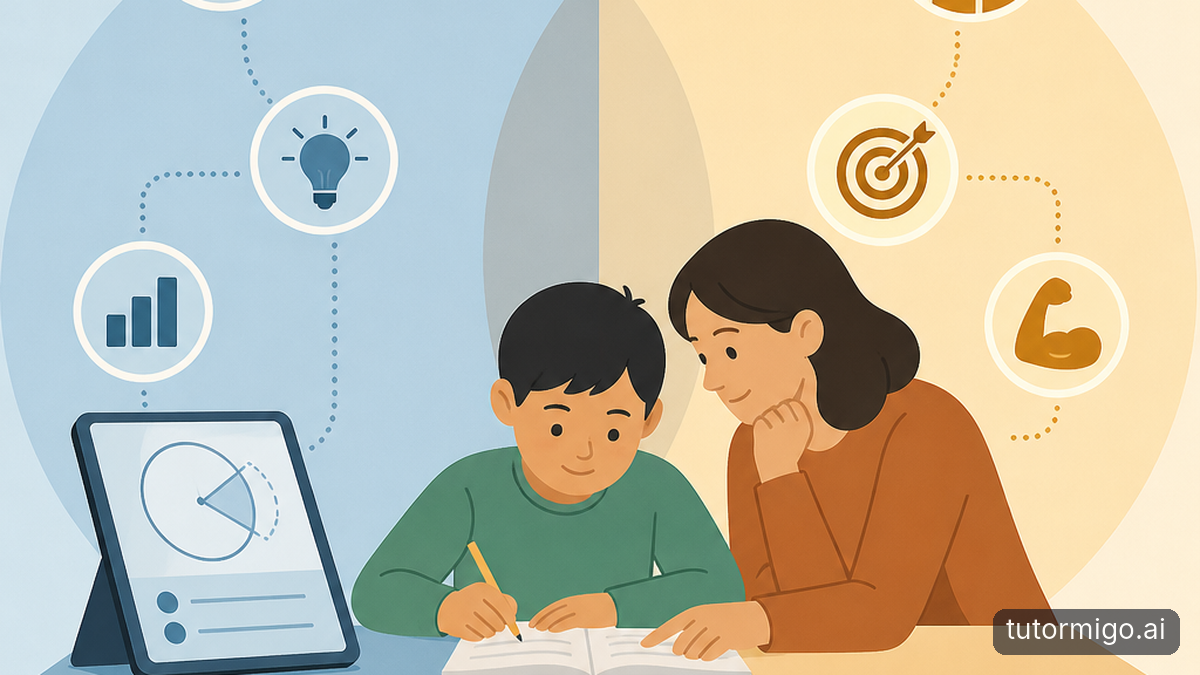
Many parents are curious about AI tutors but worry their child will use one as a shortcut. Healthy use looks different: the tool helps a learner think, practice, and reflect while adults provide judgment, encouragement, and context. The goal is support—not a way around effort.
Think of an AI Tutor as a patient study partner who can ask a follow-up question, offer another example, or help a child review a confusing step. It is more like a coach with a large collection of practice ideas than an answer machine. TutorMigo is a K–12 platform built around that kind of guided learning, with a personalized tutor workspace and session history that can help a student continue from earlier work.
It does not know a child as well as a parent or teacher does, and it should not replace classroom instruction, relationships, or independent thinking. The TutorMigo benefits are strongest when a child uses the tool alongside schoolwork and an adult occasionally asks what was learned and why.
Why Hint-First Learning Builds Understanding Better Than Copying Answers
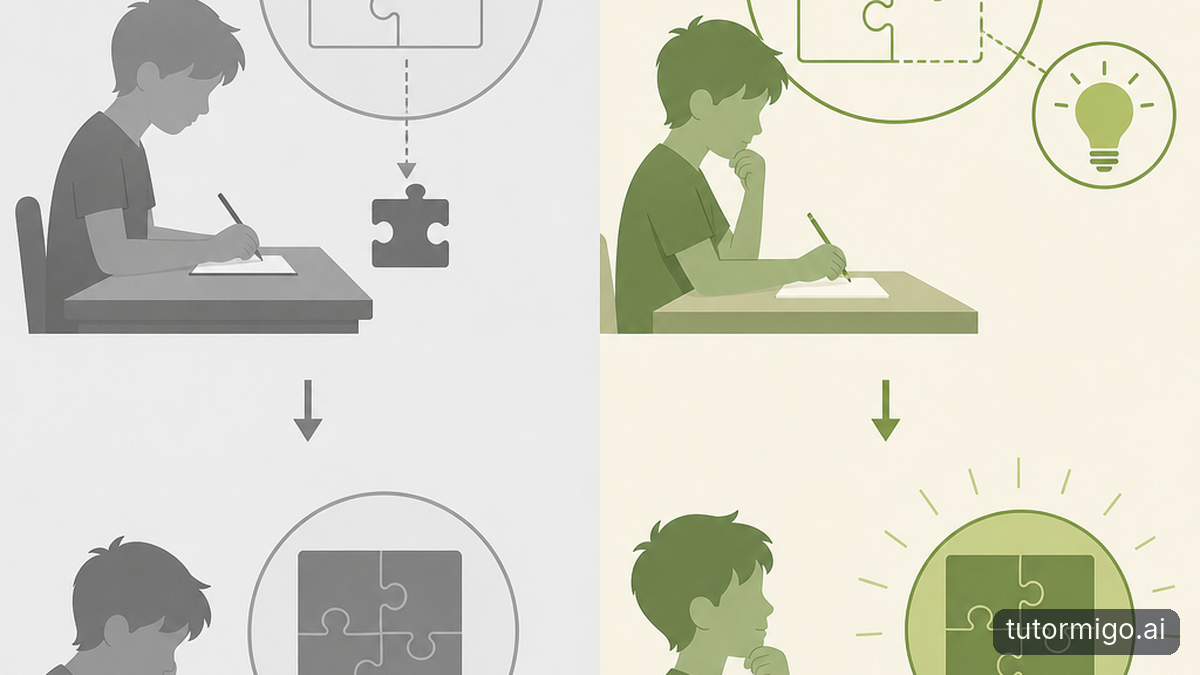
An answer can create the feeling of completion without creating understanding. Imagine a child copies the solution to a fraction problem, submits the assignment, and moves on. The next day, a similar question appears on a test. Without the worked-out reasoning, the child freezes because the answer was remembered as an isolated result rather than connected to a method.
Hints preserve the productive part of being stuck. A tutor might ask the student to identify the operation, draw a model, or explain what the question is asking before revealing another step. That small pause gives the learner a chance to retrieve prior knowledge and notice mistakes. Interactive tools such as a whiteboard or math step editor can make that reasoning visible instead of hiding it behind a final response.
Parents can reinforce this by praising a useful question or a corrected attempt, not just a fast finish. The important evidence of learning is whether the child can solve a new example and explain the choice of steps.
A Parent-Guided AI Tutoring Routine: Try, Ask, Explain, and Check
Give your child a four-part routine. First, try the problem independently, even if the attempt is incomplete. Next, ask for a hint that targets the next step rather than requesting the solution. Then explain the result back in the child’s own words. Finally, check the work against the original question, class notes, or a teacher’s instructions.
Useful prompts include: “Can you give me a hint?” “What should I look at first?” “Can you show a similar example without solving mine?” and “I think the answer is __ because __. Can you check my reasoning?”
A parent does not need to sit beside the child for every minute. At the start, agree on the task and the routine; afterward, ask the child to show one step that changed their thinking. TutorMigo’s personalized workspace can support continuity across sessions, while flashcards can help review vocabulary, facts, or formulas later through spaced repetition. If homework routinely becomes stressful, a short, calm session is more useful than pushing for immediate completion.
How Healthy AI Tutoring Changes from K–2 Through 9–12
K–2: Keep sessions to about 10–15 minutes, with an adult nearby. Read prompts aloud, use drawing or the interactive whiteboard, and ask the child to explain an idea verbally. Grades 3–5: Try 15–20 minutes, checking in at the beginning and end. Practice multiplication, reading responses, vocabulary, and flashcards; the child should make the first attempt.
Grades 6–8: A 20–30 minute session can include independent work followed by a parent check-in. Math steps, science explanations, writing plans, and spaced-repetition review work well when students explain their choices. Grades 9–12: Students can manage longer focused sessions, with a weekly review rather than constant supervision. Use the tutor workspace for difficult concepts, study tools for active practice, and structured exam preparation with progress tracking when relevant.
Across every age band, ask, “What did you figure out today?” rather than inspecting every message. Parent curiosity matters more than subject expertise. Avoid long unsupervised sessions, using AI only during crises, or skipping basics; set a short limit, return to foundational practice, and schedule help before deadlines. Try a free session together at TutorMigo.ai.
Great learning habits start with small steps.
You don't need to be a tech expert to help your child use an AI tutor well. Remember the simple routine: try the problem first, ask for a hint when stuck, explain the answer back in their own words, and check the work together. Practiced consistently, these habits turn homework time from a source of stress into a source of pride.
That's the kind of learning tutormigo.ai is built to support. Designed for K-12 students, it encourages kids to think, ask questions, and understand each step, not just reach the final answer. And because you know your child best, you stay at the center of their learning journey, cheering them on along the way.
Frequently asked questions
No. Encourage a genuine first attempt, even if it is incomplete. The tutor is most useful for a hint, a worked example, or feedback after the child has engaged with the problem.
Ask the child to explain one step in their own words and solve a similar problem without assistance. If they can transfer the idea, the session likely supported understanding.
Start with about 10–15 minutes for younger children and 20–30 minutes for older students. Short, focused sessions with a clear goal are usually better than long periods of passive use.
No. Ask open questions, review the goal and the final explanation, and encourage your child to compare the work with class materials or teacher guidance. Curiosity and consistency are enough to begin.
Related reading
Enjoyed this read?
Like, share, or comment below.


Comments
0Sign in required · respectful discussion · replies supported
Loading comments…