

IELTS Preparation: Test Format and Scoring Bands
Parents of IELTS candidates frequently question the ai tutoring effectiveness when it comes to preparing for this important English proficiency test. The IELTS exam tests four key skills and can determine opportunities for study or work abroad. Understanding how technology like an AI Tutor can support preparation is essential for making informed choices about study methods.
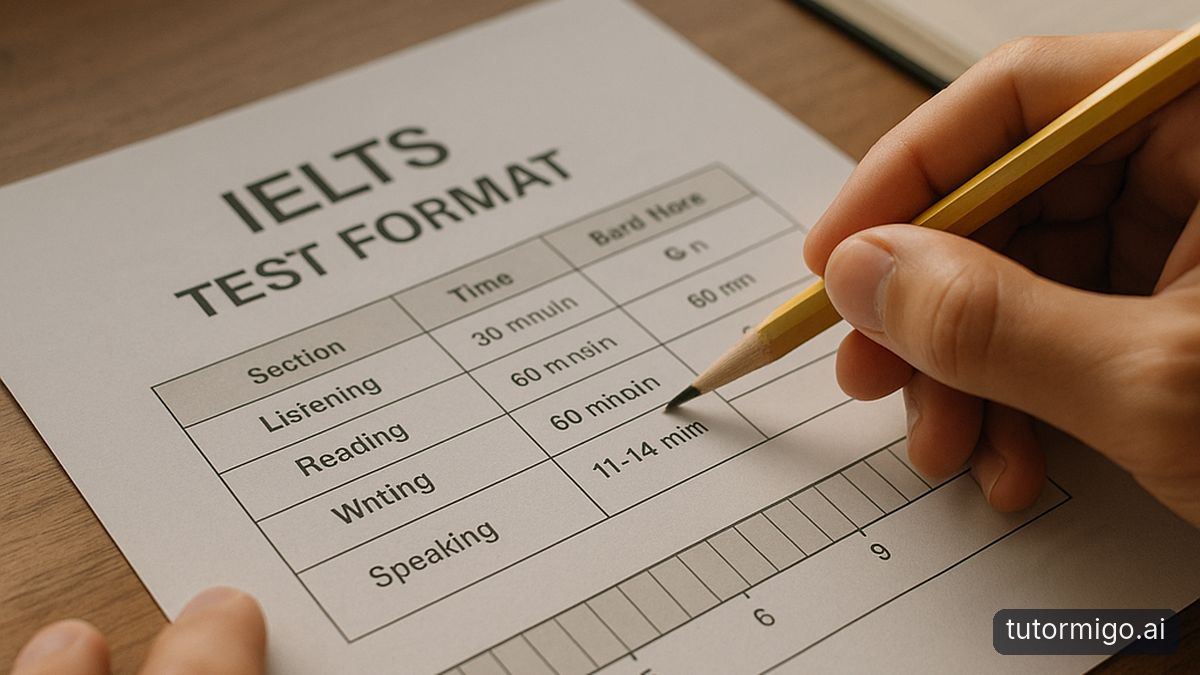
The IELTS test has a specific format that every candidate should know well. It includes listening, reading, writing, and speaking modules. Each is scored on a nine-band scale, and the overall score is the average. For instance, to achieve an overall band of 7, students typically need strong performance across all areas, with no single score pulling the average down too much.
Listening involves 40 questions from four recordings played once only. Reading has three long passages with 40 questions to be completed in one hour. Writing has two tasks: one describing a chart or diagram and one essay. Speaking is interactive with an examiner. Knowing these details helps in planning practice time effectively.
When your child understands the scoring, they can set targets for each skill. A band 6.5 in reading requires answering about 27 to 29 questions correctly, depending on the test. This kind of detail turns vague goals into specific actions. An AI Tutor can create exercises that target these exact requirements, making study sessions more productive.
Skill-Specific Practice for Listening and Reading
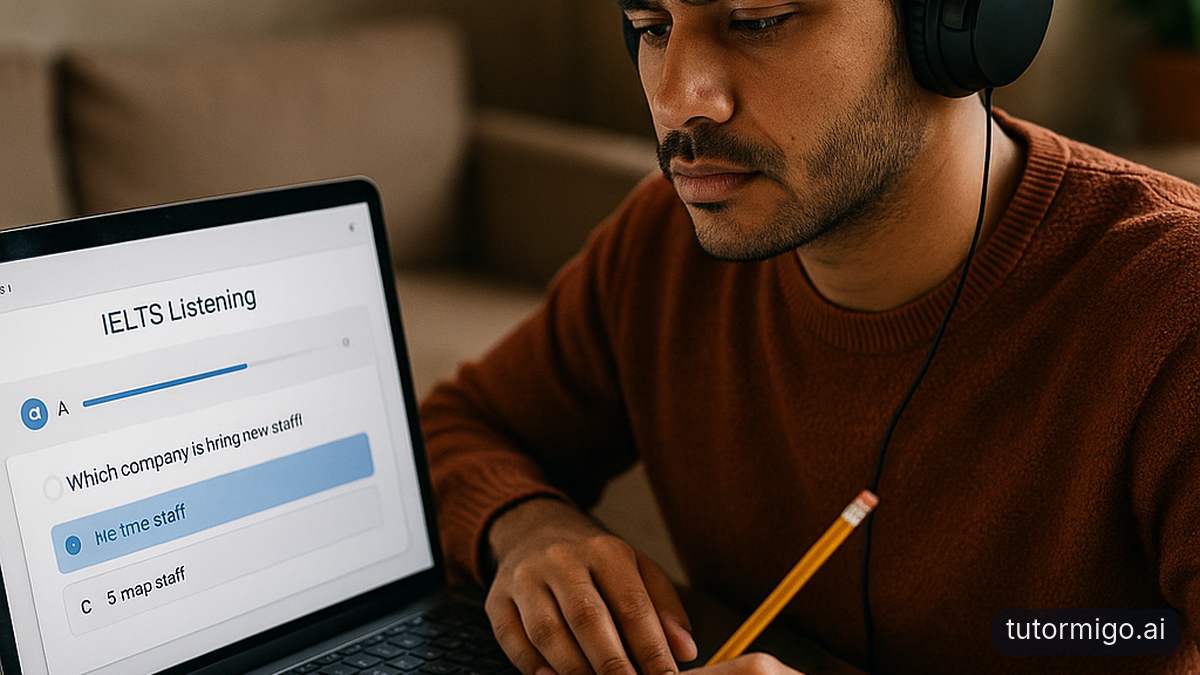
Listening and reading are the first two skills tested in the IELTS exam, and they require different strategies. An AI Tutor can offer practice that adapts to your child's current level in these areas. For listening, the key is to follow the audio closely and identify specific information quickly. The AI can play clips with different accents and then quiz on details like names, dates, or opinions.
Consider a scenario where your teen is preparing for the listening section. They listen to a conversation about a university course and miss some key points. The AI Tutor can replay the relevant part and explain why the answer is correct, helping to build better listening habits over time. This immediate feedback is hard to get from a book alone.
For reading, the focus is on skimming for main ideas and scanning for details within the time limit. The three passages increase in difficulty. An AI Tutor can provide passages on topics like science or history and ask questions that match the test types, such as matching headings or summary completion. It can also highlight vocabulary that often appears in the exam.
Parents might notice that their child spends too much time on one question. The AI Tutor can suggest strategies like moving on and coming back if time allows. By practicing regularly with these tools, students learn to manage the 60 minutes effectively. This skill-specific approach ensures that time is not wasted on general reading but on exam-relevant techniques.
Tip: Practice listening to a variety of English accents, as the test includes speakers from different countries.
Building Writing and Speaking Confidence
Writing and speaking often feel more challenging because they involve producing language rather than just understanding it. An AI Tutor can help by giving detailed feedback on both. In writing, there are two tasks that must be completed in 60 minutes. Task one requires describing data or a process in at least 150 words, while task two is an essay of at least 250 words on a given topic.
An example might be your child writing about a bar chart showing population changes. The AI Tutor can point out if the response covers all key features, uses appropriate vocabulary, and has good paragraph structure. It can also suggest improvements for grammar and coherence, which are important for higher bands.
Speaking practice with an AI Tutor allows for repeated attempts without embarrassment. The test has three parts: introduction, long turn on a cue card, and discussion. The AI can simulate the examiner by asking follow-up questions and then scoring the response on fluency, lexical resource, and pronunciation. This helps students get comfortable with the format.
Many students make the mistake of giving short answers in speaking. The AI Tutor can prompt for more details and examples, teaching how to extend responses naturally. For writing, it can check if the essay addresses all parts of the question. By working on these, students can move from band 6 to 7 in these skills.
Tip: Record your speaking practice and listen back to identify areas for improvement in pronunciation and flow.
Creating Effective Study Plans for IELTS
Having a study plan is crucial for IELTS preparation because the exam covers a lot of ground. A good plan balances all four skills and includes regular mock practice. Start by assessing current band levels in each skill, then set weekly goals. For example, dedicate certain days to listening and reading, and others to writing and speaking.
You can also explore smarter daily studying approaches that complement your IELTS preparation. An AI Tutor can help create a personalized schedule based on available time and weak areas. If your child has two months until the test, the plan might include three full mock tests in the last two weeks.
Include time for reviewing mistakes. After each practice session, spend time understanding why an answer was wrong. The AI Tutor can provide explanations and similar questions to reinforce learning. This review step is often overlooked but makes a big difference in score improvement.
Consistency matters more than long study sessions. Short daily practice of 45 to 60 minutes can be more effective than cramming. The plan should also include breaks to avoid burnout. Parents can help by setting up a quiet study space and checking in on progress without adding pressure.
Mock practice under real conditions is essential. Use the AI Tutor to simulate the full test, including timing. This prepares students for the stamina needed on exam day. By following a structured study plan, families can approach the IELTS with confidence rather than last-minute panic.
Spotting and Correcting Common IELTS Mistakes
Even well-prepared students make common mistakes in the IELTS exam. In reading, rushing leads to missing key words like 'not' or 'except'. In listening, not reading the questions before the audio plays causes confusion. An AI Tutor can highlight these patterns in practice sessions and teach ways to avoid them.
For writing, a frequent issue is going off topic or not meeting the word count. The AI Tutor can flag if the essay does not fully answer the question or if paragraphs lack clear topics. It can also suggest better linking words to improve coherence and cohesion.
Speaking mistakes include memorizing answers or giving very short responses. The AI Tutor can detect if answers sound rehearsed and encourage natural language. It might ask unexpected questions to practice thinking on your feet, which is important for part three of the speaking test.
Another common problem is poor time management. In the test, you cannot go back in listening, so practice helps develop this skill. Similar to following a structured 8 weeks to IELTS success plan, building habits early prevents these errors. The AI Tutor tracks recurring issues and provides targeted exercises to fix them.
Parents should encourage their child to keep a mistake log. After each session with the AI Tutor, note what went wrong and how it was corrected. Over time, this reduces the chance of repeating errors on the actual test. Addressing these common pitfalls directly leads to higher bands across all skills.
Evaluating AI Tutoring Effectiveness for Better Results
When evaluating ai tutoring effectiveness for IELTS preparation, look at measurable improvements in practice scores and confidence. Track band estimates over time using the tools available. If your child is consistently answering more questions correctly in timed conditions, that is a positive sign.
The AI Tutor provides session history that shows progress in specific skills. For example, if writing feedback shows fewer grammar errors after several sessions, the effectiveness is clear. Parents can compare this to previous methods like self-study or group classes to see what works best for their child.
Real effectiveness comes from how well the practice translates to the test. Use mock exams to check. If scores are rising, continue with the current approach. If not, adjust the focus or add more human support alongside the AI Tutor.
Consider the engagement level. If your teen is motivated to practice regularly because of the interactive nature, that contributes to success. The AI Tutor can make study less boring by varying the exercises and providing instant responses. This keeps the preparation sustainable over the weeks or months needed.
In the end, ai tutoring effectiveness depends on consistent use and combining it with other resources. It is not a magic solution but a powerful tool when used properly. By monitoring progress closely, you can ensure it is helping your child reach their target IELTS band.
In conclusion, understanding ai tutoring effectiveness can help you decide on the best support for IELTS preparation. With the right tools, your child can build the skills needed for success. To experience the benefits firsthand, sign up for a free trial at TutorMigo.ai and start your IELTS preparation with an AI Tutor.
Frequently asked questions
An AI Tutor can provide audio clips with various accents and immediate feedback on your answers, helping you improve comprehension and speed.
A good study plan balances all four skills with daily practice, regular reviews, and full mock tests in the weeks before the exam.
Track your practice scores and band estimates over time. If you see steady improvement in accuracy and confidence, your preparation is on the right track.
Yes, an AI Tutor can analyze your essays for task response, coherence, and grammar, then suggest specific corrections to avoid repeating errors.
Related reading
Enjoyed this read?
Like, share, or comment below.

Comments
0Sign in required · respectful discussion · replies supported
Loading comments…