


Why Targeted Delivery Is Difficult with Micro-Robotics
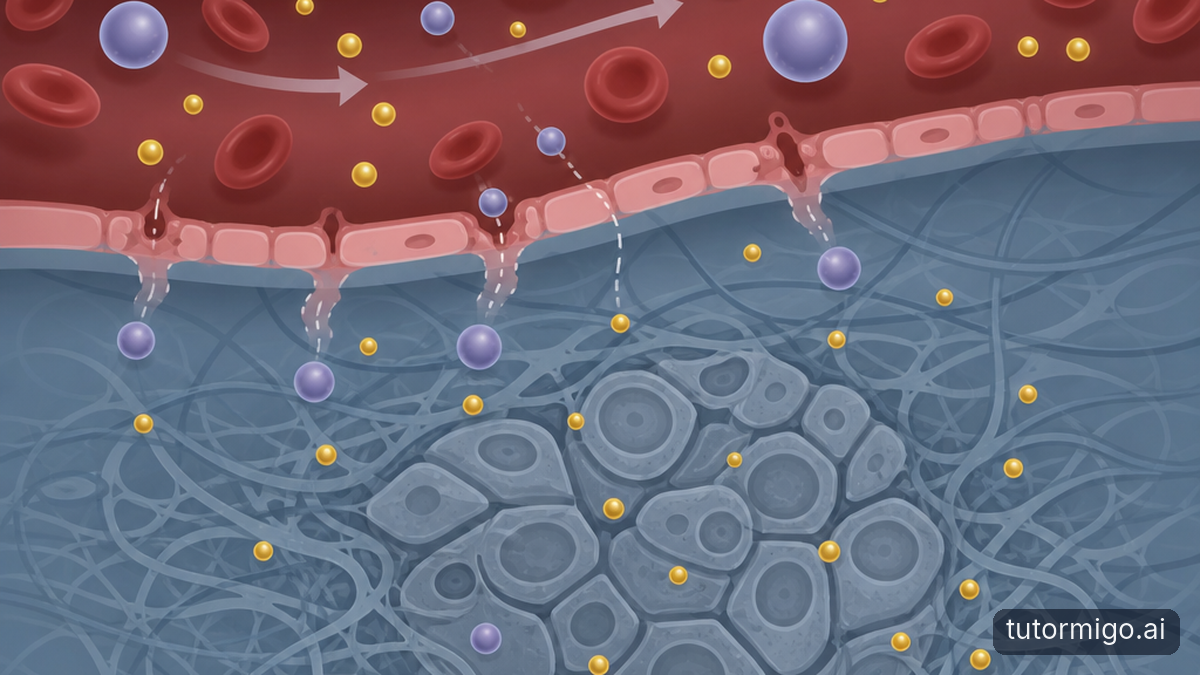
If a medicine must reach one diseased site while sparing healthy tissue, the central problem is not simply finding a powerful drug. You also need to control where the drug travels, how long it remains there, and when it is released. Conventional medicines often circulate throughout the body, which can produce useful treatment at a tumor or infection site alongside unwanted effects elsewhere.
Micro-robotics and targeted drug delivery address that distribution problem by pairing a small carrier with a method of movement and, in some designs, a trigger for release. The robot may be guided through a fluid network, attach to a target, or transport a payload until it reaches a chosen environment. Researchers are investigating these systems for applications such as cancer therapy, localized treatment, and procedures in hard-to-reach regions.
The important distinction is between a laboratory demonstration and a clinical treatment. A device that moves through a carefully prepared fluid channel is not automatically ready to navigate blood vessels in a living person. Flow, immune defenses, tissue barriers, imaging limits, and safe removal all change the engineering challenge.
How microscopic robots move
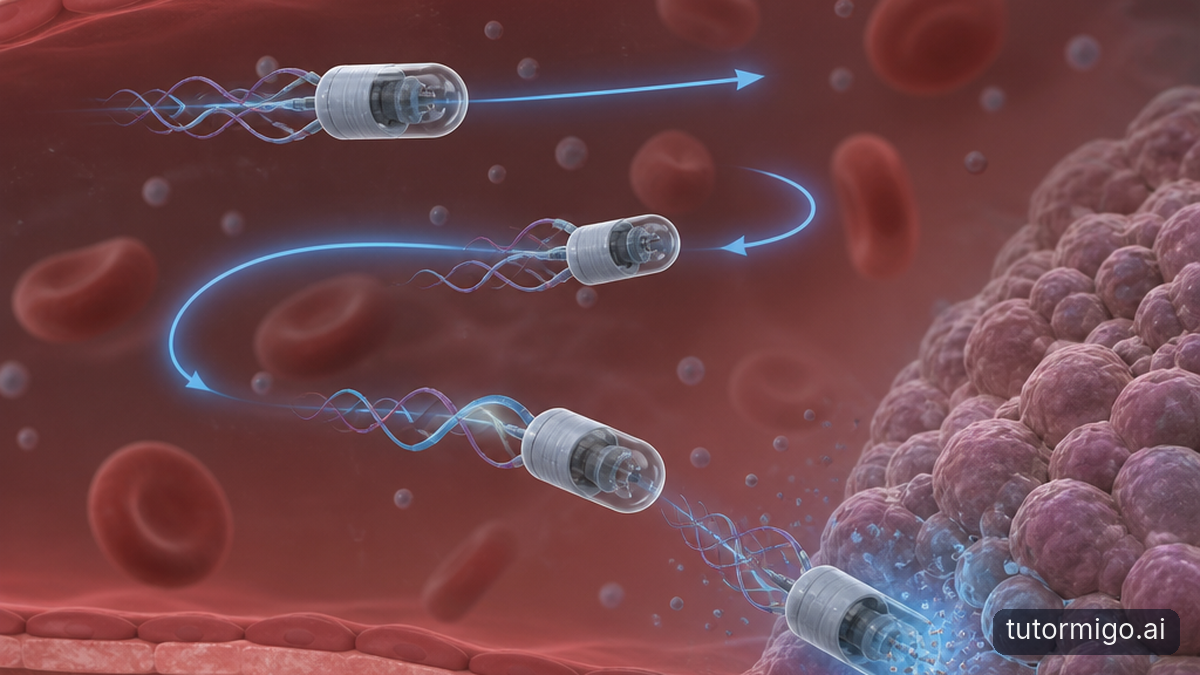
Most proposed medical microrobots do not carry onboard batteries, processors, or conventional motors. Instead, an external source supplies the force or energy. Magnetic systems can respond to a rotating or changing magnetic field, giving researchers a way to steer a device from outside the body. This approach is attractive because magnetic fields can be applied without placing a motor inside a tiny carrier, although precise control through complex anatomy remains difficult.
Light-driven systems use illumination to create movement or trigger a change in the robot. They may be useful in locations that can be reached with suitable light, but light penetration through tissue limits where and how they can operate. Chemical propulsion uses reactions that generate motion, yet the reactants and byproducts must be compatible with the body.
Shape matters as much as propulsion. Helical structures, flexible swimmers, particle clusters, and dissolvable devices behave differently in flowing liquid. A design that travels well in a still laboratory chamber may stall when blood flow, branching vessels, or sticky biological fluids push it off course. Engineers therefore test movement, steering accuracy, and stability together rather than treating propulsion as an isolated feature.
How a robot carries and releases medicine
A microrobot can carry therapy in several ways. A drug may be placed inside a hollow structure, attached to a surface, embedded in a coating, or packed into a material that breaks down after reaching its destination. The choice affects how much medicine the device can hold, how quickly it is released, and whether the carrier remains intact during travel.
Targeting can rely on navigation, biological recognition, or both. Magnetic steering may guide a carrier toward a region, while molecules on its surface can help it bind to particular cells or tissue features. A separate trigger—such as a change in acidity, temperature, an externally applied field, or an enzyme-rich environment—may then start release. Combining these controls could reduce premature dosing, but every added mechanism creates another way for the system to fail.
Consider a tumor treatment as an engineering sequence: the carrier must survive injection, move through fluid, avoid being cleared too early, accumulate near the tumor, release the therapy at a useful rate, and then degrade or leave the body. Success is not just reaching the right address. It is delivering a predictable dose without blocking vessels or damaging surrounding tissue.
The safety questions researchers must answer
Safety begins with materials. A device intended for the body must be assessed for toxicity, immune reactions, inflammation, and the possibility that fragments remain after treatment. Biodegradable materials may reduce the need for retrieval, but degradation products also require evaluation. A carrier that is harmless in one concentration or exposure time may not be harmless in another.
Control and monitoring create a second set of questions. Clinicians need to know where the robots are, whether they are moving as intended, and whether they can be stopped or redirected. Imaging can help, but visibility varies with size, material, depth, and the surrounding tissue. If a device loses propulsion, sticks to a vessel wall, or gathers in an unintended location, the medical team needs a reliable response.
Researchers also have to compare the complete system with existing treatment, not just with an untreated condition. That means measuring targeting accuracy, therapeutic benefit, side effects, manufacturing consistency, sterilization, and dose control. A technically impressive prototype may still be unsuitable if it is too difficult to manufacture uniformly or too expensive to use safely at clinical scale.
A useful reality check: “Targeted” does not mean perfectly selective. Ask how targeting is achieved, how it is measured, and what happens when the device misses its intended tissue.Where the technology stands today
Micro-robotic drug delivery remains an active research field rather than a routine hospital service. Studies often begin with simplified fluid channels, isolated tissues, animal models, or devices designed for a specific anatomical setting. Each stage can reveal a different obstacle: movement in a controlled channel does not establish safe navigation in a living body, and promising animal results do not guarantee human performance.
Researchers are working on several practical bottlenecks at once. They need smaller and more consistent manufacturing methods, propulsion that works in realistic biological fluids, tracking that is accurate enough for medical decisions, and payload systems that release drugs reliably. They must also establish how devices are sterilized, stored, injected, monitored, and disposed of.
For readers following new claims, the most useful details are often found in the methods rather than the headline. Look for the test environment, the size and material of the device, the propulsion source, the type of payload, the targeting method, and the evidence used to confirm delivery. Terms such as “proof of concept” or “preclinical” signal that further validation is still needed before ordinary clinical use.
What to watch next
The next advances will likely come from combining modest improvements rather than relying on a single dramatic breakthrough. Better magnetic control could work alongside biodegradable materials, improved imaging, and release mechanisms that respond to the local tissue environment. A device may not need to roam freely through the entire body if clinicians can place it near the target and activate it with a controlled external field.
You can evaluate developments by asking four practical questions: What problem does the device solve better than current delivery methods? Can its position and dose be verified? What happens to the device after treatment? And has the approach been tested in conditions that resemble the intended human use? Clear answers matter more than a striking animation of a tiny swimmer.
Micro-robotics and targeted drug delivery could eventually make some treatments more localized and controllable, but translation depends on biology, manufacturing, regulation, and clinical evidence as much as clever mechanics. For now, follow peer-reviewed results, distinguish laboratory prototypes from approved therapies, and treat claims of precision as questions to investigate rather than promises already established.
Pros and cons
Pros
- Could localize treatment and reduce exposure to healthy tissue
- May allow external control or triggered drug release
- Can be designed for specific anatomical or therapeutic tasks
Cons and limitations
- Most systems remain experimental or preclinical
- Tracking, safe removal, and reliable control are difficult
- Materials, manufacturing, immune response, and degradation require extensive testing
Frequently asked questions
They are very small engineered devices or particles designed to move, respond to external forces, carry therapeutic payloads, or perform a localized medical task. Their exact size, structure, and function vary by design.
Researchers are studying external magnetic fields, light, chemical propulsion, and combinations of these methods. Control depends on the device, the body location, fluid movement, tissue depth, and available tracking technology.
This is a major research goal, but most systems remain in experimental or preclinical development. A laboratory demonstration or animal study does not establish that a device is safe, effective, or approved for routine human treatment.
Potential concerns include toxicity, immune reactions, unintended accumulation, vessel obstruction, inaccurate targeting, incomplete drug release, and difficulty tracking or removing the device. Each system requires its own safety evaluation.
Related reading
Related reading
Enjoyed this read?
Like, share, or comment below.



Comments
0Sign in required · respectful discussion · replies supported
Loading comments…