
Two Students, One Zip Code Apart: The Invisible Wall of $80-an-Hour Help
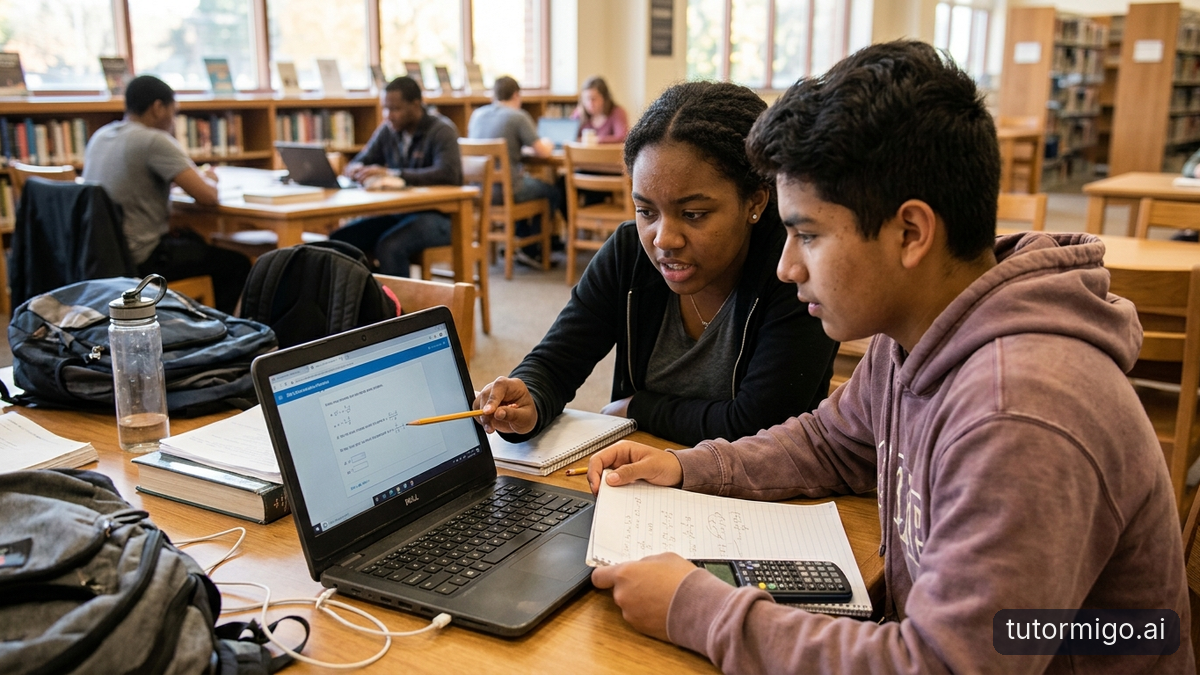
In a quiet suburb just ten miles outside the city center, Leo sits down for his weekly Tuesday afternoon session. His parents pay $85 an hour for a private tutor—a graduate student who comes to their home, reviews his geometry homework, and ensures he is ahead of the curve for next week’s exam. Leo isn’t just learning; he is being insulated against failure. Across the county line, Sofia sits at her kitchen table in a Title I district. Her mother is finishing a double shift at the hospital, and her father is commuting back from a construction site. Sofia is stuck on the same geometry proofs as Leo, but there is no one to ask for help. If she fails the unit test, it isn’t for a lack of effort; it’s because she hit the "Invisible Wall."
This is the "Opportunity Gap." While often conflated with the achievement gap, the distinction is vital: the achievement gap tracks the output of students, while the opportunity gap tracks the input of resources. For decades, the primary differentiator in student success has been the ability to purchase supplemental instruction. High-income families have effectively created a private educational shadow system that low-income families cannot access. This disparity is a structural crisis that perpetuates cycles of poverty. However, we are at a turning point. Free, high-impact digital tutoring powered by an AI Tutor is no longer a futuristic luxury; it is the most scalable lever we have to level the academic playing field and dismantle that invisible wall forever.
What the Numbers Say About Who Gets Tutored — And Who Waits
The data surrounding educational inequality is stark. According to the Brookings Institution, the gap in "enrichment spending"—which includes tutoring, music lessons, and summer camps—between the top and bottom income quintiles has grown exponentially since the 1970s [3]. While the wealthiest families have increased their spending on these supports by over 150%, spending among low-income families has remained largely stagnant due to the rising costs of basic necessities. This "shadow education" market is now a multi-billion dollar industry that serves as a gatekeeper to elite higher education and high-paying careers.
{
  "chart_type": "bar",
  "title": "Annual Out-of-Pocket Academic Support Spending by Income Quintile",
  "data": [
    {"label": "Bottom 20%", "value": 1350},
    {"label": "Second 20%", "value": 2100},
    {"label": "Middle 20%", "value": 3800},
    {"label": "Fourth 20%", "value": 5900},
    {"label": "Top 20%", "value": 9200}
  ],
  "unit": "USD"
}
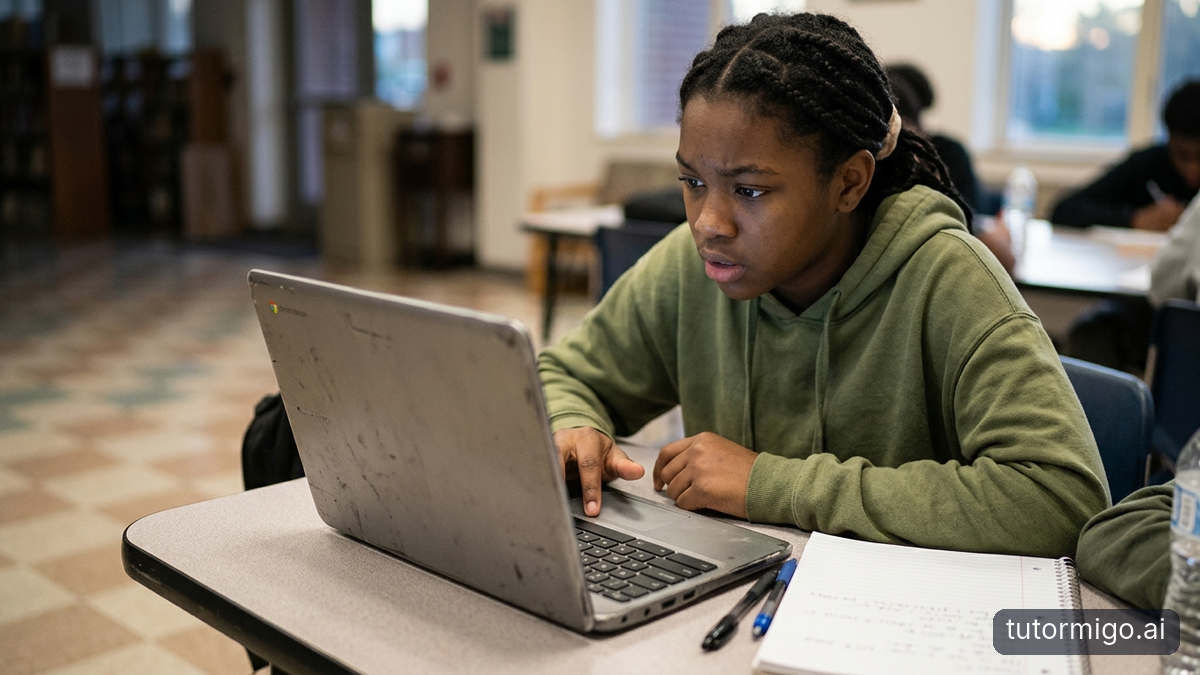
Post-pandemic learning loss has only exacerbated these divides. Research from the Annenberg Institute at Brown University indicates that while students in high-income districts have recovered nearly 80% of their pandemic-era math losses, students in high-poverty districts are still lagging significantly behind [1]. The primary barriers aren't just financial; they are logistical. For a family living paycheck to paycheck, the cost of a tutor is often secondary to the impossibility of transporting a child to a learning center or finding a tutor who speaks the family's primary language.
{
  "chart_type": "pie",
  "title": "Primary Barriers to Private Tutoring Access (Low-Income Families)",
  "data": [
    {"label": "Cost", "value": 58},
    {"label": "Transportation", "value": 18},
    {"label": "Availability/Scheduling", "value": 14},
    {"label": "Awareness", "value": 10}
  ],
  "unit": "Percentage"
}
Volunteer Tutoring's Quiet Heroism and Its Hard Ceiling
For years, the burden of closing this gap fell on the shoulders of community volunteers, public libraries, and after-school programs. These initiatives are heroic, often providing the only lifeline for students in under-resourced neighborhoods. Programs like these offer more than just academic help; they provide mentorship and a safe space for students to grow. However, as an education policy researcher, I must be honest about their limitations: they do not scale. There are approximately 50 million K-12 students in the U.S. public school system, many of whom attend Title I schools where teacher-to-student ratios are often 1:30 or higher [2].
Volunteer models face a "hard ceiling" of human capital. A volunteer can only be in one place at one time, and burnout rates are high. Furthermore, the students who need the most help often have the most erratic schedules—juggling part-time jobs or caring for younger siblings—which rarely align with the 3:00 PM to 5:00 PM window of a library program. We cannot volunteer our way out of a systemic crisis of this magnitude. We need a solution that is as persistent and available as the internet itself. This is where the TutorMigo benefits become clear: by digitizing the pedagogical expertise of a high-level tutor, we can provide every student with a 1-on-1 experience that was previously reserved for the elite.
Maya, Algebra, and a Chromebook at 9:00 PM
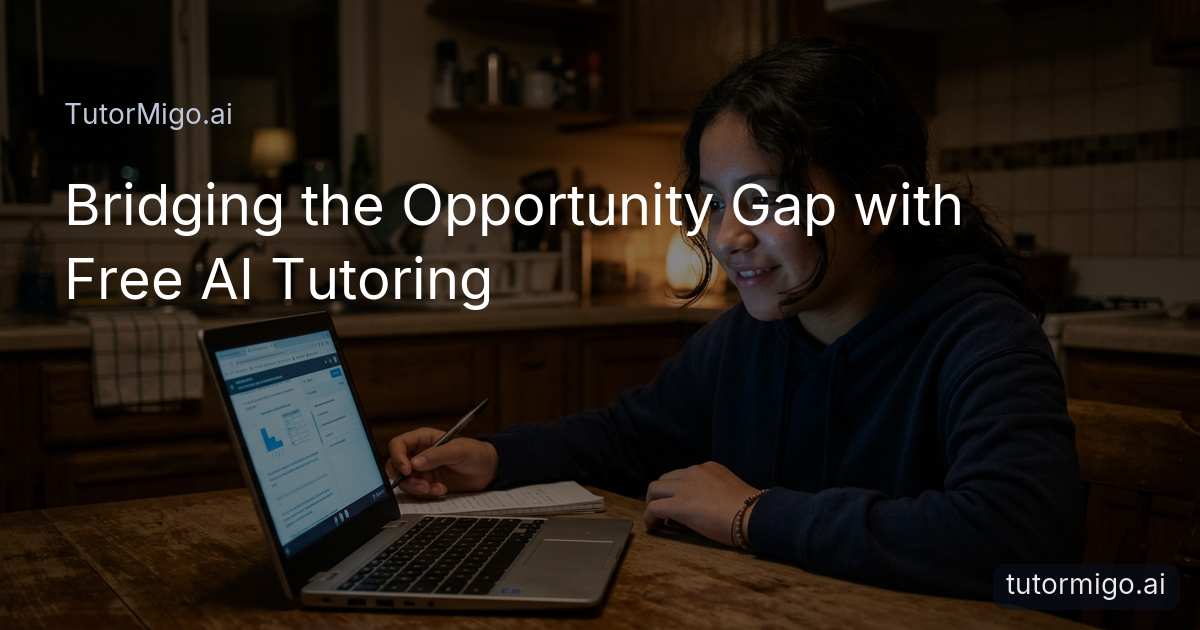
Maya is an eighth-grader in a rural district where the nearest tutoring center is a forty-minute drive away. Her school is underfunded, and her math teacher, though dedicated, is responsible for five different classes and over 150 students. Maya wants to be an engineer, but algebra has become a terrifying obstacle. Every time she looks at a quadratic equation, her mind goes blank. She is too shy to raise her hand in class, fearing she will look "slow" in front of her peers. By the time she gets home and finishes her chores, it is 9:00 PM. Her mother is at work, and her older brother is busy with his own studies.
In the past, this is where Maya’s story would stall. She would stare at her textbook until her eyes blurred, eventually closing it in defeat. But tonight, Maya opens her school-issued Chromebook and logs into TutorMigo.ai. She doesn't need a credit card, and she doesn't need an appointment. She types in her problem: "I don't understand how to start factoring this equation." There is no judgment on the other side of the screen. There is no sigh of frustration from a tired parent. Instead, the AI Tutor responds instantly, greeting her by name and asking her a simple, leading question to help her identify the first step. For the first time, Maya feels like she has a partner in her learning rather than a judge of her progress.
Inside the Session: How Scaffolded AI Tutoring Rebuilt Her Confidence
The magic of the interaction lies in the "Socratic" approach. Unlike a standard search engine or a basic chatbot that might simply provide the answer, TutorMigo.ai is designed to build understanding. When Maya struggles with the concept of the "greatest common factor," the AI doesn't just do the math for her. It uses the interactive study tools to visualize the problem, breaking the equation down into manageable pieces. It asks Maya to identify the numbers that multiply to twelve, guiding her toward the solution through her own logic. This is "scaffolded" learning—providing just enough support to help the student reach the next level independently.
As Maya works through the problem, the session is saved in her history, allowing her to return to it whenever she needs a refresher. This continuity is a key part of the affordable support model. By 9:45 PM, Maya hasn't just finished her homework; she has mastered a concept that had elled her for weeks. The "aha!" moment isn't just about math; it's about her self-perception. She no longer sees herself as someone who "isn't a math person." She sees herself as someone who can solve hard problems with the right tools. This shift in confidence is the true catalyst for long-term academic success, and it happened in a rural kitchen, late at night, without costing her family a single cent.
TutorMigo Benefits That Actually Reach Low-Income Families: Free Access, Socratic Prompts, Multilingual Support, Any Device
To truly bridge the opportunity gap, a tool must be designed with the realities of low-income life in mind. One of the core TutorMigo benefits is its "Zero Friction" philosophy. We recognize that many students in under-resourced communities are working on older hardware or rely on smartphone browsers with limited data plans. Therefore, the platform is built to be lightweight and high-performance even on low-bandwidth connections. It doesn't require the latest MacBook; it works on the $100 tablet or the hand-me-down phone. This accessibility is non-negotiable for true equity.
Furthermore, the platform addresses the language barrier that often prevents immigrant parents from helping their children with homework. With multilingual support, a student can ask a question in Spanish or Vietnamese and receive an explanation that bridges the gap between their home language and their English-language curriculum. This empowers the whole family. Additionally, for educators in Title I schools, the teacher dashboard provides critical insights into which concepts the entire class is struggling with, allowing for more targeted in-class instruction. By combining Socratic pedagogy with radical accessibility, we aren't just giving students an app; we are giving them an advocate that is always in their pocket.
Where AI Tutoring Helps, Where It Falls Short, and What Parents and Teachers Should Watch
While the potential of AI tutoring is immense, it is not a "silver bullet" that replaces the need for human educators. Policy researchers emphasize that AI is most effective when it acts as a "force multiplier" for teachers, not a replacement. One of the risks of AI in education is the potential for "hallucinations"—where the AI provides an incorrect but confident-sounding answer. This is why TutorMigo.ai focuses on a Socratic method that encourages students to verify steps and think critically, rather than passively accepting an output. It is a tool for engagement, not a shortcut to an answer.
Parents and teachers should also be mindful of the "digital divide" that extends beyond just having a device. Students need "digital literacy" to know how to prompt the AI effectively and how to use the spaced-repetition flashcards to retain what they've learned. The goal is to move from passive consumption to active mastery. As we move forward, the focus must remain on the human at the center of the technology. AI tutoring provides the equity of access, but it is the combined effort of students, parents, and teachers that creates the equity of outcome. By democratizing these high-level tools, we ensure that the next generation of engineers, doctors, and leaders can come from any zip code in the country.
References & Sources
- Annenberg Institute at Brown University (2023). "The State of Student Learning Recovery: Disparities in Growth Across Income and Race."
- National Center for Education Statistics (NCES) (2022). "Digest of Education Statistics: Teacher-to-Student Ratios and Title I Funding Allocations."
- Brookings Institution (2021). "The Growing Enrichment Gap: How Wealth Inequality Shapes Educational Opportunity."
- Harvard Graduate School of Education / EdResearch for Recovery (2023). "Accelerating Learning with High-Impact Tutoring: Scaling Models for Equity."
| Feature | Private Human Tutoring | General AI Chatbots | TutorMigo.ai AI Tutor |
|---|---|---|---|
| Cost per Hour | $50 - $150+ | Free or $20/mo Subscription | Free Tier for Title I/Low-Income |
| Availability | Scheduled/Limited | 24/7 | 24/7 Instant Access |
| Pedagogical Approach | Variable (Depends on Tutor) | Direct Answer (Hand-holding) | Socratic/Scaffolded Learning |
| Subject Specialization | Single Subject per Tutor | General Knowledge | K-12 Curricular Alignment |
| Parent/Teacher Visibility | Manual Reports | None | Integrated Dashboards |
Pros and cons
Pros
- Eliminates the $80/hour cost barrier for high-impact tutoring.
- Available 24/7, accommodating students with working parents or late-night schedules.
- Provides a non-judgmental environment for students to ask 'dumb' questions.
- Scales instantly to serve millions of students in under-resourced districts.
Cons and limitations
- Requires basic internet connectivity and a digital device.
- Cannot replace the emotional mentorship of a physical teacher.
- Requires initial guidance for students to learn how to prompt effectively.
Talent is distributed equally across every zip code, but opportunity is not. AI tutoring isn't just a tech innovation; it is a civil rights tool that ensures a child's potential isn't capped by their parents' bank account.
Explore TutorMigo
Enjoyed this read?
Like, share, or comment below.

Comments
0Sign in required · respectful discussion · replies supported
Loading comments…