

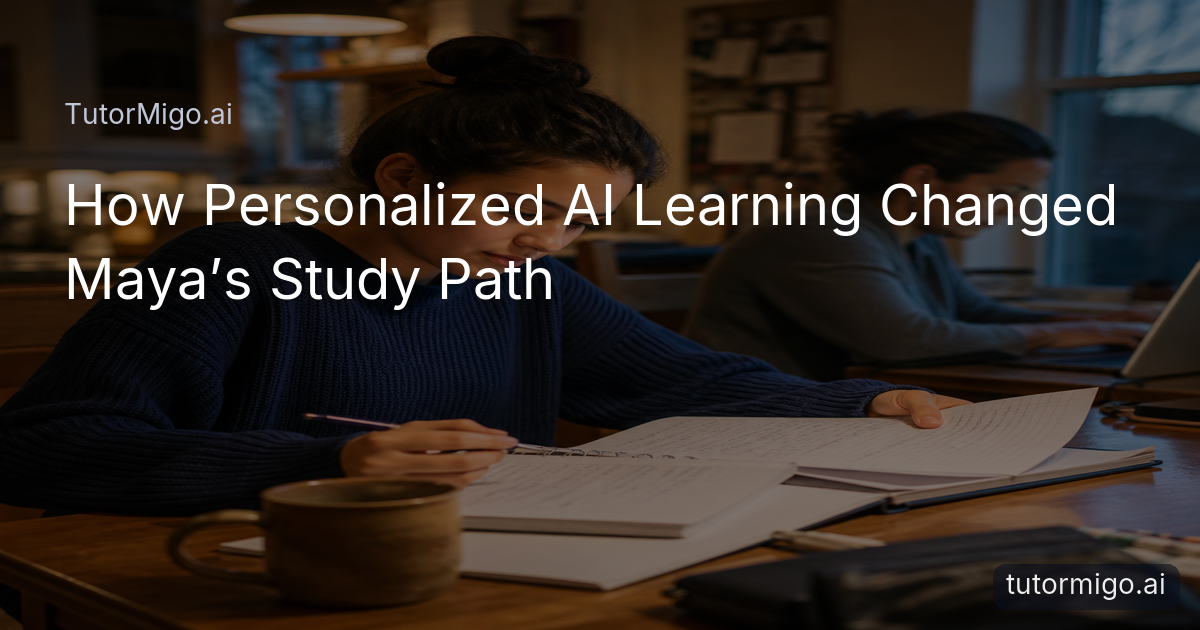
The Tuesday Maya Nearly Gave Up

By the time Maya came home on Tuesday, she had already erased the same algebra problem three times. Her class had moved from linear equations to quadratic expressions, but the lesson had felt too quick for her to ask what the symbols meant. At the kitchen table, she understood the first line of her homework and then lost the thread.
Her mother could help with encouragement, but not always with the mathematics. Maya did not need someone to complete the worksheet. She needed a calm explanation that began where her understanding had stopped, then gave her a chance to try the next step herself. That distinction mattered. When she searched for help, she was looking for learning support outside the classroom, not simply an answer.
She opened TutorMigo.ai and described the exact point of confusion: why a factored quadratic could have two solutions. The AI Tutor responded in stages, connecting the new idea to multiplication she already knew. Maya could pause, ask for a simpler explanation, and return to the conversation later instead of starting over. For the first time that evening, the problem looked like a sequence of choices rather than a wall.
A Conversation That Remembered the Lesson
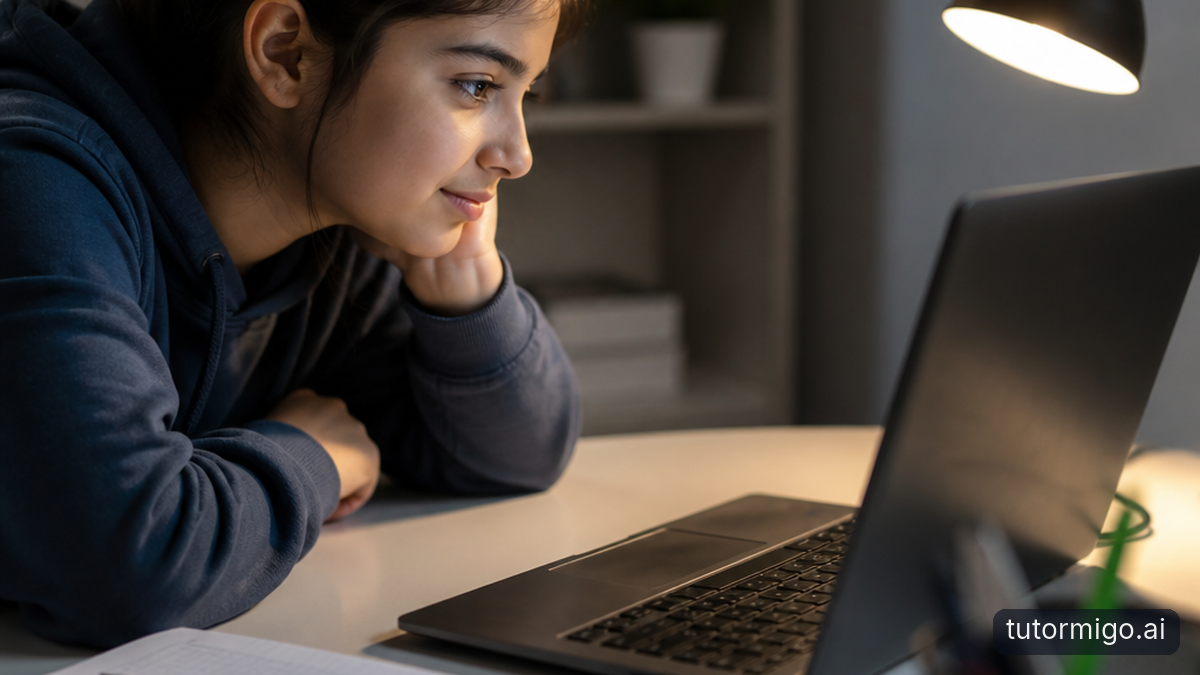
Over the next few sessions, Maya’s questions became more specific. On Wednesday, she asked for another example. On Thursday, she returned to the earlier explanation and said she still mixed up factoring and expanding. Because the tutor workspace kept her session history, the work felt connected. She did not have to retell the entire story every time she sat down.
The difference was visible in the way she practiced. Instead of receiving a long block of information, Maya asked to see one step at a time, then tried a similar problem before moving on. When she made a mistake, the explanation focused on the decision that caused it. A general-purpose generative chatbot could be useful for a one-off question, but Maya valued a learning space organized around her ongoing questions and study sessions.
That continuity also changed her confidence. She began writing down questions during class rather than hiding them. At home, she could bring those questions into a focused conversation and keep working until the explanation made sense. One of the practical TutorMigo benefits was not that every problem became easy; it was that confusion became something she could return to, examine, and gradually resolve.
Practice Became Small Enough to Continue
Maya’s biggest obstacle had never been a lack of effort. It was the size of the effort she thought she needed to make. A two-hour catch-up session felt impossible after school, while ten focused minutes felt manageable. TutorMigo.ai helped her turn the larger goal into smaller study actions: review a concept, solve a few examples, identify one weak point, and come back to it later.
She used the interactive study tools when a written explanation was not enough. On the whiteboard, she worked through the structure of a problem visually. For calculations that required careful order, the math step editor let her inspect her reasoning rather than only compare a final answer. These tools gave her different ways to approach the same idea, which mattered when reading a paragraph alone did not unlock it.
After each session, Maya made flashcards from the terms and mistakes she wanted to remember. Spaced-repetition review brought those cards back over time instead of leaving them buried in a notebook. A card about the zero-product property appeared again two days later, then the following week. The repeated encounters were brief, but they helped the idea stay available when Maya faced a new homework question.
From Homework Frustration to Exam Preparation
By the middle of the term, Maya had a larger academic goal: prepare for her upcoming SAT while keeping pace with algebra. She did not want a separate pile of disconnected practice. She needed to know whether her daily work was moving her toward the test. Structured exam preparation gave her practice sets and progress tracking, so she could see which areas deserved attention instead of guessing from how tired she felt.
On one Saturday morning, Maya completed a short set and noticed that her errors clustered around equations with unfamiliar wording. The result gave her a useful next question. She returned to the AI Tutor to unpack the language of two missed problems, then added the underlying concepts to her flashcards. Her study plan became more responsive: practice showed the gap, tutoring clarified it, and review helped reinforce it.
The change was gradual rather than dramatic. Her first goal was not a perfect score; it was to finish a practice set without abandoning the questions that looked difficult. A few weeks later, she could explain why she had chosen a method, not merely report whether an answer was right. That was the academic progress her family had hoped to see: stronger reasoning, steadier practice, and a clearer path toward her goal.
Support That Parents and Teachers Could See
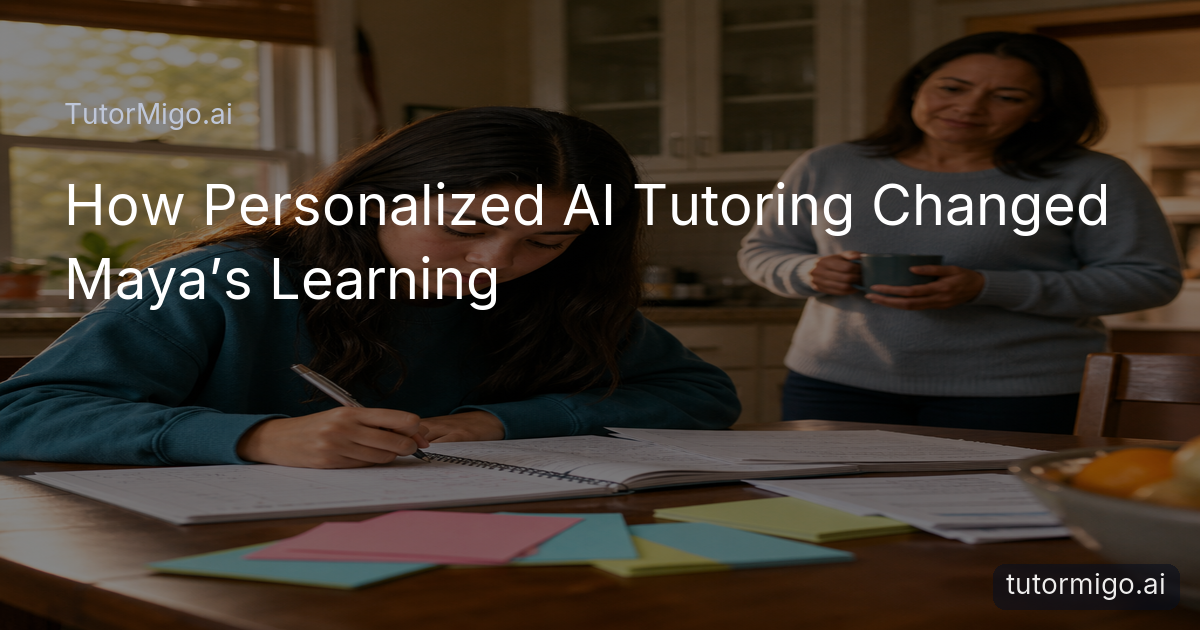
Maya’s mother noticed the difference before she saw any score. Maya no longer closed her notebook at the first sign of difficulty. Still, her mother wanted to support her without hovering over every session. The parent dashboard gave her visibility into Maya’s progress and learning activity, making it easier to ask a useful question such as, “Which topic are you working on tonight?” rather than simply asking whether homework was finished.
Her math teacher also became part of the support system. With the teacher dashboard, the teacher could monitor student progress and see where additional class attention might help. Maya was not reduced to a number on a report. Her pattern of practice gave the teacher a starting point for a brief conversation: she understood the mechanics of factoring but hesitated when a problem was presented in a new form.
This shared view made the help around Maya more consistent. Her mother could encourage a short review, Maya could continue from her previous tutoring session, and her teacher could reinforce the same area in class. The platform did not replace those relationships. It helped the adults around her see enough of the learning process to offer timely support, while Maya remained responsible for the work.
The Goal Was Confidence She Could Carry Forward
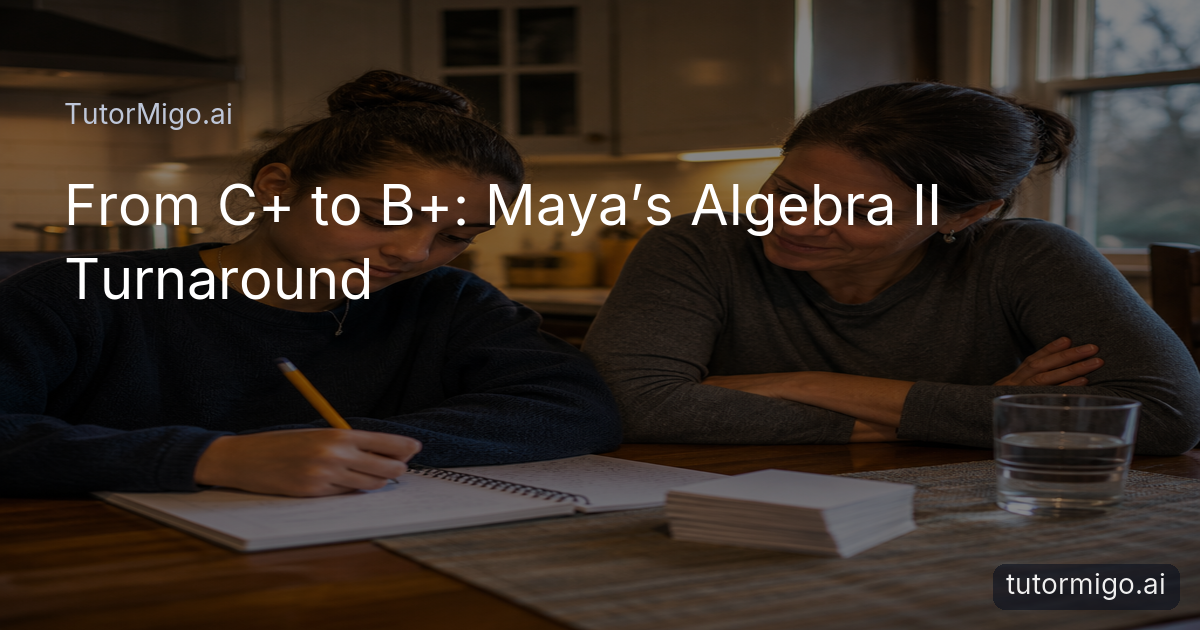
At the end of the term, Maya brought home a practice result that was higher than her first attempt. The number mattered, but the conversation around it mattered more. She could point to the topics she had improved, identify the questions she still needed to review, and describe the routine that had helped: ask clearly, work through an example, practice, and revisit the idea later.
Her progress had started with one difficult Tuesday and a problem she nearly abandoned. It grew through continuity, not instant answers. The AI Tutor gave her a patient place to ask follow-up questions; interactive tools made reasoning visible; flashcards spaced review across days; and structured preparation showed how small improvements connected to a larger exam goal. Together, those supports made studying feel less like reacting to failure and more like building a skill.
For students, parents, teachers, and lifelong learners comparing AI learning tools, Maya’s story offers a practical measure of personalization. The question is not only whether a tool can explain a concept. It is whether the explanation can lead to meaningful practice, whether progress can be seen, and whether the next session can begin from what the learner already worked on. That is where personalized AI learning can turn outside-classroom support into sustained academic momentum.
Families exploring a gentler routine may also find useful ideas in this guide to improving academic performance without pressure. Students who want to move beyond finished homework can read about turning homework answers into lasting learning, while readers comparing tools can consider what learning-focused AI tutoring can show about progress.
I stopped asking, ‘What is the answer?’ and started asking, ‘Which part do I understand, and what should I try next?’
Explore TutorMigo
Enjoyed this read?
Like, share, or comment below.

Comments
0Sign in required · respectful discussion · replies supported
Loading comments…