


Why Nutrient Flow Modeling Matters in Hydroponics Vertical Farms
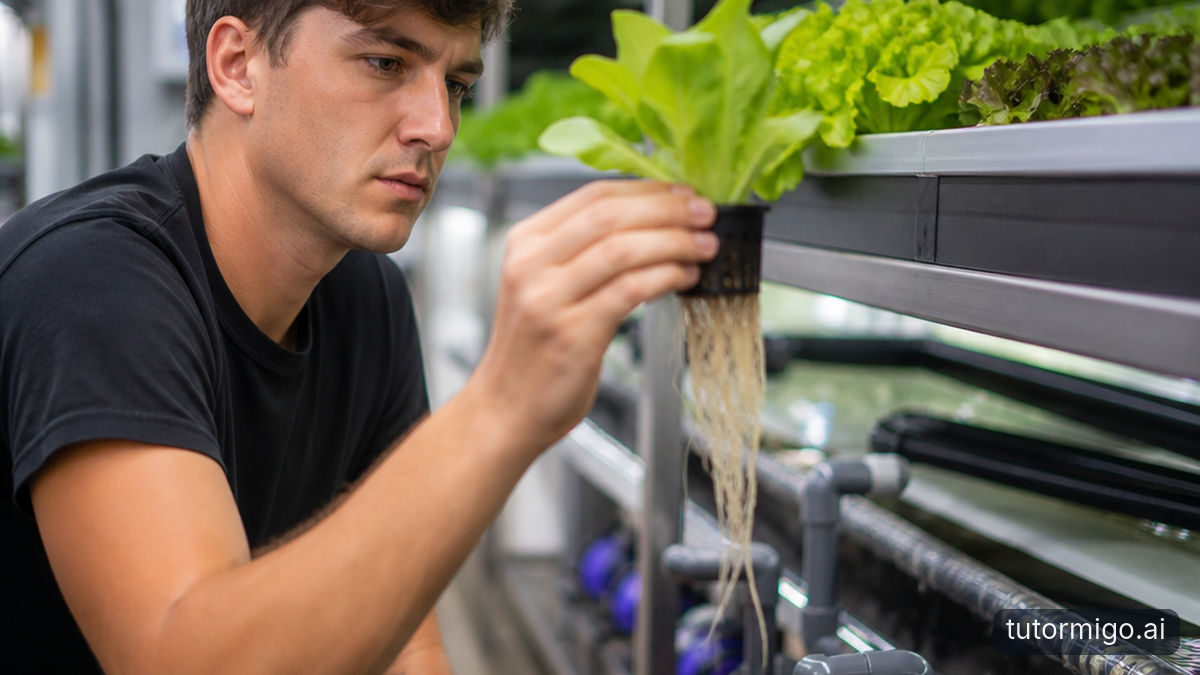
If one row of plants grows faster than another, the cause may not be seed quality or lighting alone. In a vertical farm, nutrient solution has to travel through pumps, pipes, channels, and growing sites before returning to a reservoir. Small differences in flow speed, temperature, dissolved oxygen, or root density can create uneven conditions across the same rack. Hydroponic nutrient flow modeling: AI tools help operators examine those differences before changing a live system.
A useful model combines fluid dynamics with crop behavior. A fluid model estimates how quickly solution moves and where pressure drops occur. A biological model estimates how roots absorb water and nutrients as plants mature. An energy model can then compare the effect of pump settings, oxygenation, and lighting schedules. Together, these simulations form a digital representation of the farm’s growing environment.
The goal is not to replace measurements. It is to make measurements more useful. If sensors show that a return line has lower dissolved oxygen than expected, a simulation can help test whether the cause is weak aeration, excessive residence time, or an obstruction. You can then make a targeted adjustment instead of increasing pump power across the entire facility.
Building a useful digital fluid model
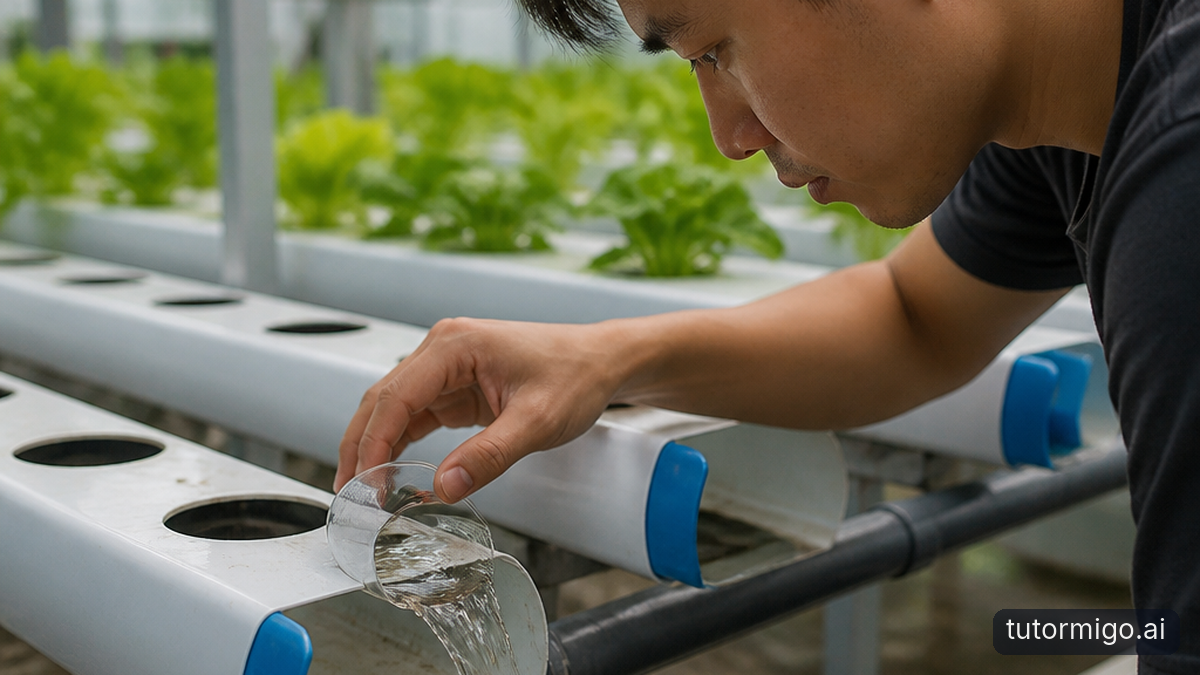
Start with the physical layout, not the algorithm. Map reservoir volume, pipe diameter, channel length, elevation changes, pump capacity, valve positions, and the number of plant sites on each circuit. These details determine residence time and pressure behavior. A model that ignores a narrow connector or an added shelf may produce an elegant result that does not describe the farm.
Computational fluid dynamics can divide the system into small regions and estimate velocity, pressure, turbulence, and mixing. In a simple recirculating setup, the model may track how a nutrient pulse travels from the reservoir to the farthest channel and back. Operators can compare that travel time with sensor readings and identify zones where solution lingers.
You also need reliable inputs. Record flow rate, solution temperature, electrical conductivity, acidity, dissolved oxygen, and reservoir level at consistent intervals. Use several crop stages because young plants and mature root systems do not impose the same resistance. Machine learning can help detect patterns in this data, but it should be trained on clearly labeled operating conditions. If a sensor drifts or a harvest changes the number of plants, the model must know that the system has changed.
A practical first objective is prediction, not full autonomy: estimate which circuit will fall outside its target range before the crop shows visible stress.
Simulating oxygenation and nutrient delivery schedules
Nutrient concentration is only one part of delivery. Roots also need access to oxygen, and oxygen availability depends on temperature, agitation, water depth, root mass, and time spent in the circuit. An AI-assisted simulation can test whether a longer pump cycle improves distribution or simply pushes more solution through a system that already has poor aeration.
For example, an operator might compare continuous circulation with a schedule that uses shorter cycles and a separate aeration period. The model can estimate reservoir mixing, oxygen decline between cycles, and the time required to restore dissolved oxygen. The best schedule depends on crop type, root development, equipment, and measured conditions; there is no universal setting that should be copied from one farm to another.
You can also model nutrient uptake as a changing demand rather than a fixed subtraction. A crop block with greater leaf area may remove water and ions faster than a newly planted block. A simplified mass-balance calculation can describe this relationship:
In a real model, uptake is represented with measured or estimated rates that vary over time. The simulation should be checked against reservoir readings and periodic lab analysis. If predictions consistently overestimate oxygen recovery or underestimate concentration changes, recalibrate the biological assumptions before adjusting hardware.
Coordinating lighting with water and crop demand
Lighting changes plant demand, so lighting cycles should not be modeled separately from irrigation and nutrient delivery. When light intensity or photoperiod rises, plants may increase transpiration and alter water uptake. That can change reservoir concentration, channel residence time, and the frequency with which the system needs replenishment. A combined simulation lets you test these effects as one operating plan.
Consider a vertical rack that runs its brightest lighting period in the afternoon. Rather than applying the same circulation schedule all day, you could simulate a higher delivery rate before and during that period, then compare it with a lower-energy schedule that maintains adequate root-zone conditions. The model should account for heat from the fixtures because warmer air and solution can affect both plant demand and dissolved oxygen.
Lighting optimization is not simply a search for maximum intensity. You are balancing crop growth, electricity use, cooling load, water consumption, and uniformity across the canopy. A simulation can compare scenarios using an objective function such as:
Here, may represent growth, uniformity, energy use, and water use, while the terms express the farm’s priorities. The exact scoring system should be transparent. If the model favors yield while ignoring uneven crop quality or pump wear, it is optimizing the wrong operation.
Turning simulations into safer farm decisions
Treat model output as a recommendation with uncertainty, not as an instruction that bypasses operators. Before changing a full facility, run a controlled trial on one rack or circulation loop. Keep the crop variety, lighting, and harvest timing as consistent as possible, then compare predicted and observed flow, oxygen, concentration, and plant response.
A useful dashboard should show confidence ranges and the measurements behind each recommendation. If the system suggests reducing pump speed, you should be able to see whether that conclusion came from recent sensor data, historical patterns, or assumptions about root density. Alerts should distinguish a likely sensor fault from a genuine hydraulic problem. Automatic controls deserve additional safeguards, including minimum oxygen thresholds, maximum temperature limits, and a fallback schedule when communications or sensors fail.
The next step is a short operating review. Ask which prediction was accurate, which was not, and why. Check for changes in filters, emitters, valves, crop age, and reservoir chemistry. This feedback makes the model more useful over time than simply collecting more data.
If you are starting small, prioritize one question: can the model predict uneven delivery at the farthest growing sites? Once that prediction is dependable, add oxygenation, lighting coordination, and energy optimization. A narrow, testable model is usually safer and more valuable than a complex system no one can validate.
Frequently asked questions
It is the use of fluid-dynamics, crop-growth, sensor, and control models to estimate how nutrient solution moves through a hydroponic system and how plants affect that flow over time.
AI can identify patterns in sensor data, detect unusual flow or oxygen behavior, estimate changing crop demand, and compare operating schedules. It should support measured data and operator review rather than replace validation.
Roots require oxygen as well as water and nutrients. Pump timing, temperature, agitation, root mass, and reservoir conditions can change oxygen availability, so ignoring it may produce an incomplete delivery model.
Begin with one circulation loop and a clear operational question, such as whether distant plant sites receive consistent flow. Validate predictions against flow, oxygen, concentration, and crop observations before expanding the model.
Enjoyed this read?
Like, share, or comment below.



Comments
0Sign in required · respectful discussion · replies supported
Loading comments…