

Why Year-Round Growing Is Difficult—and How Controlled Environment Agriculture (CEA) Helps
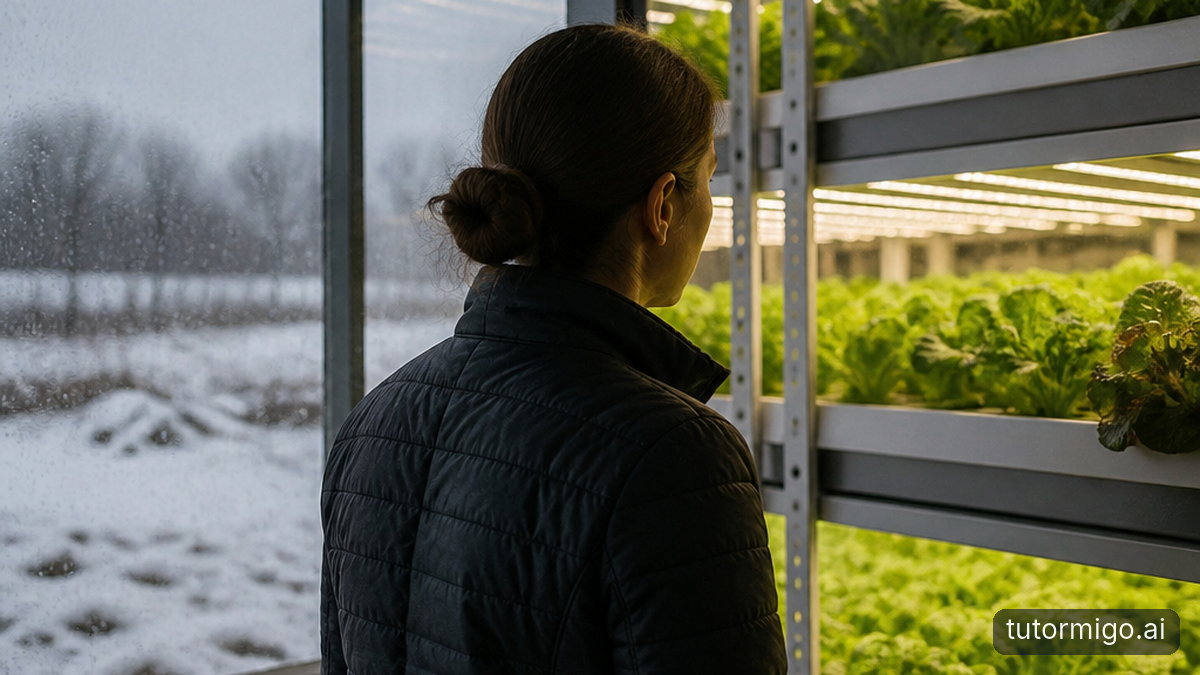
When weather, water shortages, pests, and short growing seasons disrupt a harvest, you need more than a greenhouse and good luck. Controlled environment agriculture (CEA) brings light, temperature, humidity, airflow, irrigation, and plant nutrition into one managed system, allowing crops to grow through winter, heat waves, and changing outdoor conditions.
Outdoor farming depends on a narrow set of conditions. Lettuce may bolt during a hot spell, basil can slow down in cool nights, and heavy rain can delay planting or spread disease. Even a conventional greenhouse still exchanges air with the surrounding environment, so outside humidity and pests remain important variables.
A CEA facility creates a more predictable growing zone. Sensors track conditions around the crop, while software and equipment make small adjustments rather than waiting for visible stress. A farm producing salad greens, for example, can schedule repeated harvests every week instead of concentrating production in one season. That consistency may shorten transportation routes when farms are located near cities, although electricity, construction, labor, and distribution still affect the overall environmental and financial case.
Practical tip: Start by defining the crop and harvest target. A system designed for fast-growing lettuce will not automatically suit tomatoes, strawberries, or woody herbs.
How Vertical Farms Combine Hydroponics and Aeroponics in Stackable Spaces
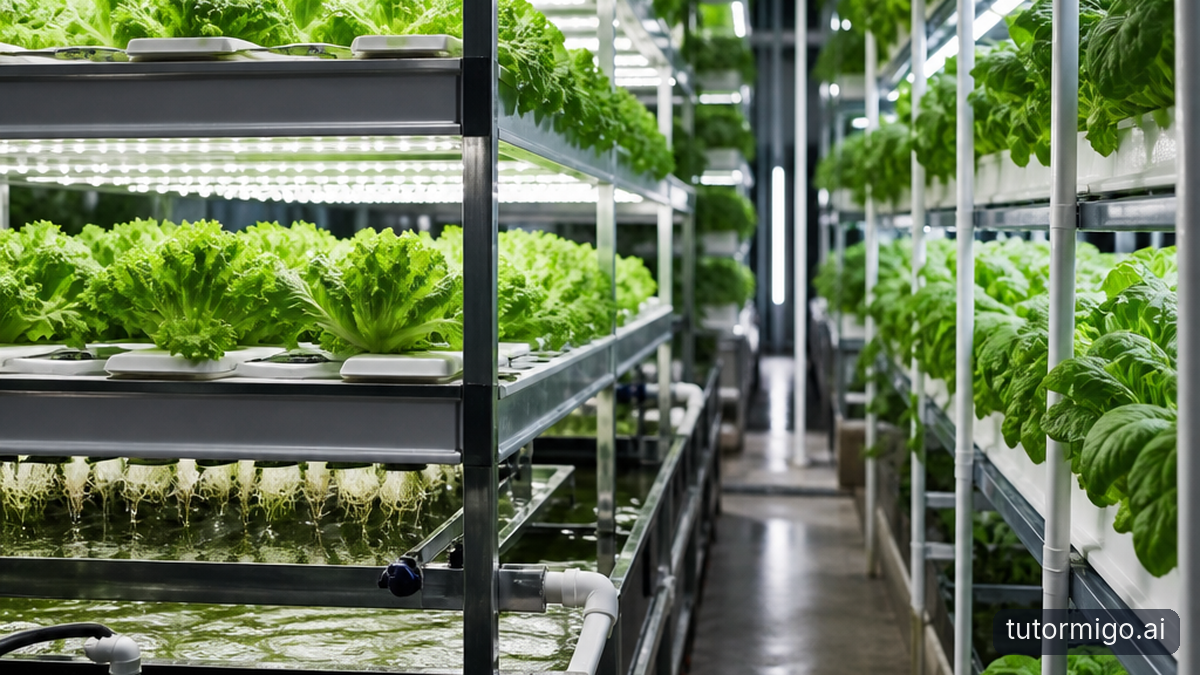
Vertical farming uses shelving, towers, or columns to place growing surfaces above one another. Instead of spreading plants across a single field, you use the height of a controlled indoor room. The approach is especially suited to compact crops such as leafy greens, microgreens, and herbs, where a short plant canopy can be repeated across several levels.
Hydroponic systems grow plants without soil by delivering a nutrient solution to their roots. In a nutrient film technique channel, a shallow stream flows past the roots before returning to a reservoir. In deep-water culture, roots sit in oxygenated solution. Both methods recirculate water, but they require careful filtration, oxygen management, and sanitation.
Aeroponics takes a different route: roots hang in an enclosed chamber and receive a fine nutrient mist at timed intervals. The roots can access plenty of oxygen, but clogged nozzles or a pump failure can dry them quickly. Some facilities use hydroponic systems for their main production levels and aeroponic propagation or specialized modules where rapid root access is valuable. In either design, the stacking plan must leave room for lights, airflow, maintenance, harvest, and safe movement between levels.
How LED Spectrums, CO₂ Levels, and Climate Controls Keep Crops Growing
Plants do not need simply “more light”; they need an appropriate amount, schedule, and spectrum for the crop and growth stage. LED fixtures let operators adjust intensity and, in some systems, the balance of blue, red, and other wavelengths. A leafy-green room may prioritize compact growth and uniform color, while a fruiting crop needs a different light strategy and enough space for pollination and canopy development.
Climate control links lighting to temperature, humidity, and airflow. LEDs produce less radiant heat than many older lamps, but the room still gains heat from fixtures, pumps, and other equipment. Dehumidification becomes important because plants release water vapor into the air. If humidity stays too high, condensation and fungal disease can become serious risks; if airflow is too weak, leaves may develop unevenly.
Carbon dioxide is another managed variable. Plants use CO₂ during photosynthesis, but adding it is not a substitute for sufficient light, water, nutrients, or ventilation. Sensors should measure the actual room condition, and controls should include alarms when readings move outside safe limits. A well-tuned recipe therefore coordinates photoperiod, light intensity, temperature, humidity, airflow, and CO₂ rather than adjusting one setting in isolation.
How Automated Nutrient Dosing Supports Consistent Crop Growth
In soil, roots encounter a changing mixture of minerals, moisture, air, and organic matter. In a hydroponic or aeroponic system, the operator must provide that balance directly. Automated dosing equipment adds concentrated nutrients to a reservoir, while sensors commonly track electrical conductivity and pH as indicators of solution strength and acidity.
Consistency starts with a tested crop recipe. A young lettuce plant may require a different nutrient concentration from a mature plant, and water quality changes the amount of adjustment required. If source water already contains substantial calcium or alkalinity, blindly following a standard recipe can push the solution out of range. Operators should calibrate probes, verify dosing pumps, and compare automated readings with manual checks.
Automation does not eliminate oversight. A stuck dosing pump, empty concentrate tank, leaking line, or faulty sensor can affect an entire crop zone. Good systems divide production into manageable zones, log changes, and trigger alerts before a small drift becomes visible damage. For example, a gradual rise in electrical conductivity may indicate water loss through plant uptake, while a sudden jump could point to an injection error. Regular reservoir sampling and clear maintenance records remain essential, even in a highly automated farm.
For a deeper look at how data models can represent nutrient movement, see this overview of modeling nutrient flow in hydroponic systems.
How CEA Can Use Up to 95% Less Water With Zero Pesticide Use
CEA can reduce water use because irrigation is captured and recirculated instead of draining through soil or evaporating across a field. In a closed hydroponic loop, plants take up part of the water, while the remaining solution returns to a reservoir for monitoring and reuse. Operators may also collect condensation from dehumidification equipment, depending on local rules and treatment requirements. Claims of up to 95% less water are possible in some comparisons, but the result depends on the crop, system design, baseline farm, climate, and accounting method.
Indoor production can also operate without synthetic pesticides. Separating crops from outdoor fields, filtering incoming air, controlling access, and cleaning equipment reduce pest pressure. Farms still need an integrated pest-management plan: workers can carry insects inside, plant material may arrive infested, and pathogens can spread rapidly through shared water. Scouting cards, quarantine procedures, biological controls, sanitation, and prompt removal of affected plants all matter.
“Zero pesticide use” should therefore describe a verified operating practice, not an assumption that indoor crops are automatically pest-free. Water treatment, nutrient disposal, electricity demand, packaging, and replacement materials also belong in an honest environmental assessment. CEA can conserve water and reduce pesticide reliance, but it works best when operators measure inputs and report boundaries clearly.
What to Consider Before Choosing or Building an Indoor Vertical Farm
Begin with a crop-specific business case rather than a technology wish list. Estimate the selling price, harvest volume, crop cycle, labor, packaging, delivery distance, and likely waste. A rack full of plants is not the same as a profitable farm. Leafy greens often fit vertical systems because they grow quickly and can be harvested frequently, while large fruiting plants demand more height, structural support, pollination work, and light.
Then assess the building. You need dependable electricity, water treatment, drainage, fire protection, climate-control capacity, loading access, and enough floor strength for tanks and racks. Calculate the heat removed by lighting and equipment before choosing HVAC hardware. A power interruption can damage crops within hours, so backup systems, alarm routing, and a plan for pump or cooling failure are operational necessities.
Choose automation that your team can maintain and understand. Ask whether sensors can be calibrated, parts are locally available, data can be exported, and the system can fail safely. Pilot one crop zone before expanding to a full building. Track water use, electricity per kilogram, labor minutes per tray, crop loss, and sales quality. Those measurements will tell you whether adding another growing level improves the farm—or only increases complexity.
Next step: Write a one-page production plan for one crop, one room, and one harvest schedule. Use it to test infrastructure, staffing, and market assumptions before committing to a larger build.
Frequently asked questions
Controlled environment agriculture manages growing conditions such as light, temperature, humidity, airflow, irrigation, and nutrients so crops can be produced more consistently than they can be outdoors.
No. Many vertical farms use hydroponics, but systems may also use aeroponics or other soilless methods. The best choice depends on the crop, maintenance capacity, water design, and production goals.
It can operate without pesticides when exclusion, sanitation, scouting, quarantine, and biological controls are effective. Indoor farming reduces pest exposure but does not guarantee that pests or plant diseases will never appear.
Leafy greens, herbs, and microgreens are common choices because they are compact, relatively fast-growing, and harvested frequently. Larger fruiting crops can work, but they usually require more space, light, support, and labor.
Related reading
Related reading
Enjoyed this read?
Like, share, or comment below.

Comments
0Sign in required · respectful discussion · replies supported
Loading comments…